Shape Recognition Addition & Subtraction Worksheets for Ages 4-6
3 filtered results
-
From - To
Introduce your young learners to the essentials of math with our "Shape Recognition Addition & Subtraction Worksheets for Ages 4-6." These engaging and educational worksheets blend fun shape recognition exercises with basic addition and subtraction problems, creating a delightful learning experience that captivates children's interest. Carefully designed for ages 4-6, these activities sharpen both mathematical and cognitive skills, fostering confidence and a love for learning. Ideal for home or classroom use, our worksheets support early learners as they embark on their educational journey. Explore now and help your children master the basics of math in an enjoyable way.
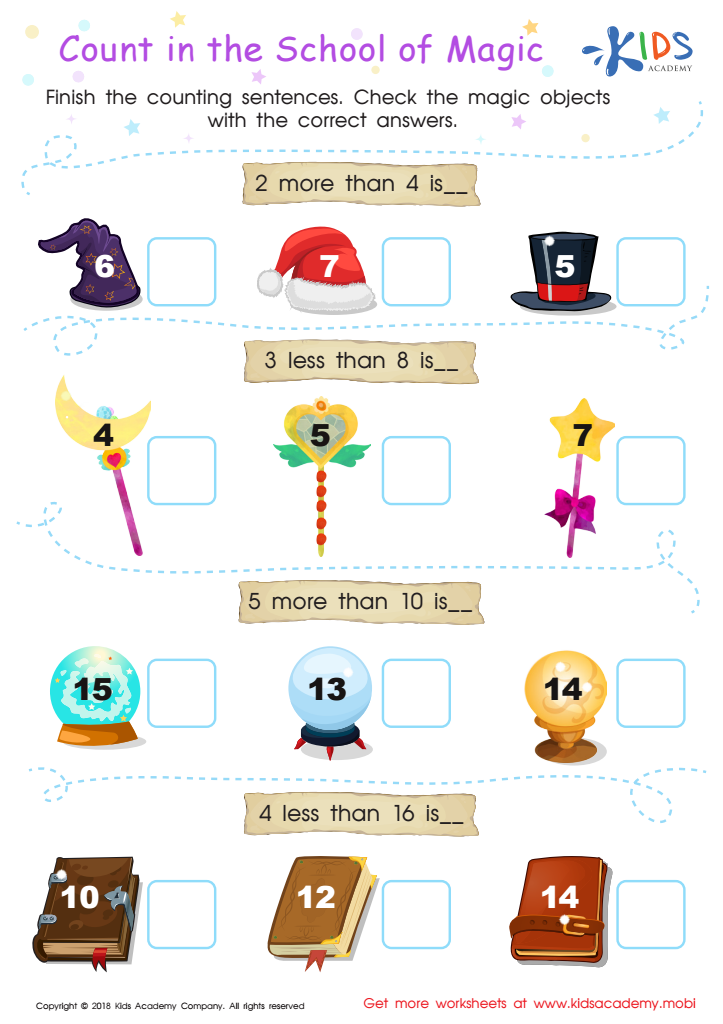
Count in the School of Magic Worksheet
 Assign to My Students
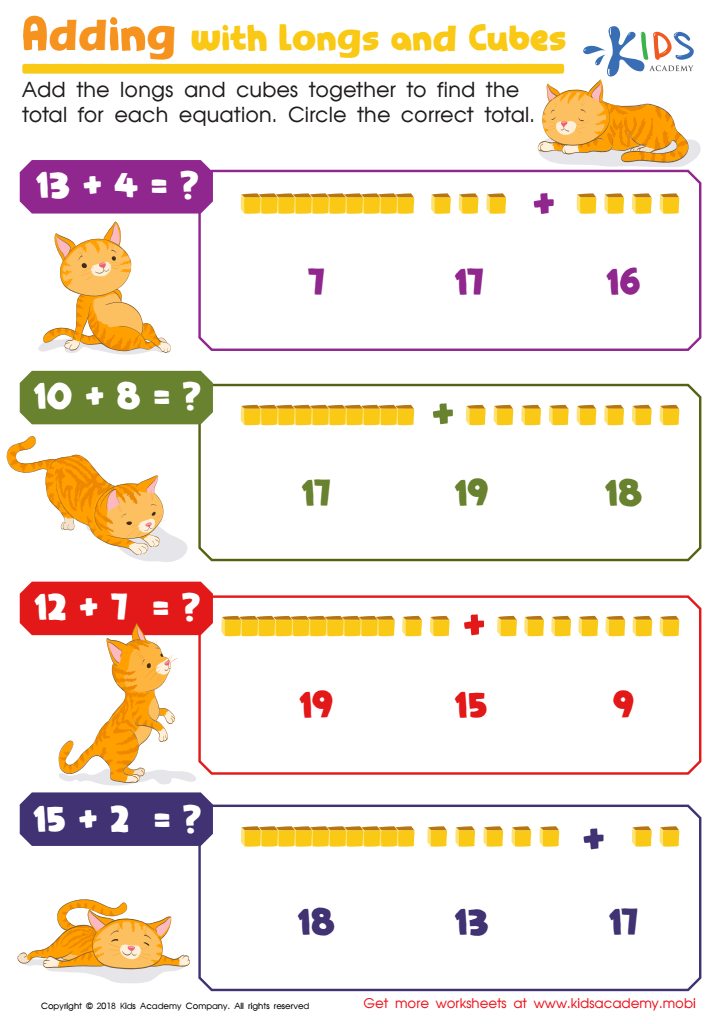
Adding With Longs and Cubes Worksheet
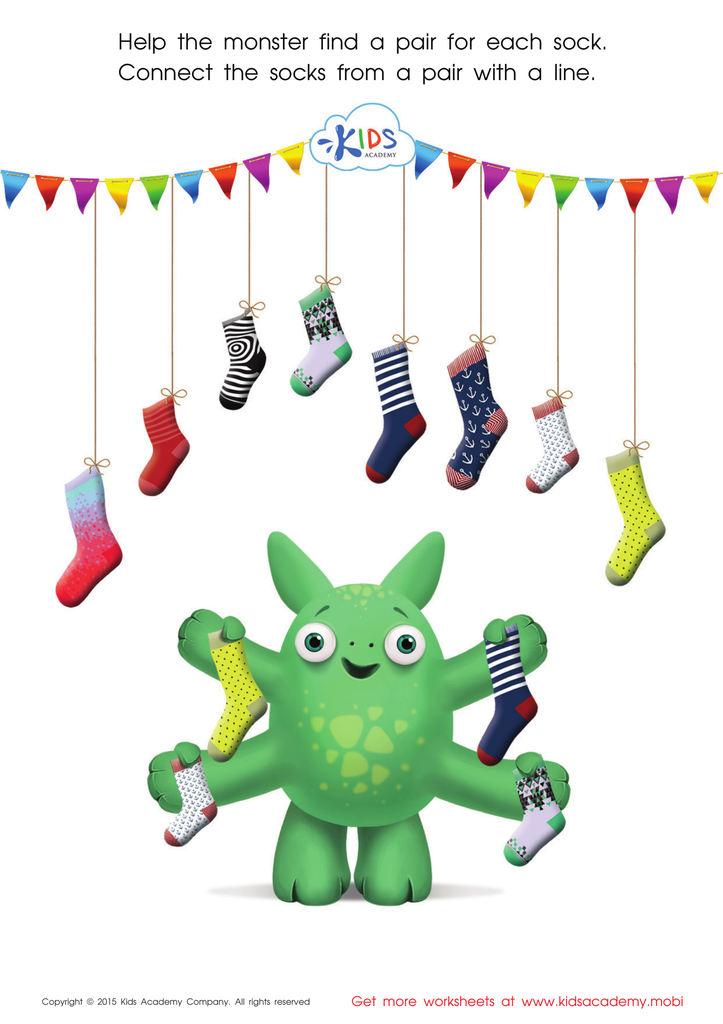
Math Matching Pairs Game: Monsterв's Socks Worksheet








Parents and teachers should deeply care about shape recognition, addition, and subtraction for children ages 4-6 because these foundational skills are critical for early cognitive development and future academic success. At this tender age, recognizing shapes not only enhances children's spatial awareness but also boosts their ability to identify patterns, an essential skill in matching and comparison activities. Shape recognition lays the groundwork for geometry, a key component of mathematics.
On the other hand, early exposure to addition and subtraction nurtures a child’s number sense, which is the understanding of numbers and their relationships. This proficiency is crucial as it forms the base on which more complex mathematical concepts are built. When young children practice adding and subtracting, they are not only learning to perform calculations but also mastering problem-solving and critical thinking skills. These activities encourage children to think logically and sequentially, developing their analytical abilities.
Integrating these concepts into engaging learning activities makes mathematical concepts tangible and fun, fostering a positive attitude toward learning. This encourages curiosity and builds confidence, ensuring that children are well-prepared for future academic challenges and are likely to enjoy and excel in their studies as they progress.








