Visual learning enhancement Addition & Subtraction Worksheets for Ages 4-6
7 filtered results
-
From - To
Discover our Visual Learning Enhancement Addition & Subtraction Worksheets, crafted specifically for ages 4-6. These engaging worksheets are designed to make learning math fun and intuitive, reinforcing fundamental skills through colorful visuals and interactive exercises. Ideal for early learners, they help in developing strong number sense, boosting confidence, and enhancing problem-solving abilities. Each worksheet provides a balanced blend of visual aids and practice problems, encouraging young minds to grasp addition and subtraction concepts easily. Perfect for both classroom use and at-home practice, these resources are an essential tool for laying a solid mathematical foundation.
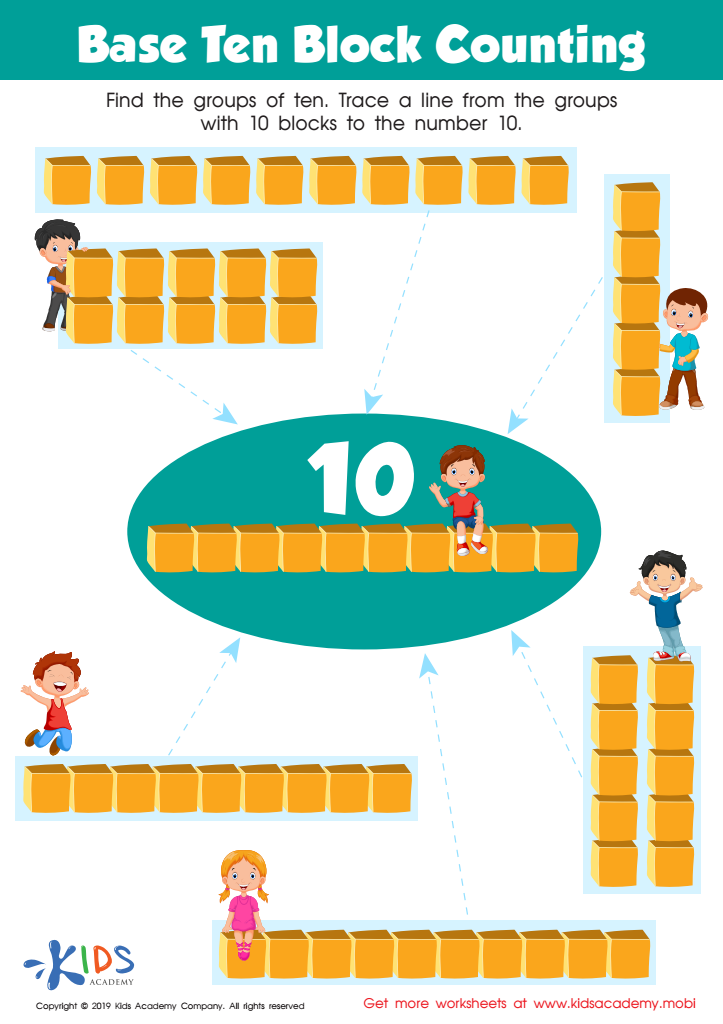
Base Ten Block Counting Worksheet
 Assign to My Students
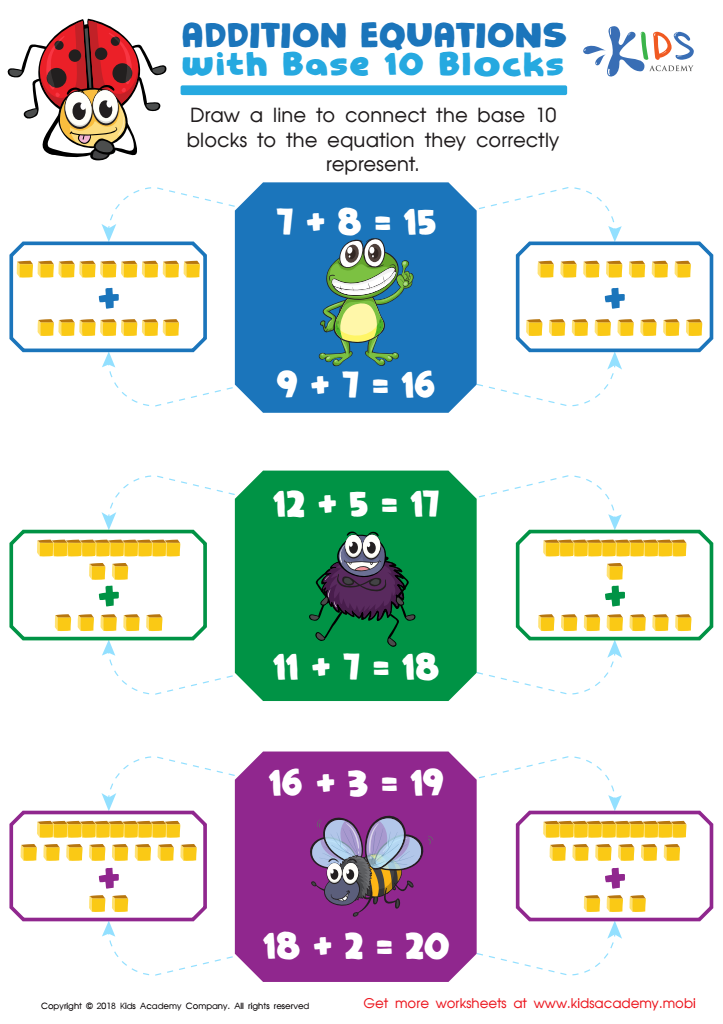
Addition Equations With Base 10 Blocks Worksheet
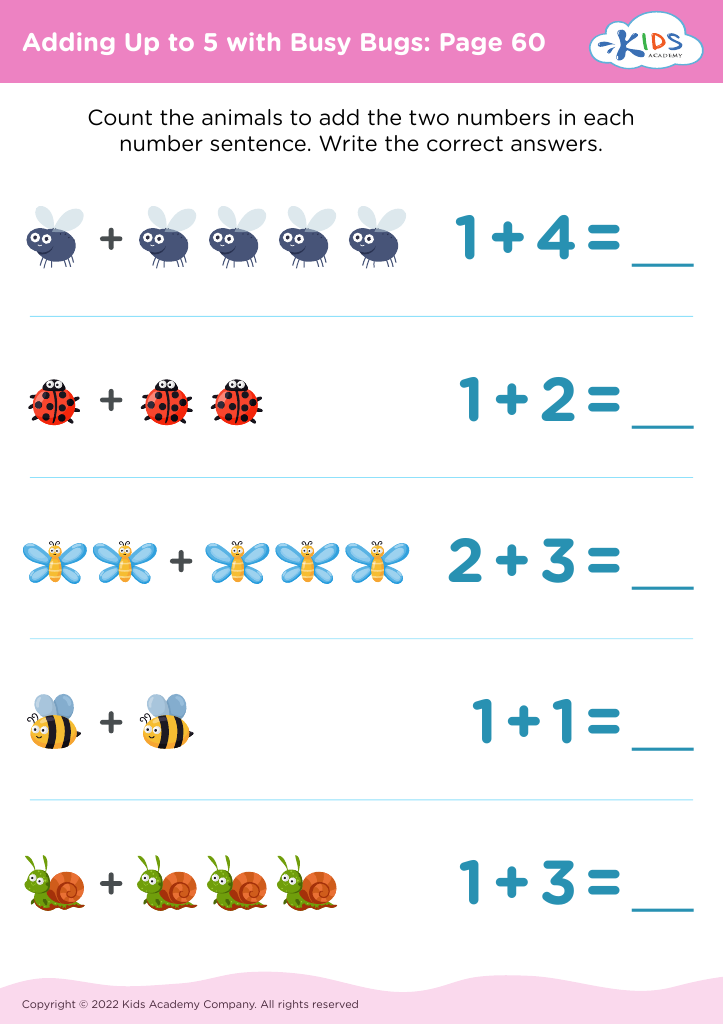
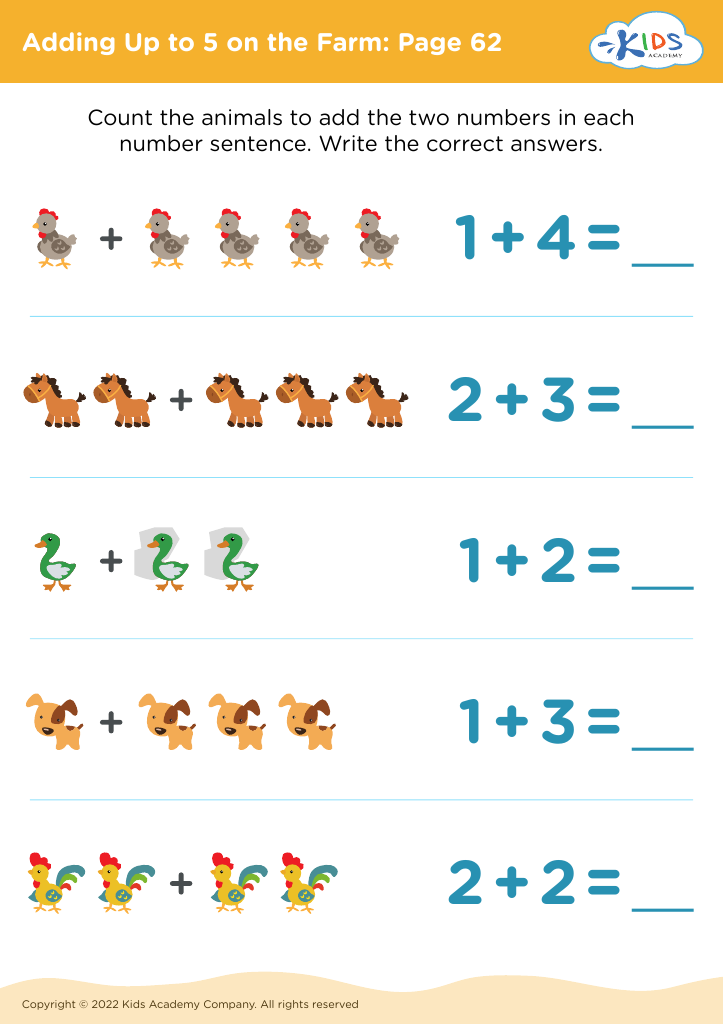
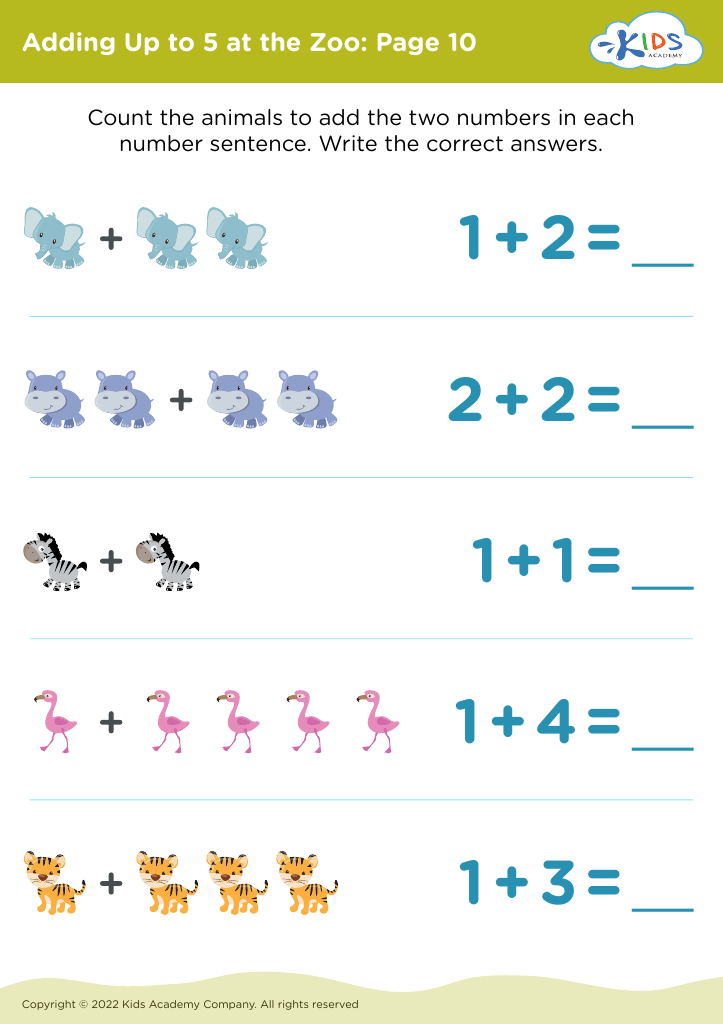
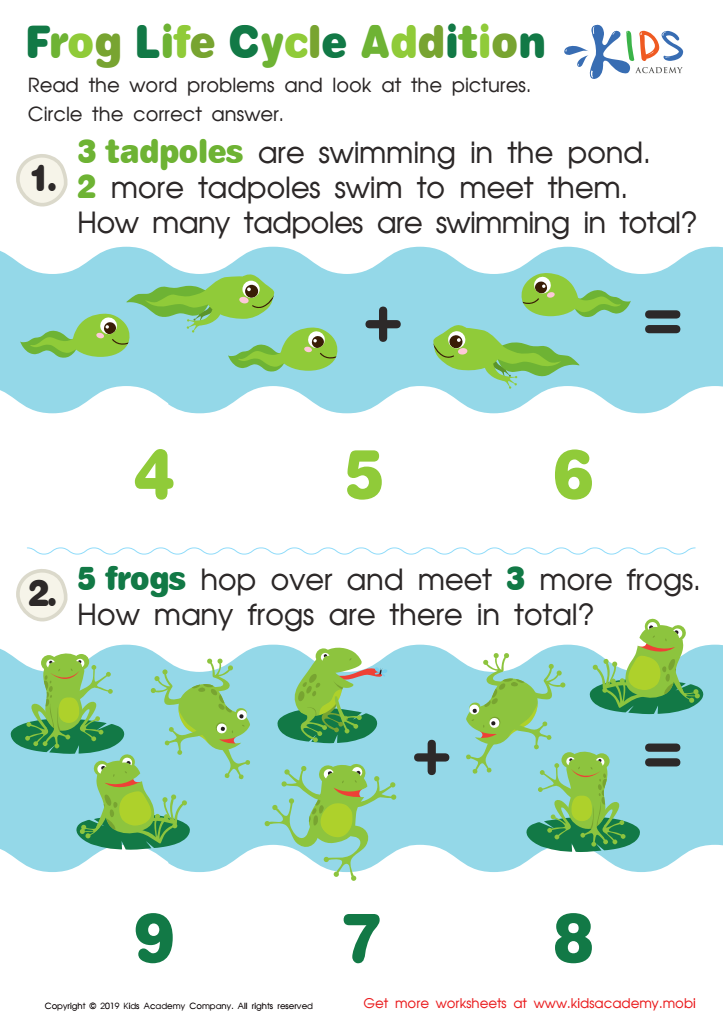
Frog Life Cycle Addition Worksheet
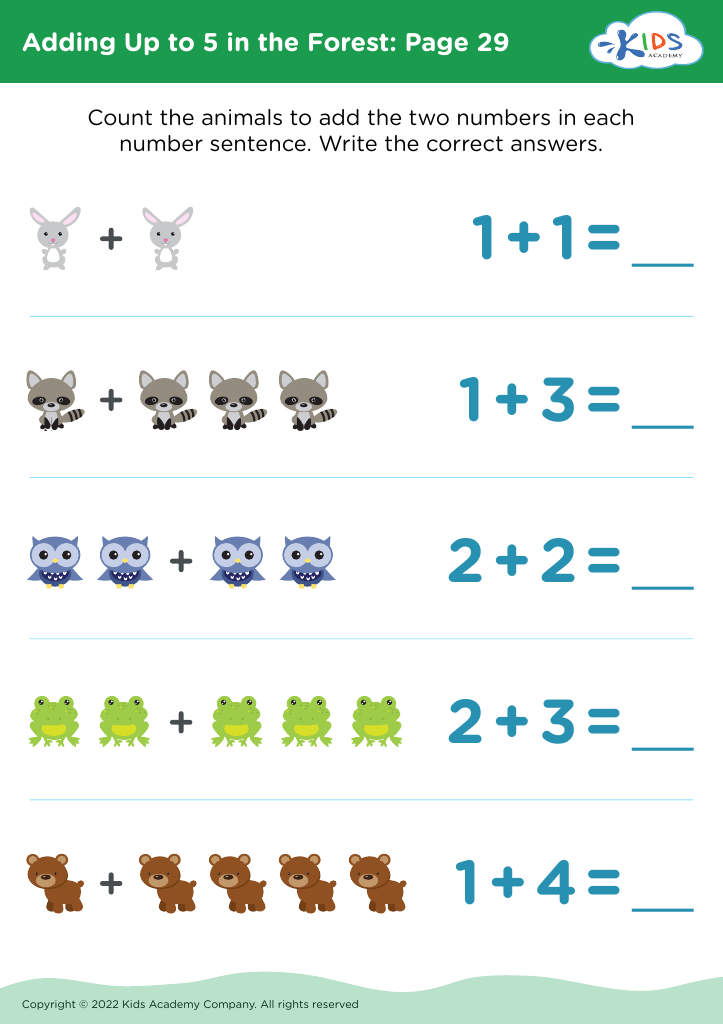








Parents and teachers should prioritize visual learning enhancement for addition and subtraction in children aged 4-6 because these early years are crucial for cognitive development. During this period, children are beginning to form their foundational understanding of numbers and basic mathematical concepts. Visual aids such as counting objects, number lines, and colorful charts make abstract concepts more concrete and comprehensible. By seeing the relationships between numbers, children can more easily grasp addition and subtraction, making the transition to more advanced math smoother and more intuitive.
Visual learning also caters to different learning styles. Some children may struggle with rote memorization or purely auditory instruction but thrive when engaging with visual stimuli. This approach not only helps in retaining their interest but also increases their ability to retain and process information. Furthermore, using visual aids can make learning more interactive and enjoyable, encouraging positive attitudes towards math from an early age.
Developing strong mathematical skills early on lays down a solid foundation for future academic success. By leveraging visual tools to teach addition and subtraction, parents and teachers give children the best chance to develop clarity, confidence, and a love for learning, setting them up for lifelong success in both academic and real-world problem-solving.








