Visual perception improvement Addition & Subtraction Worksheets for Ages 4-6
7 filtered results
-
From - To
Enhance your child's mathematical skills with our Visual Perception Improvement Addition & Subtraction Worksheets, designed specifically for ages 4-6. These engaging, printable worksheets focus on developing essential visual perception skills pivotal for mastering basic math concepts. Young learners will enjoy a variety of interactive activities that boost their ability to recognize patterns, shapes, and quantities, setting a strong foundation for future learning. Each worksheet is carefully crafted to combine fun and education, ensuring that children remain motivated while building their problem-solving abilities. Perfect for at-home learning or classroom use, these resources will help your child thrive in their early math journey!
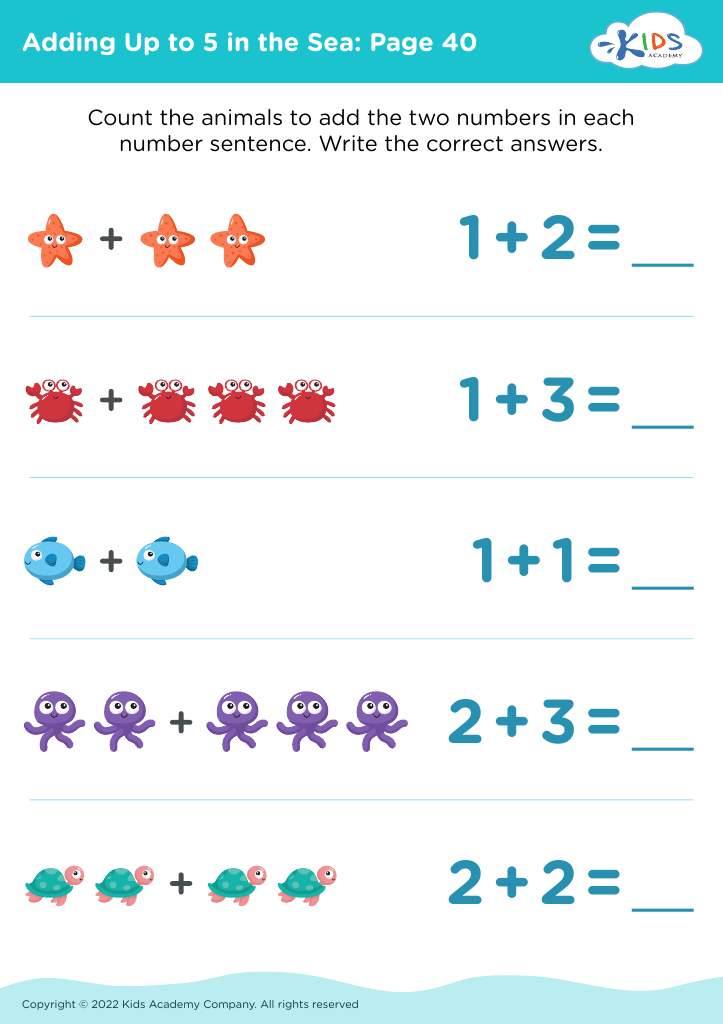
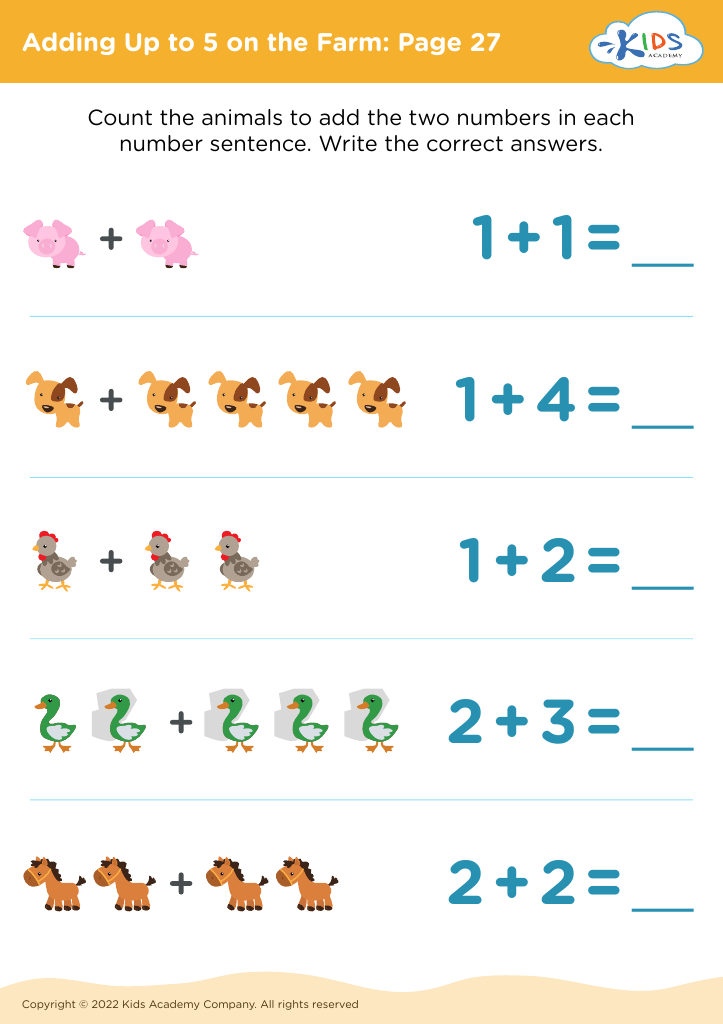
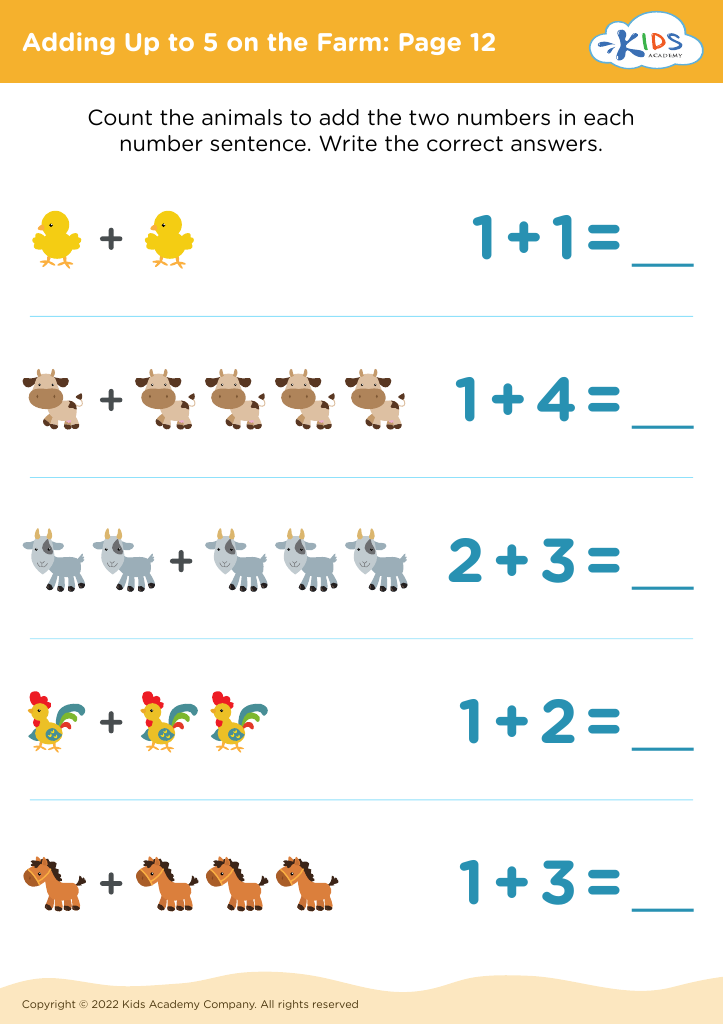
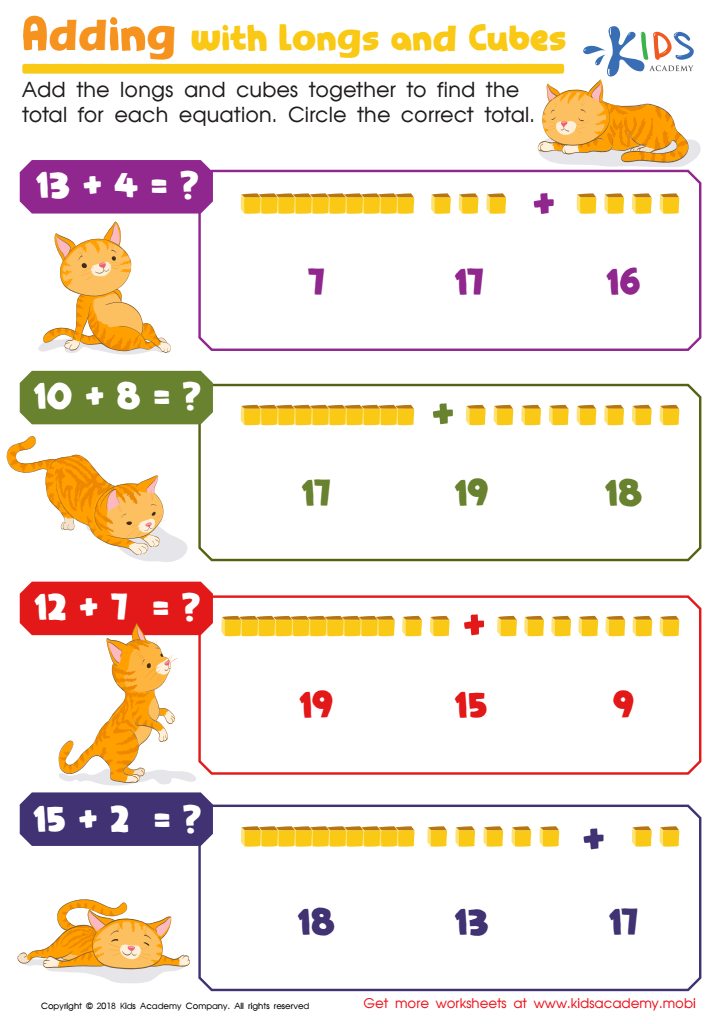
Adding With Longs and Cubes Worksheet
 Assign to My Students
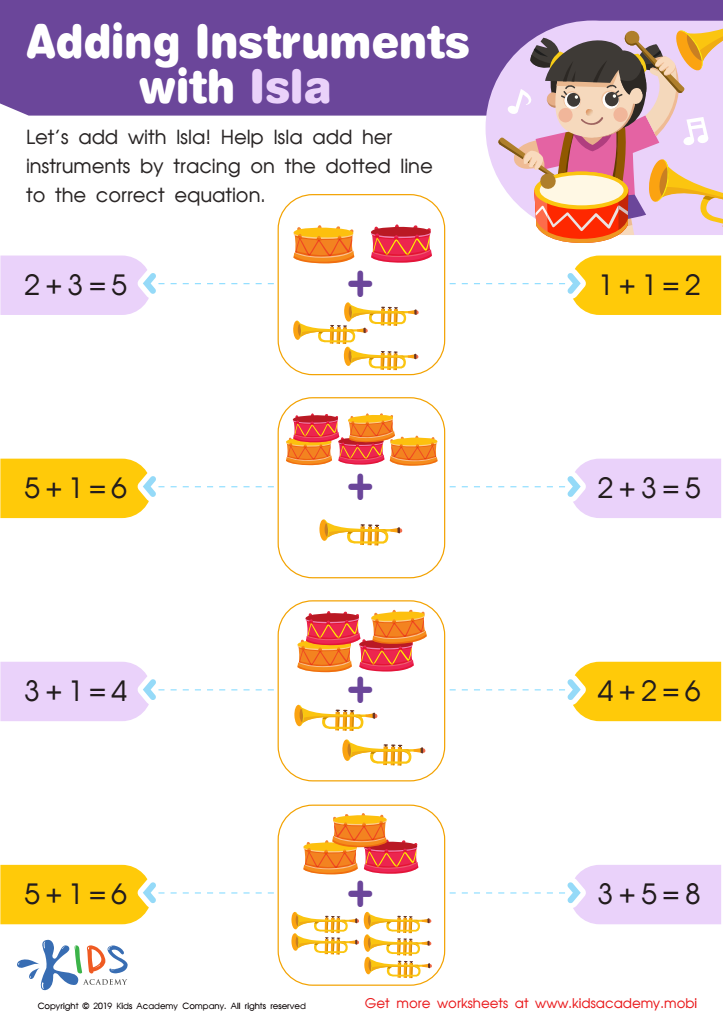
Adding Instruments with Isla Worksheet








Visual perception is a cornerstone of early childhood learning, particularly in developing foundational skills in mathematics like addition and subtraction. For children ages 4-6, the ability to perceive and process visual information is essential in recognizing numbers, understanding spatial relationships, and solving problems. Improved visual perception can enhance not only a child's mathematical abilities but also their overall academic performance.
Parents and teachers should care about fostering visual perception in young learners because it directly influences their confidence and enthusiasm for math. When children can quickly identify shapes, patterns, and quantities, they become more adept at solving addition and subtraction problems. This skill set enables them to approach math with a positive mindset, laying the groundwork for more complex concepts in the future.
Additionally, strong visual perception skills help children develop critical thinking and problem-solving abilities that are valuable across all subjects. By focusing on visual perception improvement, parents and teachers are investing in a holistic educational approach. Activities that encourage visual engagement—such as games, puzzles, and hands-on learning—can significantly bolster a child's cognitive development and prepare them for success in school and beyond. Therefore, prioritizing these skills is vital for nurturing well-rounded, competent learners.








