Addition Practice Addition Worksheets for Ages 4-6 - Page 4
77 filtered results
-
From - To
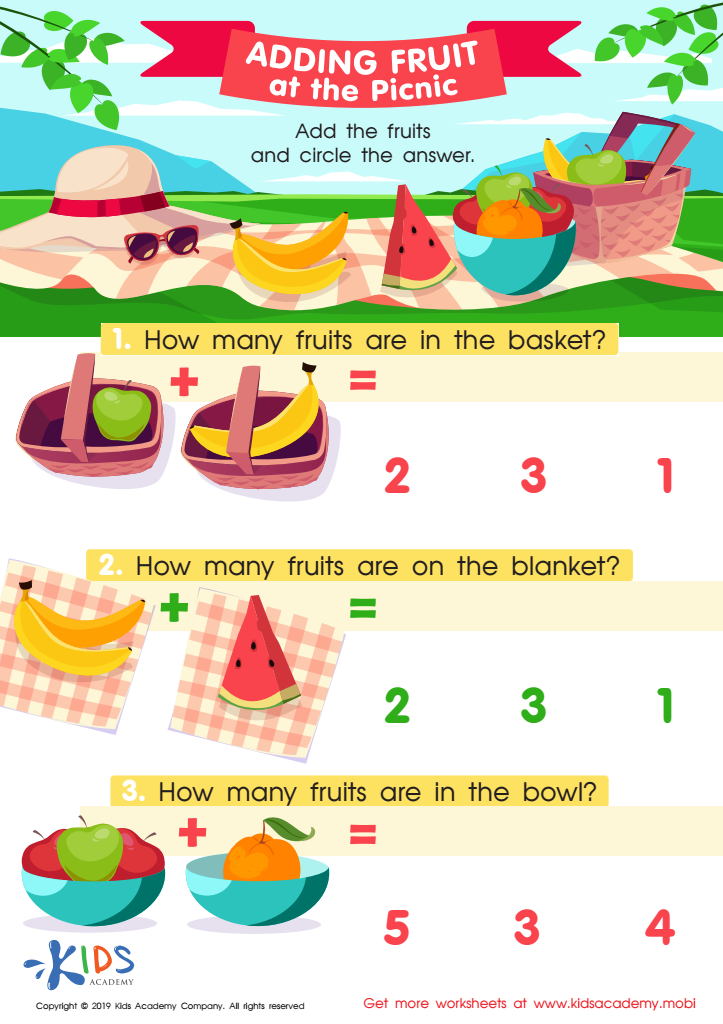
Adding Fruit at the Picnic Worksheet
 Assign to My Students
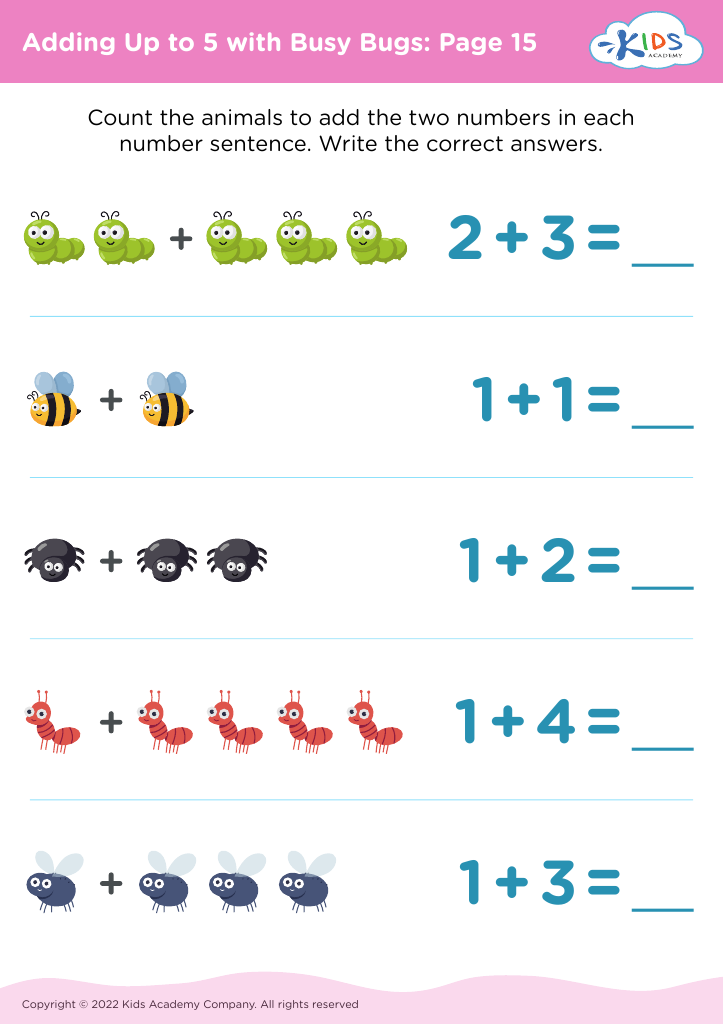








Parents and teachers should prioritize addition practice for children aged 4-6 because foundational math skills play a crucial role in early cognitive development. Mastery of basic addition forms the building blocks for more complex mathematical concepts in later grades. Engaging students in addition during these formative years enhances their number sense, promotes problem-solving skills, and boosts their confidence in handling math-related tasks.
Moreover, learning addition at a young age helps develop critical thinking and logical reasoning abilities, which are essential not only in math but across various subjects. By embedding math practice in daily routines, parents and teachers can nurture a positive attitude towards learning—making it enjoyable through games, stories, and interactive activities.
Additionally, early exposure to addition helps children understand the real-world applications of math, making lessons more relatable. This practical understanding cultivates an appreciation for math that can have lasting effects on their educational journey. Ultimately, fostering a strong mathematical foundation in early childhood facilitates academic success, sets the stage for continuous learning, and prepares children to tackle life's everyday challenges with confidence and skill.








