Check out this FREE Trial Lesson on Addition for age 4-6!

Short and Long Vowel Sort

Favorites
With answer key
Interactive
  • 4-6
  • Basic Addition Skills
  • Addition
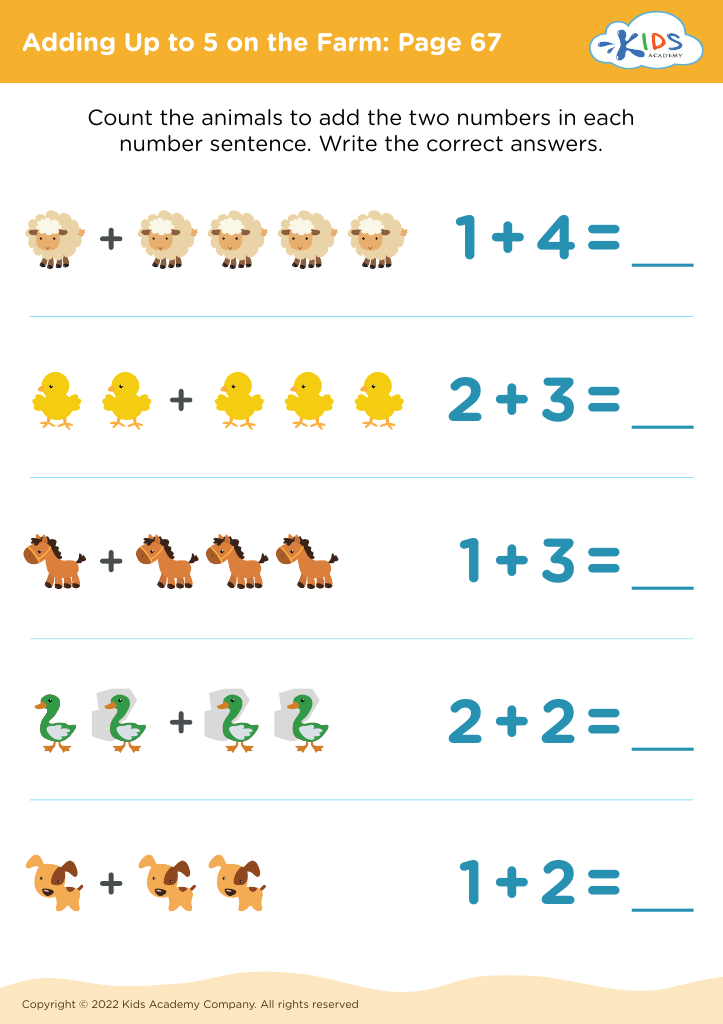
Adding Up to 5 on the Farm: Page 67
Worksheet
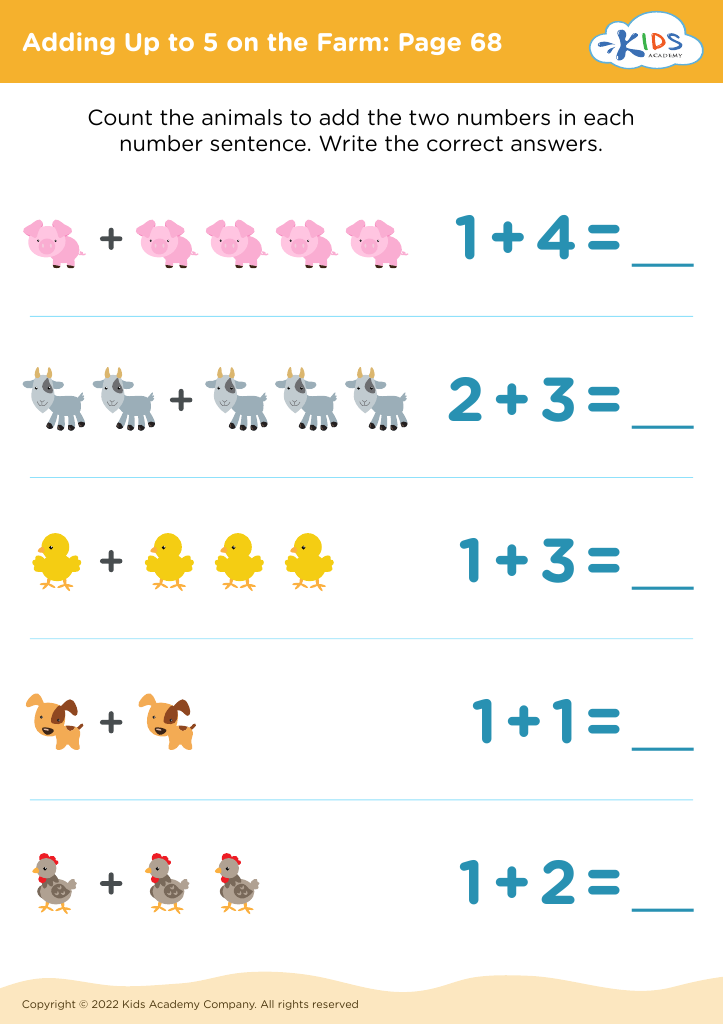
Adding Up to 5 on the Farm: Page 68
Worksheet
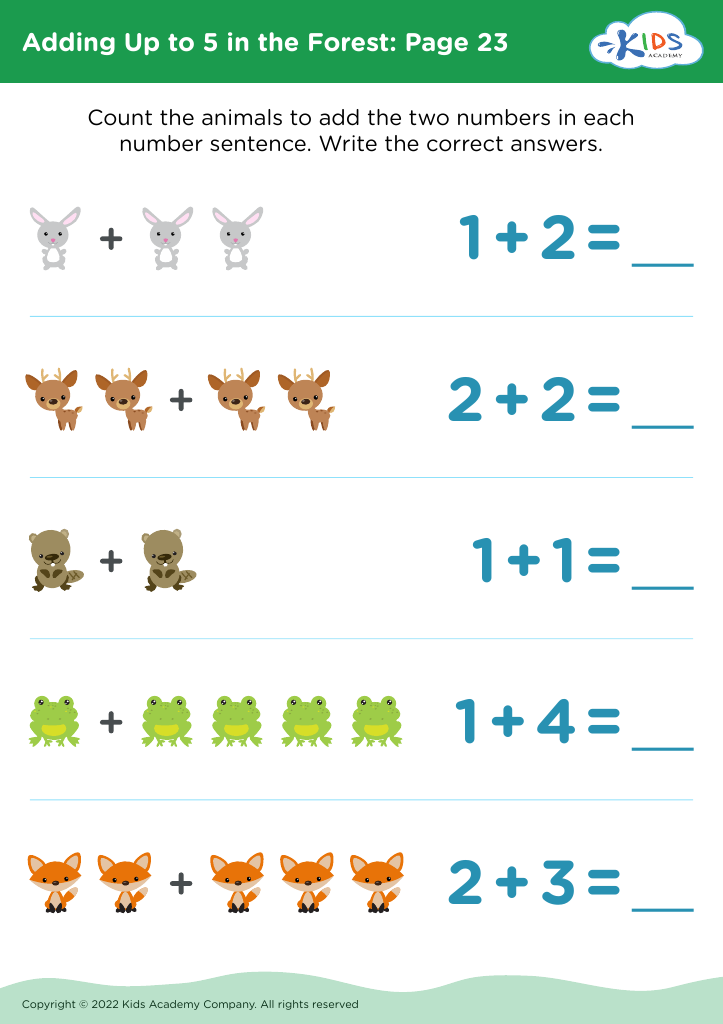
Adding Up to 5 in the Forest: Page 23
Worksheet
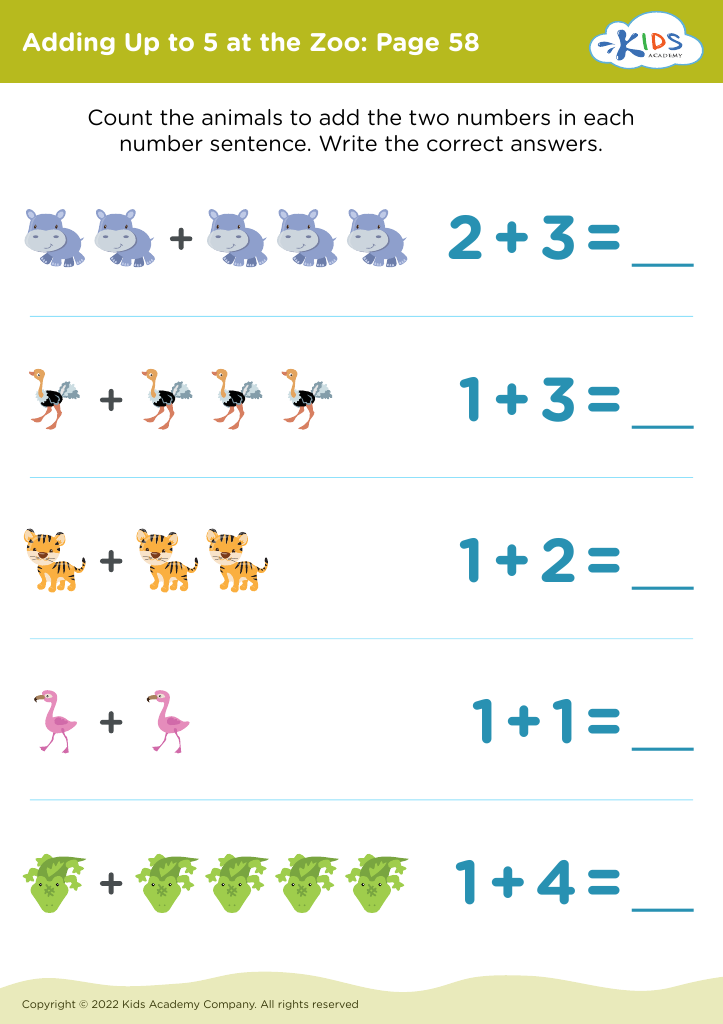
Adding Up to 5 at the Zoo: Page 58
Worksheet
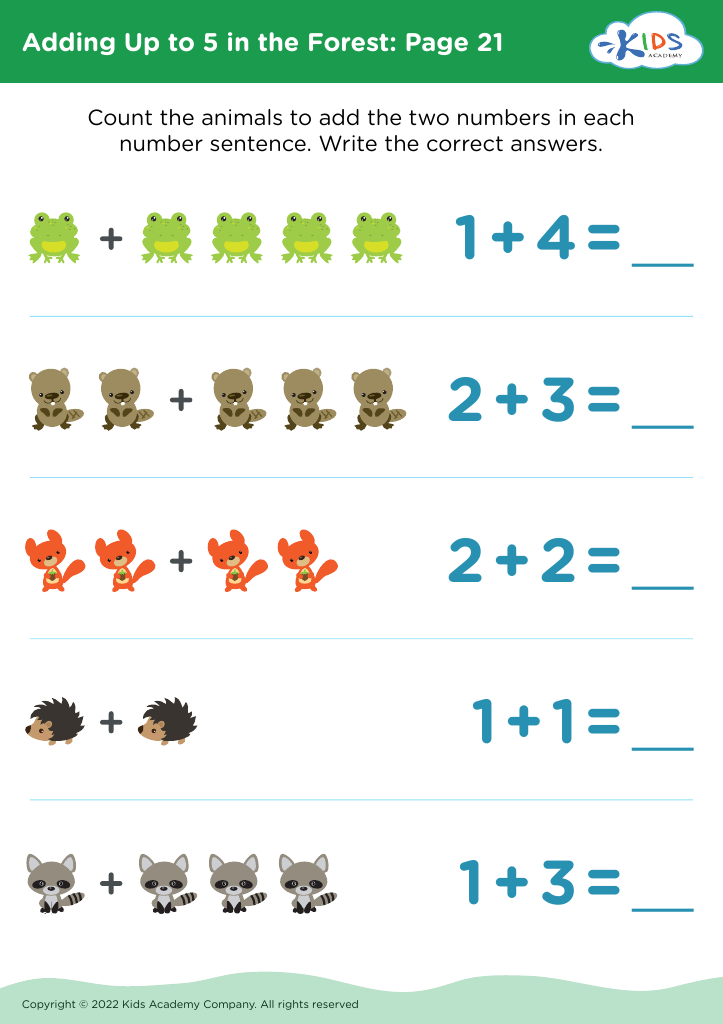
Adding Up to 5 in the Forest: Page 21
Worksheet
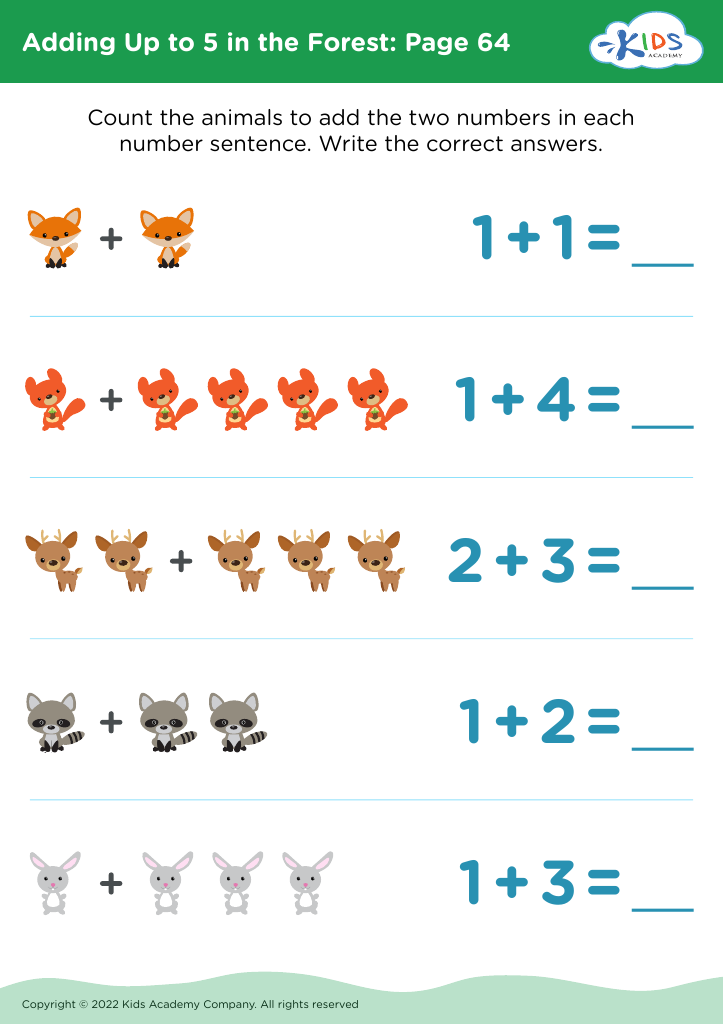
Adding Up to 5 in the Forest: Page 64
Worksheet
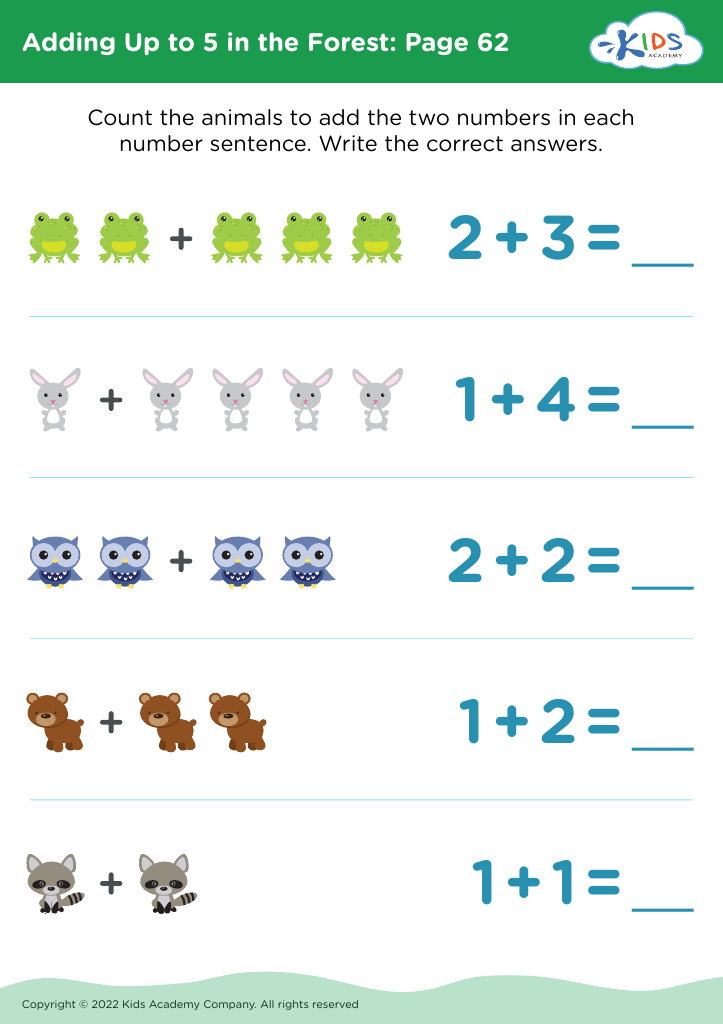
Adding Up to 5 in the Forest: Page 62
Worksheet
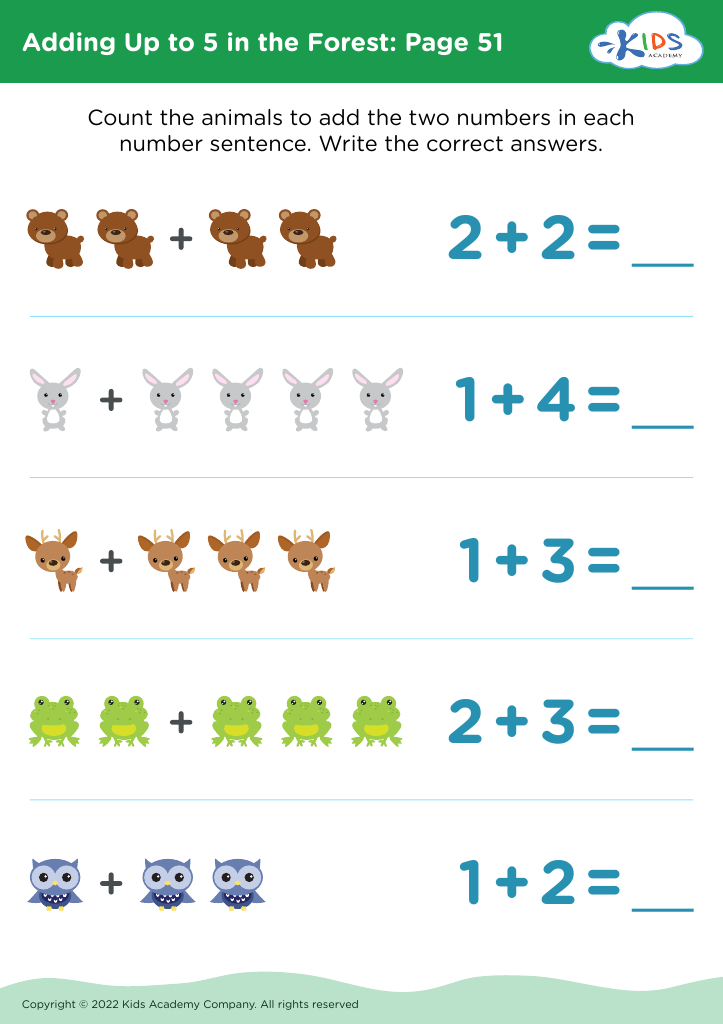
Adding Up to 5 in the Forest: Page 51
Worksheet
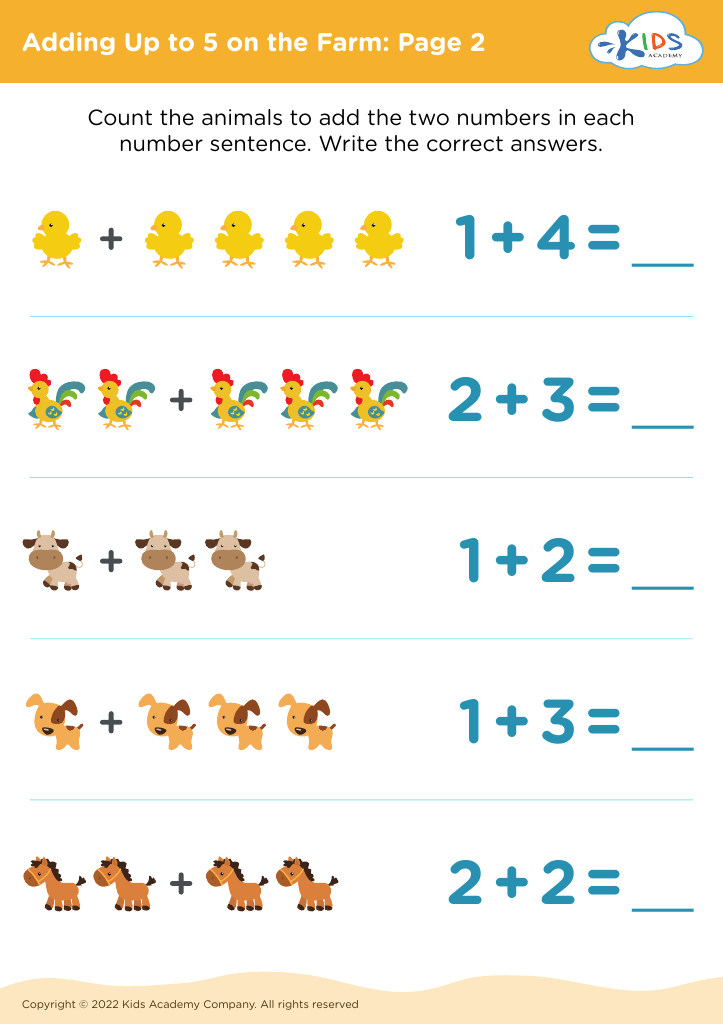
Adding Up to 5 on the Farm: Page 2
Worksheet
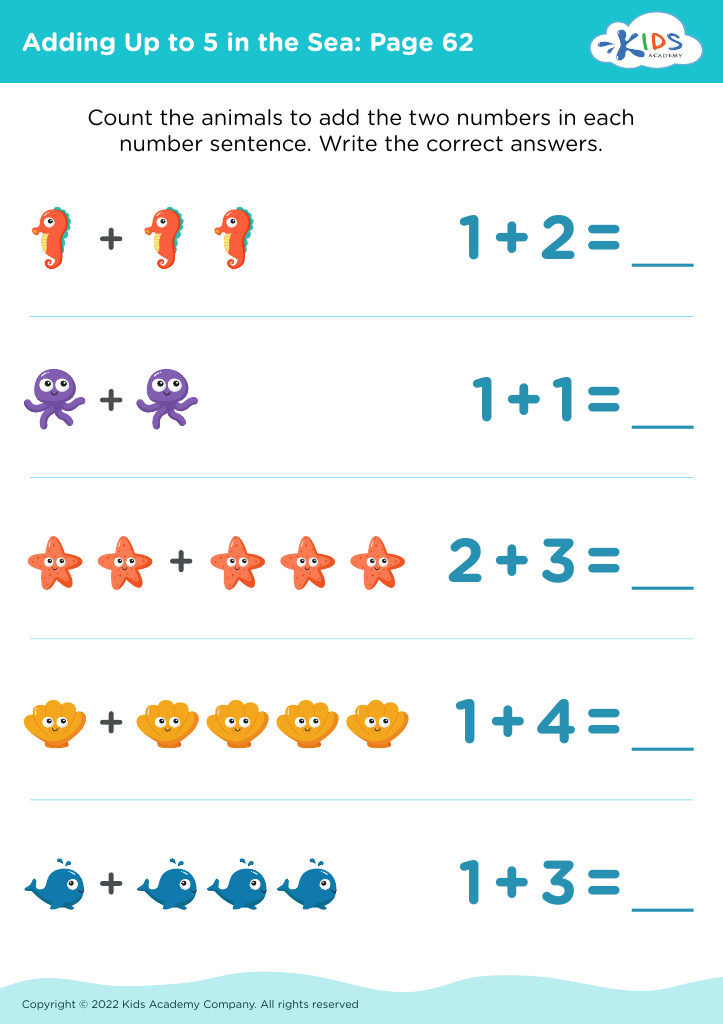
Adding Up to 5 in the Sea: Page 62
Worksheet
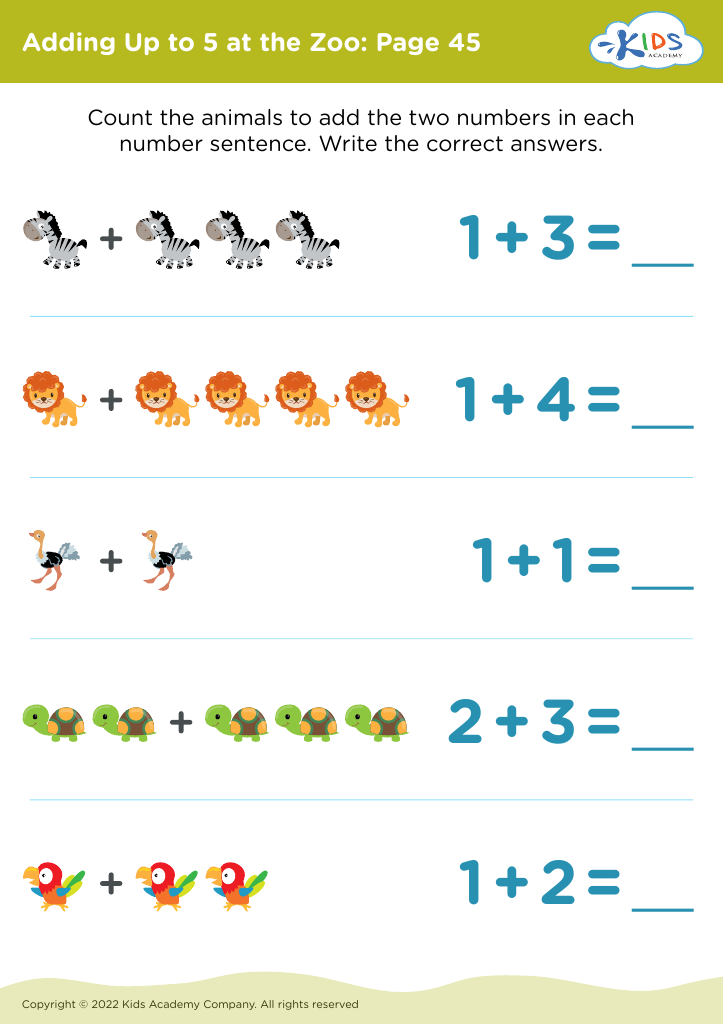
Adding Up to 5 at the Zoo: Page 45
Worksheet
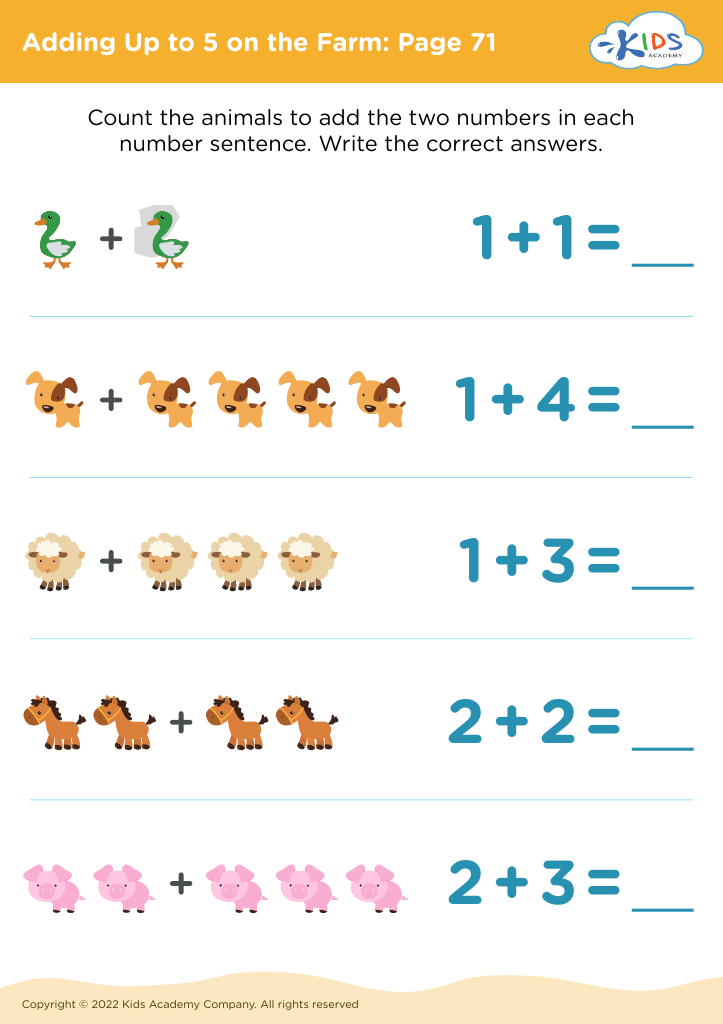
Adding Up to 5 on the Farm: Page 71
Worksheet
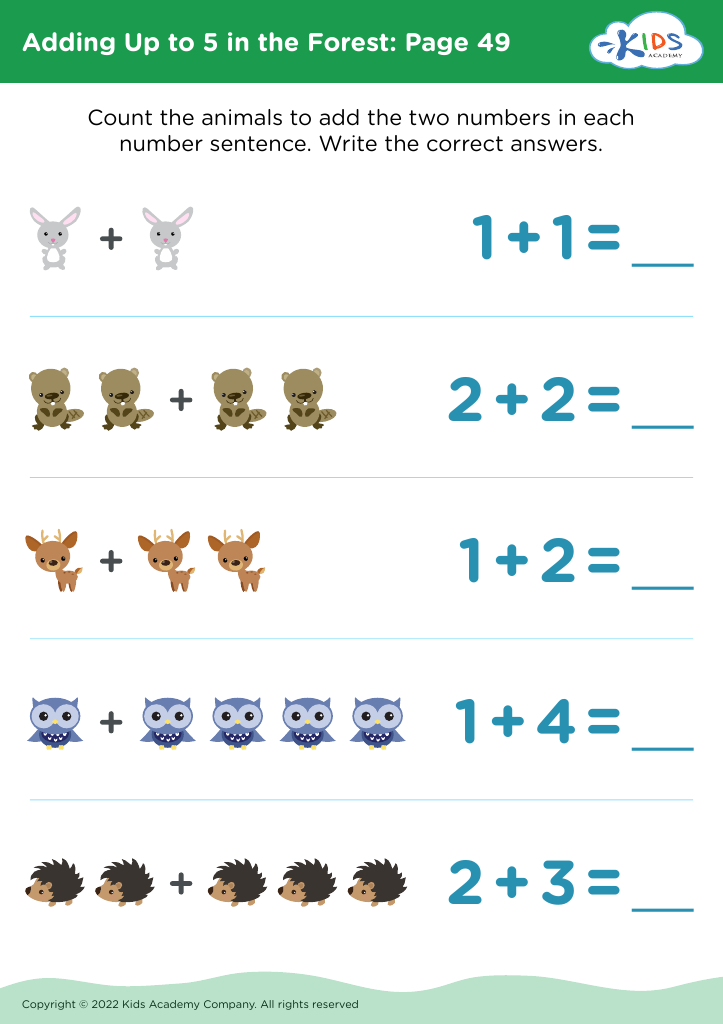
Adding Up to 5 in the Forest: Page 49
Worksheet
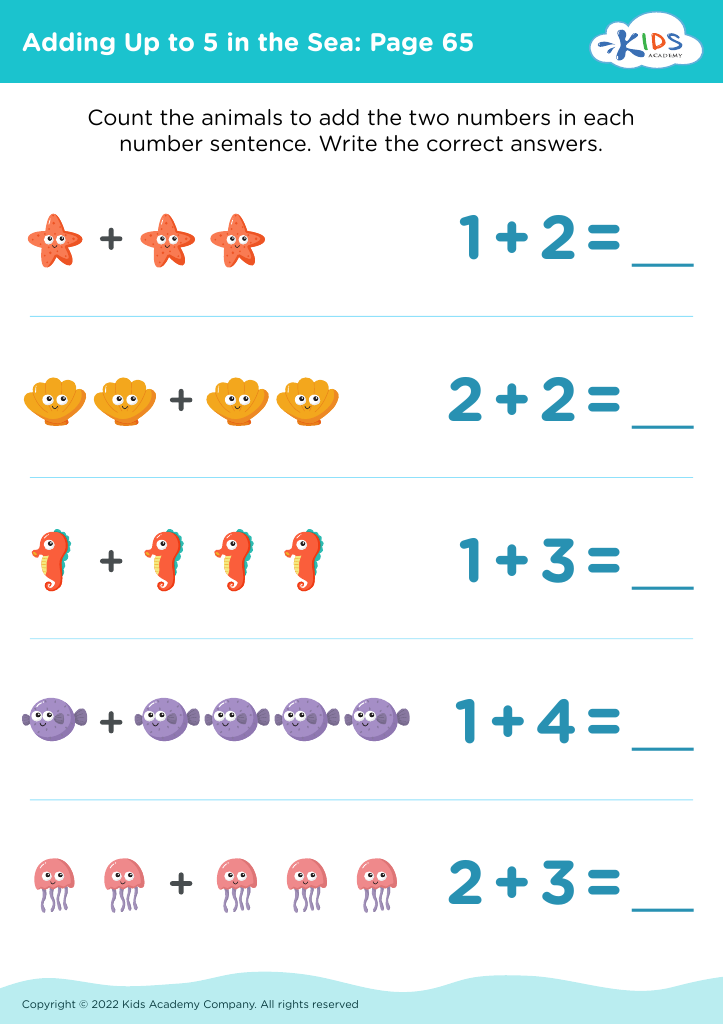
Adding Up to 5 in the Sea: Page 65
Worksheet
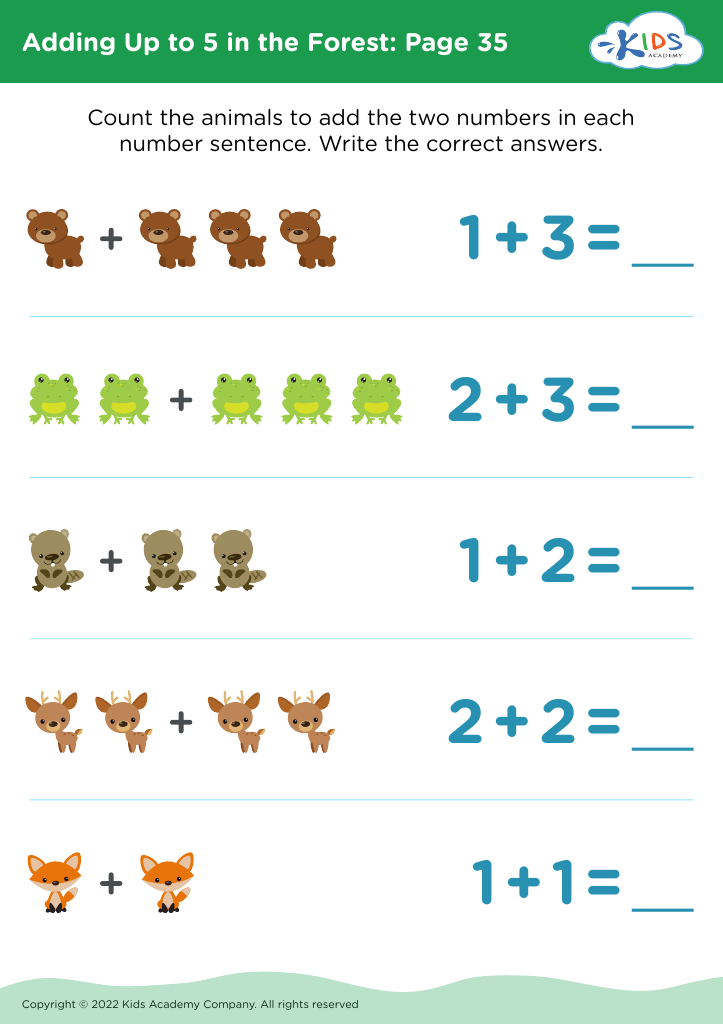
Adding Up to 5 in the Forest: Page 35
Worksheet
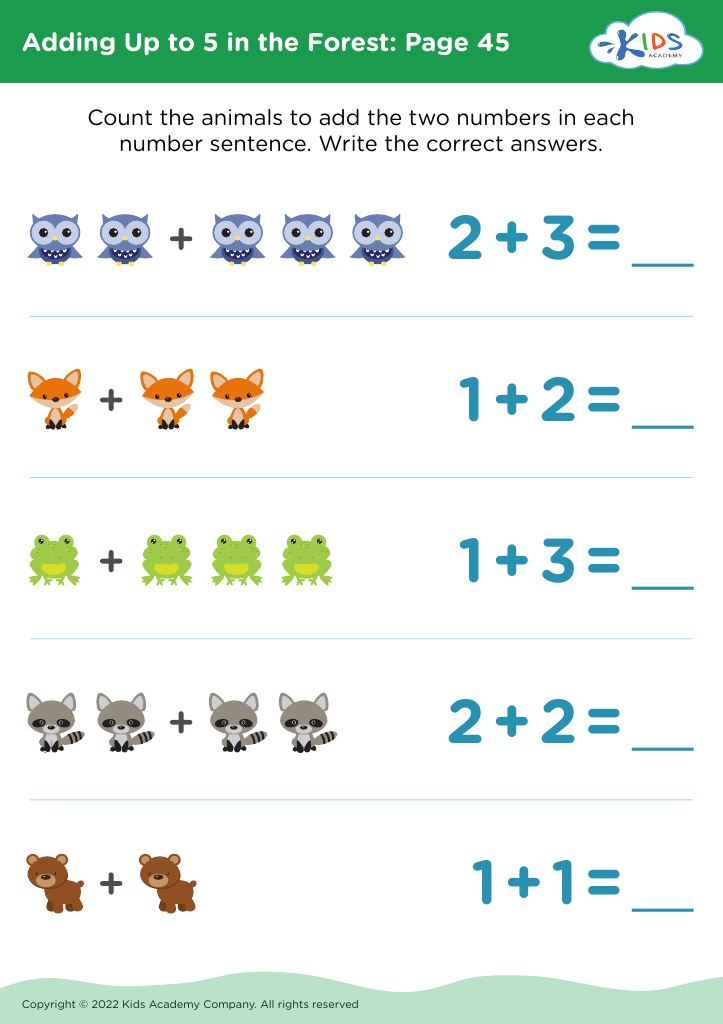
Adding Up to 5 in the Forest: Page 45
Worksheet
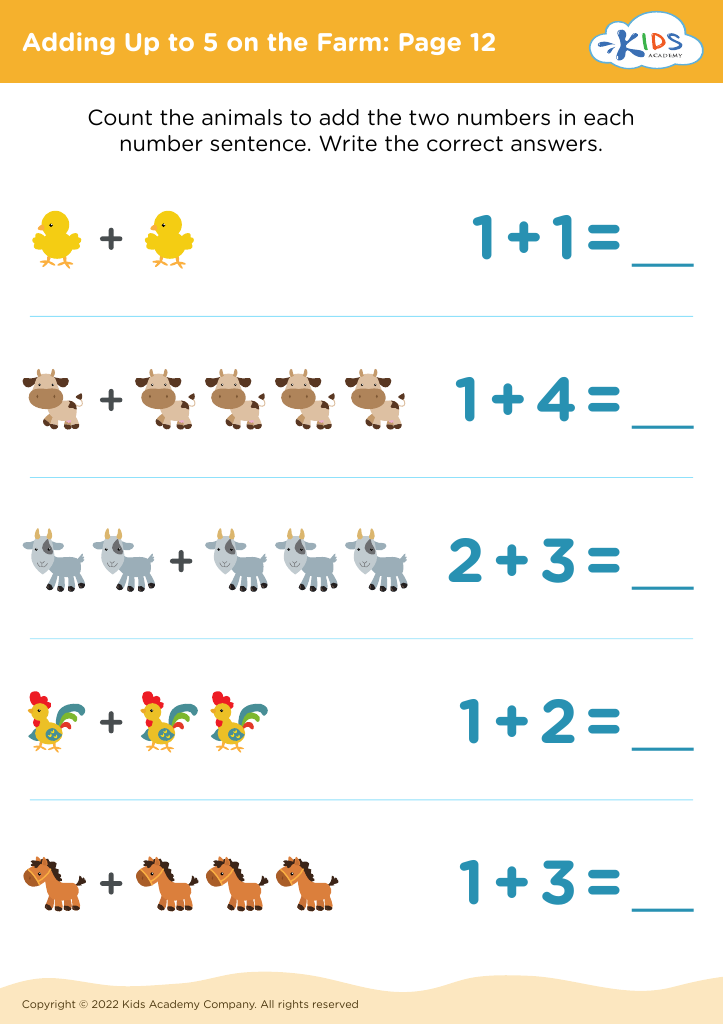
Adding Up to 5 on the Farm: Page 12
Worksheet
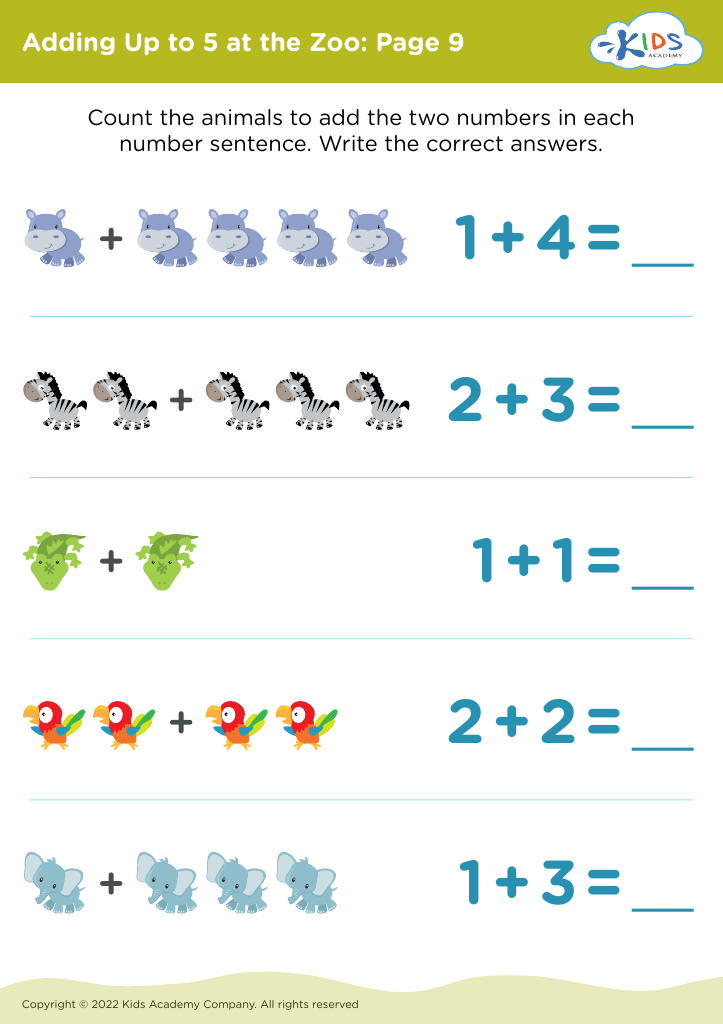
Adding Up to 5 at the Zoo: Page 9

Adding Up to 5 at the Zoo: Page 9

Adding Up to 5 at the Zoo: Page 9
Worksheet
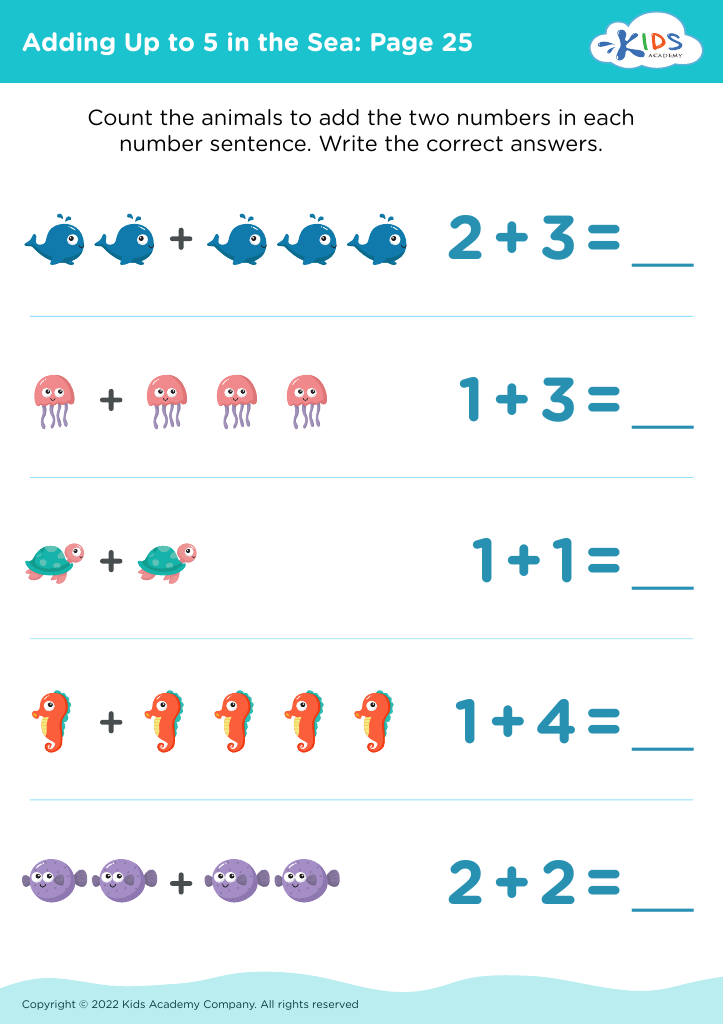
Adding Up to 5 in the Sea: Page 25
Worksheet
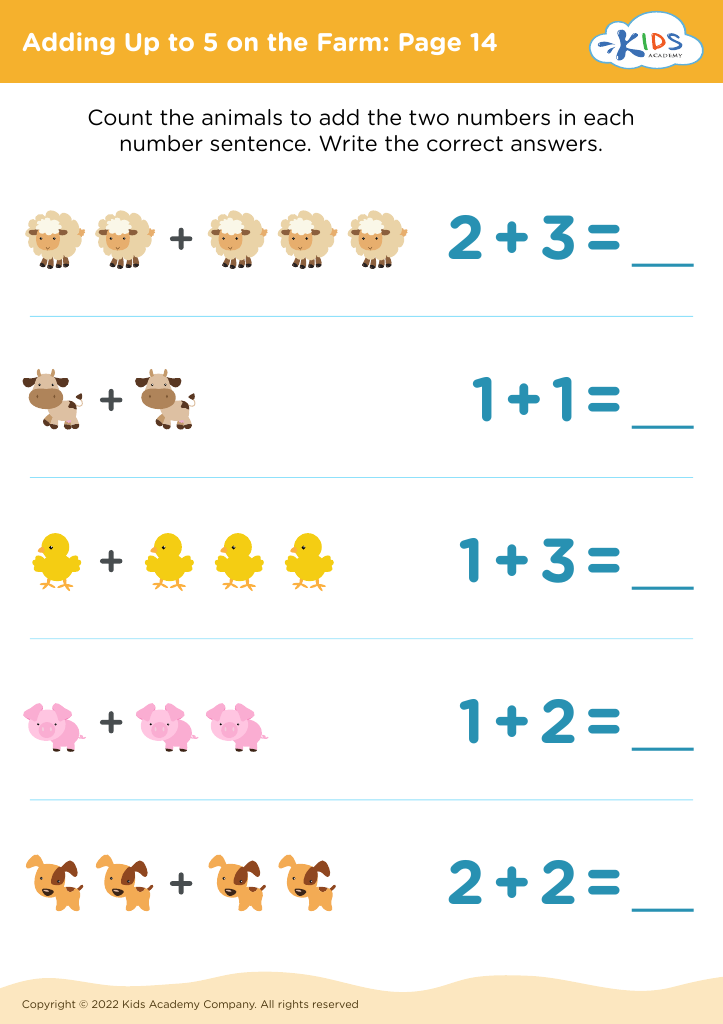
Adding Up to 5 on the Farm: Page 14
Worksheet
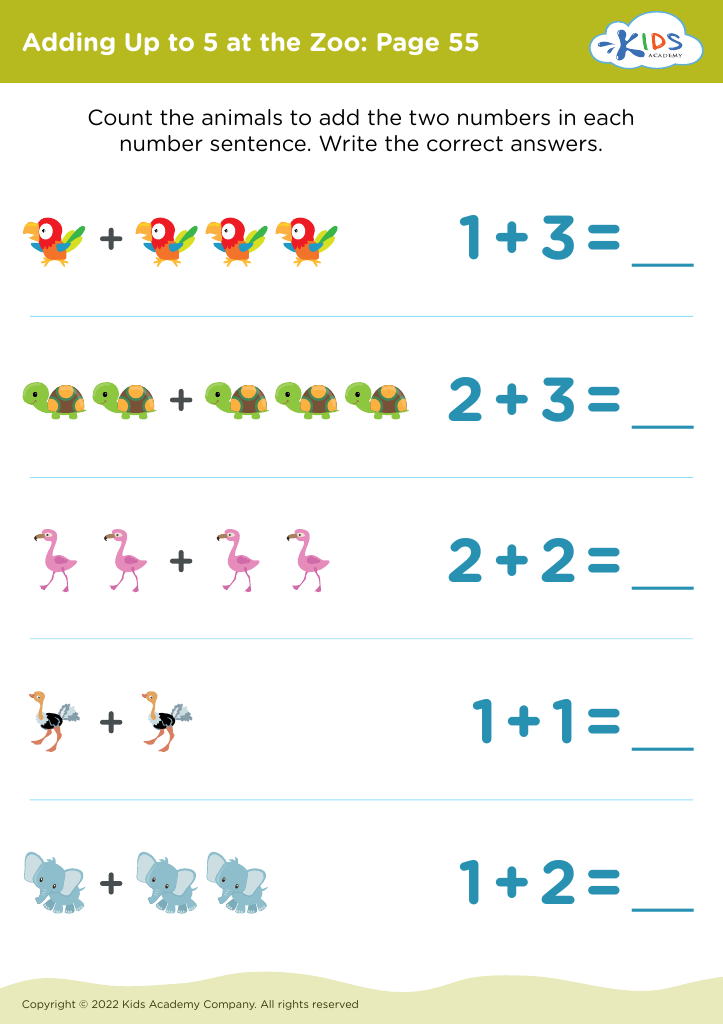
Adding Up to 5 at the Zoo: Page 55
Worksheet
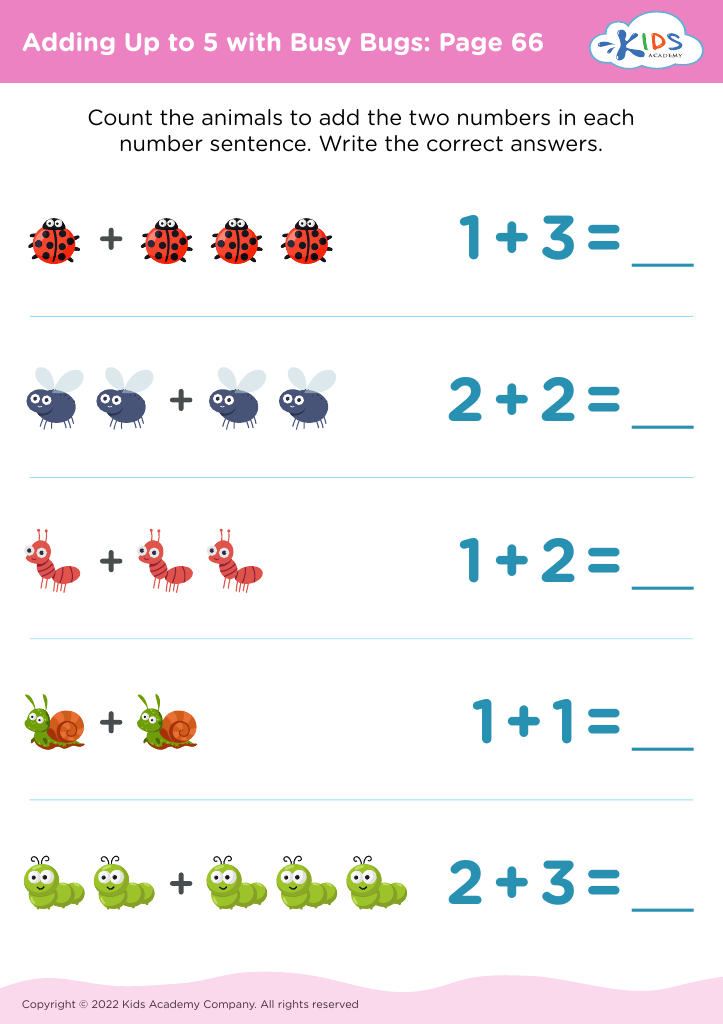
Adding Up to 5 with Busy Bugs: Page 66
Worksheet
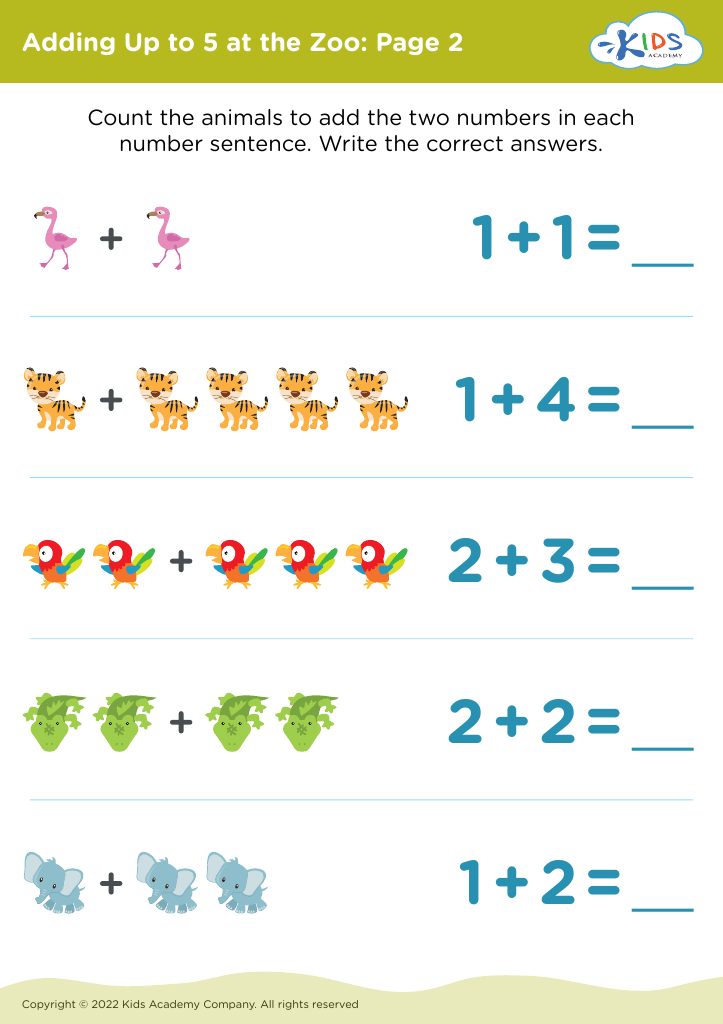
Adding Up to 5 at the Zoo: Page 2

Adding Up to 5 at the Zoo: Page 2

Adding Up to 5 at the Zoo: Page 2
Worksheet
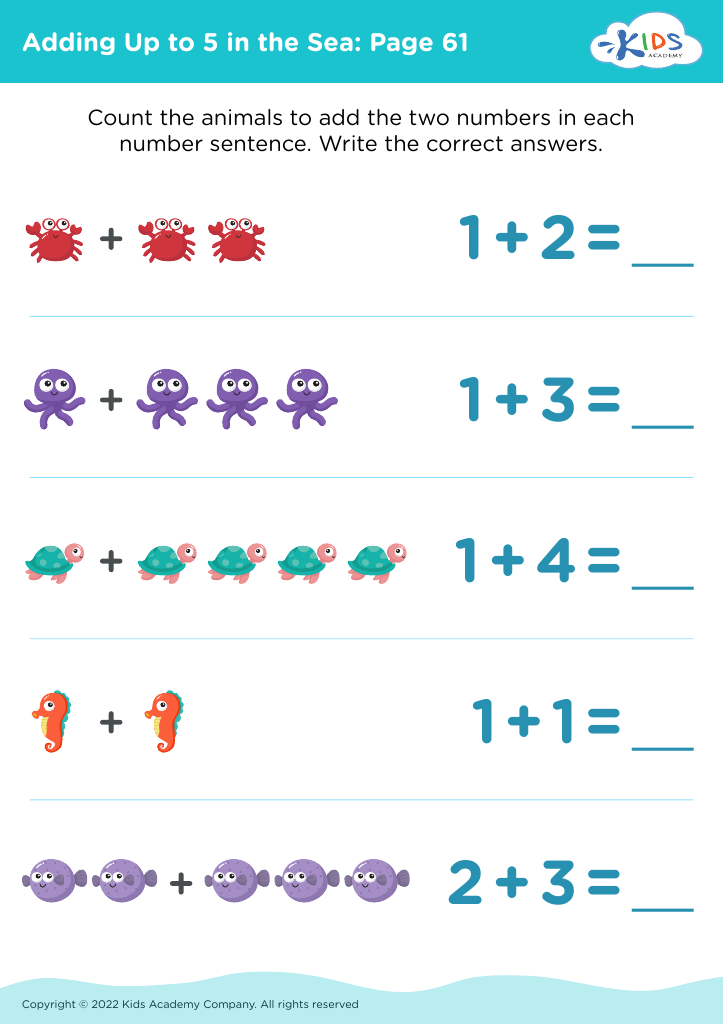
Adding Up to 5 in the Sea: Page 61
Worksheet


Basic addition skills are fundamental building blocks for young learners, shaping their understanding of numbers and mathematical concepts. For children aged 4-6, mastering these skills lays the groundwork for more advanced math topics in the future. By learning how to add, children develop critical thinking and problem-solving abilities that will be valuable throughout their education.

Parents and teachers should care about teaching basic addition because these skills foster confidence in young learners. Achieving mastery in something as fundamental as addition instills a sense of accomplishment, motivating children to engage further with math and enhancing their overall enthusiasm for learning. Additionally, early exposure to addition promotes cognitive development by encouraging pattern recognition, logical reasoning, and fine motor skills through hands-on activities such as counting objects or using educational games.

Moreover, these skills have real-world applications. Recognizing how addition relates to everyday tasks—like sharing snacks or counting toys—helps children understand the relevance of math in daily life, which can promote a positive attitude towards the subject as they grow older. Thus, prioritizing basic addition skills in early education establishes a strong foundation that supports lifelong learning and success in mathematics.