Check out this FREE Trial Lesson on Addition for age 4-6!

Exactly the Same, or Not

Favorites
With answer key
Interactive
  • 4-6
  • Basic Arithmetic
  • Addition
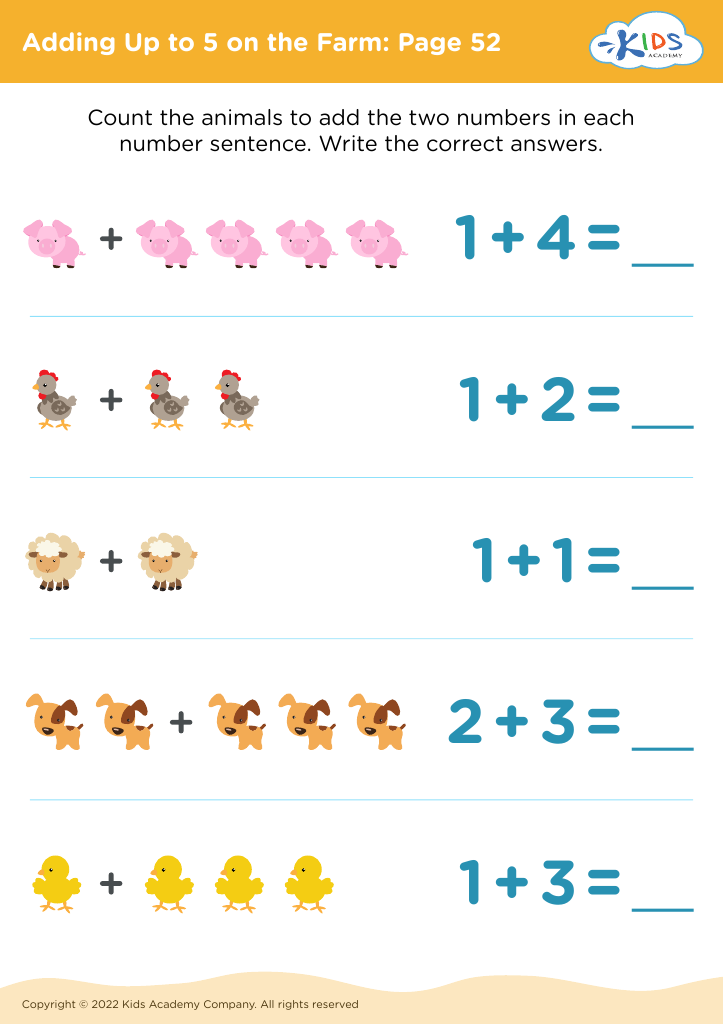
Adding Up to 5 on the Farm: Page 52
Worksheet
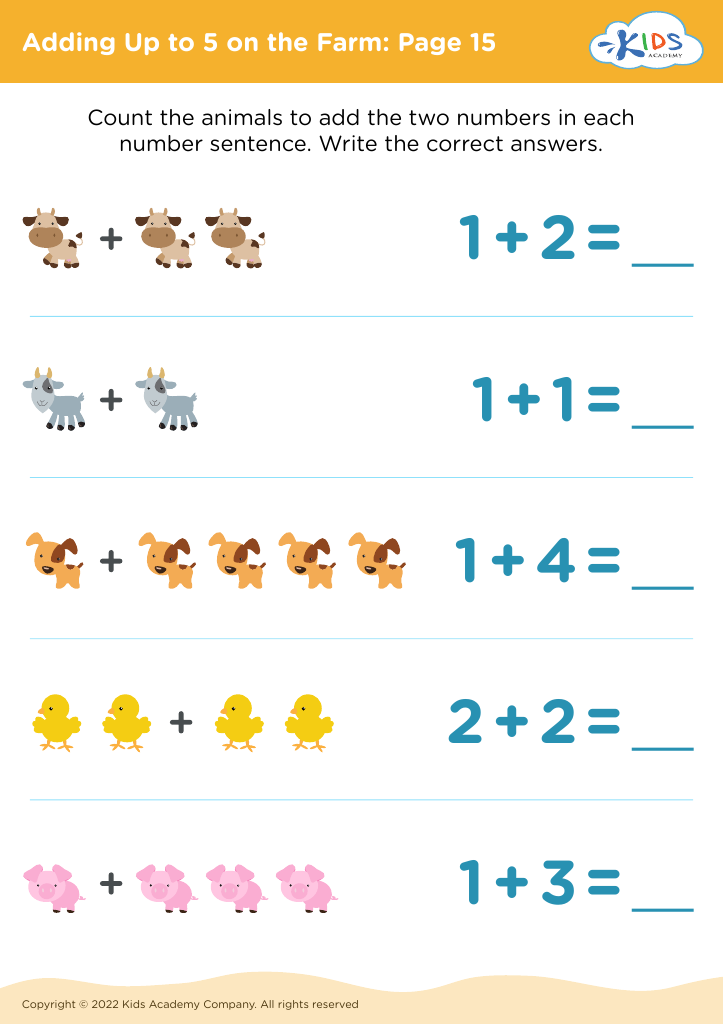
Adding Up to 5 on the Farm: Page 15
Worksheet
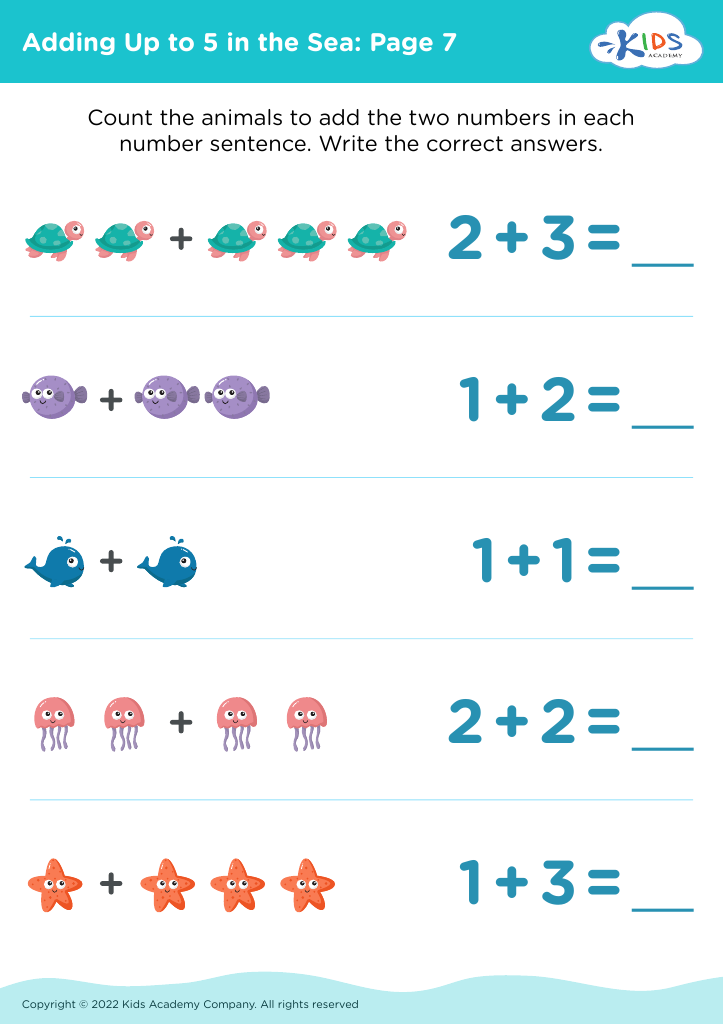
Adding Up to 5 in the Sea: Page 7

Adding Up to 5 in the Sea: Page 7

Adding Up to 5 in the Sea: Page 7
Worksheet
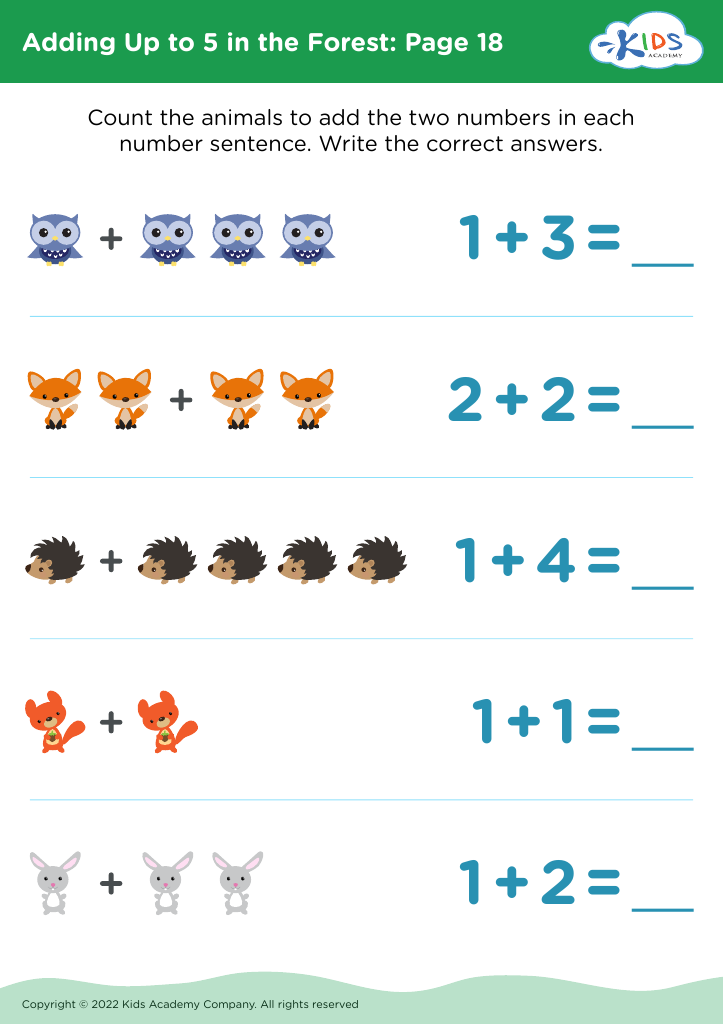
Adding Up to 5 in the Forest: Page 18
Worksheet
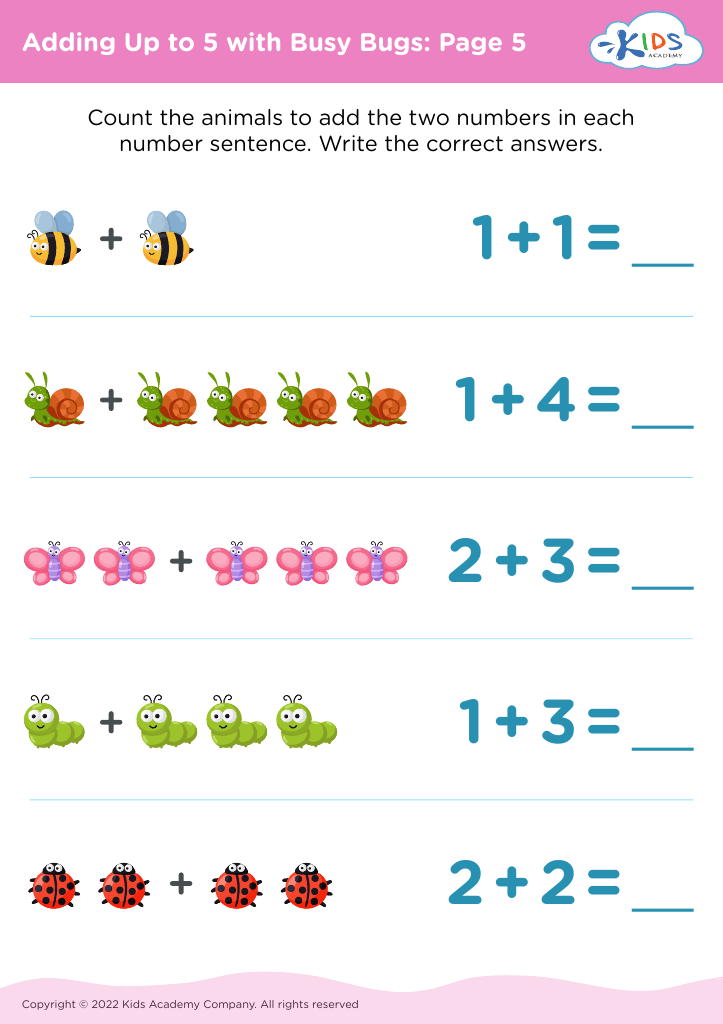
Adding Up to 5 with Busy Bugs: Page 5
Worksheet
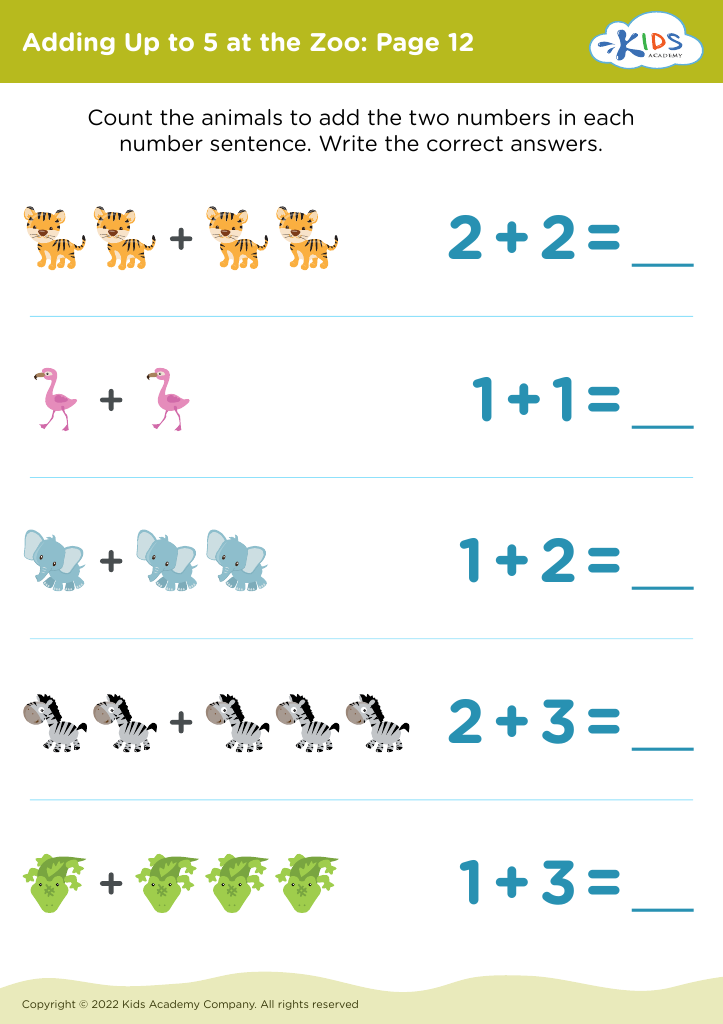
Adding Up to 5 at the Zoo: Page 12
Worksheet
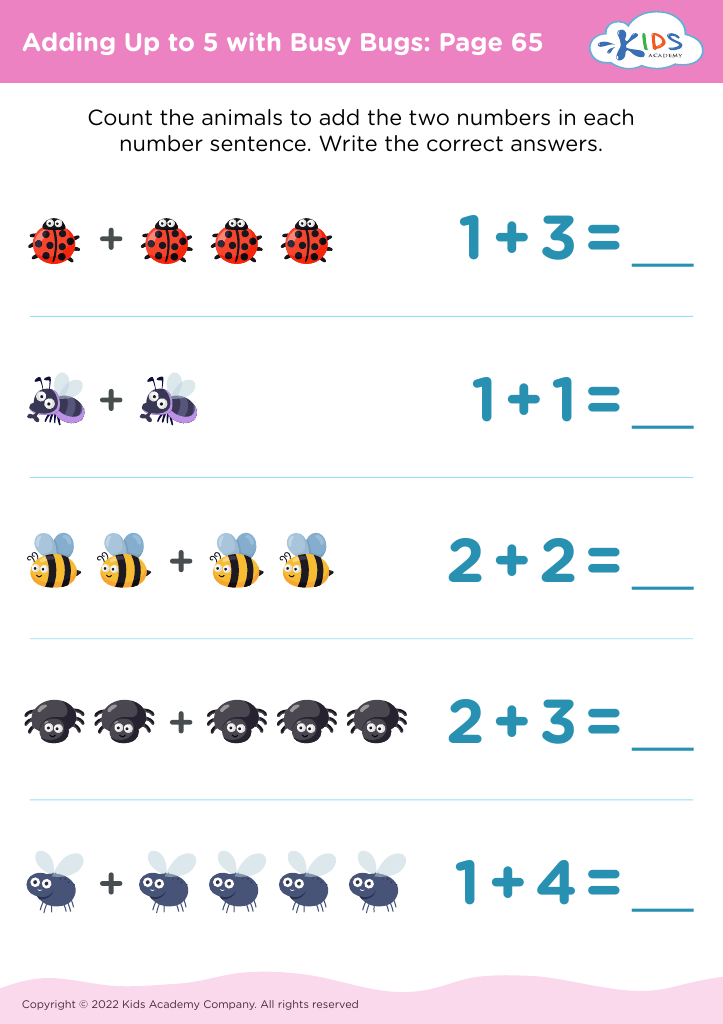
Adding Up to 5 with Busy Bugs: Page 65
Worksheet
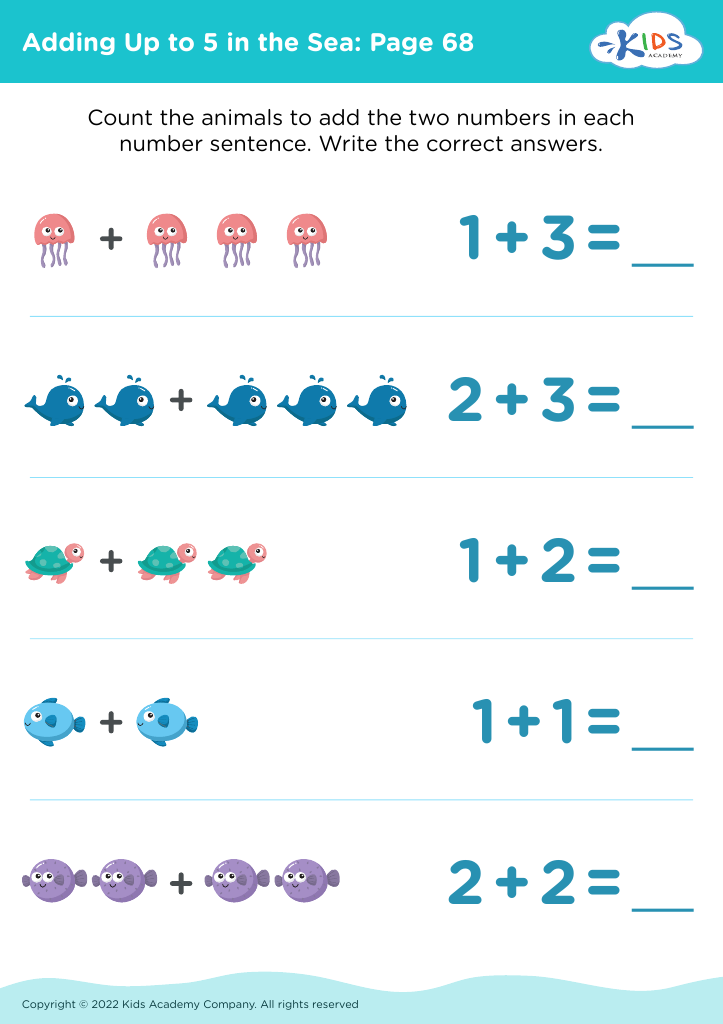
Adding Up to 5 in the Sea: Page 68
Worksheet
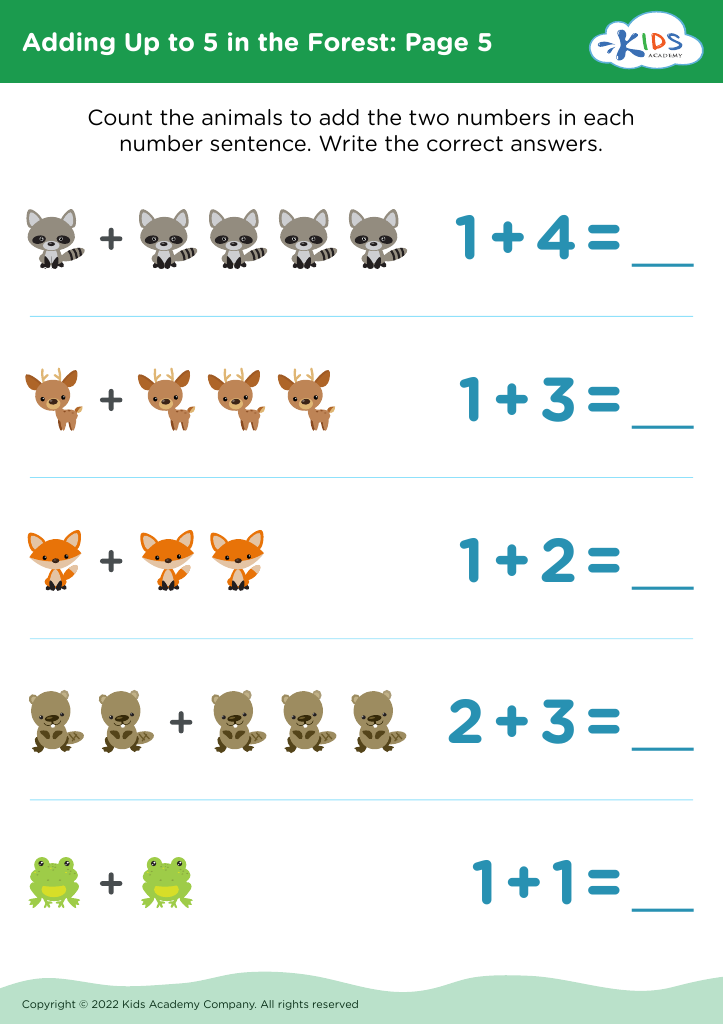
Adding Up to 5 in the Forest: Page 5
Worksheet
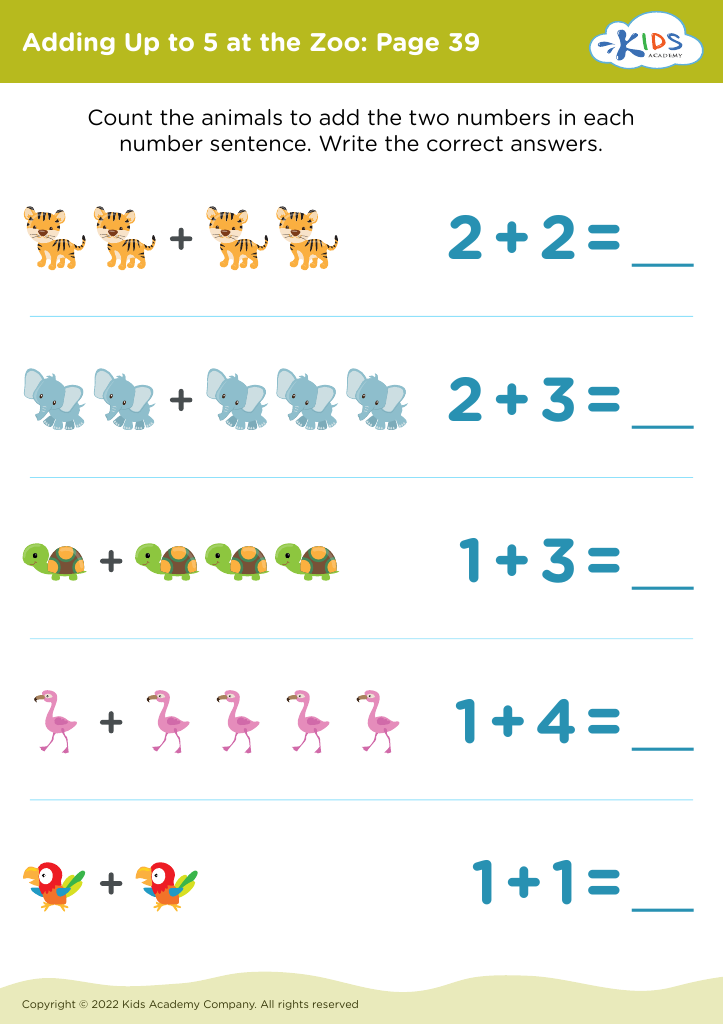
Adding Up to 5 at the Zoo: Page 39
Worksheet
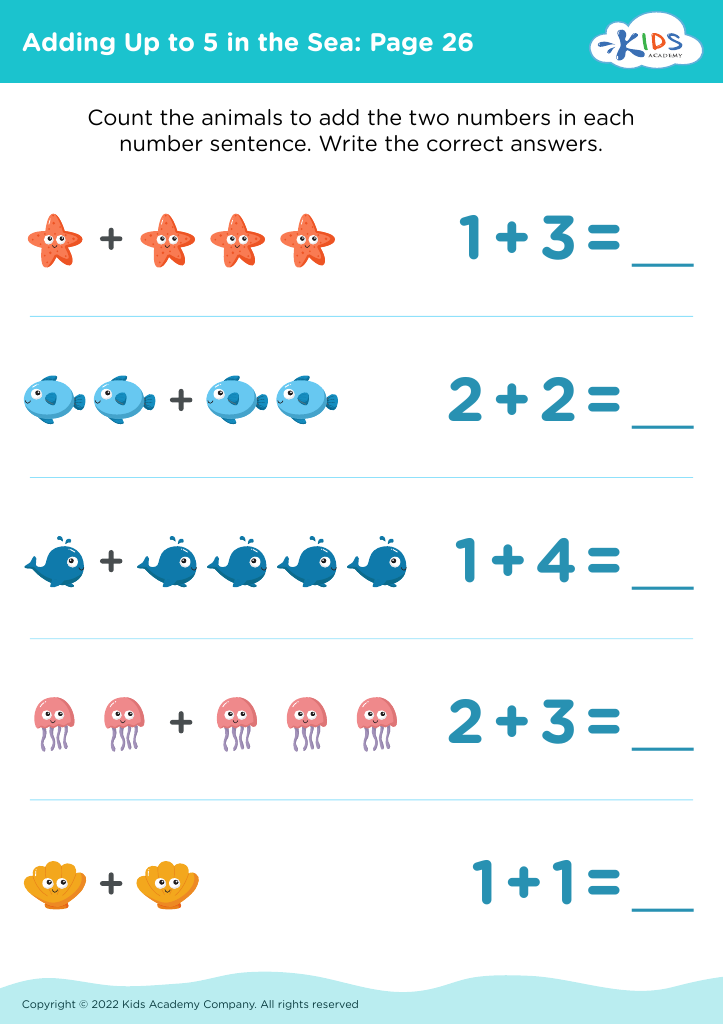
Adding Up to 5 in the Sea: Page 26
Worksheet
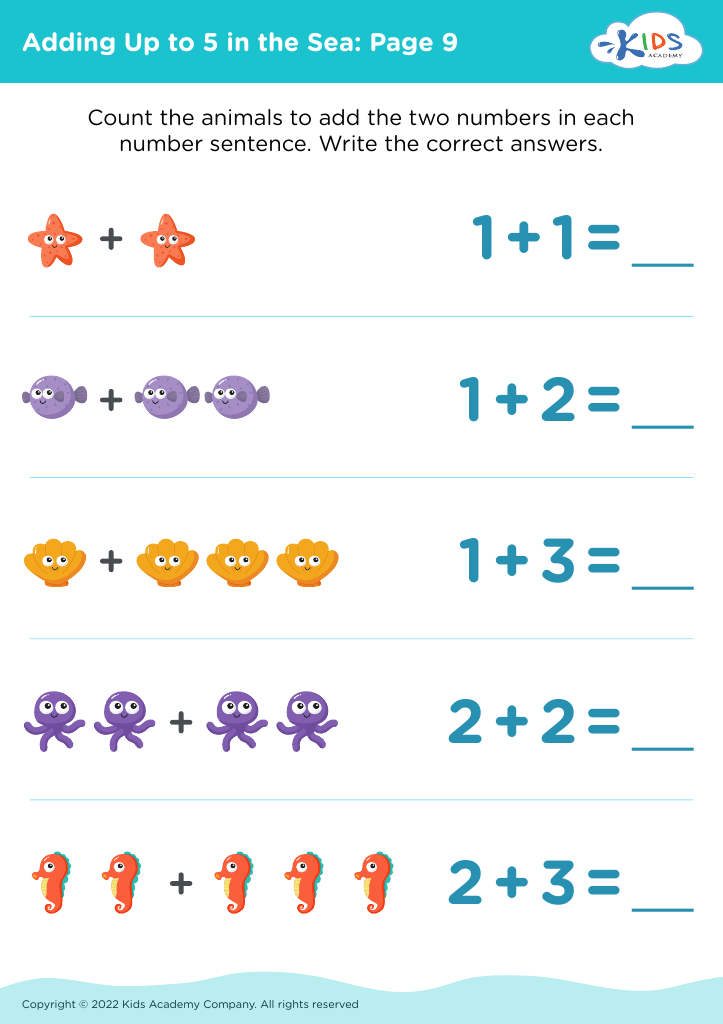
Adding Up to 5 in the Sea: Page 9

Adding Up to 5 in the Sea: Page 9

Adding Up to 5 in the Sea: Page 9
Worksheet


Basic arithmetic addition is a fundamental building block in early childhood education, particularly for children aged 4-6. During these formative years, children are naturally curious and eager to learn. Mastering addition fosters essential cognitive skills, including problem-solving and critical thinking. It lays groundwork not only for future mathematical concepts but also for everyday life skills, such as budgeting and measuring.

Moreover, learning addition in a fun and engaging manner can significantly enhance a child's confidence and interest in math. Parents and teachers can use games, visual aids, and interactive activities to make learning enjoyable, reinforcing the importance of math in real-world situations.

Additionally, developing a solid understanding of addition helps improve concentration and focus, which are crucial skills for academic success. Early competence in this area encourages a positive attitude toward learning, reducing anxiety or apprehension that may arise later in more complex mathematics. Furthermore, when children grasp basic arithmetic, it fosters a strong foundational relationship with numbers, leading to long-term academic achievement.

Overall, parents and teachers should prioritize teaching basic arithmetic addition, as it plays a vital role in children's cognitive, social, and emotional development.