Fine motor skills (writing) Addition Worksheets for Ages 4-6 - Page 2
32 filtered results
-
From - To
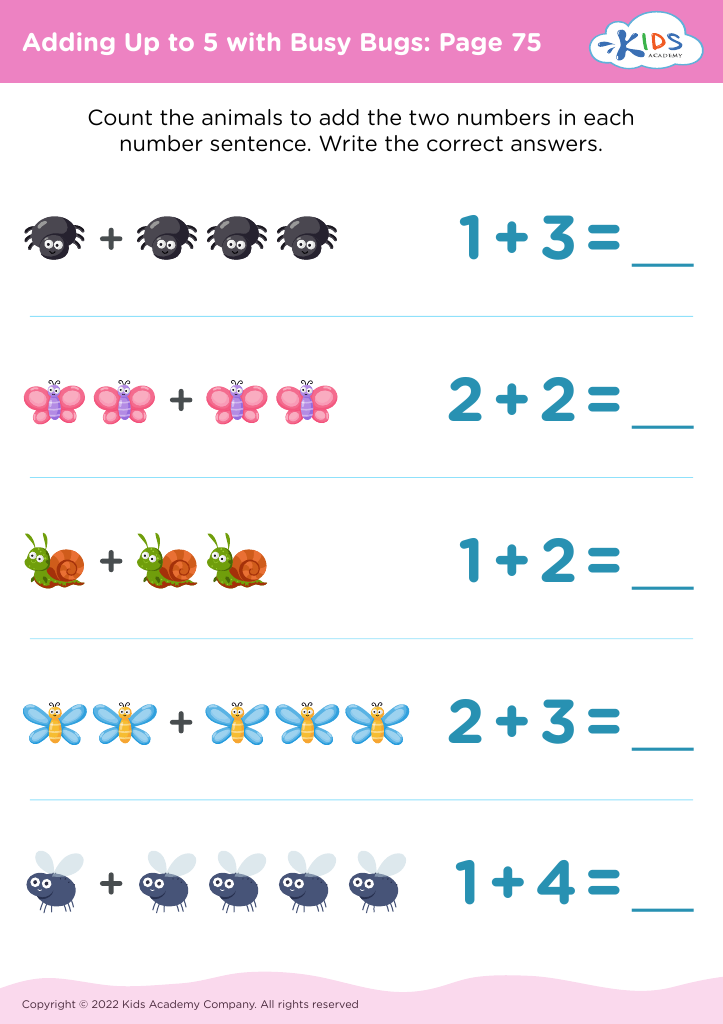
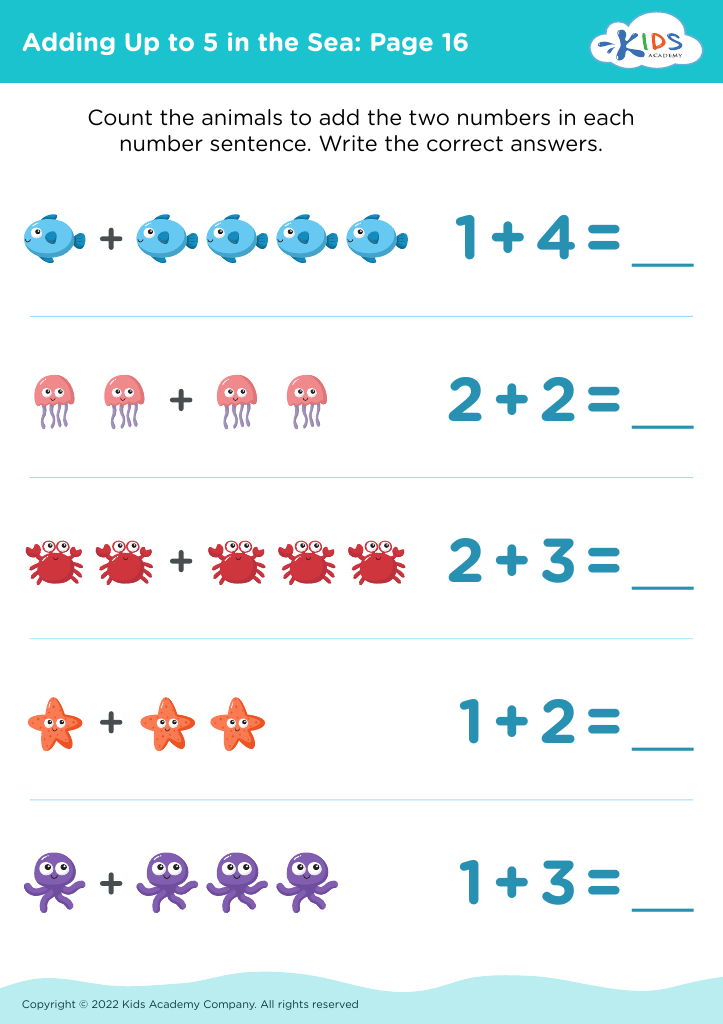
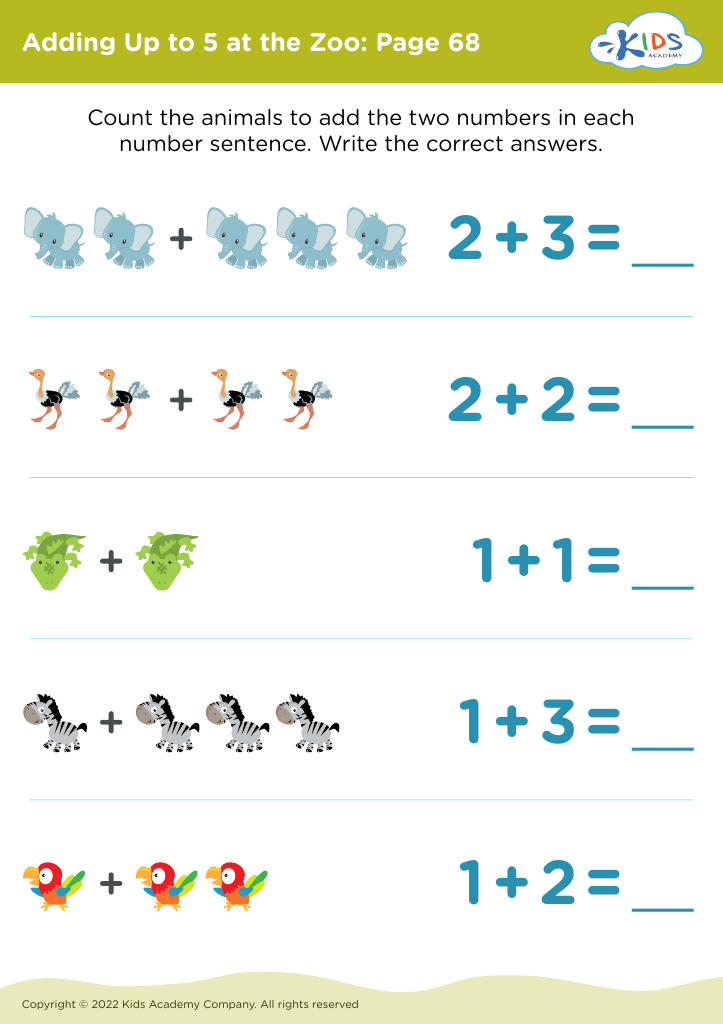
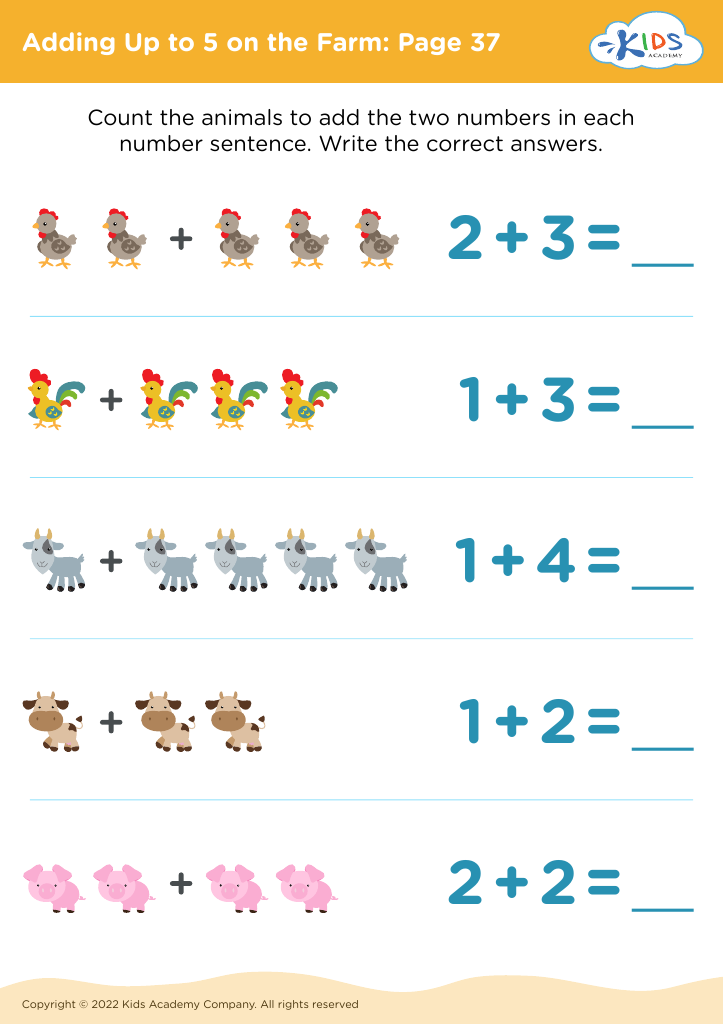
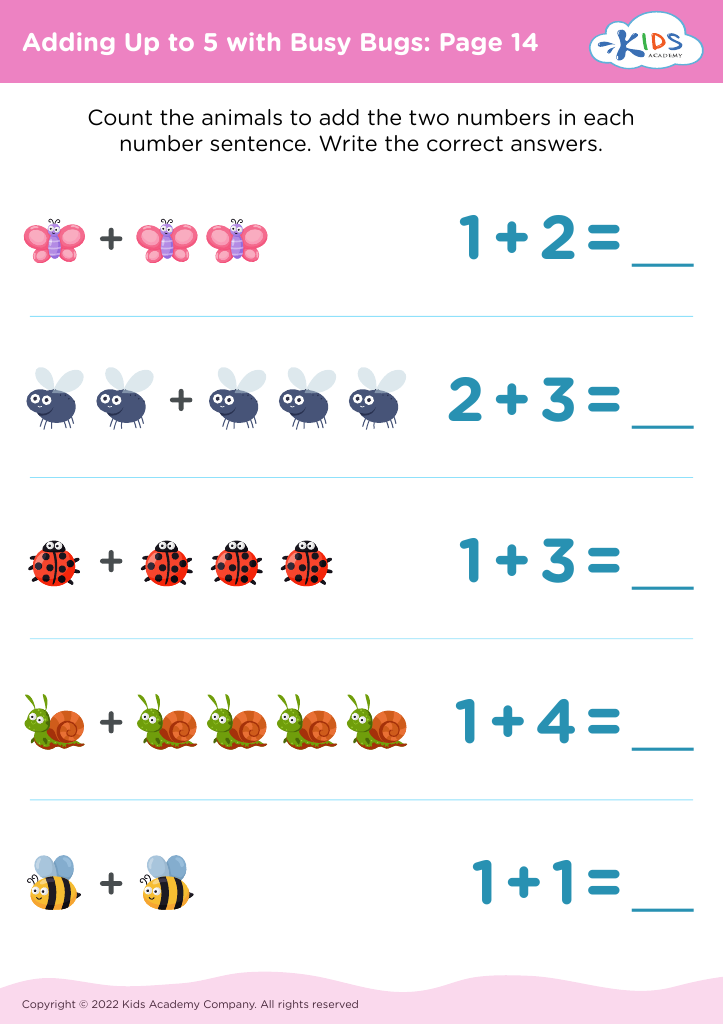
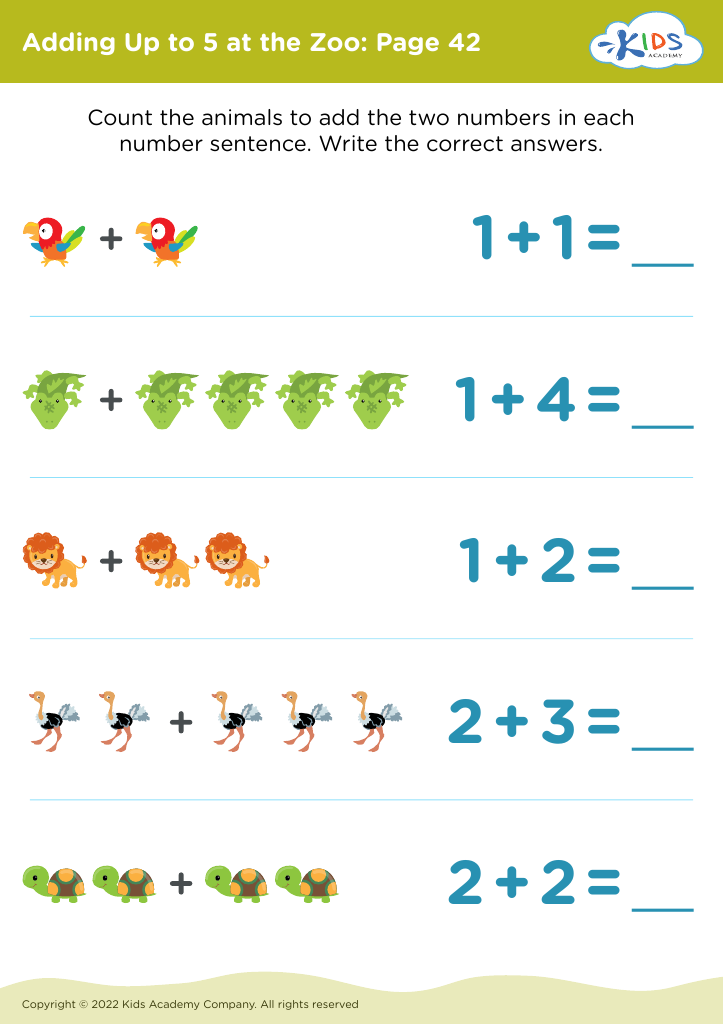
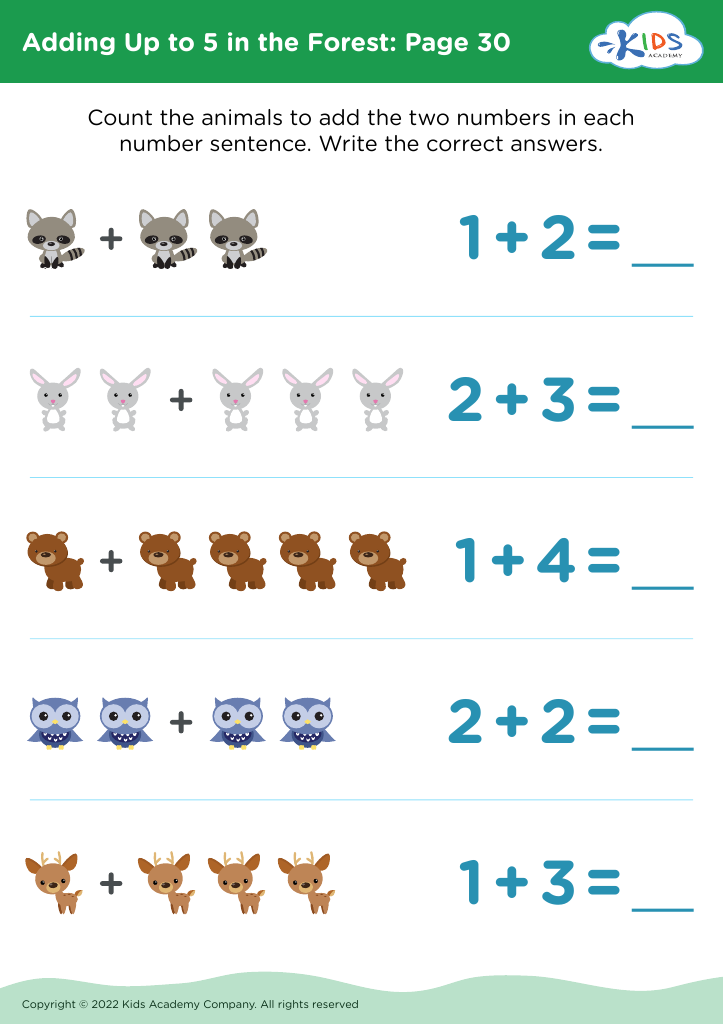
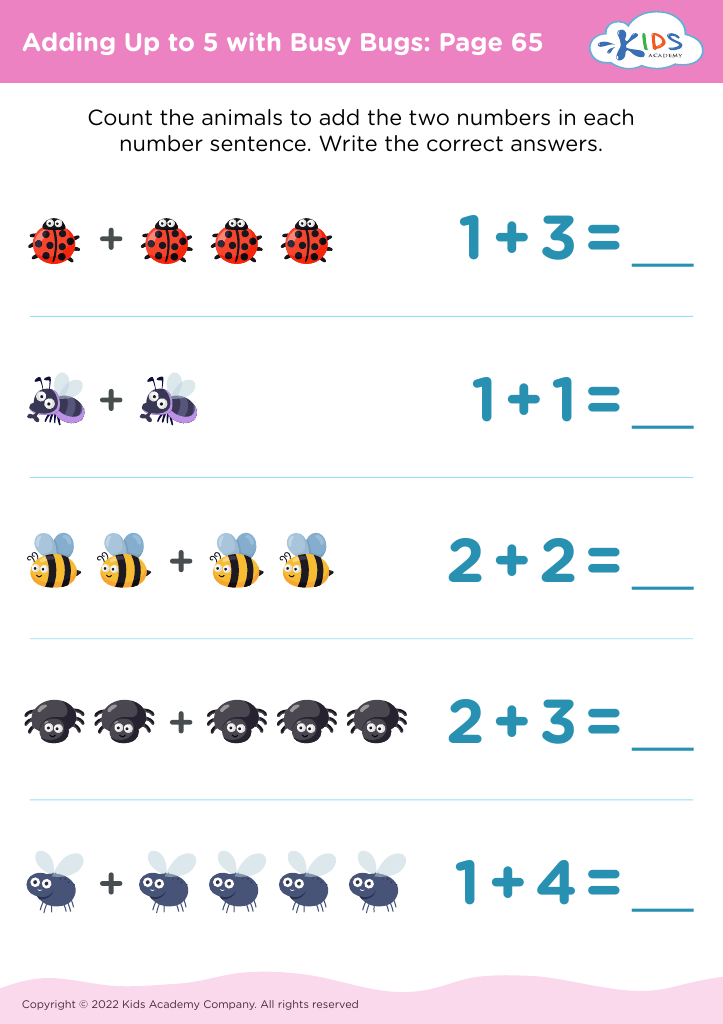








Developing fine motor skills for children aged 4-6, especially through activities like writing and drawing, is crucial for several reasons. Firstly, fine motor skills involve the coordination of small muscles, primarily in the hands and fingers, working in harmony with the eyes. This coordination forms the foundational skillset essential for daily tasks such as buttoning clothes, using utensils, and, importantly, writing legibly. Fine motor skills enhancement directly supports children's ability to express themselves through writing, facilitating better communication and academic success in their early schooling years.
Moreover, engaging in writing-related activities stimulates cognitive development. As children learn to form letters and shapes, they also begin to understand patterns, sequences, and symbolic representations. These are foundational elements of early mathematics and literacy. Writing exercises help solidify fine motor control, spatial awareness, and hand strength, which ease the transition into more complex tasks as they mature.
Furthermore, mastery of fine motor skills boosts children's confidence and willingness to participate in varied classroom activities. It fosters a sense of accomplishment and independence, encouraging a positive attitude towards learning. For teachers and parents, this means that focusing on these skills through regular, engaging exercises can lead to more productive and rewarding educational experiences.








