Understanding number value Addition Worksheets for Ages 4-6
3 filtered results
-
From - To
Enhance your child's mathematical foundation with our "Understanding Number Value Addition Worksheets" for ages 4-6! These engaging printables help kids grasp fundamental number concepts and addition skills. Designed to make learning fun, each worksheet includes colorful visuals and interactive exercises. Perfect for beginners, these activities encourage counting, number recognition, and simple addition, laying a strong groundwork for future math success. Ideal for both classroom and home use, these worksheets not only educate but also entertain, ensuring your young learner stays engaged and motivated. Start building essential math skills today with our expertly curated addition worksheets!
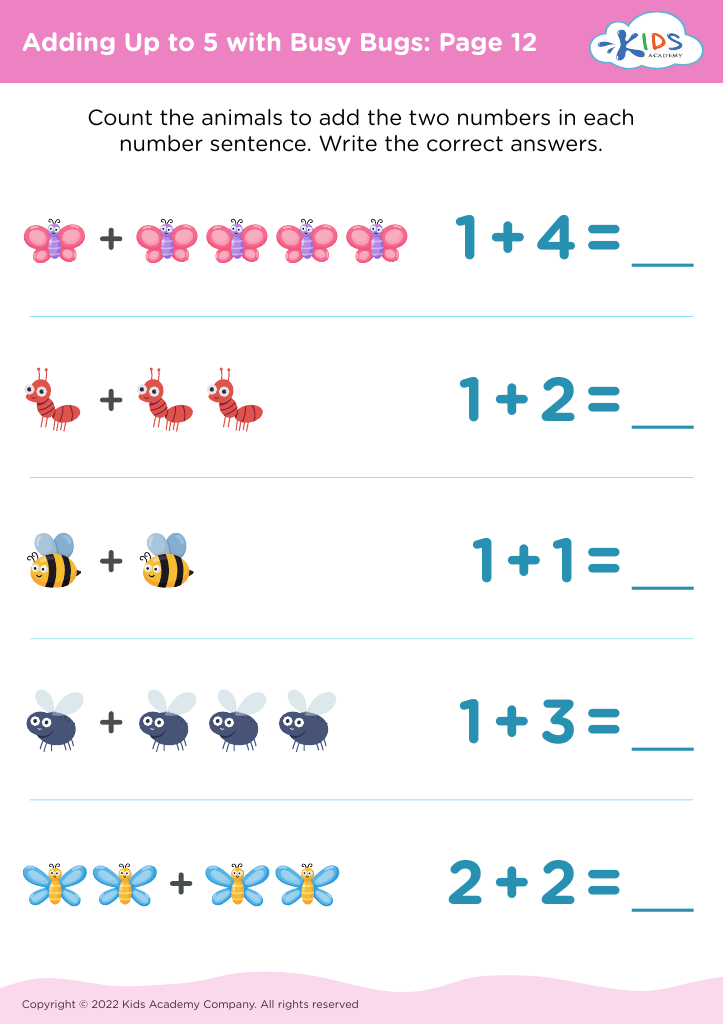
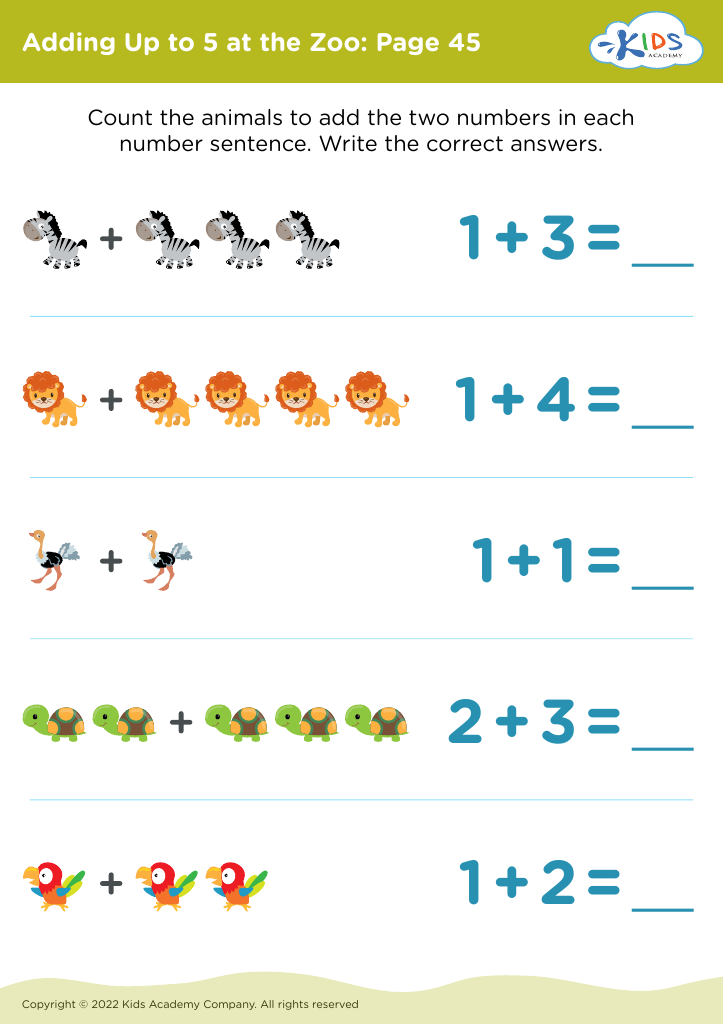
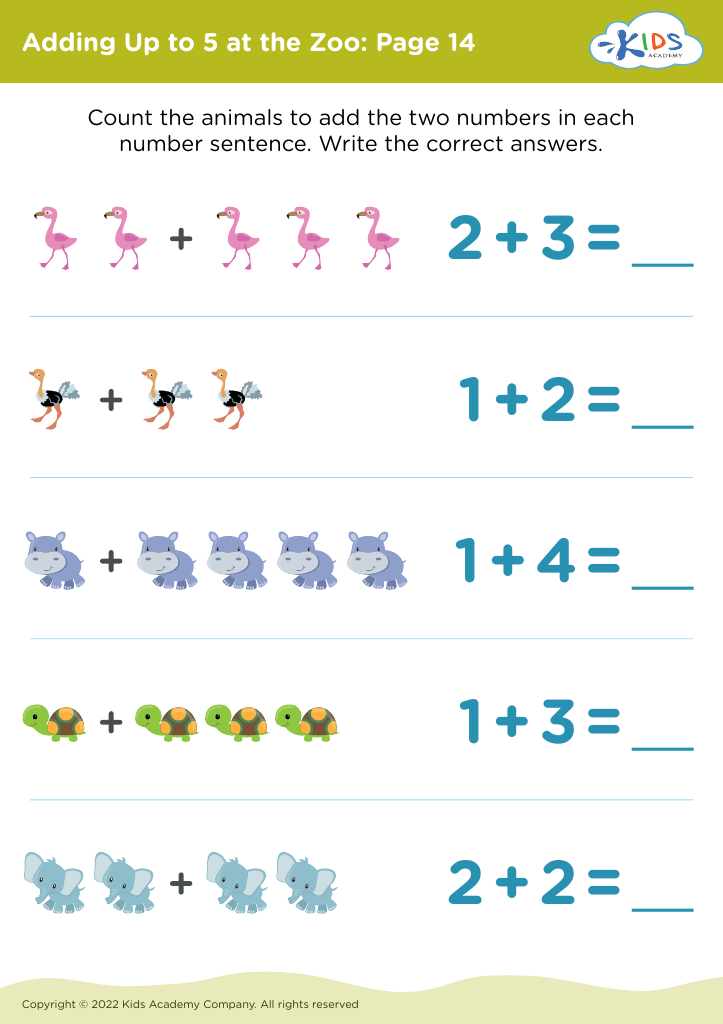








Understanding number value and addition at ages 4-6 lays the foundation for crucial mathematical skills that will benefit children throughout their educational journey and beyond. Young children are at a stage of rapid cognitive development; introducing these concepts early helps them grasp fundamental numerical relationships and operations more intuitively.
One key reason parents and teachers should care is that these early math skills are building blocks for more complex mathematical problem-solving. Comprehending number value allows children to recognize that numerals represent quantities, fostering numerical literacy. When they understand that five apples are more than three apples, they're developing an intrinsic sense of quantity, which is essential for more advanced math.
Additionally, addition, the process of combining quantities to find a total, helps children develop logical thinking and problem-solving skills. These are critical abilities that extend beyond math class and into everyday decision-making and reasoning. Good early math skills also correlate strongly with later academic success, not just in mathematics but across subjects, as they foster discipline and focused learning attitudes.
Early exposure to these concepts also boosts confidence. When children successfully navigate addition problems, they experience a sense of achievement, fostering a positive attitude toward learning. This encouragement can inspire a lifelong appreciation for mathematics and learning in general. Therefore, focusing on number value and addition with young children paves the way for their academic and personal growth.








