Visual comprehension Addition Worksheets for Ages 4-6
7 filtered results
-
From - To
Welcome to our Visual Comprehension Addition Worksheets designed for children aged 4-6! These engaging, printable worksheets are perfect for young learners to develop their addition skills through visual learning. Children will analyze pictures, identify quantities, and match them with correct sums, enhancing their comprehension and arithmetic abilities. Each worksheet is crafted to captivate young minds with colorful designs and interactive exercises, making math fun and accessible. Our resources promote critical thinking and are aligned with educational standards, ensuring a solid foundation for early math success. Download our Visual Comprehension Addition Worksheets today and watch your child's confidence in math soar!
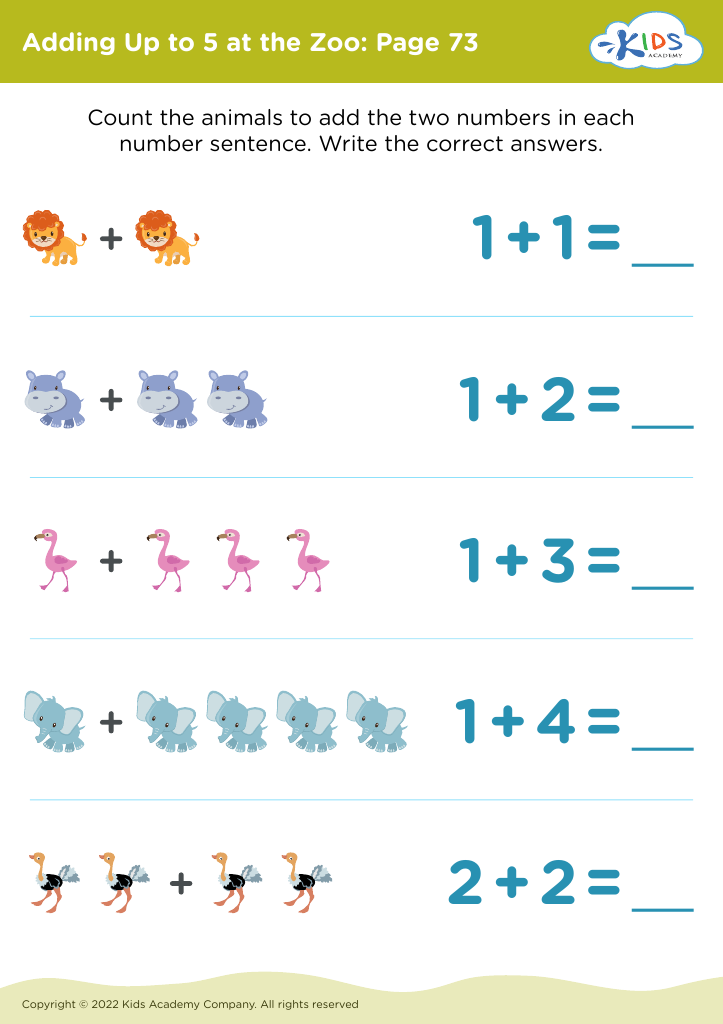
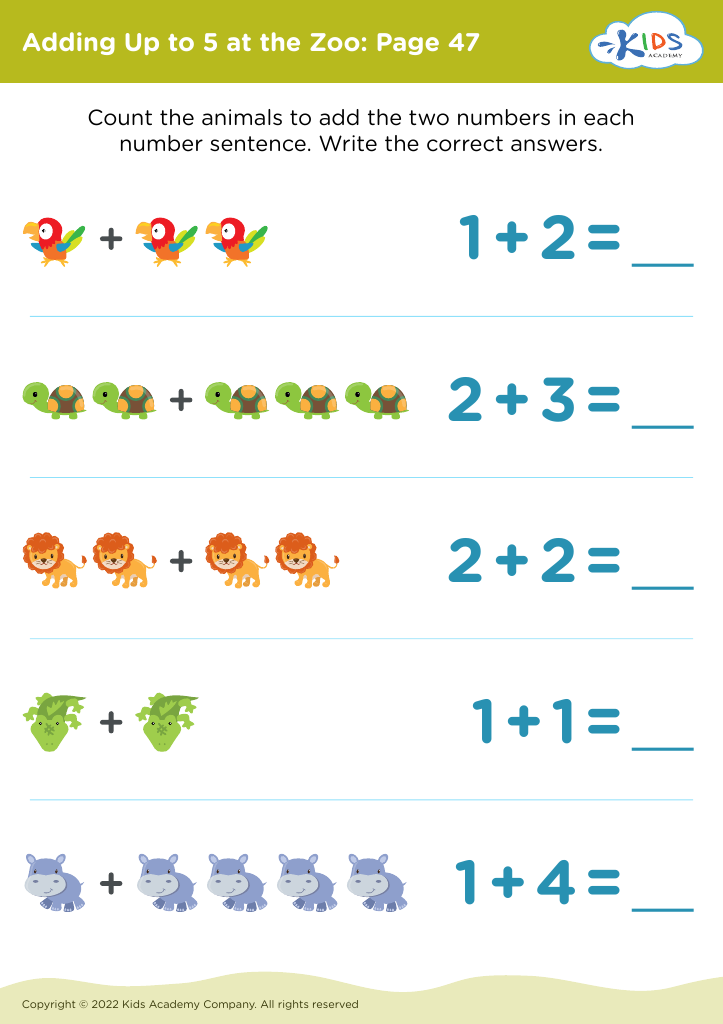
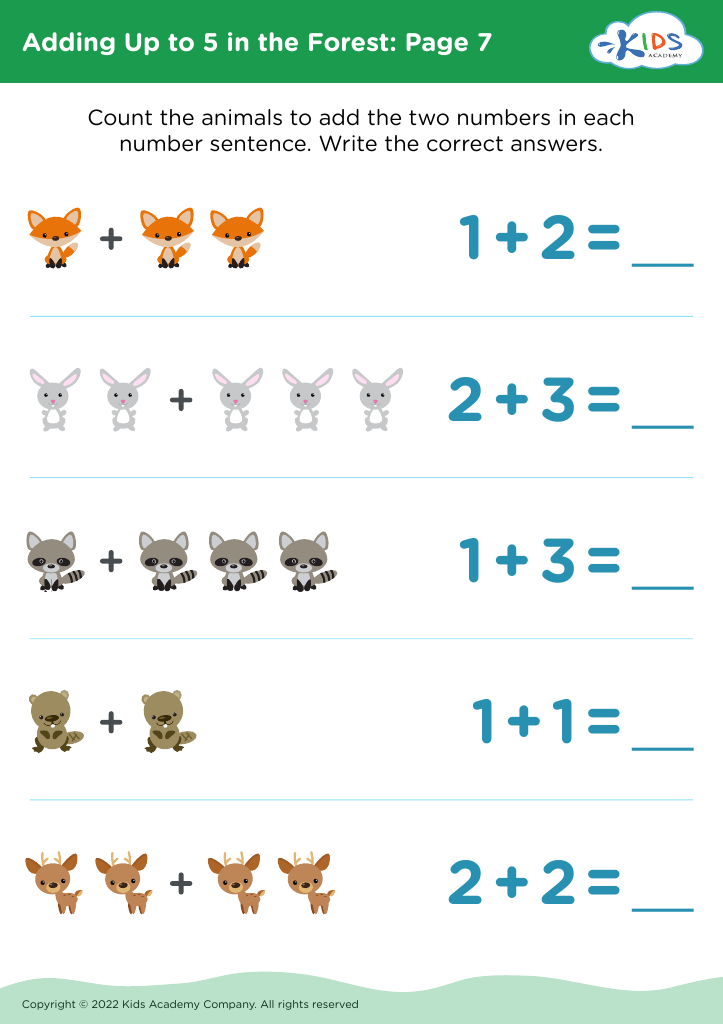
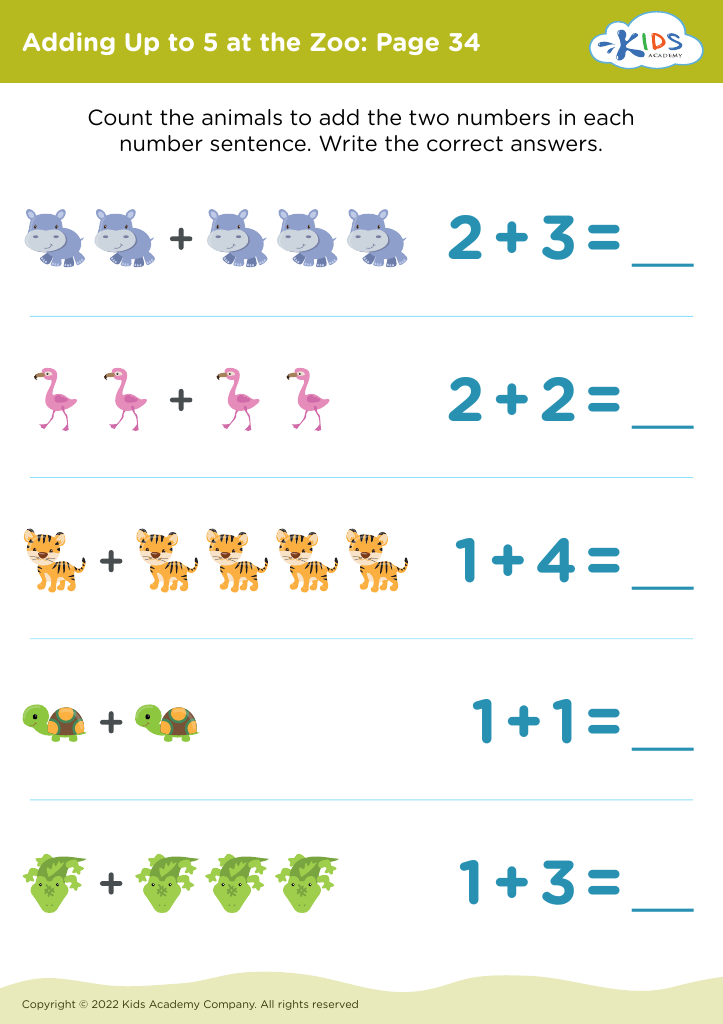
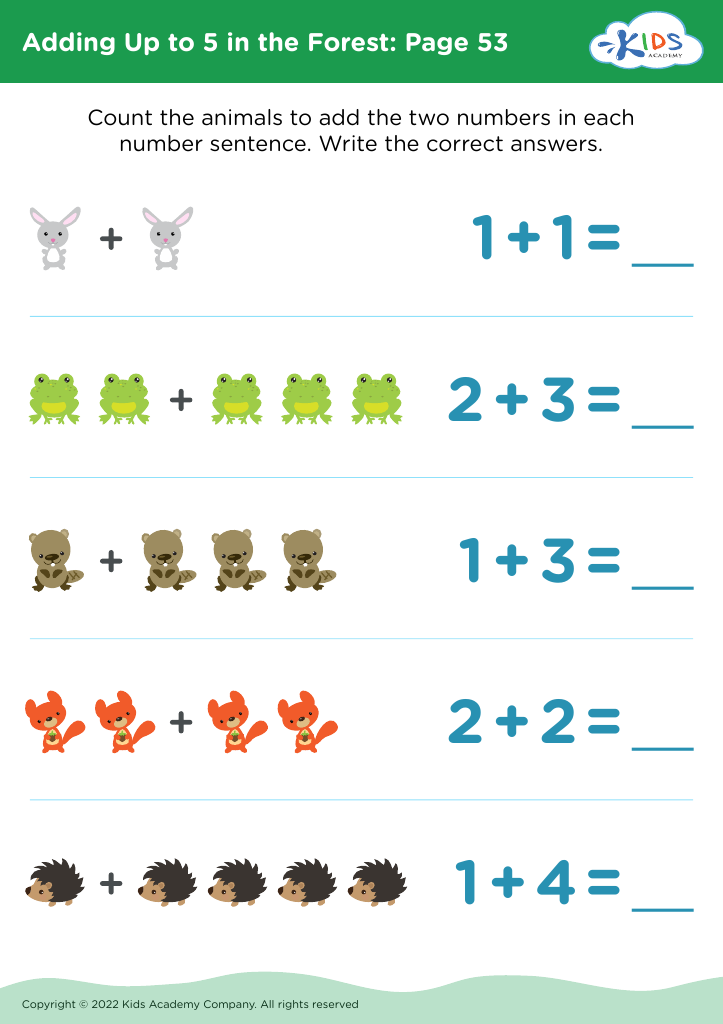
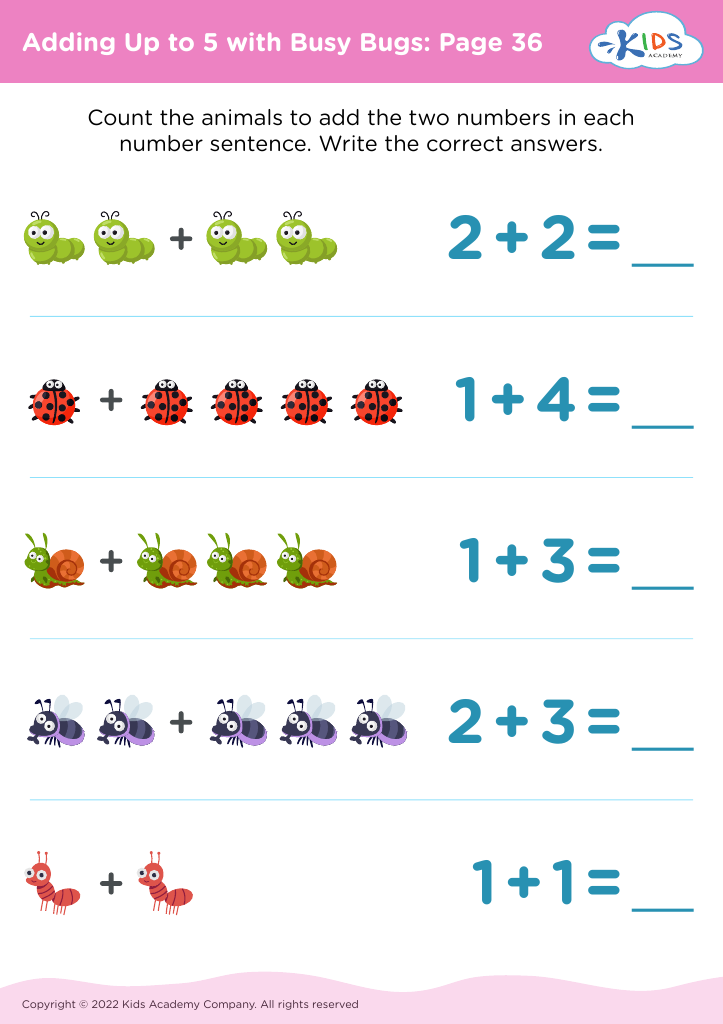
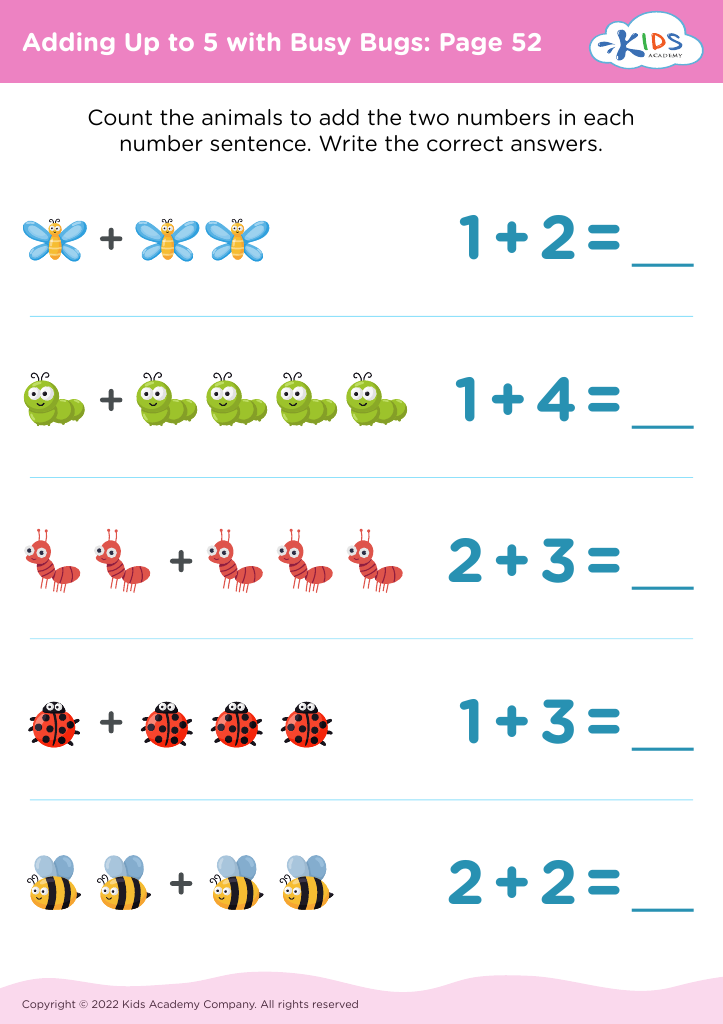








Visual comprehension is a crucial skill for children aged 4-6, especially when it comes to mastering addition conceptually. Understanding visual representations of numbers helps young learners make connections between numerical symbols and tangible quantities. This foundational skill not only fosters a stronger grasp of mathematical concepts but also enhances critical thinking and problem-solving abilities.
Parents and teachers should care about visual comprehension in addition because young children are naturally visual learners. Engaging them with visual aids, such as counters, fingers, or drawings, enables them to see how numbers come together, making abstract concepts more concrete. This approach builds confidence and a positive attitude toward math, reducing math anxiety as they progress in their education.
Additionally, developing visual comprehension lays the groundwork for more complex math skills, ensuring that children are not just memorizing math facts but truly understanding the underlying principles. Encouraging creativity through engaging and fun visual activities helps maintain children's interest and enjoyment in learning. Overall, prioritizing visual comprehension in addition provides children with essential tools that foster academic success and a lifelong love for learning. The early years are pivotal, and investing in these skills pays dividends in their future educational journey.








