Visual learning reinforcement Addition Worksheets for Ages 4-6
5 filtered results
-
From - To
Enhance your child's understanding of fundamental addition concepts with our Visual Learning Reinforcement Addition Worksheets, specially designed for ages 4-6. These engaging worksheets incorporate colorful visuals and interactive elements to make math fun and accessible. By connecting numerical values with visual cues, young learners will grasp addition in a concrete way, building a strong foundation for future learning. Ideal for classrooms or at home, our resources empower children to practice and reinforce their addition skills with confidence. Explore a variety of exercises that promote essential problem-solving abilities while keeping your little ones motivated. Start their math journey today and watch them thrive!
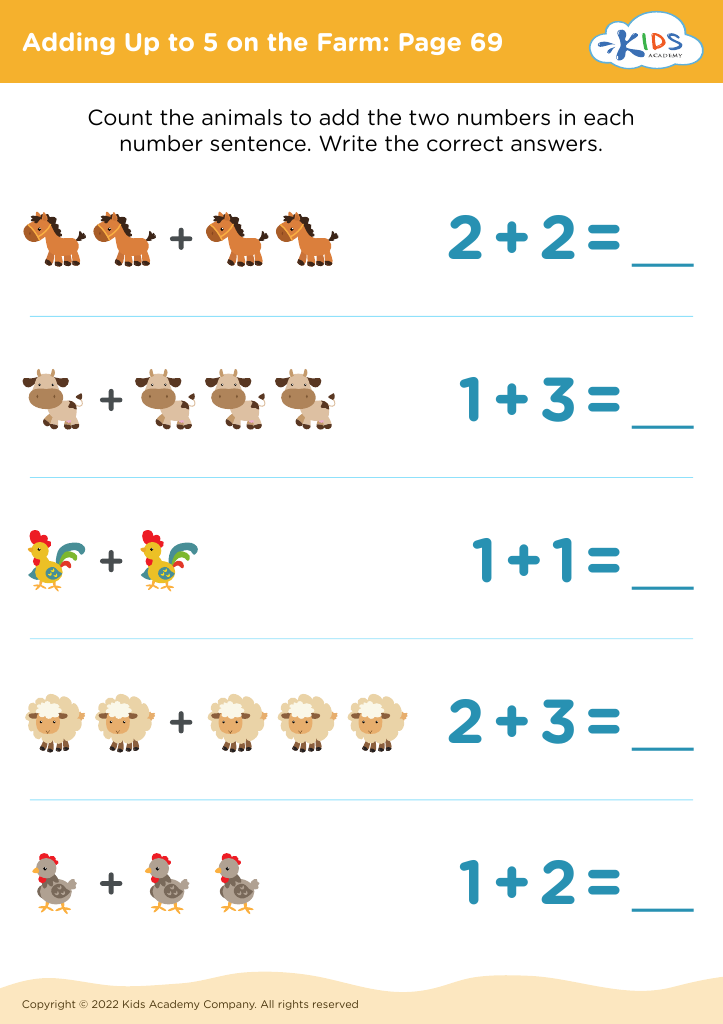
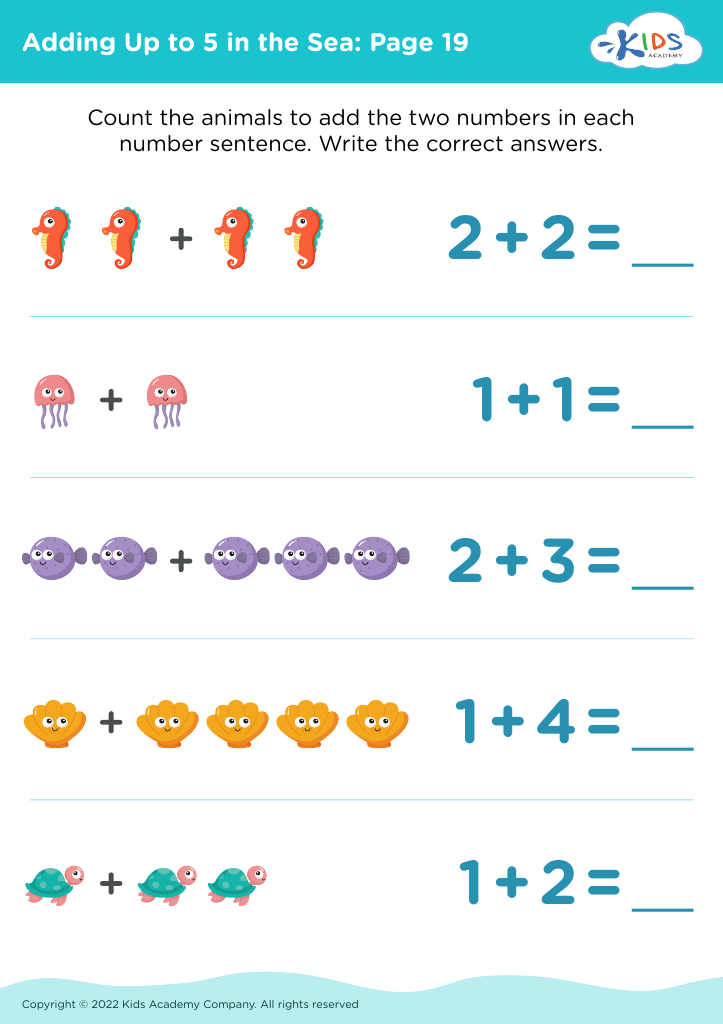
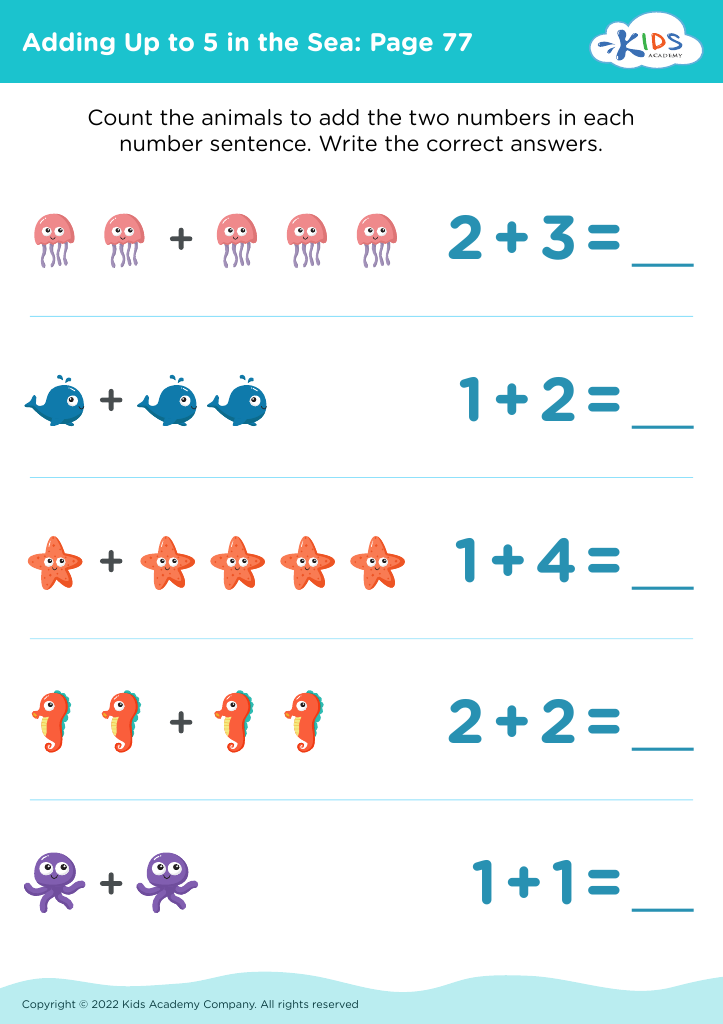
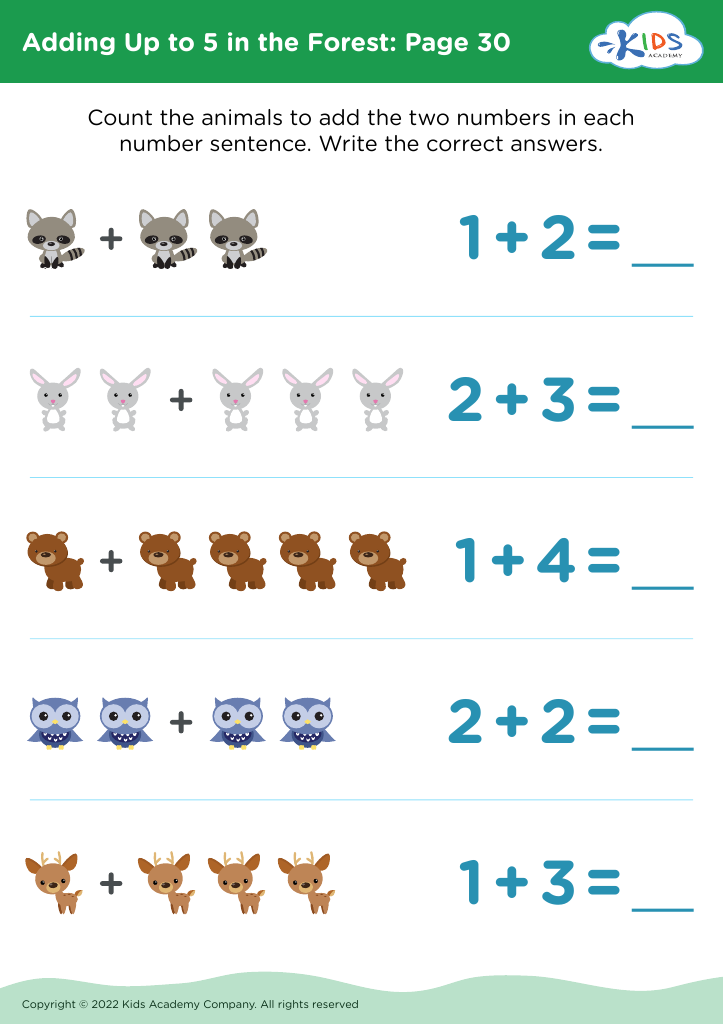
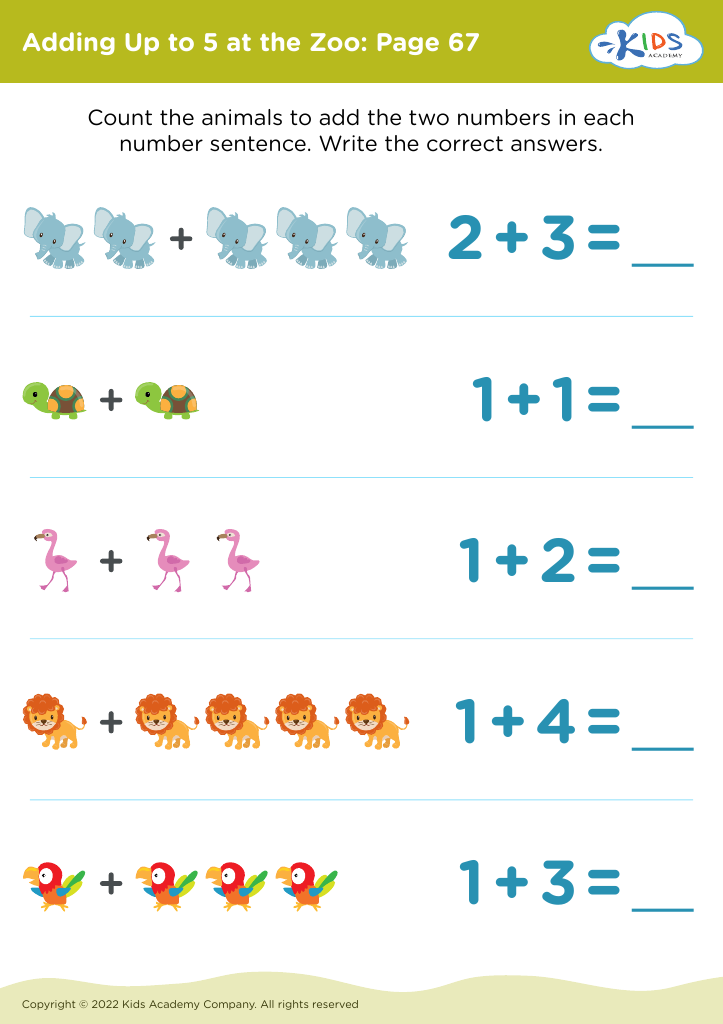








Parents and teachers should prioritize visual learning reinforcement for addition in children aged 4-6 because this approach significantly enhances comprehension and retention of mathematical concepts. At this developmental stage, young learners are often more engaged when information is presented visually, such as through colorful charts, illustrations, or manipulatives like blocks and beads.
Visual aids help simplify abstract concepts by providing concrete representations. For example, using apple visuals allows children to understand quantities and perform basic addition by physically counting and grouping items. This tactile engagement brings math to life and integrates kinesthetic learning, which is crucial at this age.
Moreover, incorporating visuals makes learning enjoyable and less intimidating, fostering a positive attitude toward math. When children visually connect elements, it strengthens their problem-solving skills and builds a foundation for more complex subjects later on.
Early mastery of addition through visual tools can significantly boost confidence in young learners, encouraging curiosity and a love for learning. Therefore, both parents and teachers play a vital role in integrating visual learning methods into early math education to ensure children develop essential skills that will benefit their academic journey.








