Financial literacy Coins Worksheets for Ages 4-6
4 filtered results
-
From - To
Introduce your little ones to the exciting world of finance with our Financial Literacy Coins Worksheets designed specifically for ages 4-6. These engaging and colorful worksheets help young learners grasp the concepts of money, coins, and their values. Through fun activities, children will identify different coins, practice counting, and understand basic transactions. Each worksheet is crafted to develop critical early math skills while also promoting financial awareness. Ideal for classroom settings or at-home learning, these resources ensure that young children lay a strong foundation in financial literacy as they prepare for a future of smart money management. Download now and start learning!
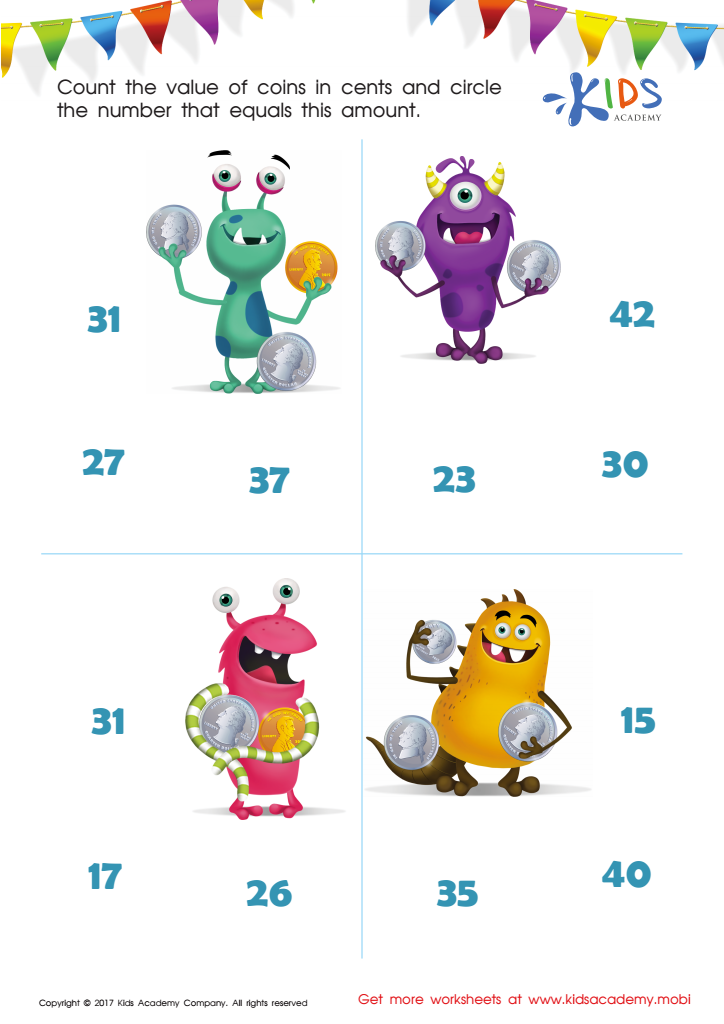
How Many Coins Money Worksheet
 Assign to My Students
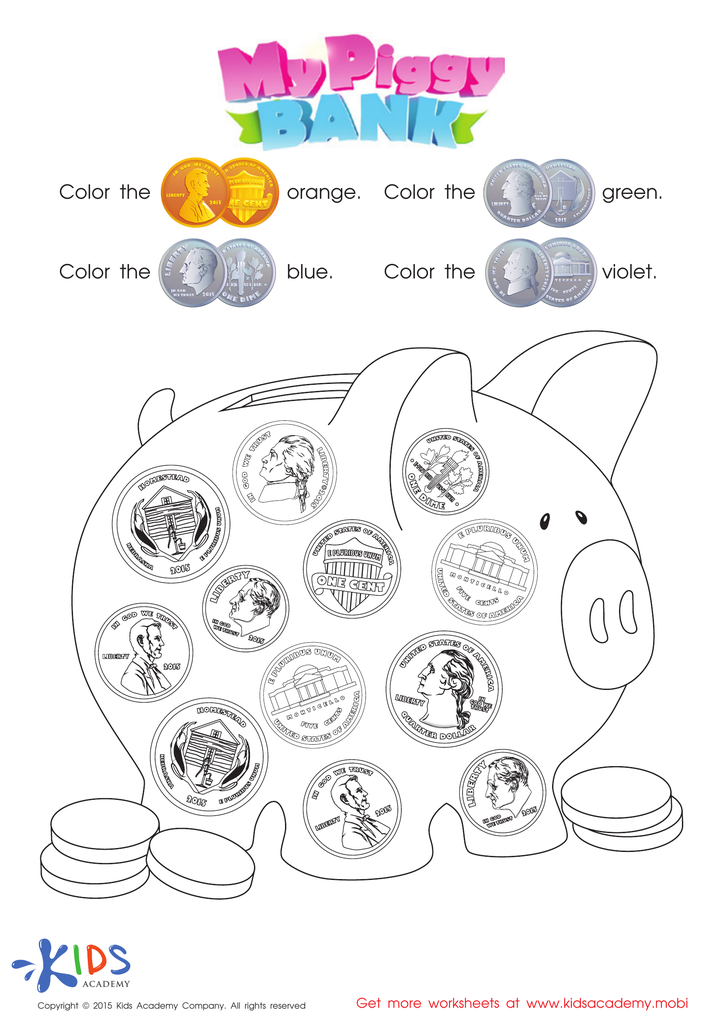
Recognizing Money Money Worksheet
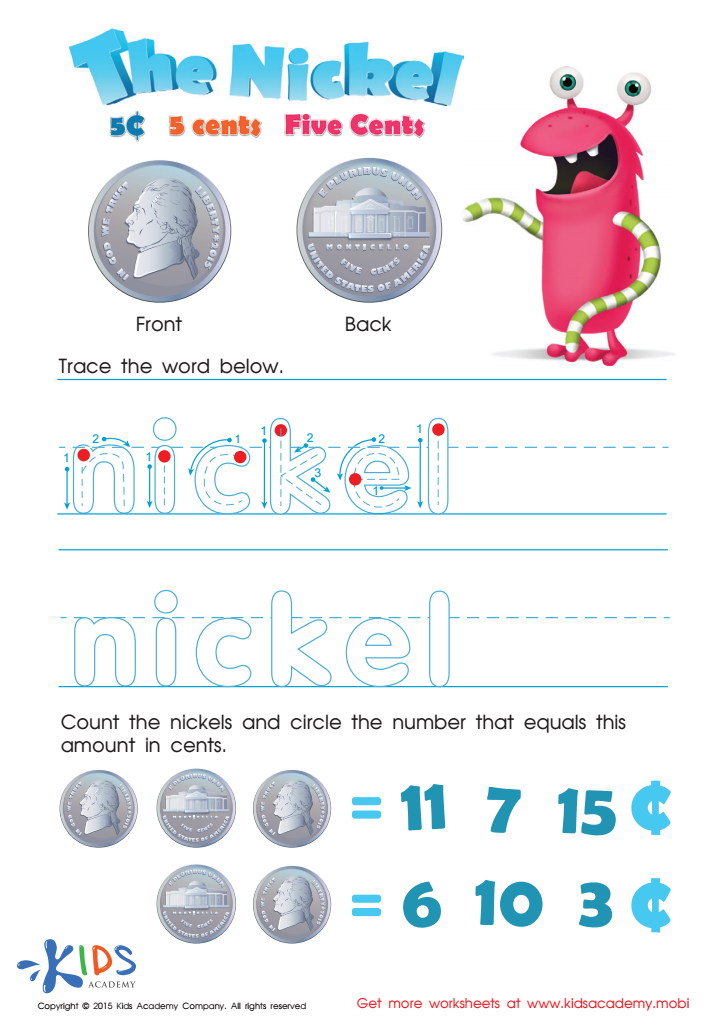
Five Cents or the Nickel Money Worksheet
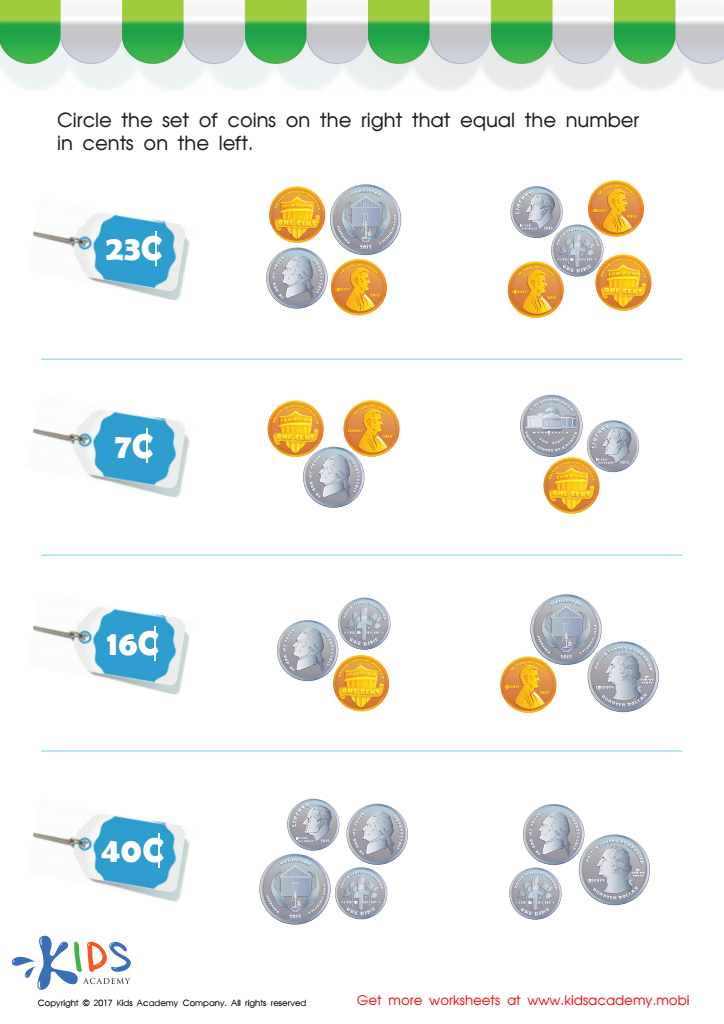
Picking the Coins You Need Money Worksheet








Teaching financial literacy to children aged 4-6 is crucial for their long-term understanding of money management, setting the foundation for healthy financial habits. At this tender age, kids are like sponges, absorbing information and making sense of the world around them. Introducing concepts such as coins and basic money handling not only helps them become familiar with the currency but also fosters important skills like counting, sorting, and recognizing value.
Incorporating playful activities related to coins, such as role-playing store scenarios or using catchy songs about money, makes learning engaging and fun. This early exposure teaches children the value of saving and spending wisely, preparing them for future financial decisions. By addressing these themes early, parents and teachers equip children with the knowledge to navigate money concepts effectively when they grow older.
Moreover, instilling financial literacy at a young age encourages a sense of responsibility and independence among children, which can mitigate future financial difficulties. Ultimately, investing time in teaching financial basics not only enriches cognitive development but also sets the stage for children to become informed, responsible adults who can contribute positively to society. Thus, it is imperative for parents and teachers to prioritize financial literacy within early childhood education.








