Money recognition Coins Worksheets for Ages 4-6
5 filtered results
-
From - To
Discover engaging Money Recognition Coins Worksheets designed for children ages 4-6! These fun, printable resources help young learners identify and understand different coins while developing essential math skills. Through various activities, your child will explore the value of coins, enhancing their counting and monetary skills in an interactive way. Ideal for both classroom and home learning, our worksheets promote early financial literacy and problem-solving, ensuring a solid foundation for future math concepts. Plus, the colorful designs captivate young minds, making learning fun! Start your child's money recognition journey today and give them the confidence to handle coins with ease!
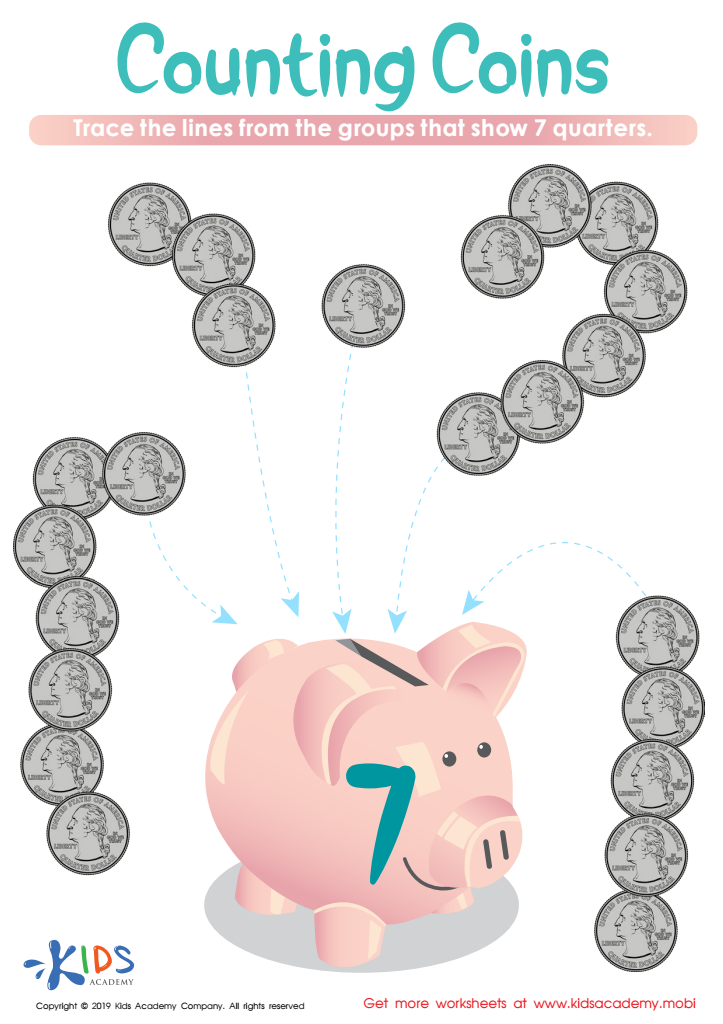
Counting Coins Worksheet
 Assign to My Students
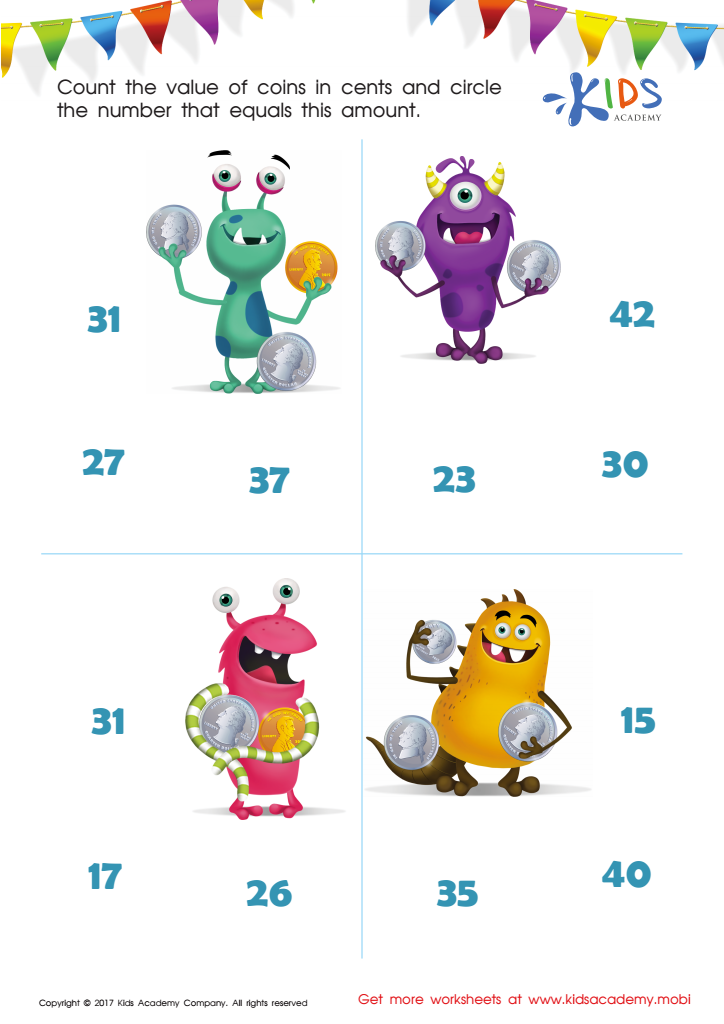
How Many Coins Money Worksheet
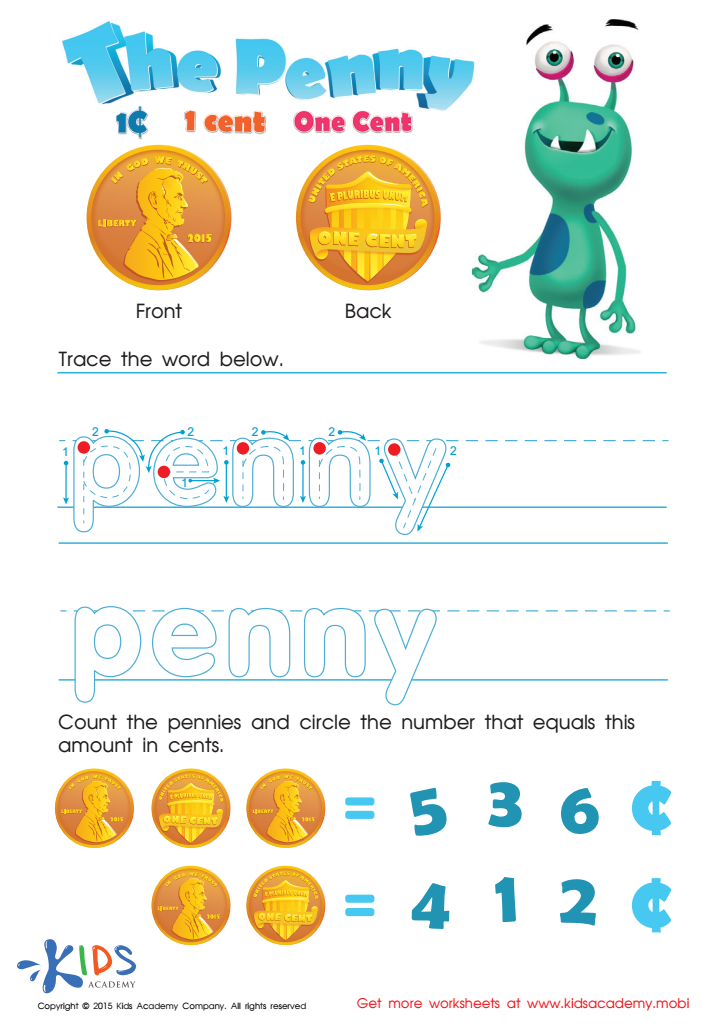
One Cent or the Penny Money Worksheet
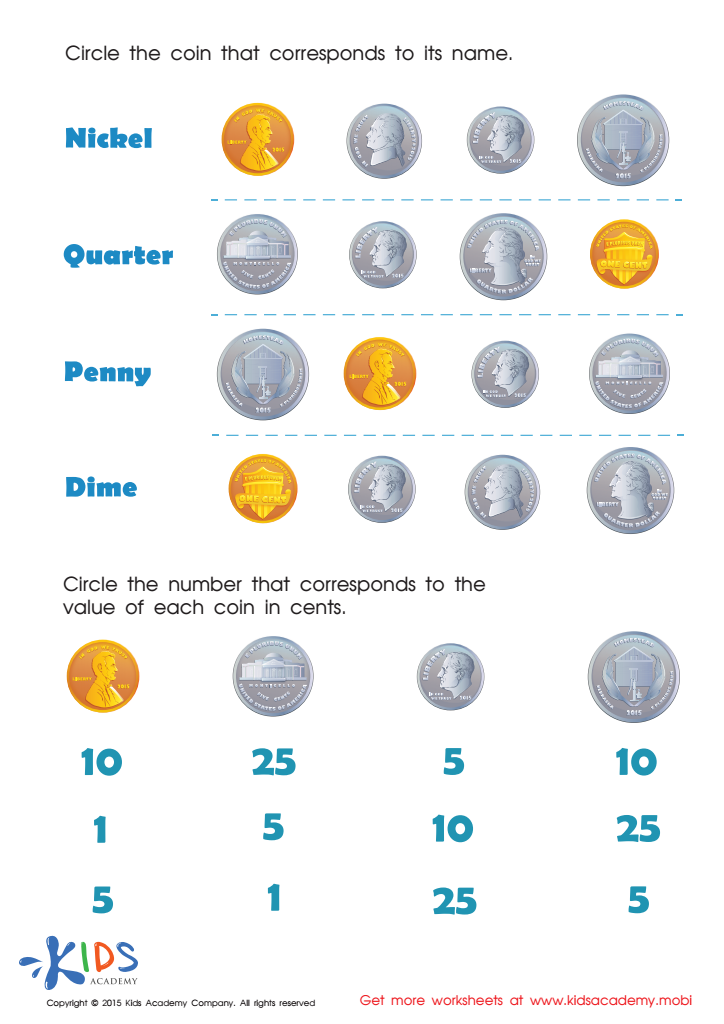
Coin Names and Values Money Worksheet
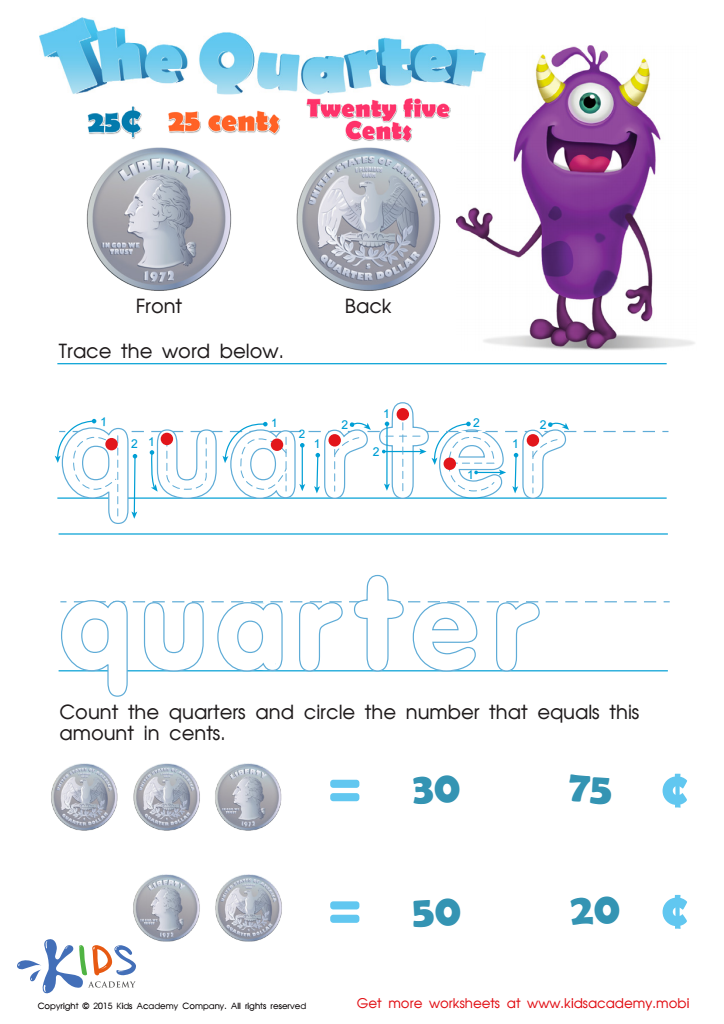
Twenty Five Cents or the Quarter Money Worksheet








Teaching money recognition, particularly coins, to children aged 4-6 is crucial for several reasons. First, this foundational skill promotes early numeracy and enhances children's understanding of value and counting. By recognizing coins and their worth, children develop essential math skills that serve as a basis for more complex financial concepts later on.
Additionally, money recognition is tied to real-world experiences. Children learn how to make purchases, understand change, and grasp the concept of saving versus spending, laying the groundwork for responsible financial behavior. When parents and teachers emphasize this skill, they empower children to make independent choices in their daily lives, fostering self-confidence and problem-solving abilities.
Moreover, early money education encourages language development as children learn the names and characteristics of different coins, enriching their vocabulary and communication skills. Engaging in activities like shopping simulations and games can make learning about money fun and interactive.
Lastly, as society increasingly emphasizes financial literacy, introducing these concepts at a young age equips children with the tools they need to navigate future financial decisions effectively. In summary, understanding money and coins encourages cognitive, social, and emotional growth, making it a priority for both parents and educators.








