Basic geometry knowledge Geometry Worksheets for Ages 4-6
3 filtered results
-
From - To
Discover the joy of learning geometry with our engaging worksheets designed for children aged 4-6! This collection focuses on basic geometry concepts, helping young learners recognize shapes, understand spatial relationships, and develop essential math skills. Each worksheet is tailored to capture your child’s interest while fostering their critical thinking through fun activities, including shape identification, tracing, and matching exercises. Our resources not only promote cognitive development but also enhance fine motor skills. Perfect for preschool and kindergarten settings, these interactive geometry worksheets ensure a solid foundation in math. Start your child’s journey in geometry today and watch them excel in their learning!
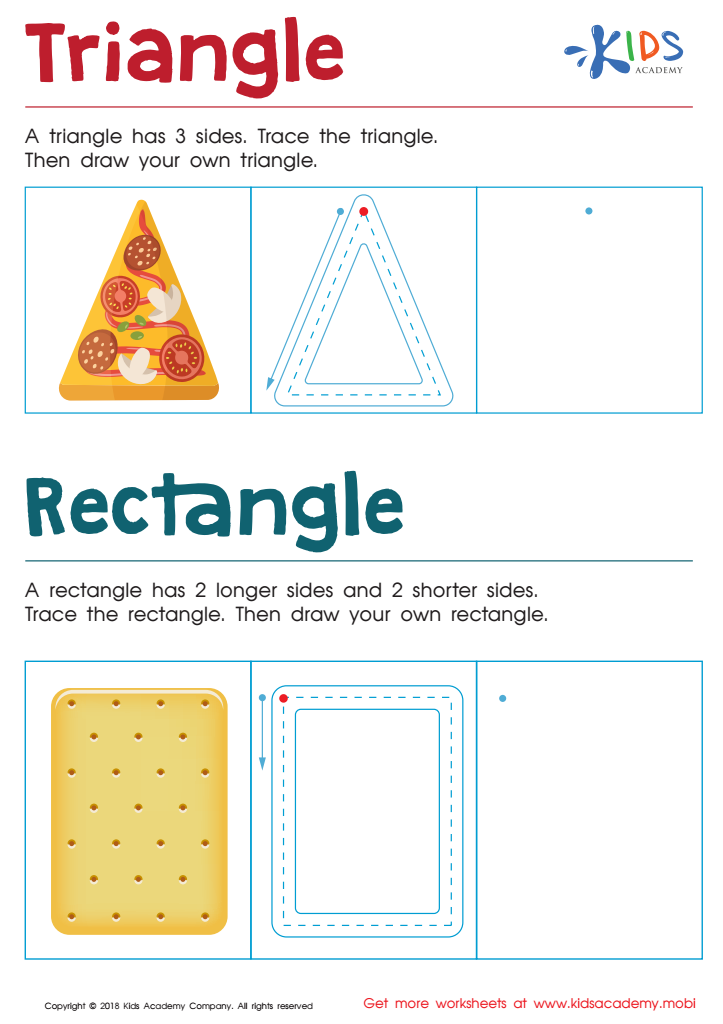
Triangle Rectangle Worksheet
 Assign to My Students











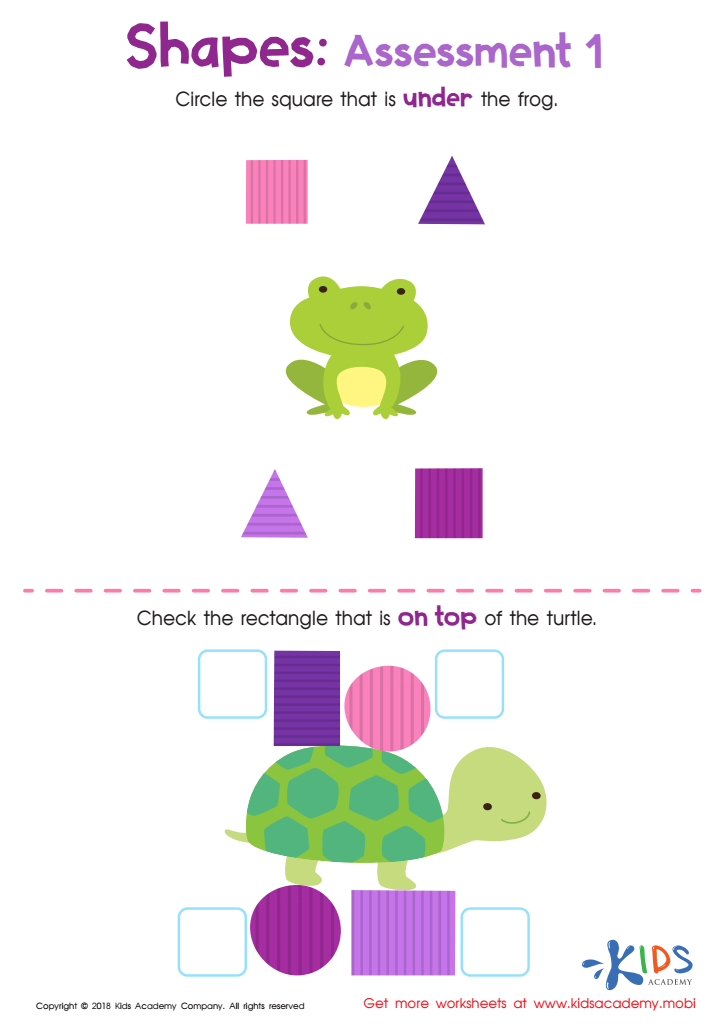
Geometry – Assessment 1 Worksheet
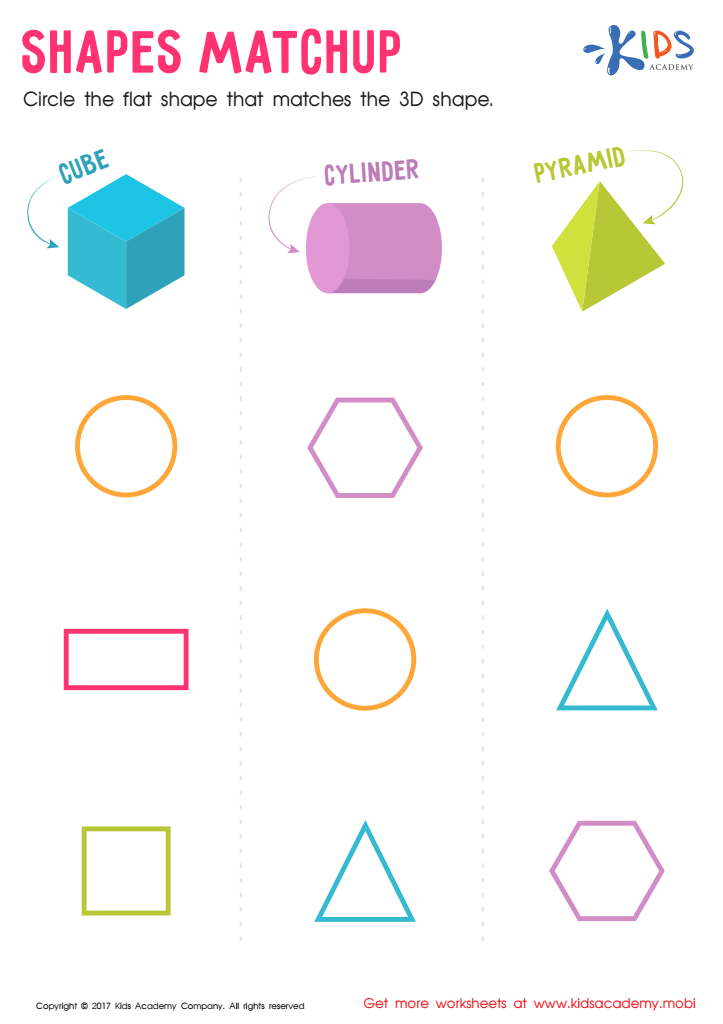
Shapes Matchup Worksheet








Basic geometry knowledge is crucial for children aged 4-6 as it lays the foundation for their mathematical understanding and problem-solving skills. During these formative years, children develop spatial awareness and cognitive abilities, which are pivotal for their overall learning. Engaging with shapes, sizes, and spatial relationships sharpens their analytical skills, critical for later academic success.
Learning geometry helps children recognize patterns, identify shapes, and understand measurements in their world. This knowledge fosters creativity, as they explore concepts through art, crafts, and play. Moreover, familiarity with geometric terms enhances communication skills, enabling children to articulate their ideas more effectively.
From a developmental perspective, early exposure to geometry contributes to enhanced thinking skills. Children learn to categorize objects, compare sizes, and visualize spaces, which are essential in daily life, from reading maps to understanding architecture. Furthermore, these concepts build a platform for advanced mathematical skills required in future schooling.
Involving parents and teachers in geometry education promotes collaborative learning, making it enjoyable and interactive. Thus, prioritizing basic geometry for young learners ensures they gain critical skills for both academic achievement and practical life applications.








