Comparing Fractions Geometry Worksheets for Ages 4-6
3 filtered results
-
From - To
Discover our engaging "Comparing Fractions Geometry Worksheets" designed for children aged 4-6! These worksheets help young learners grasp the foundational concepts of fractions through fun and interactive activities. Each worksheet encourages children to compare different fractions using visual aids, making it easier to understand size and quantity. With colorful illustrations and relatable examples, these resources make learning enjoyable while strengthening critical thinking skills. Perfect for homeschoolers or classroom settings, our worksheets aim to boost confidence and foster a love for math. Explore our collection today and support your child's journey in mastering geometry and fractions!
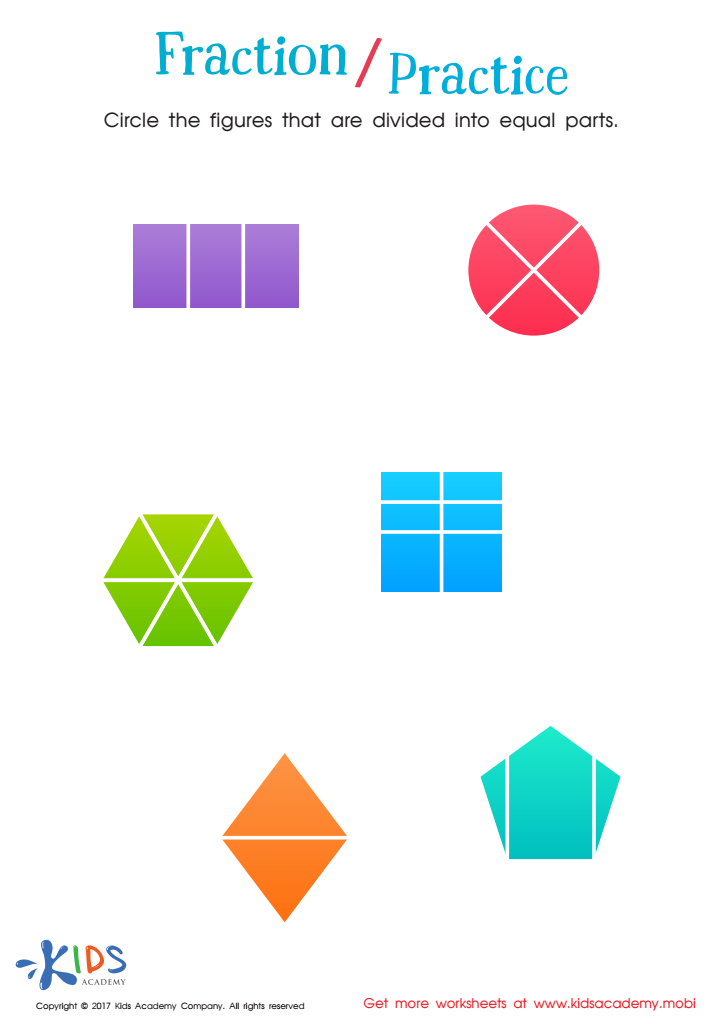
Fractions: Shapes Worksheet
 Assign to My Students











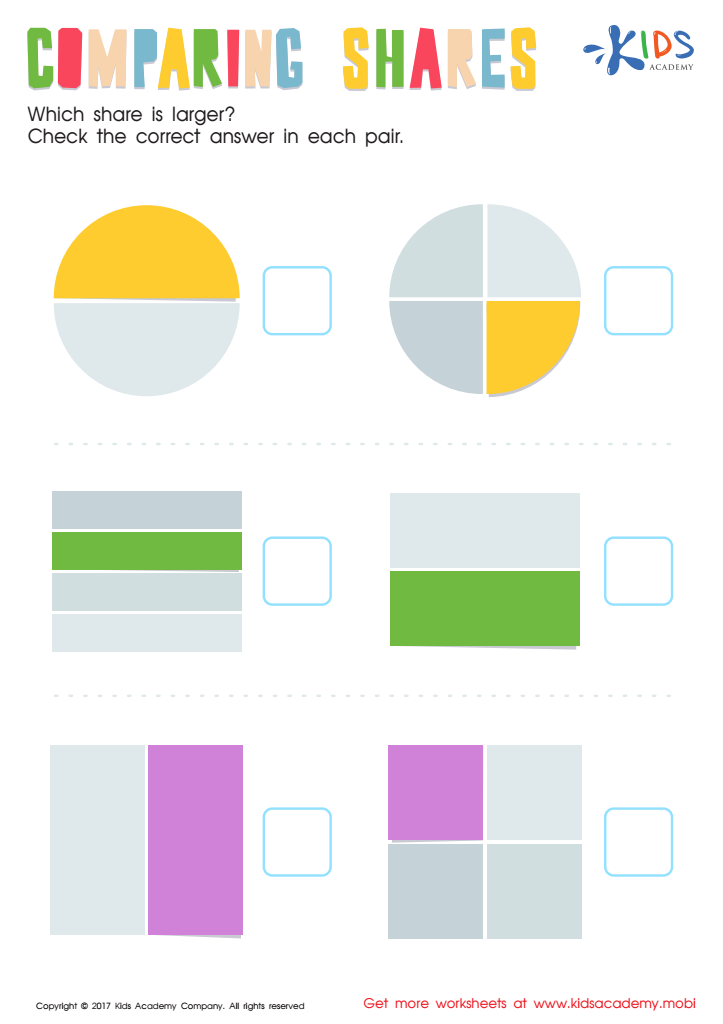
Comparing Shares Worksheet
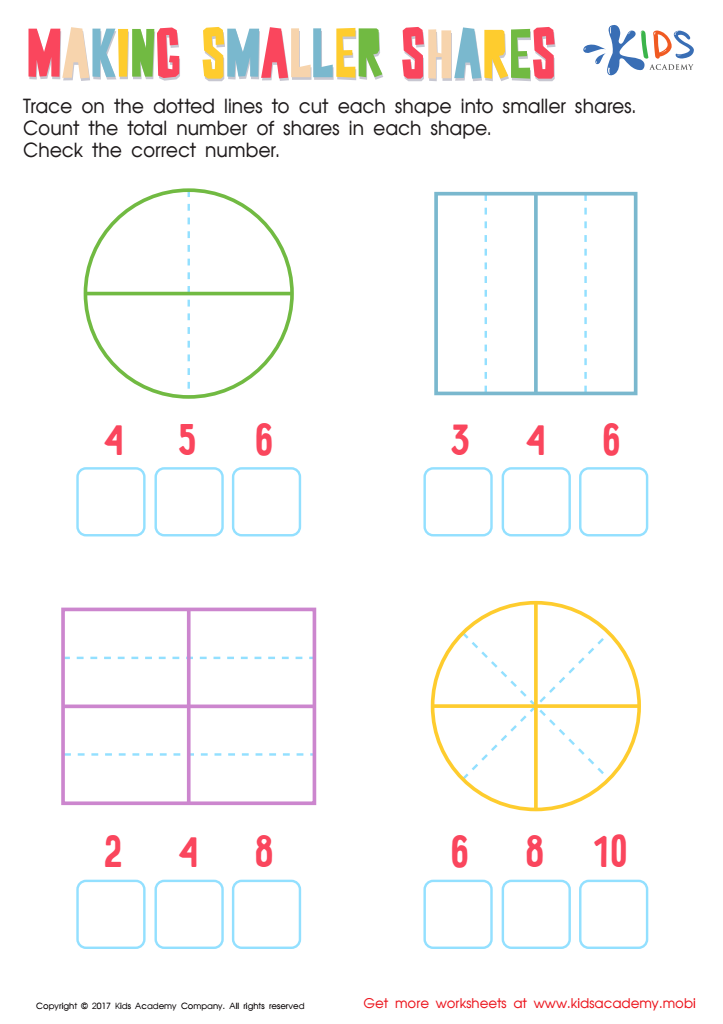
Making Smaller Shares Worksheet








Understanding comparing fractions is essential for young learners, as it lays the groundwork for more complex mathematical concepts in later grades. For parents and teachers of children ages 4-6, introducing the concept of comparing fractions through geometry not only enhances mathematical skills but also fosters critical thinking and problem-solving abilities.
Using geometric shapes to illustrate fractions—such as dividing a circle into equal parts—helps children visualize concepts that may seem abstract at this age. It engages their spatial awareness, making it easier for them to grasp the idea of parts versus wholes. For instance, relating fractions to parts of a pizza or slices of a cake can make learning more relatable and fun, capturing their interest.
Moreover, comparing fractions encourages teamwork and communication in the classroom or at home. When discussing why one fraction is greater or lesser than another, children practice articulating their thoughts and reasoning, strengthening their verbal skills.
Incorporating fraction comparisons within geometric contexts also aligns with early learning standards, ensuring that children have a solid foundation in mathematics. By nurturing an understanding of these concepts, educators and parents are equipping children with vital skills that will benefit their future learning endeavors.








