Differentiating shapes Geometry Worksheets for Ages 4-6
3 filtered results
-
From - To
Discover our "Differentiating Shapes Geometry Worksheets" designed specifically for children ages 4-6! These engaging worksheets introduce young learners to the wonderful world of shapes through fun and interactive activities. Our resources help kids identify, compare, and classify various geometric shapes, building a strong foundation in early math skills. With colorful illustrations and easy-to-follow instructions, these worksheets cater to diverse learning styles, making geometry enjoyable and accessible. Perfect for both classroom and home use, our worksheets foster creativity, critical thinking, and problem-solving abilities. Get ready to enhance your child's shape recognition skills while having fun with our specially crafted geometry activities!
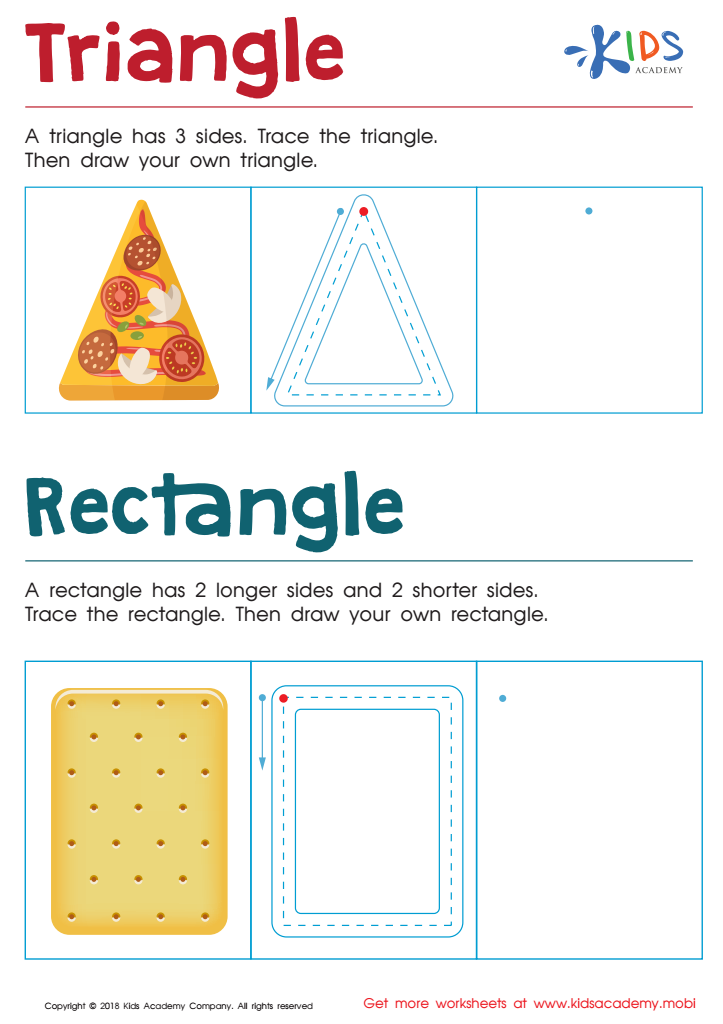
Triangle Rectangle Worksheet
 Assign to My Students











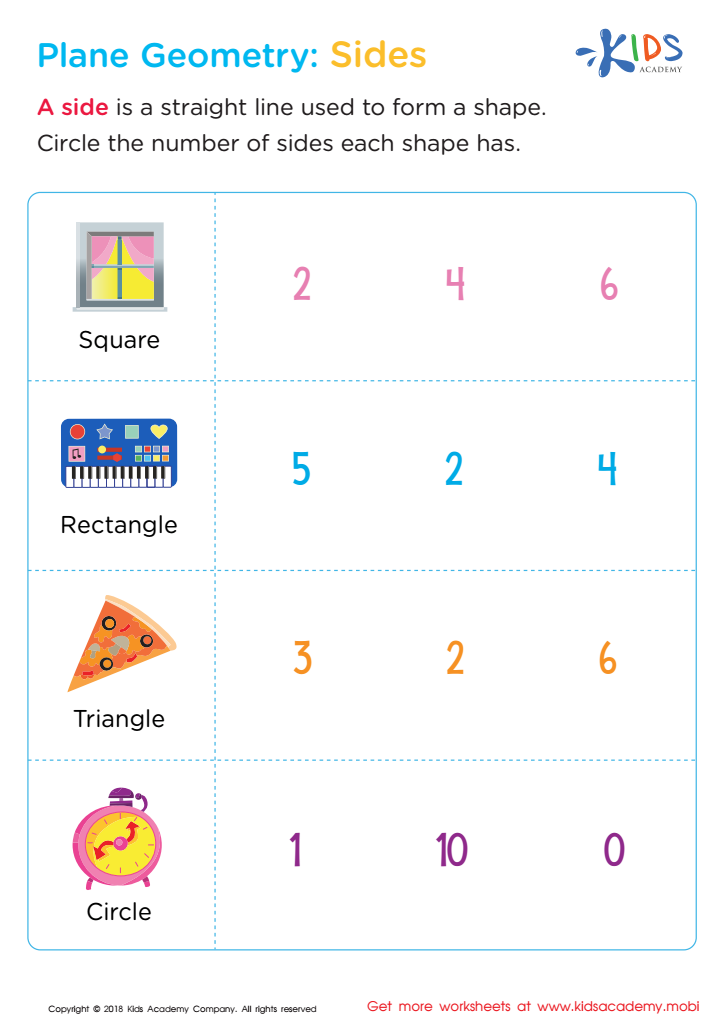
Plane Geometry: Sides Worksheet
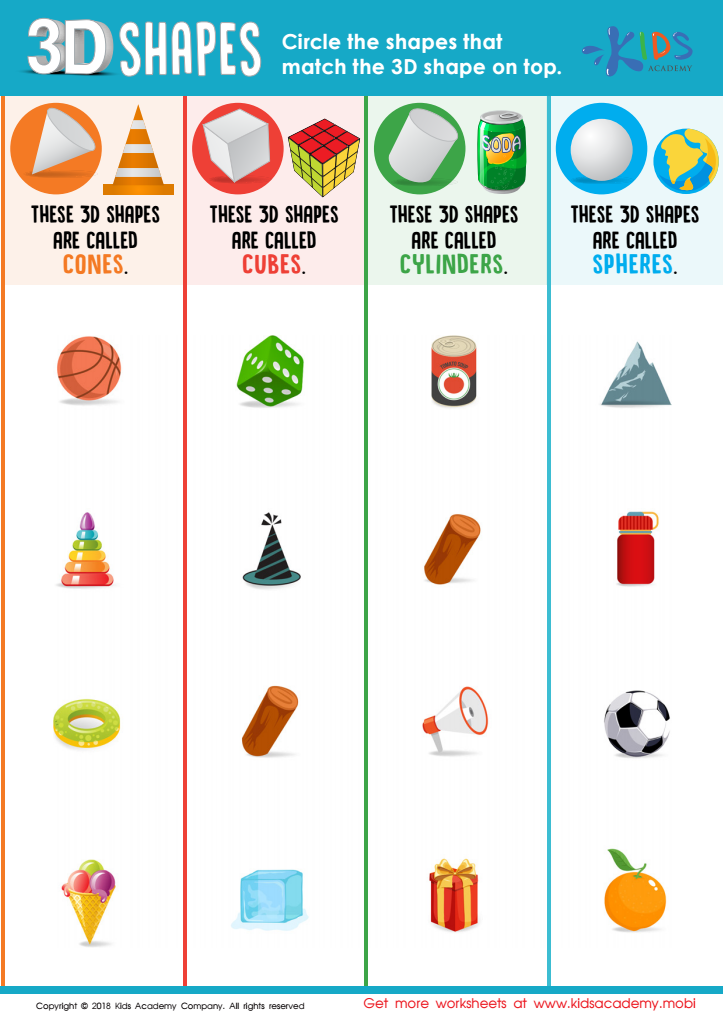
3D Shapes Worksheet








Differentiating shapes in geometry for children ages 4-6 is crucial for several reasons. At this developmental stage, children are naturally curious and eager to explore their environment, making it an ideal time to engage them in shape recognition and differentiation activities. Understanding shapes lays the foundation for essential math skills later in life, as it reinforces pattern recognition, spatial awareness, and critical thinking.
Parents and teachers should care because early exposure to geometry fosters cognitive development, enhancing problem-solving abilities and encouraging creativity. When children learn to differentiate shapes, they also begin to understand concepts like symmetry, measurement, and comparison.
Moreover, differentiating shapes can support language development. Discussing the attributes of different shapes (like corners and sides) helps children build vocabulary and begins to introduce them to more complex mathematical language.
Creating fun and interactive activities that involve differentiating shapes – such as sorting games, arts and crafts, and scavenger hunts – can make learning enjoyable and memorable. Involvement in such activities promotes engagement, boosts self-confidence, and cultivates a love for learning, setting the stage for a positive attitude towards mathematics in their future education. Ultimately, fostering these foundational skills can have lasting benefits in a child's academic journey.








