Addition Practice Numbers Worksheets for Ages 4-6 - Page 2
28 filtered results
-
From - To
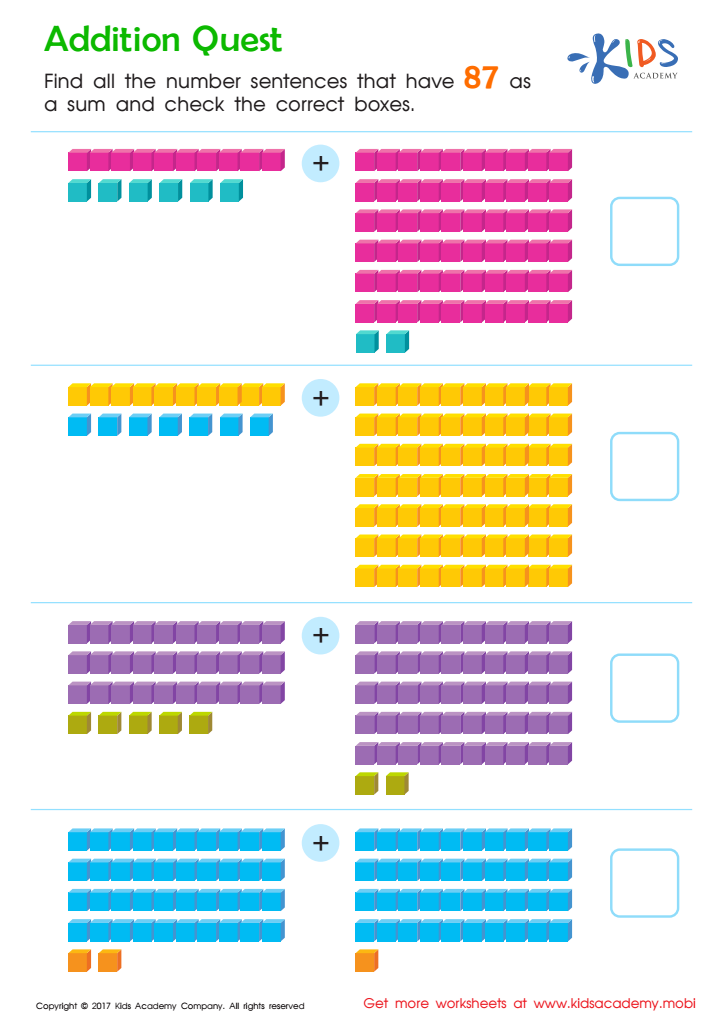
Addition Quest Worksheet: Part 1
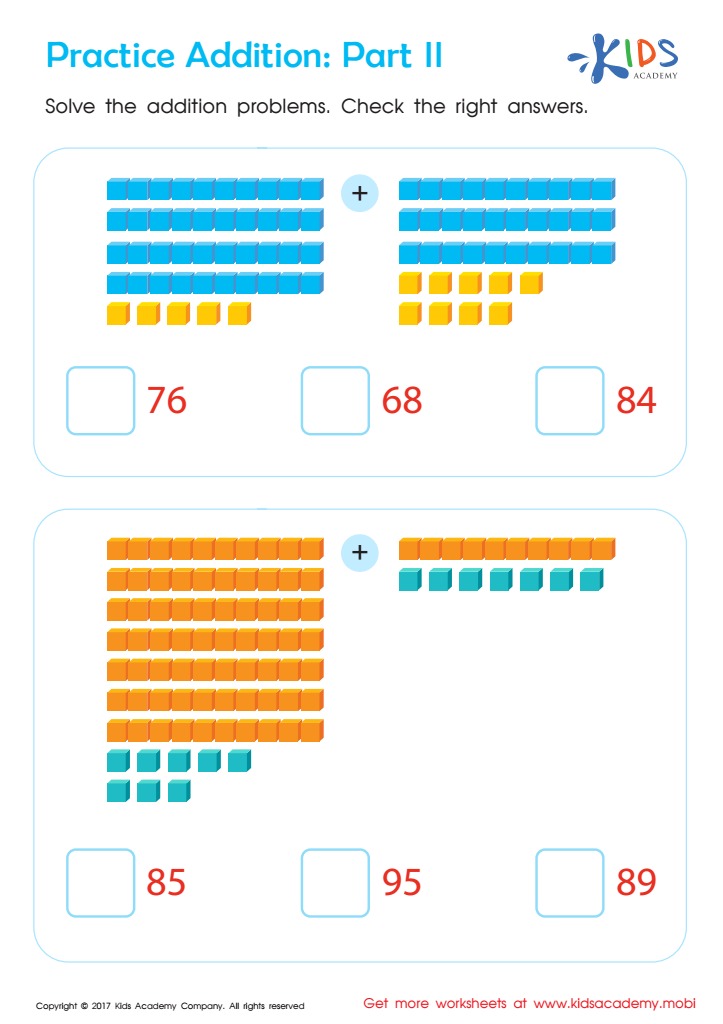
Practice Addition: Part 2 Worksheet
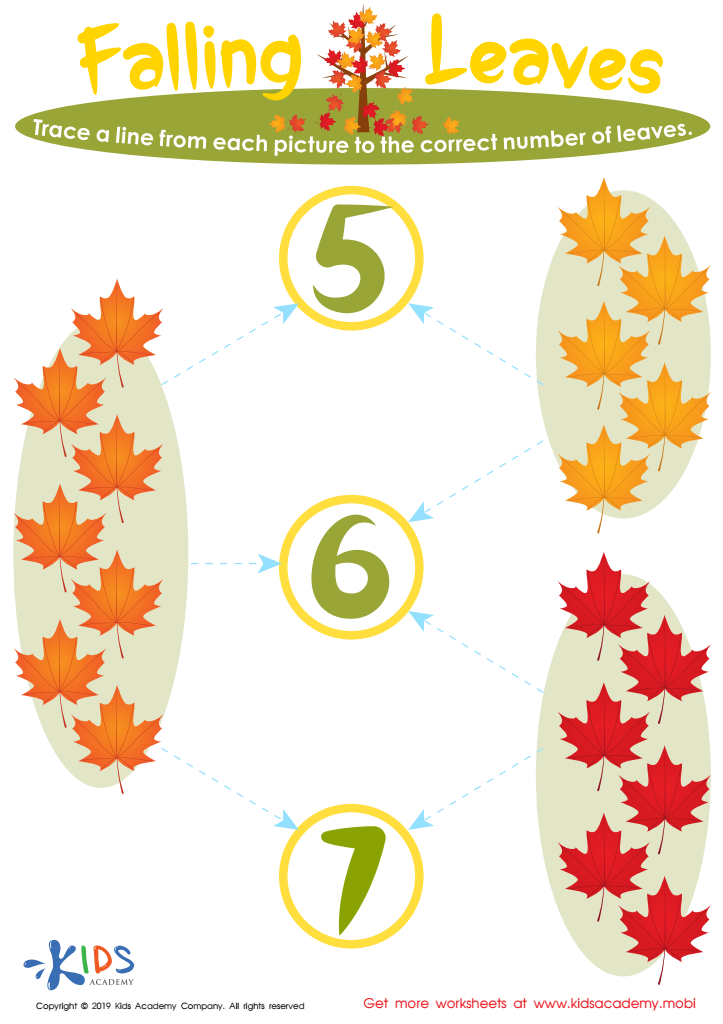
Falling Leaves Worksheet
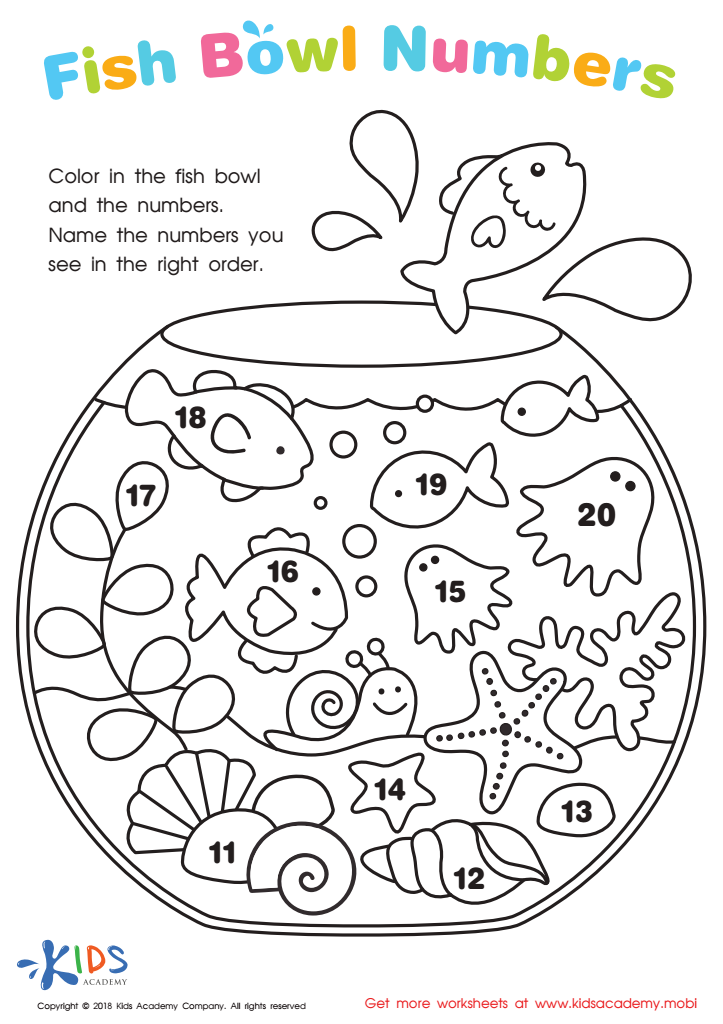
Fish Bowl Numbers Worksheet
 Assign to My Students



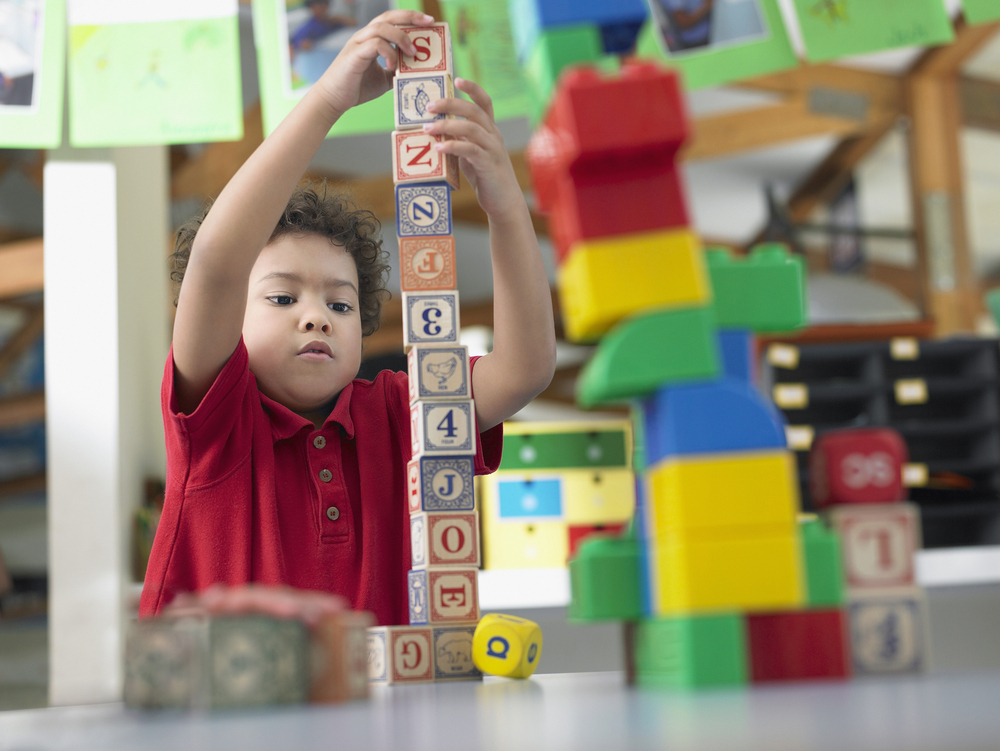




For children aged 4-6, introducing addition practice numbers is a pivotal part of cognitive development and foundational math skills. At this formative stage, kids are naturally curious and absorb new concepts quickly. Encouraging them to practice addition helps build a strong mathematical foundation, essential for future academic success. It enhances their numerical fluency, enabling them to solve simple arithmetic problems with ease. Moreover, addition practice nurtures critical thinking and problem-solving abilities as children learn to identify relationships between numbers.
When children engage with addition activities early, they also strengthen their memory and attention span. These foundational math skills are not isolated but influence other areas of learning, such as understanding patterns, sequencing, and even language development through logical structuring.
Furthermore, consistent addition practice boosts a child's confidence. Each correct answer reinforces their belief in their abilities, fostering a positive attitude towards mathematics as they progress through higher grades. From a social perspective, kids frequently engage in math-related games with peers, pushing them towards collaborative learning and improving their communication skills.
Parents and teachers play a crucial role in making math practice fun and engaging. By incorporating playful activities and praising efforts, adults can foster an environment where children develop a lifelong love for learning and continue to pursue academic excellence.








