Comparing quantities Numbers Worksheets for Ages 4-6
4 filtered results
-
From - To
Discover our engaging "Comparing Quantities Numbers Worksheets" designed for children ages 4-6! These interactive worksheets help young learners master essential math skills by comparing quantities in a fun and accessible way. With colorful illustrations and relatable scenarios, children will enjoy identifying which group has more, less, or equal amounts. Our carefully crafted exercises support early arithmetic understanding, encouraging critical thinking and problem-solving. Perfect for classroom activities or home practice, these worksheets make learning math enjoyable and effective. Equip your little ones with the foundational skills they need for future success in mathematics and boost their confidence as they explore numbers!
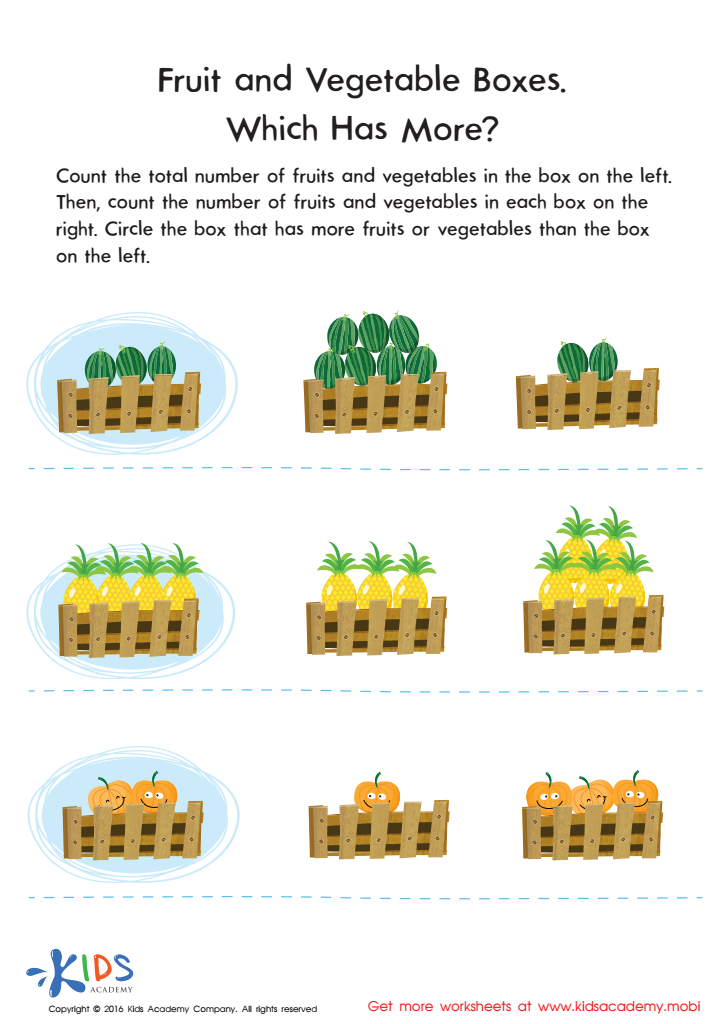
Which Has More? Size Worksheet
 Assign to My Students
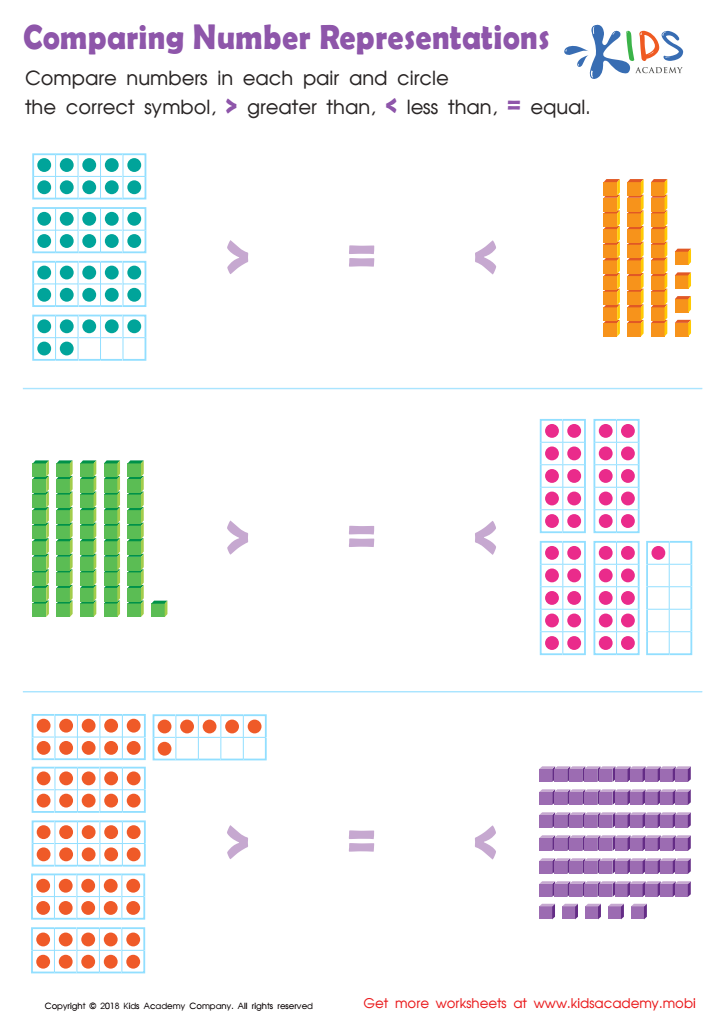
Comparing Number Representations Worksheet
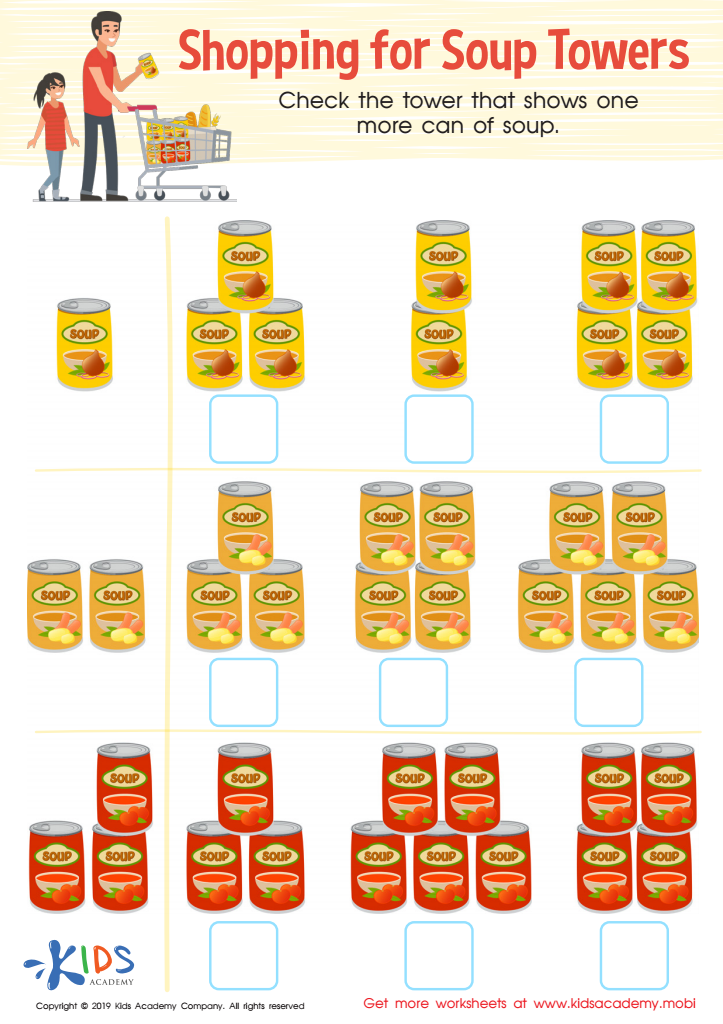
Soup Towers Worksheet
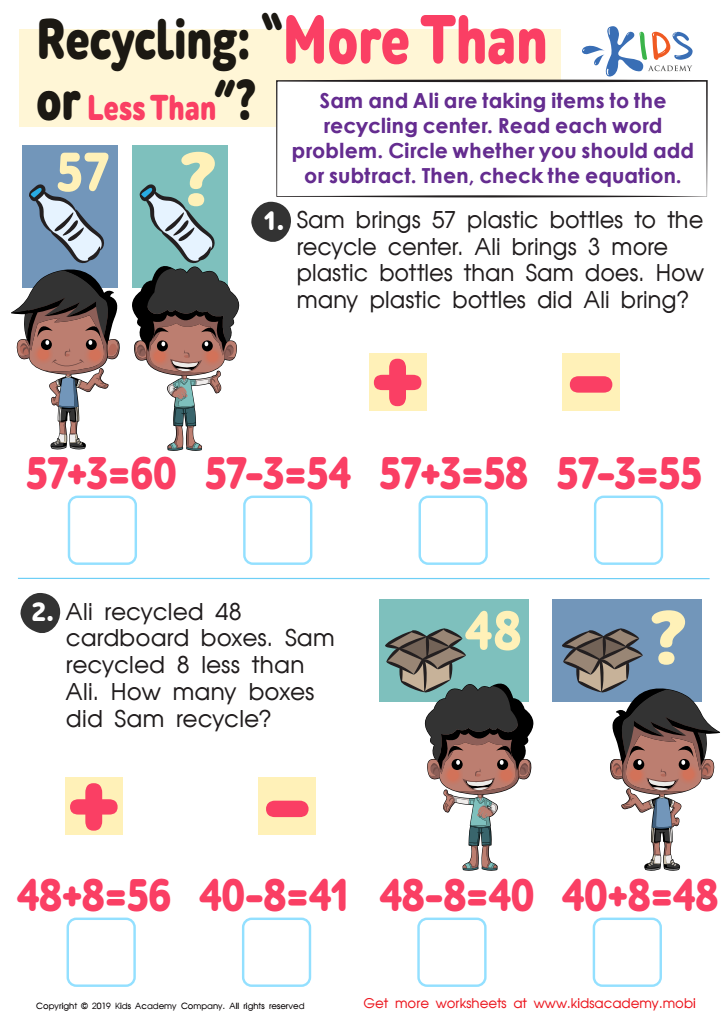
Recycling - More or Less Worksheet








Comparing quantities is a fundamental skill for children aged 4-6 that lays the groundwork for mathematical understanding and problem-solving. At this age, children are naturally curious and eager to make sense of the world around them. By engaging with concepts of more, less, and equal, they start to develop crucial cognitive skills, including logical reasoning and analytical thinking.
Understanding comparison helps children not only with math but also with everyday situations, such as sharing snacks or organizing toys. It fosters their ability to categorize and make decisions based on quantity, which is essential for building independence. Moreover, parents and teachers who emphasize this skill cultivate a supportive learning environment that encourages exploration and questioning, nurturing a child’s confidence in their mathematical abilities.
Furthermore, early exposure to comparing amounts boosts focus and attention, crucial traits for preschool and early grade readiness. It helps create connections between numbers and their practical applications, ensuring children can relate math concepts to real-life scenarios. Overall, prioritizing the comparison of quantities supports both academic and social development, preparing children for future challenges in both mathematics and broader contexts.








