Basic geometry knowledge Math Worksheets for Ages 4-6
3 filtered results
-
From - To
Discover our engaging Basic Geometry Knowledge Math Worksheets, specifically designed for children aged 4 to 6. These worksheets aim to introduce young learners to fundamental geometric shapes and concepts, fostering an early understanding of geometry through fun and interactive activities. Our collection features vibrant illustrations and easy-to-follow exercises, helping children identify, compare, and organize various shapes. Perfect for classroom use or at-home learning, these worksheets support early math skills development and encourage critical thinking. Boost your child's confidence and foundational math skills with our carefully crafted geometry worksheets, making learning a joyful adventure in shape exploration and recognition!
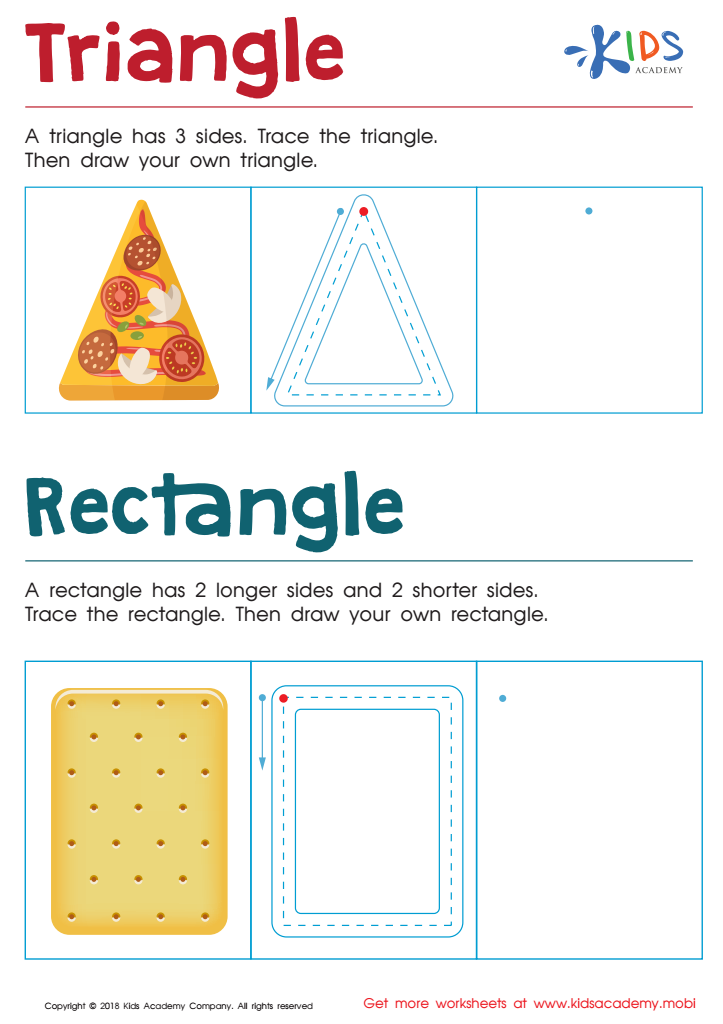
Triangle Rectangle Worksheet
 Assign to My Students
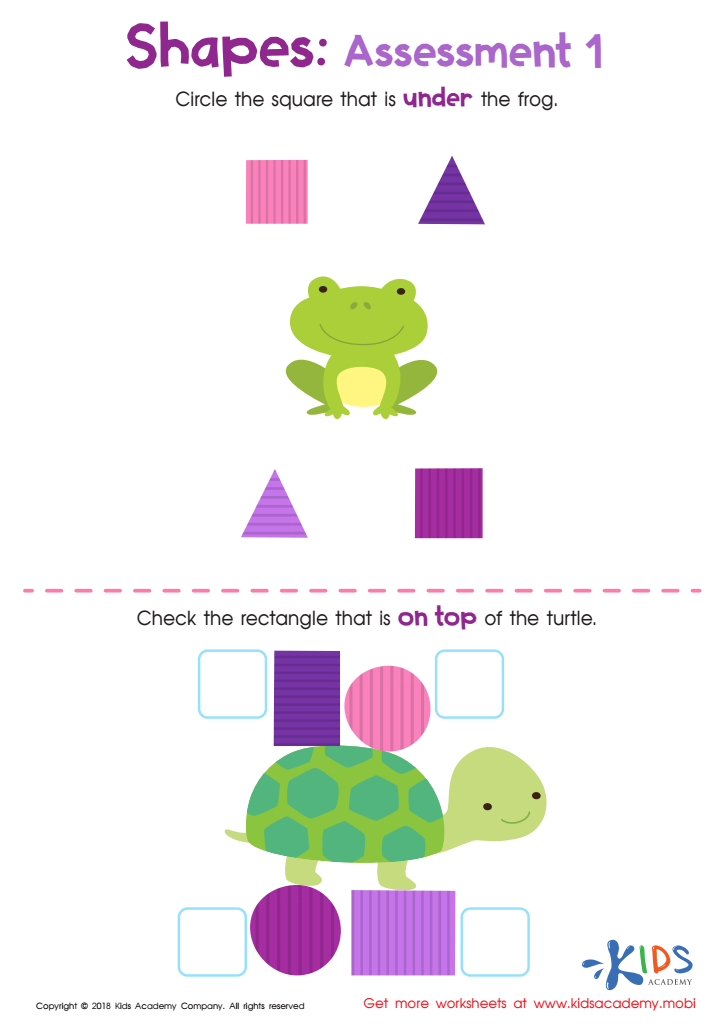
Geometry – Assessment 1 Worksheet
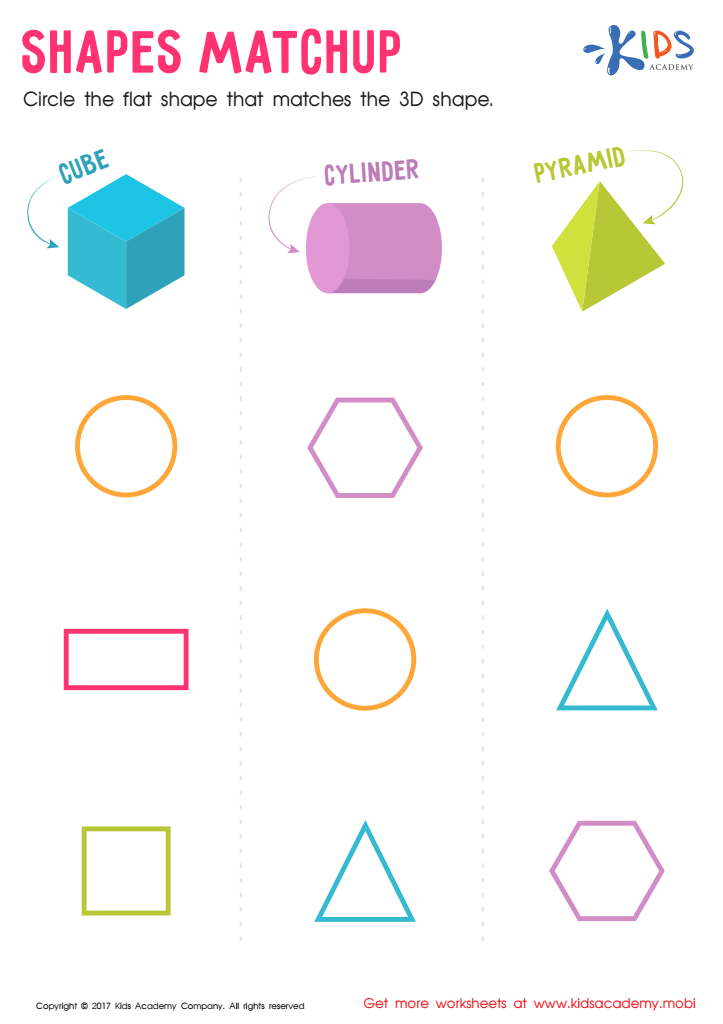
Shapes Matchup Worksheet




.jpg)


Basic geometry knowledge is essential for children aged 4-6 as it lays the foundation for critical thinking and problem-solving skills. At this age, kids are naturally curious and eager to explore shapes and spatial relationships. Introducing them to geometric concepts helps develop their cognitive abilities, enhancing their understanding of the world around them.
Geometry ties closely to everyday experiences. For instance, recognizing basic shapes—circles, squares, triangles—enables children to identify objects in their environment, fostering observational skills. Understanding spatial relationships helps them follow directions and build a sense of orientation essential for later math concepts.
Moreover, geometry supports fine motor skills through activities such as drawing shapes, which enhances hand-eye coordination. These foundational skills are crucial as children progress to more advanced math concepts and literacy, linking geometry to reading comprehension through visual-spatial learning.
Encouraging geometry knowledge not only bolsters academic success but also instills a sense of confidence in young learners. Engaging in playful, hands-on activities can make learning enjoyable and memorable, further igniting a lifelong interest in math. Thus, parents and teachers play a vital role in nurturing these foundational skills during these formative years.








