
Comparing numbers Math Worksheets for Ages 4-6
4 filtered results
Difficulty Level
Grade
Age
-
From - To
Subject
Activity
Standards
Unlock your child’s math potential with our Comparing Numbers Math Worksheets designed for ages 4-6! Our engaging and colorful worksheets help young learners develop essential skills by comparing quantities, identifying bigger and smaller numbers, and understanding number sequences. These activities foster mathematical confidence and prepare children for more advanced concepts. Each worksheet is crafted to make learning fun and interactive, integrating playful themes that resonate with kids. Perfect for both classroom and home use, our worksheets provide a solid foundation in early math skills. Start your child on the path to math excellence today!
Favorites
With answer key
Interactive
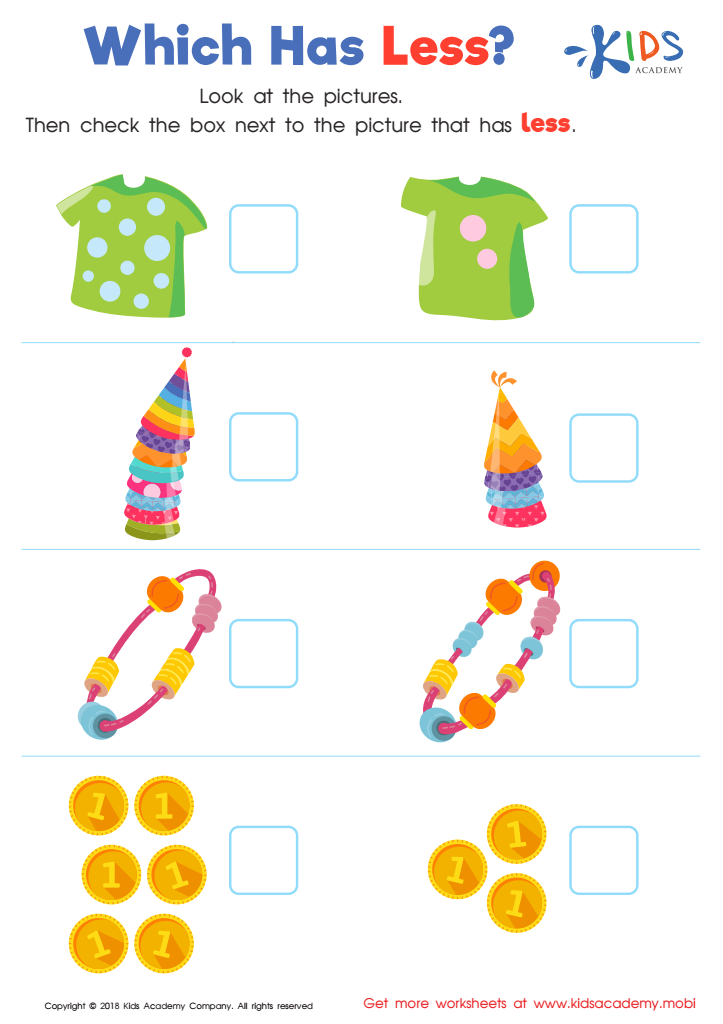
Which Has Less? Worksheet
Kids can develop their number sense by comparing and contrasting objects to identify which has less. This worksheet helps them practice: it's bright and colorful, featuring familiar objects and pictures to count, strengthening basic counting skills. It's the perfect warm-up for comparing and contrasting larger numbers.
 Assign to My Students
Which Has Less? Worksheet
Worksheet
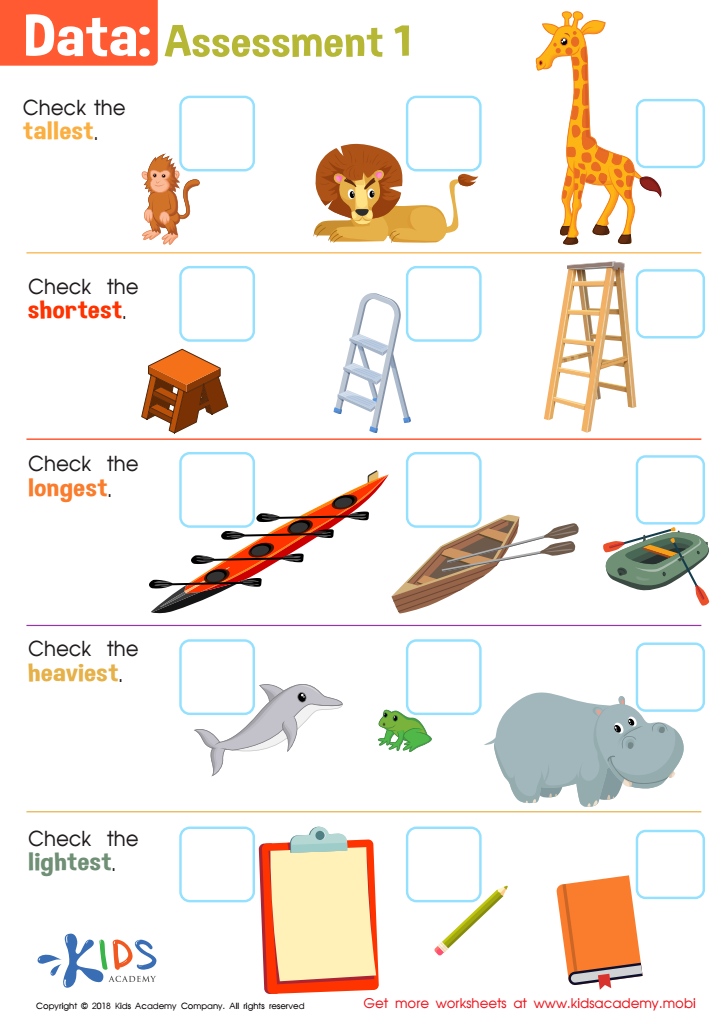
Data: Assessment 1 Worksheet
This free worksheet helps you assess where your young students are with measurement superlatives like tallest, shortest, heaviest, longest and lightest. It features cute, colorful pics of familiar objects so your kids have a reference, and helps you identify areas to work on.
Data: Assessment 1 Worksheet
Worksheet
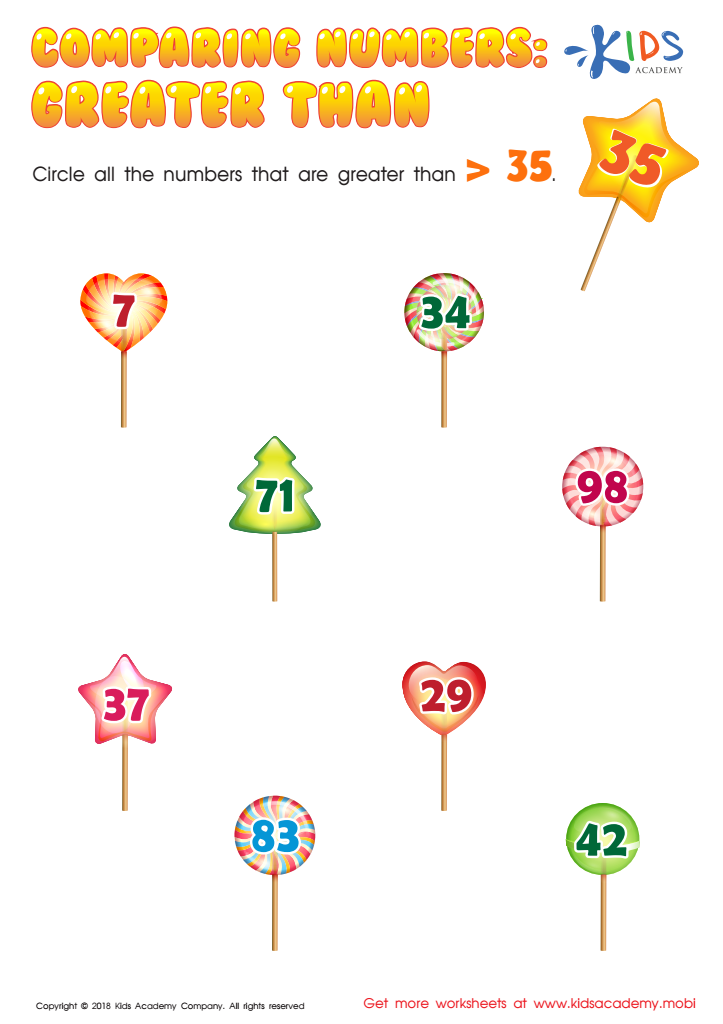
Greater Than Worksheet
Tired of generic maths problems? Try this fun pdf worksheet! With your child or student, carefully look through the numbers in the balloon and circle those greater than 35. Enjoyable and educational!
Greater Than Worksheet
Worksheet
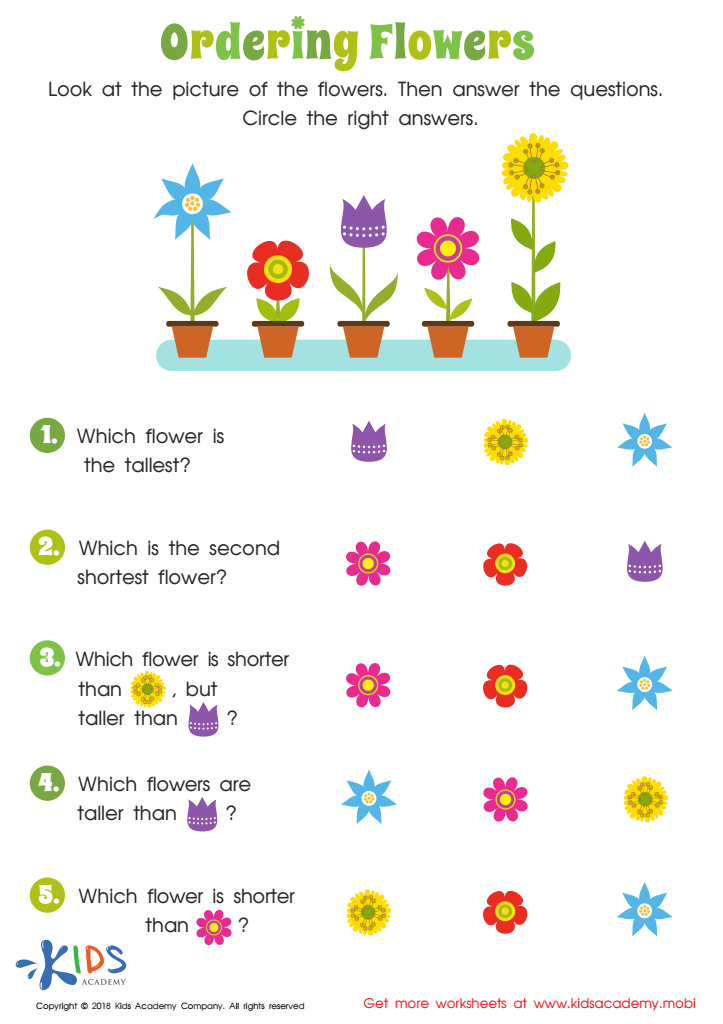
Ordering Flowers Worksheet
Preschoolers can start learning measurement with visuals! This worksheet uses colorful flowers of different heights. Ask your learner to observe the flowers, then help them compare/answer which is taller/shorter. It's an easy way for them to begin learning about measurement.
Ordering Flowers Worksheet
Worksheet
Join Kids Academy for Free
Who is primarily going to use this learning content?








Comparing numbers is a fundamental mathematical skill crucial for young children's cognitive development and future success in math. At ages 4-6, children are beginning to understand the concepts of quantity, size, and value, which are the building blocks of arithmetic and more complex mathematical reasoning.
By learning to compare numbers, children develop critical thinking and decision-making skills. This process involves recognizing patterns, interpreting numerical relationships, and making judgments about greater-than, less-than, and equal-to scenarios. These foundational skills are not only vital for math but are also transferable to other areas such as science, reading comprehension, and everyday problem-solving.
For parents and teachers, focusing on comparing numbers provides a structured approach to nurturing these abilities. It encourages young learners to observe, analyze, and communicate their thoughts clearly. Additionally, engaging activities like comparing quantities through playful counting games or everyday tasks (e.g., identifying which group has more apples or fewer toys) make learning active and enjoyable.
Ultimately, fostering an early understanding of number comparison sets the stage for a positive mathematical experience. This early success instills confidence, motivating children to tackle more challenging concepts enthusiastically in their academic journey. Thus, prioritizing this skill is an investment in a child's broader educational and personal development.








