Comparing objects Math Worksheets for Ages 4-6
6 filtered results
-
From - To
Discover our engaging "Comparing Objects Math Worksheets" designed specifically for children ages 4-6! These worksheets introduce young learners to essential math concepts such as size, weight, and quantity. Through fun activities and colorful visuals, kids will develop their observational skills while mastering comparison techniques. Each worksheet encourages hands-on learning and reinforces early mathematical skills in a playful environment. Perfect for teachers and parents, these resources will ensure that your child gains confidence in their math abilities while having fun! Conquer comparisons with our interactive worksheets and watch your little one flourish as they explore the world of math.
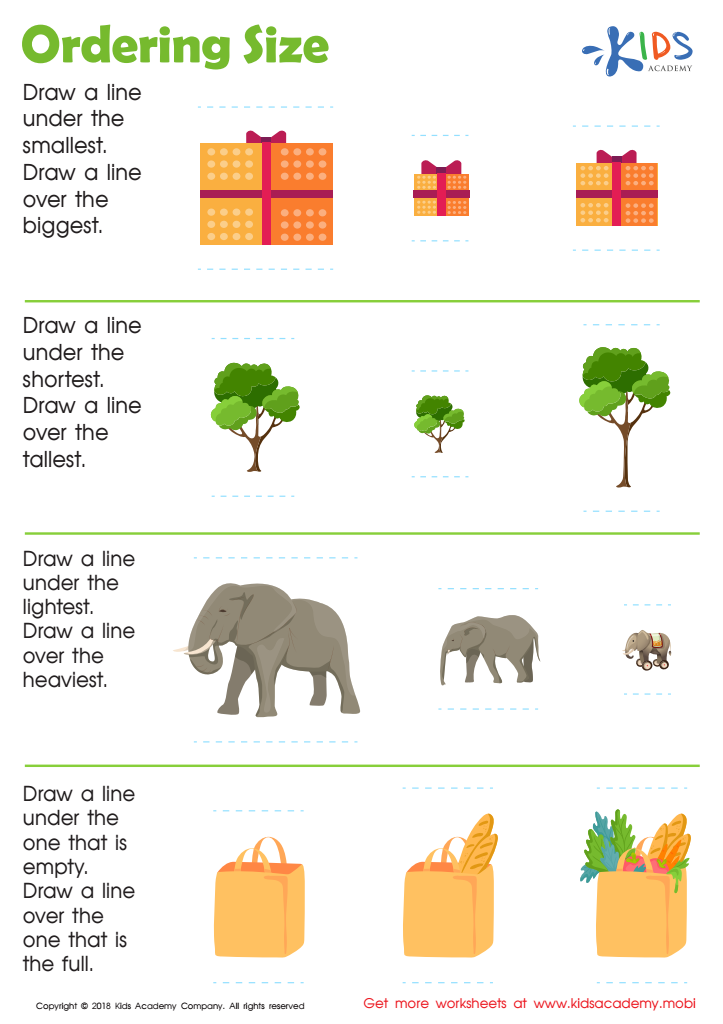
Ordering Size Worksheet
 Assign to My Students
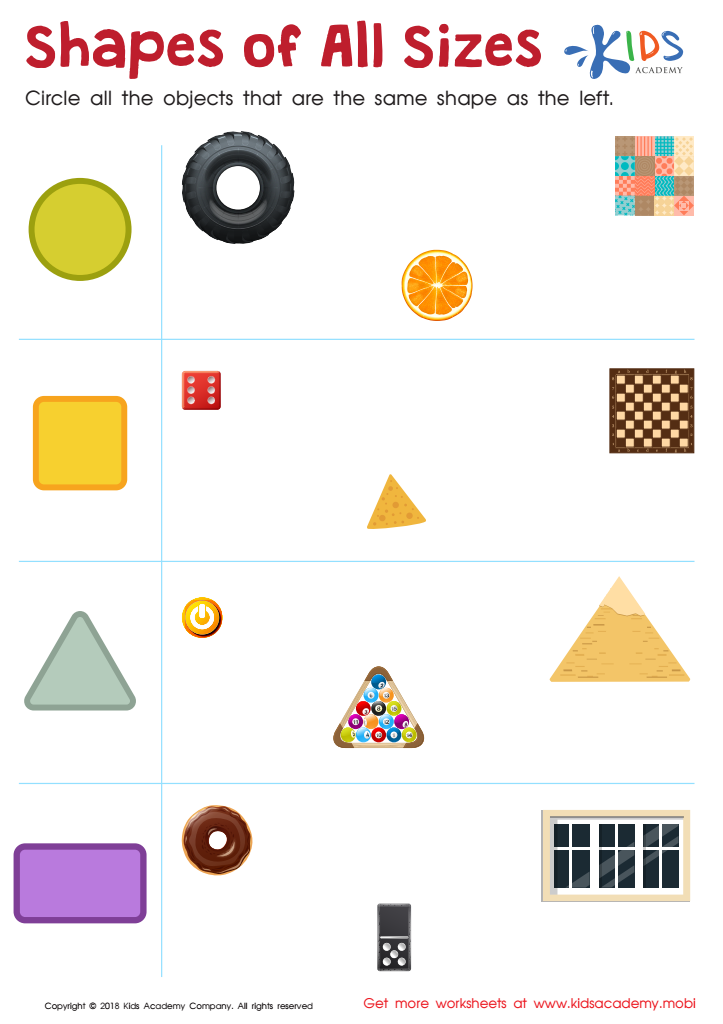
Shapes of All Sizes Worksheet
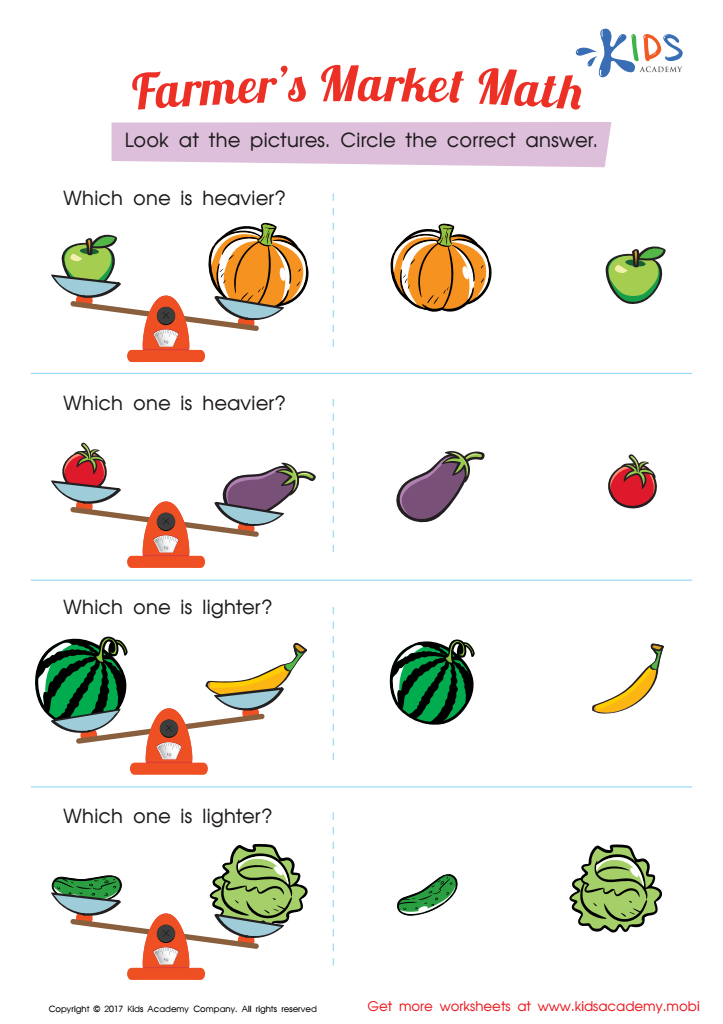
Which One Is Heavier Worksheet
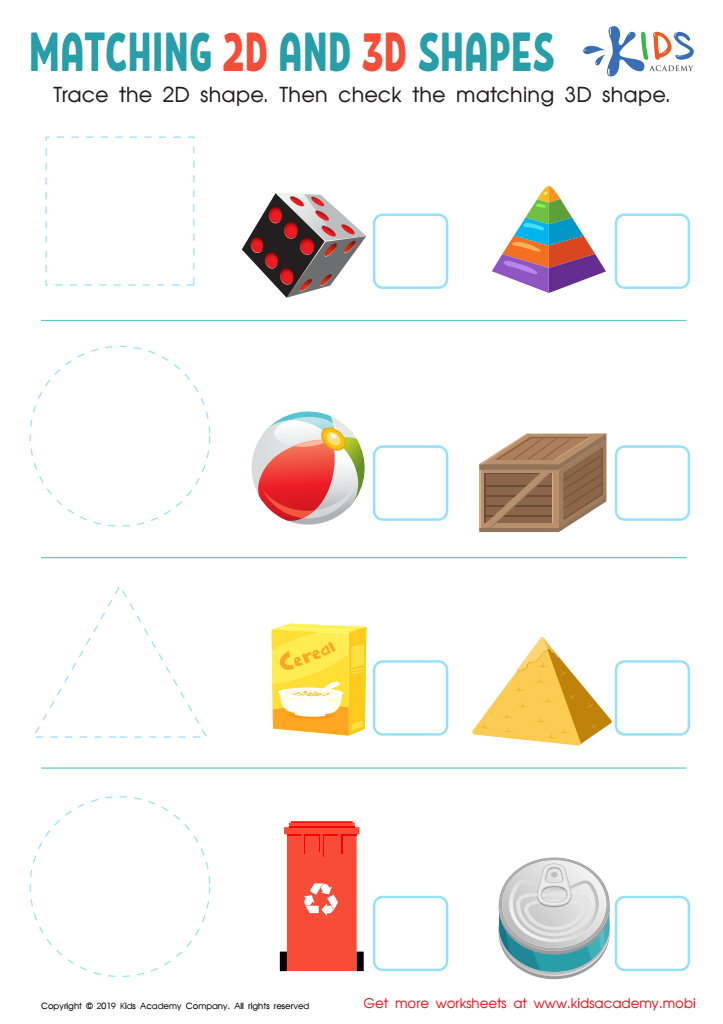
Matching 2D and 3D Shapes Worksheet
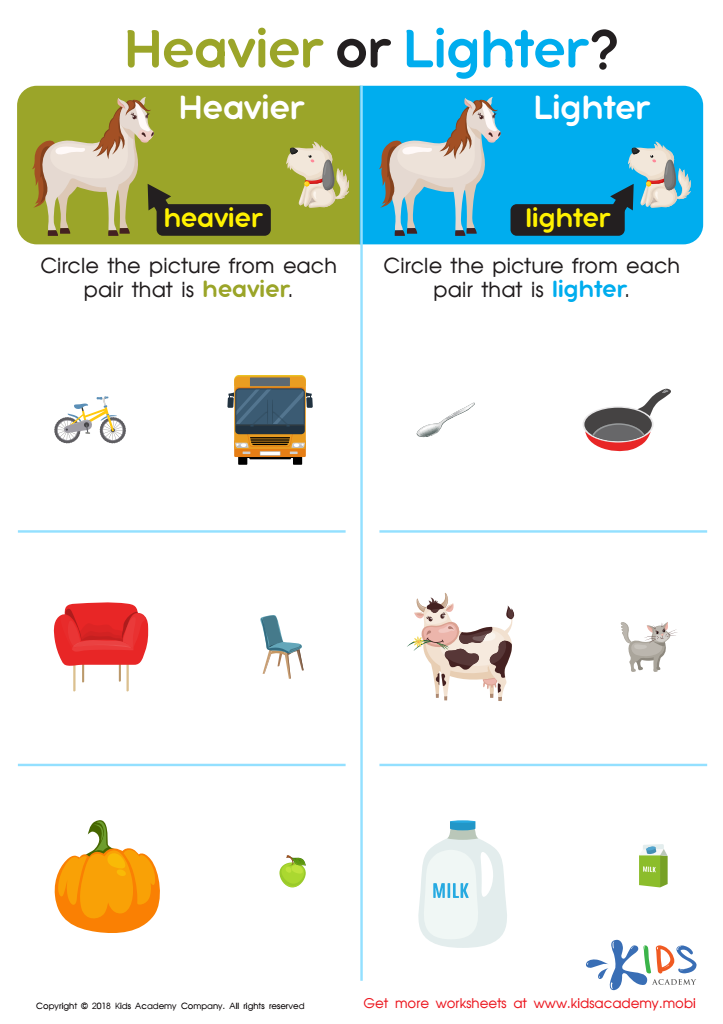
Heavier or Lighter? Worksheet
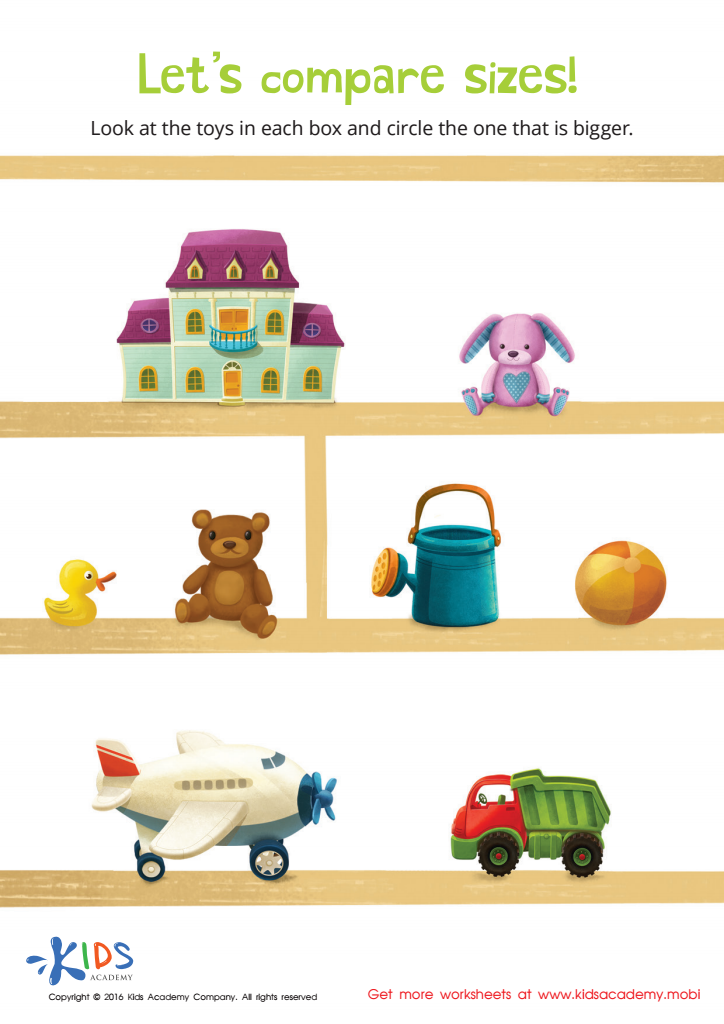
Classifying by Size Sorting Worksheet



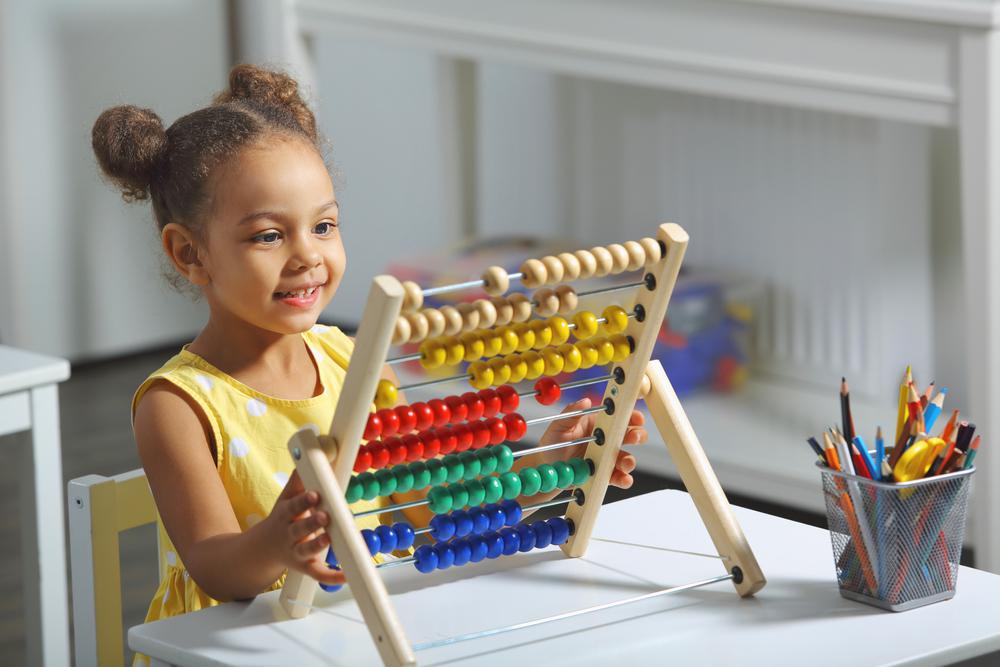


Comparing objects is an essential foundational skill in early math education for children ages 4-6. Engaging in this activity helps young learners develop critical thinking skills as they categorize, analyze, and differentiate between objects based on size, weight, shape, and quantity. When parents and teachers prioritize such comparisons, they nurture children’s ability to make judicious observations and better understand the world around them.
Moreover, comparing objects lays the groundwork for more advanced mathematical concepts, such as measurement and basic arithmetic. When children identify similarities and differences, they refine their skills in problem-solving and logical reasoning. These early experiences empower confident participation in math-related discussions later in academic life.
Additionally, comparing objects fosters language development as children articulate their thoughts, express findings, and engage with peers. It encourages social interaction, collaboration, and the exchange of ideas, further enhancing their communication skills.
Finally, nurturing these mathematical comparisons also promotes curiosity and exploration in young learners. Seeing the relevance of math in everyday life can inspire a lifelong interest in mathematics. Thus, parents and teachers should actively engage children in comparing objects to build a robust foundation for their future educational success.








