Comparison Skills Math Worksheets for Ages 4-6
6 filtered results
-
From - To
Introducing our Comparison Skills Math Worksheets designed for children ages 4-6 at Kids Academy. These engaging and educational worksheets focus on developing essential math skills by teaching young learners to compare numbers, quantities, and objects. Through interactive exercises, children identify bigger, smaller, longer, and shorter items, fostering critical thinking and problem-solving abilities. These brilliantly crafted worksheets make learning fun and effective, ensuring your child builds a strong foundation in early math concepts. Perfect for classroom use or at-home practice, they are an excellent tool to help your child excel in math while enjoying the learning process.
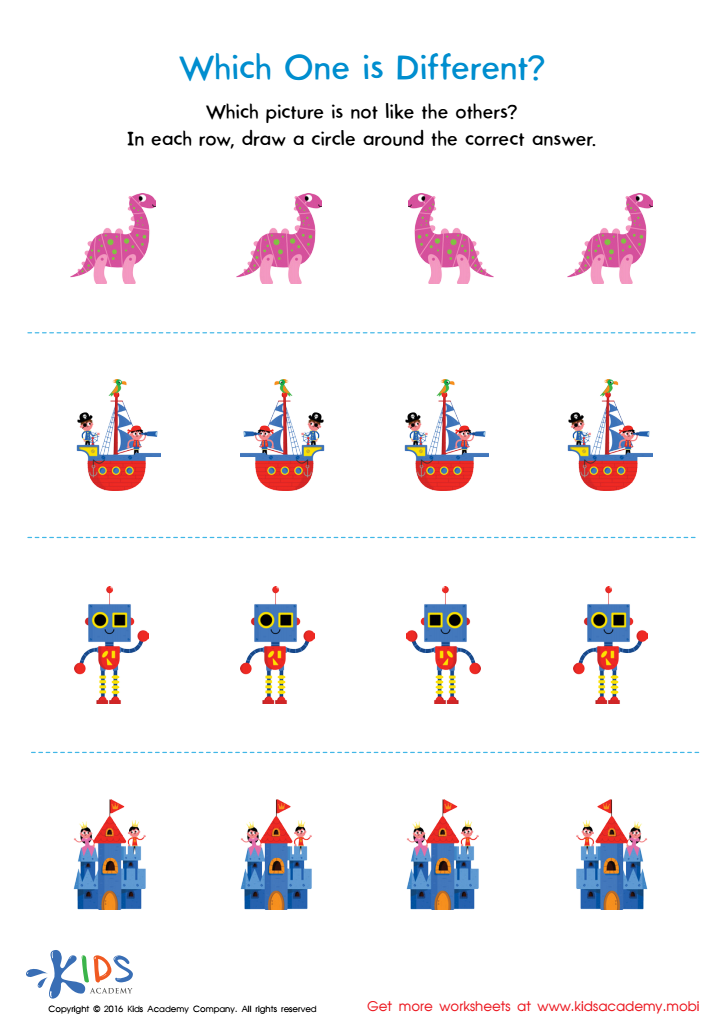
Which One Is Different Worksheet
 Assign to My Students
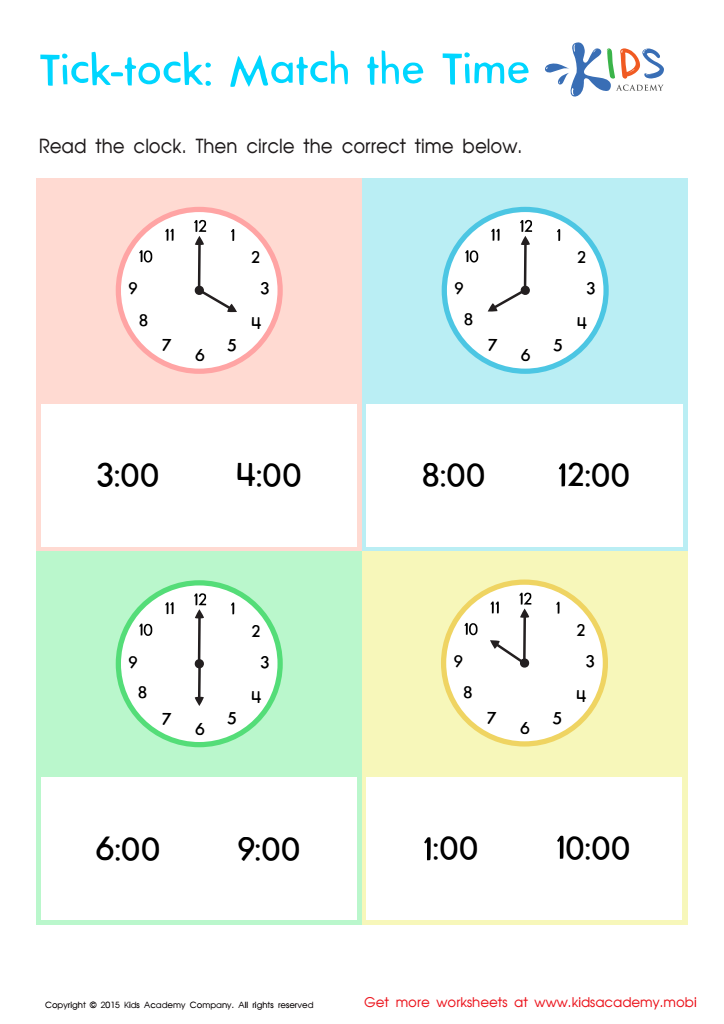
Telling The Time Worksheet: Part 4
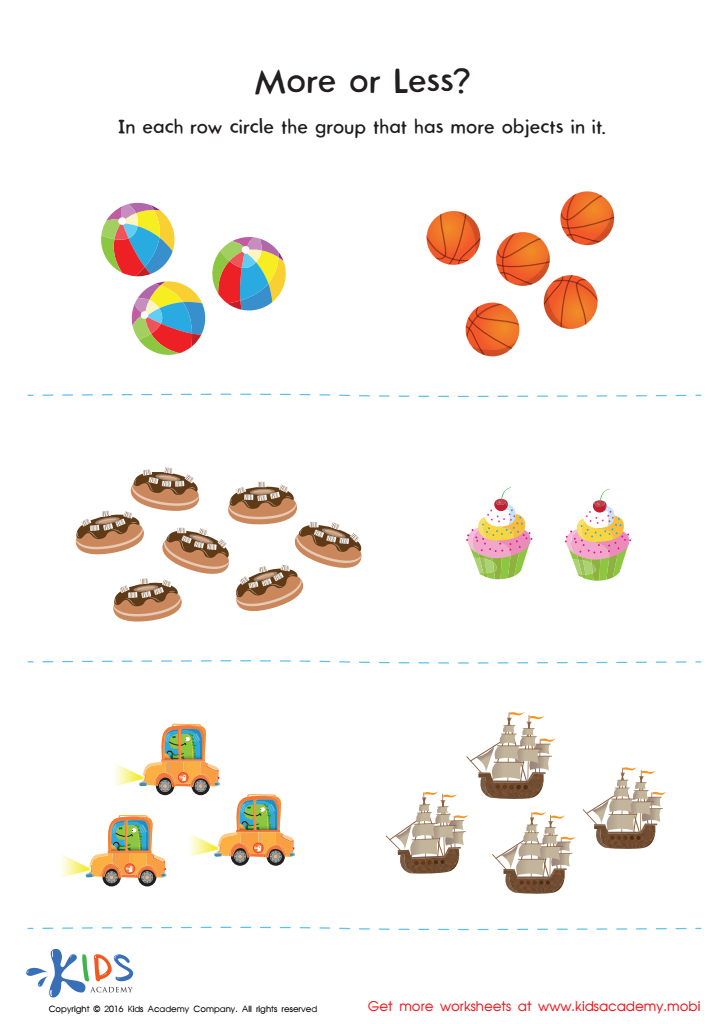
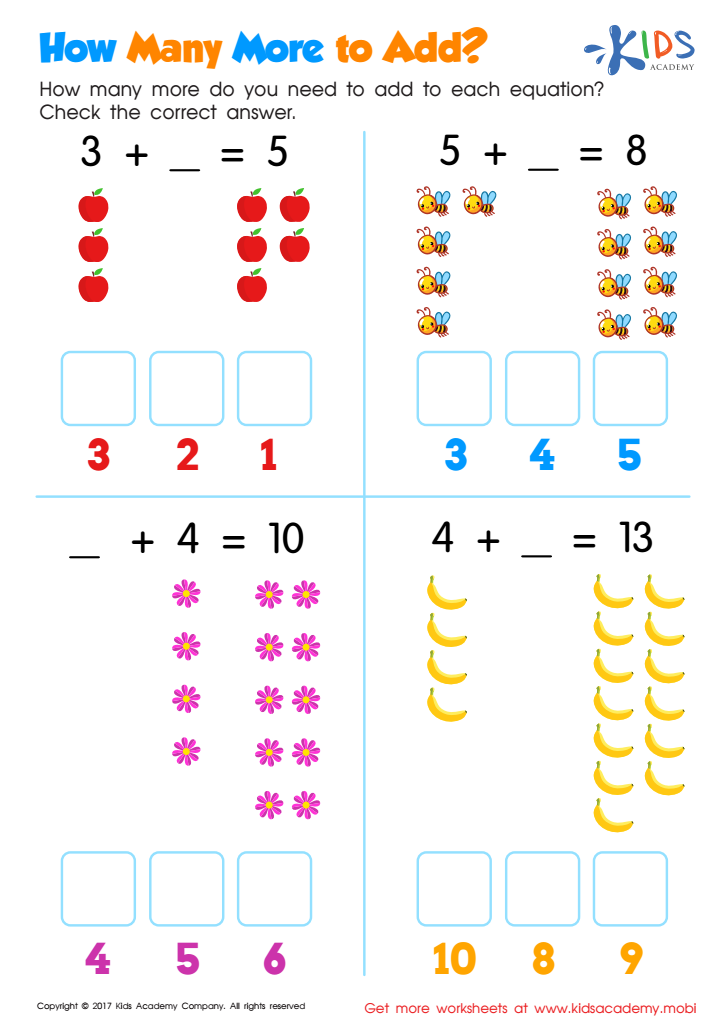
How Many More to Add Worksheet
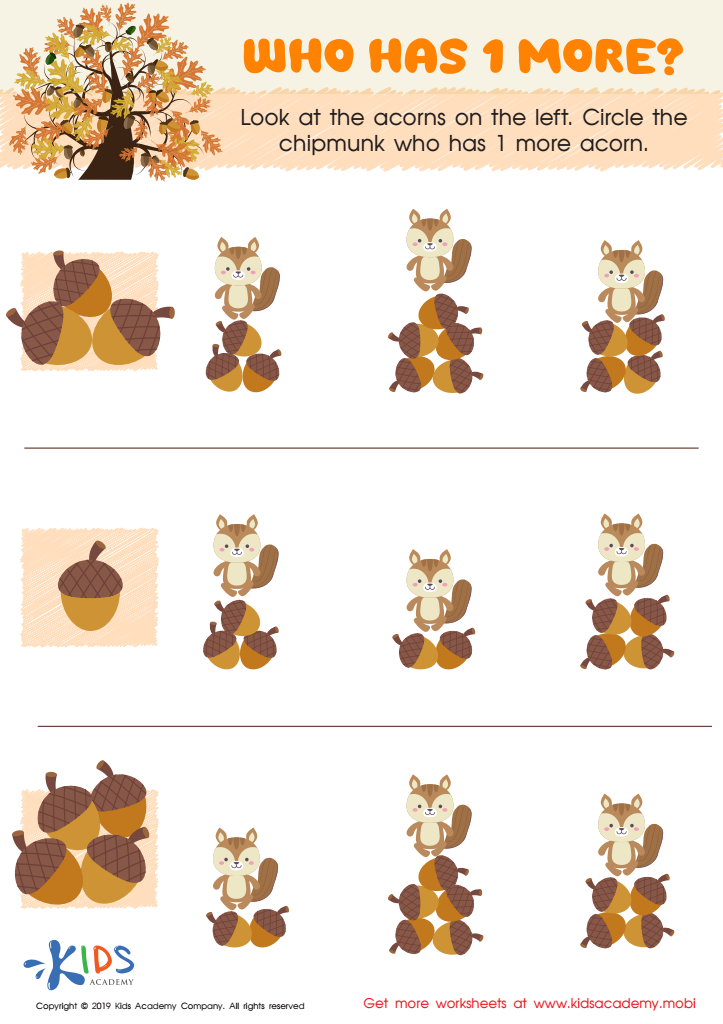
Who Has 1 More? Worksheet
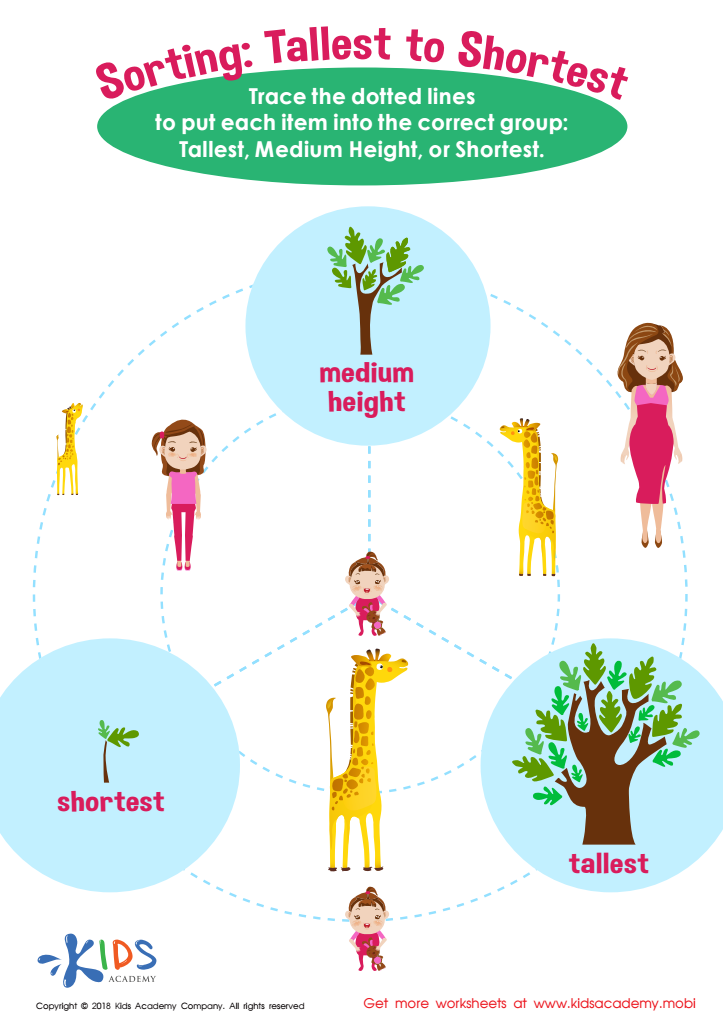
Sorting: Tallest to Shortest Worksheet







Comparison skills in math, such as understanding "more than," "less than," and "equal to," are fundamental building blocks for children's cognitive and numerical development during ages 4-6. These skills are crucial because they foster logical thinking and support early problem-solving abilities. As young learners engage in activities that involve sorting, matching, and comparing objects or numbers, they begin to make sense of quantitative relationships and patterns.
For parents and teachers, nurturing these skills provides a strong foundation for future math learning. Children who can compare quantities efficiently are better prepared for tackling more complex math concepts such as addition, subtraction, and eventually algebra. Moreover, comparison skills also aid in developing language skills, as children need to articulate their reasoning and understanding through comparative vocabulary – terms like "bigger," "smaller," "more," and "less."
Additionally, strengthening these skills can boost a child's self-esteem and confidence in their abilities, as they are more likely to succeed in a range of learning activities. For parents, integrating comparison-related games and tasks at home creates a fun and engaging learning environment. For teachers, employing structured comparison exercises in the curriculum ensures that children develop these essential skills, setting the stage for academic success and an enduring interest in math.








