Developing math skills Math Worksheets for Ages 4-6
3 filtered results
-
From - To
Unlock your child's potential with our "Developing Math Skills" worksheets designed for ages 4-6! Tailored to foster early mathematical understanding, these engaging activities cultivate essential skills in counting, number recognition, and simple addition and subtraction. Our worksheets provide a delightful mix of colorful illustrations and interactive exercises that keep young learners motivated and excited about math. Each sheet is aligned with early learning standards, ensuring your child grasps foundational concepts while having fun. Perfect for both classroom and home use, these worksheets are ideal for parents and educators seeking effective tools to enhance math learning in early childhood. Start the journey to math mastery today!
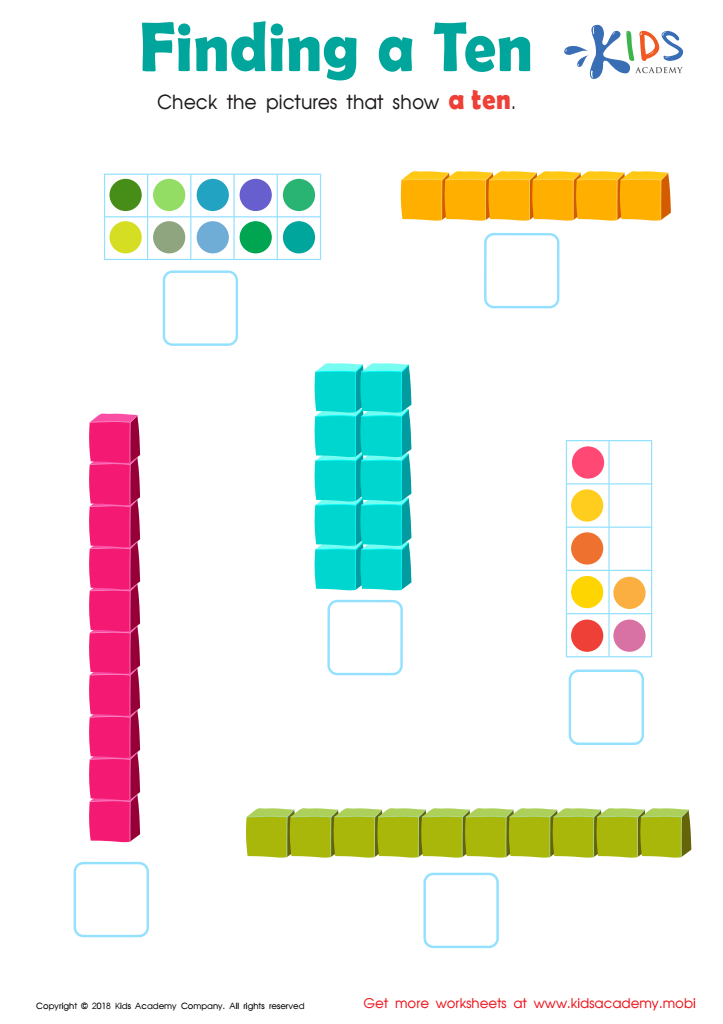
Finding a Ten Worksheet
 Assign to My Students
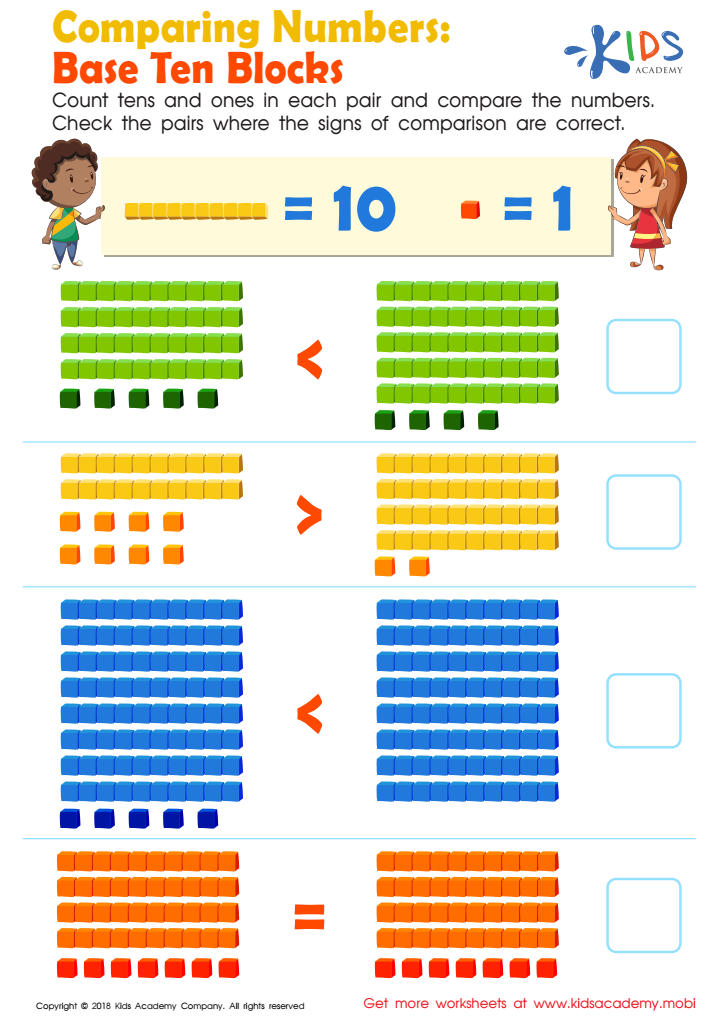
Comparing Numbers: Base Ten Blocks Worksheet
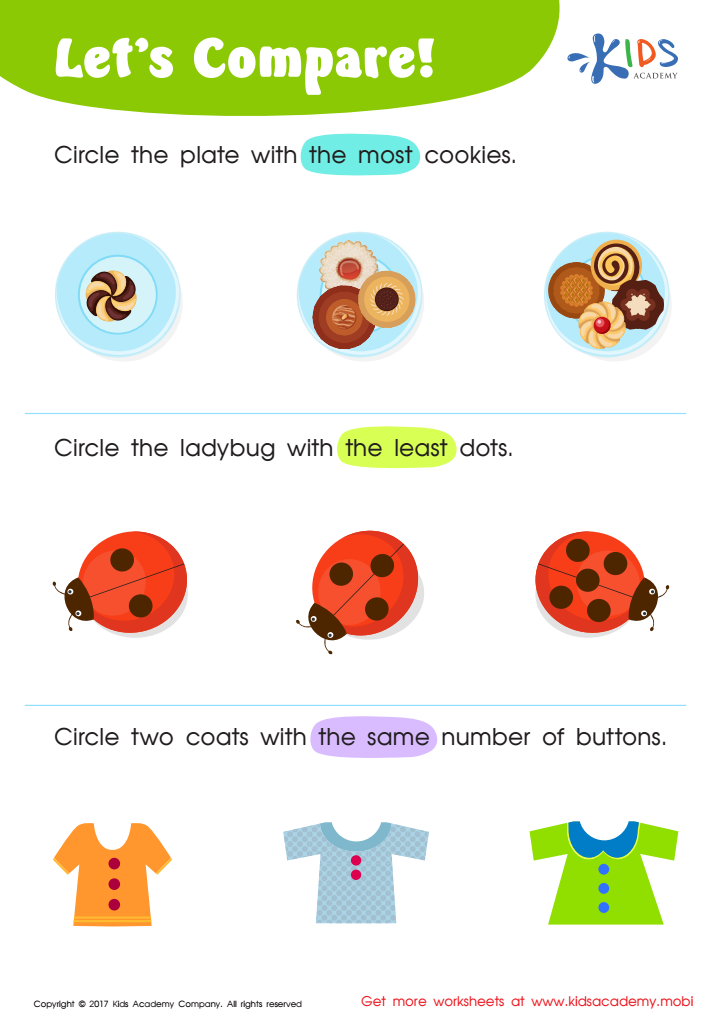
Matching: Classifying Toys by Size Worksheet


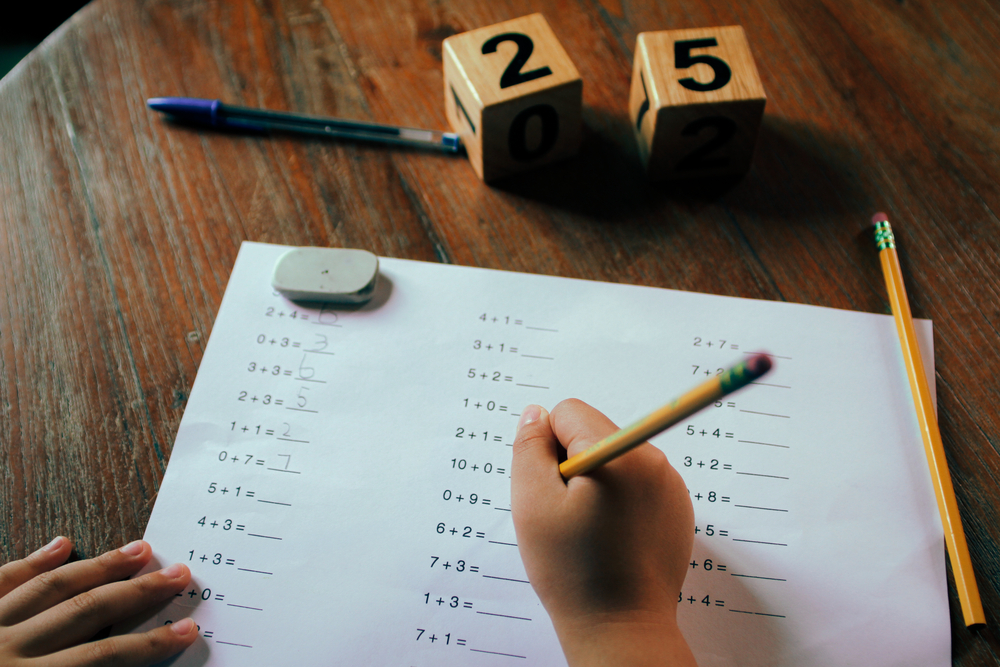





Developing math skills in children aged 4-6 is crucial for several reasons. First, this age group represents a foundational stage in cognitive development when children begin to form essential mathematical concepts. Early exposure to math helps them understand basic concepts such as counting, sorting, and pattern recognition, which serve as building blocks for more complex math skills later on.
Additionally, developing math skills fosters critical thinking and problem-solving abilities. Engaging children in math through fun games and activities encourages them to explore, investigate, and apply logic, which benefits them academically and in everyday situations. Moreover, instilling a positive attitude toward math early on can reduce math anxiety in later years, resulting in increased confidence and persistence in tackling more challenging mathematical concepts.
Furthermore, parents and teachers play a significant role in creating a supportive environment where kids can explore math in a hands-on manner. By incorporating math-related activities into everyday life, such as measuring ingredients while cooking or counting steps while walking, they reinforce learning in real-world contexts.
Ultimately, nurturing math skills at this young age sets children on a path toward academic success while equipping them with essential life skills.








