Developing observational skills Math Worksheets for Ages 4-6
3 filtered results
-
From - To
Unlock the potential of young learners with our "Developing Observational Skills" math worksheets designed specifically for ages 4-6. These engaging resources focus on enhancing children's ability to observe, compare, and analyze their surroundings through playful activities. By fostering these essential skills, children not only improve their mathematical reasoning but also nurture critical thinking and problem-solving abilities. Our interactive worksheets include fun visuals and relatable scenarios that ensure your child stays engaged while learning. Perfect for parents and educators, these worksheets are a fantastic way to promote cognitive development in early math education. Explore our collection today and start building observational skills through playful learning!
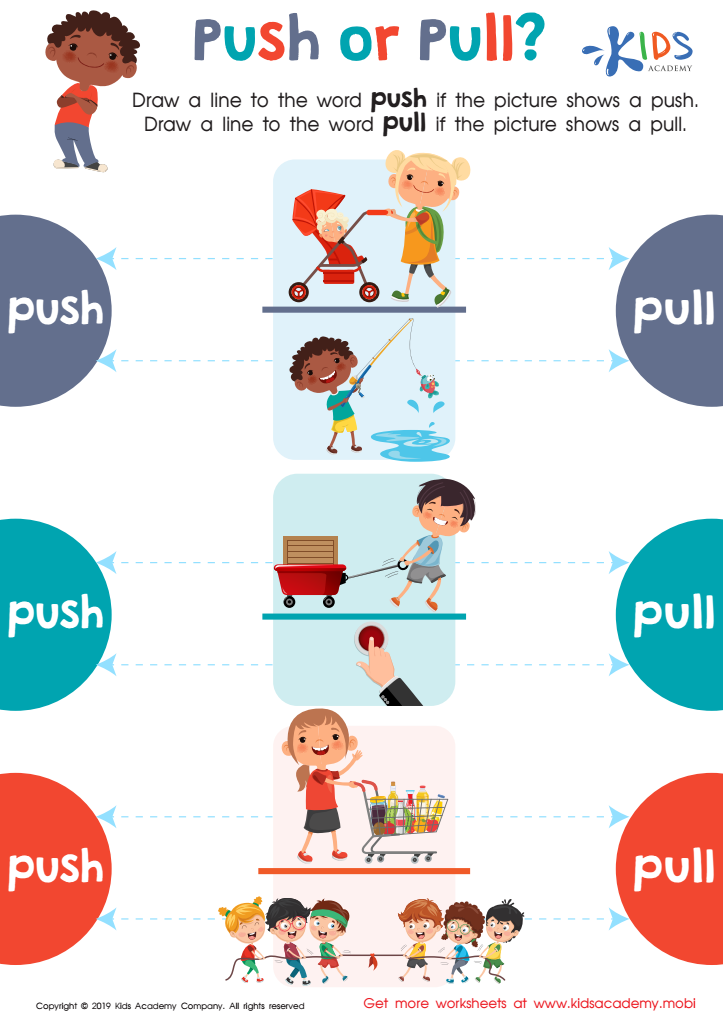
Push or Pull? Worksheet
 Assign to My Students
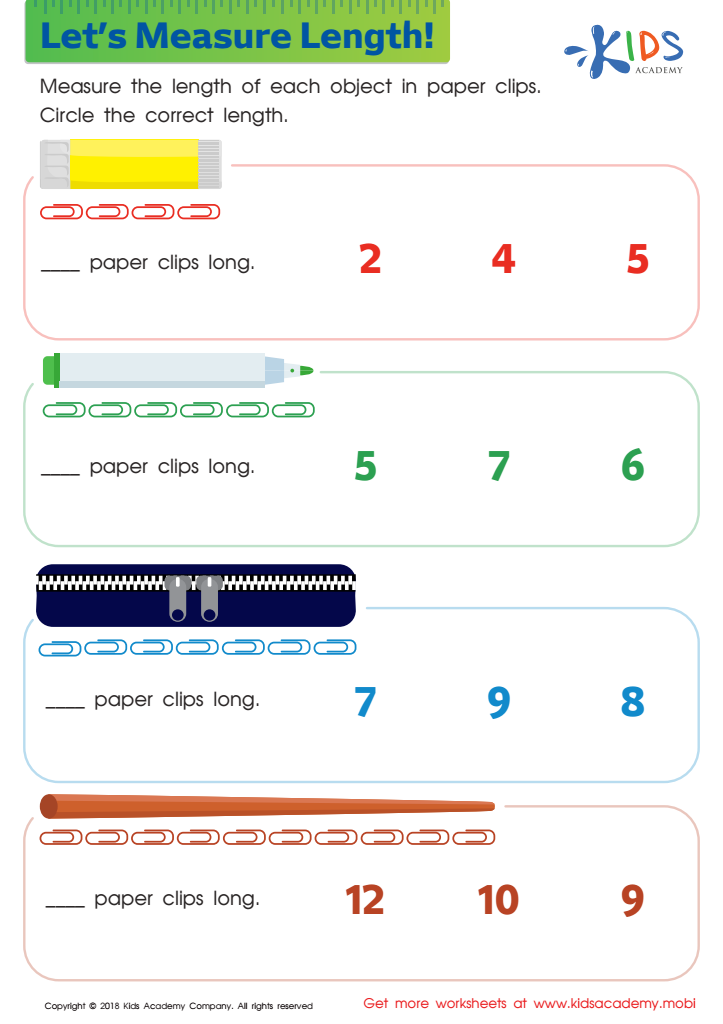
Lets Measure Length Worksheet
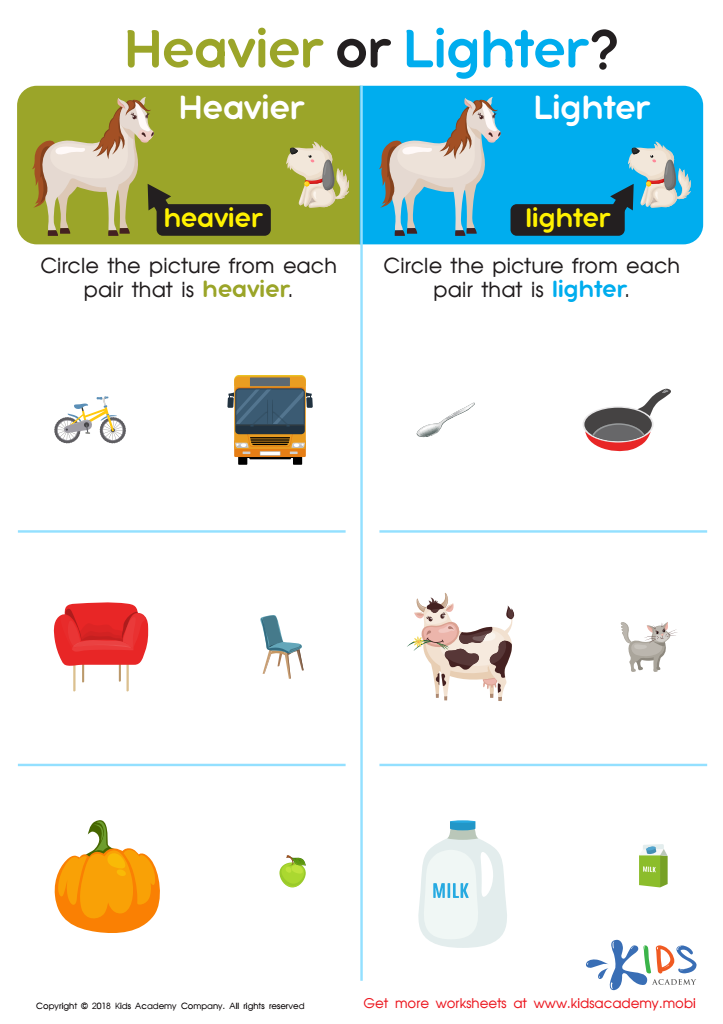
Heavier or Lighter? Worksheet







Developing observational skills in young children, particularly in math, is crucial for their cognitive development and future learning. At ages 4 to 6, children's brains are rapidly evolving, and fostering their ability to observe and interpret their surroundings lays a solid foundation for mathematical reasoning. When parents and teachers encourage observational skills, they help children recognize patterns, categorize objects, and understand relationships, which are essential components of early math learning.
Moreover, observational skills enable children to engage in critical thinking and problem-solving. By learning to notice details and differences, children can approach math concepts like counting, shapes, and measurements with greater confidence and creativity. This practice also supports the development of fine motor skills, as they engage with their environment through hands-on activities.
Moreover, fostering observational skills creates a richer learning environment. Children learn to express their thoughts and findings, improving their verbal skills and confidence in sharing mathematical ideas. Ultimately, by prioritizing observational skills in math, parents and teachers help cultivate a love for learning and a deeper understanding of the world, building the competencies needed for future academic success and daily life challenges.








