Fine motor skills (writing numbers) Math Worksheets for Ages 4-6
16 filtered results
-
From - To
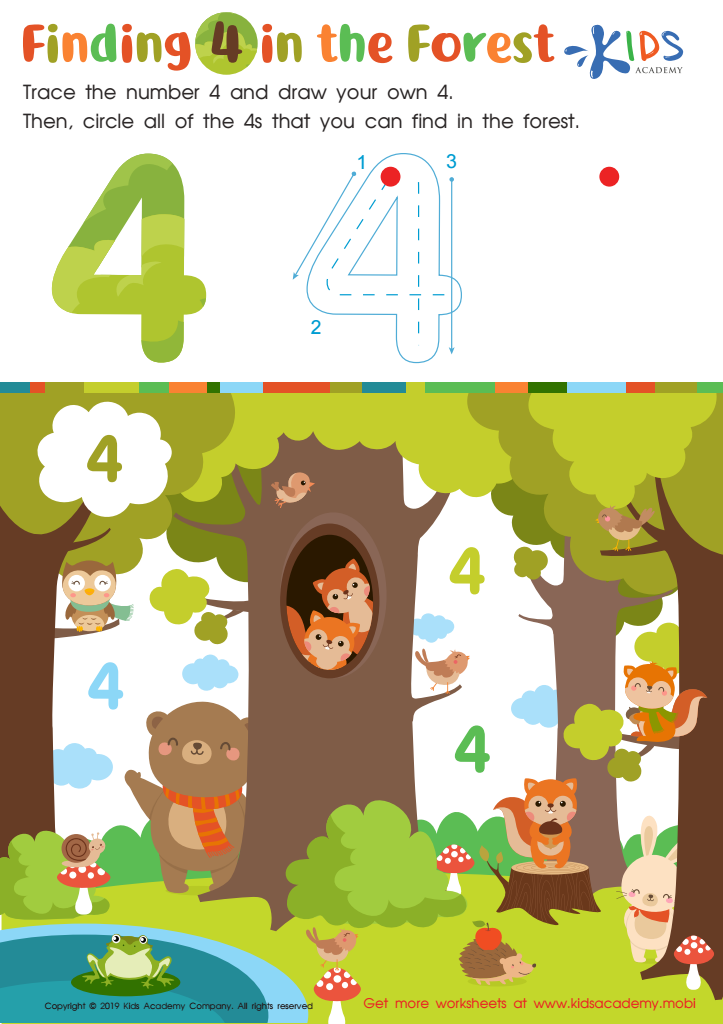
Enhance your child's fine motor skills and number writing abilities with our engaging math worksheets designed for ages 4-6. These thoughtfully crafted activities promote pencil control and precision while helping young learners master writing numbers. Each worksheet offers fun tracing exercises, number formation practice, and stimulating graphics to keep kids captivated. Ideal for at-home learning or classroom use, our worksheets build foundational skills necessary for future mathematical success. Set your child on the path to academic excellence with Kids Academy's fine motor skills writing numbers worksheets. Visit our page and download yours today for hands-on practice and learning fun!
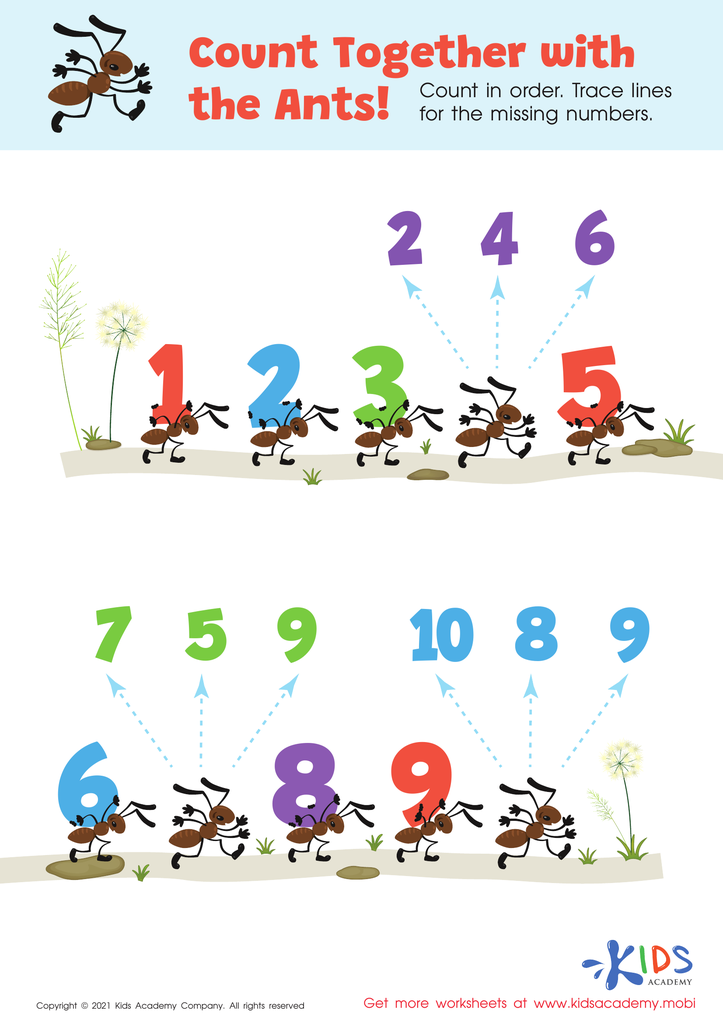
Count Together with the Ants Worksheet
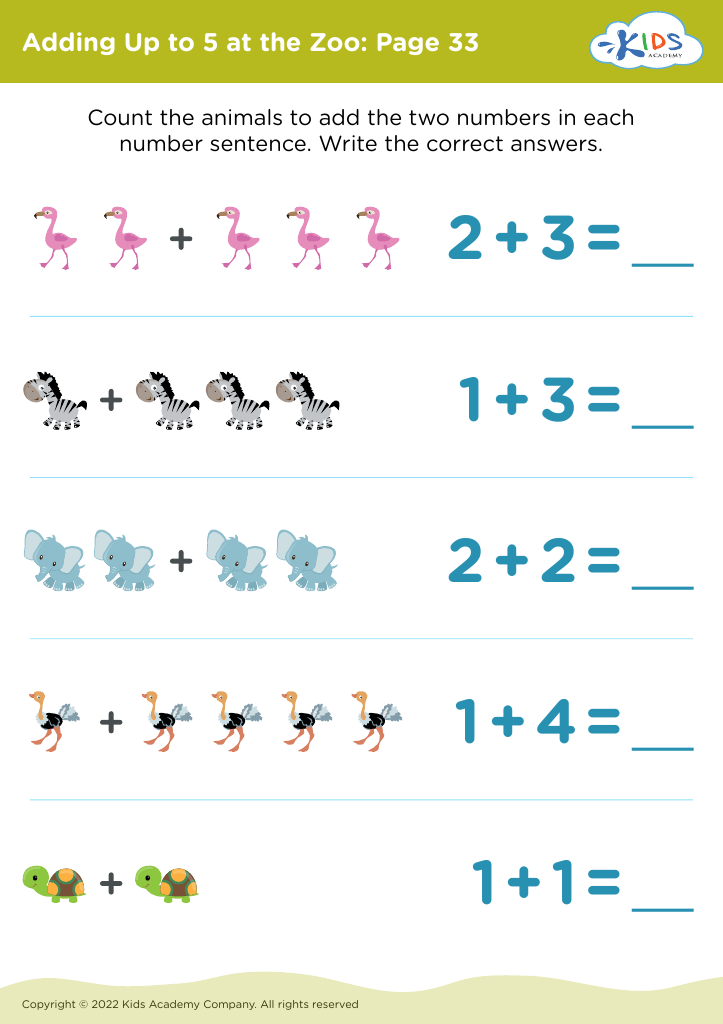
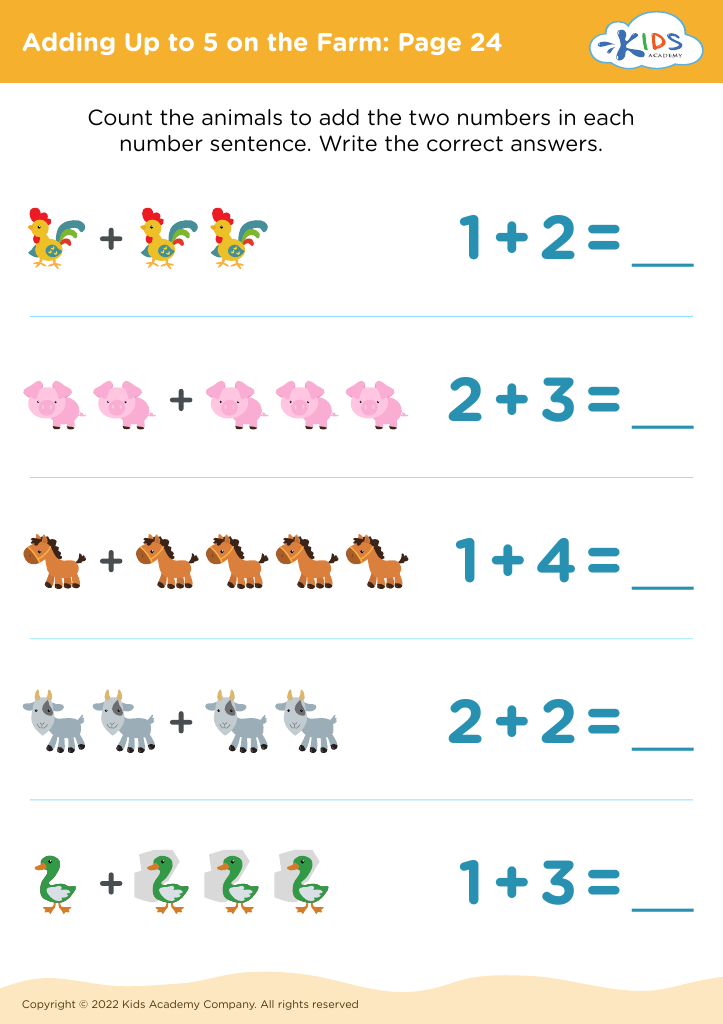
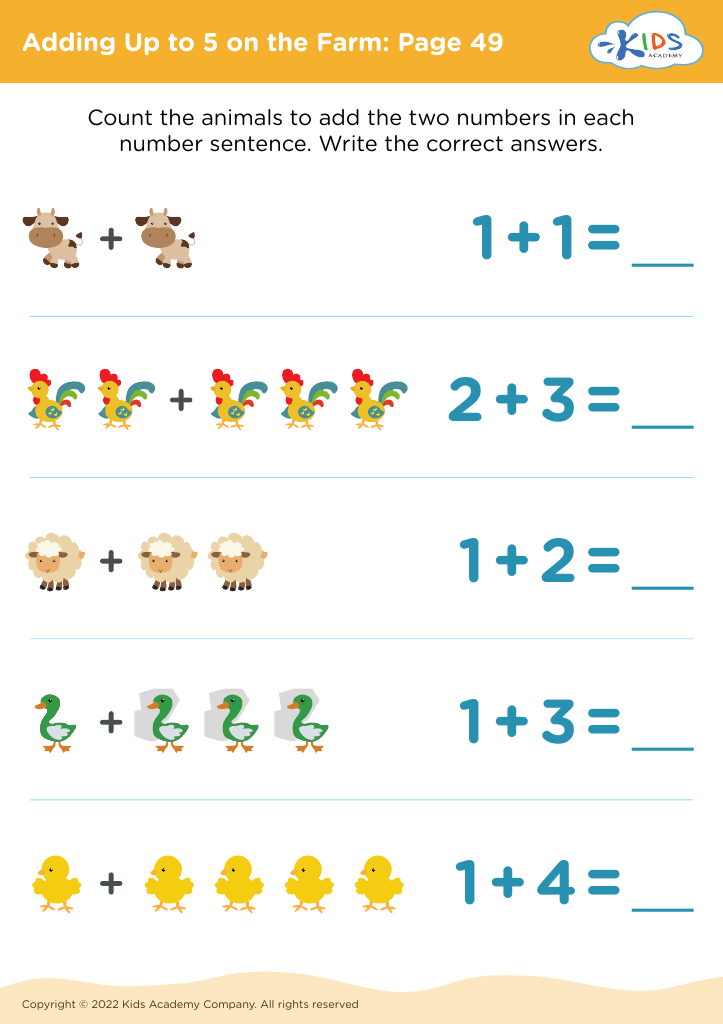
Finding 4 in the Forest Worksheet
 Assign to My Students
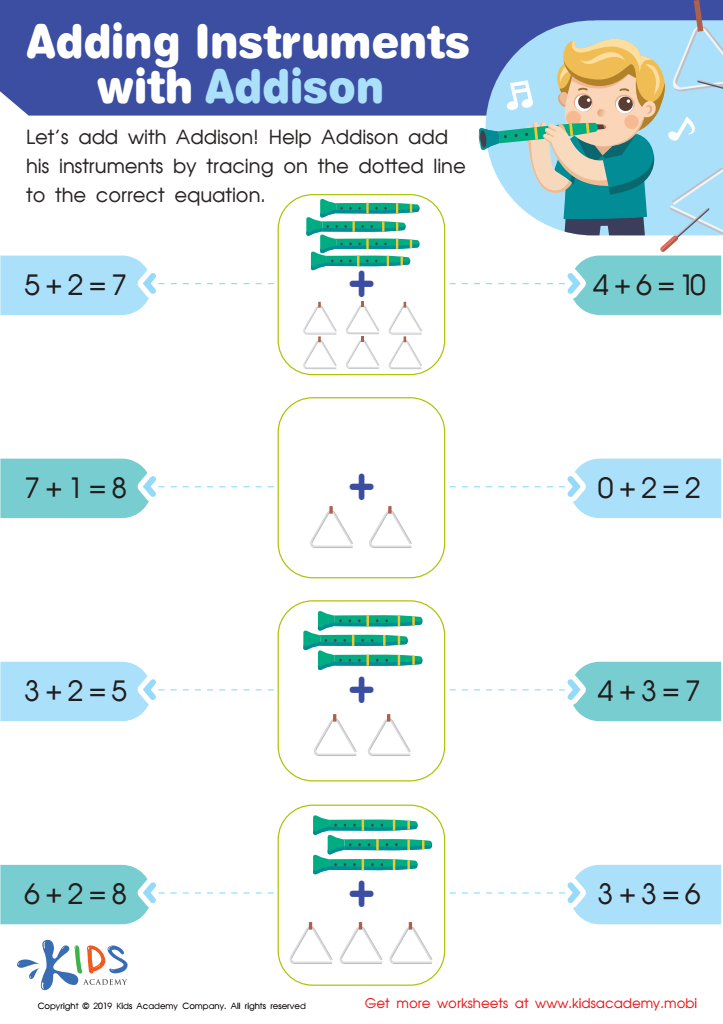
Adding Instruments with Addison Worksheet








Parents and teachers should care deeply about fine motor skills related to writing numbers in children aged 4-6 because these foundational skills are critical for academic development and everyday functioning. Fine motor skills involve the coordination of small muscles in the hands and fingers, enabling precise movements essential for tasks like writing, cutting, and buttoning clothes. Mastering these skills early can boost children’s confidence and foster independence.
Writing numbers specifically facilitates both cognitive and motor development. It encourages children to focus, follow sequences, and understand the numerical value associated with each symbol, forming a strong basis for more complex mathematical concepts. Developing good number-writing skills improves hand-eye coordination and dexterity, paving the way for overall writing proficiency.
In addition, proficient fine motor skills predict academic success. When children can write numbers clearly and accurately, they are more likely to engage in mathematical activities positively, reinforcing their understanding and enjoyment of the subject. Parents and teachers play crucial roles in providing opportunities for practice through fun, engaging activities such as tracing, playing with dough, or using age-appropriate manipulatives. Investing time in these activities supports holistic development, reducing frustrations later in school where more advanced tasks require well-established foundational skills.








