Mathematical problem-solving Math Worksheets for Ages 4-6
6 filtered results
-
From - To
Discover engaging and educational mathematical problem-solving worksheets designed specifically for children aged 4-6! These printable resources foster critical thinking and foundational math skills, making learning fun and effective. Our worksheets focus on essential areas such as counting, simple addition and subtraction, and recognizing patterns, all tailored to spark young minds' curiosity. With vibrant illustrations and interactive exercises, kids will enjoy developing their problem-solving abilities while boosting their confidence in math. Perfect for at-home learning or supplementary classroom activities, these worksheets provide a valuable tool for early learners to build a strong mathematical foundation. Start your child’s math adventure today!
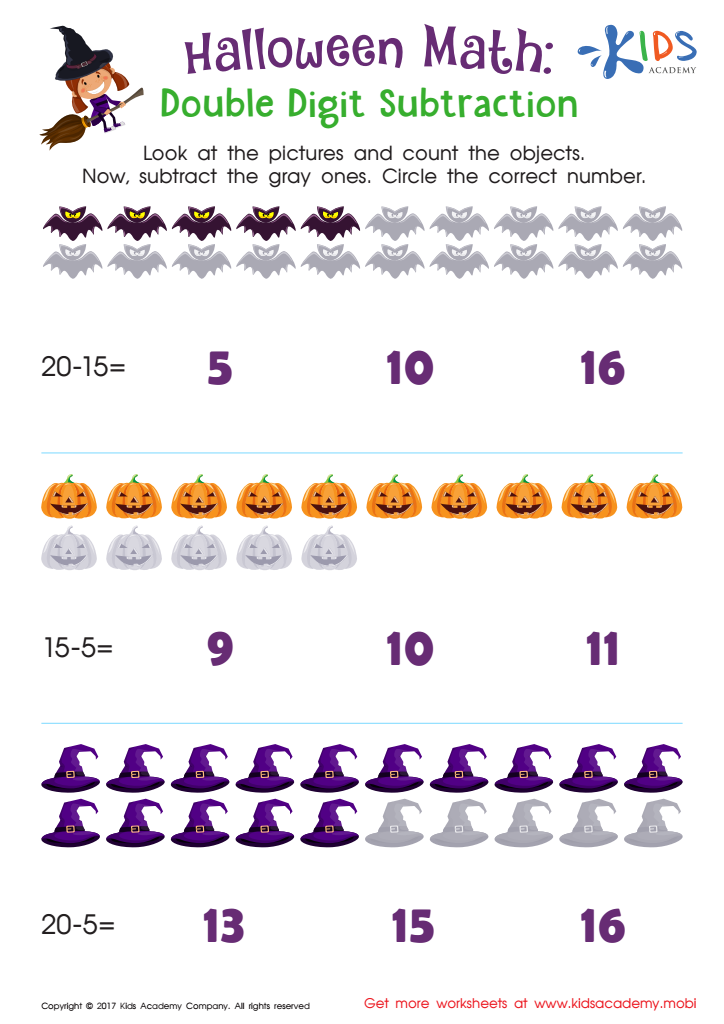
Halloween Math Subtraction Worksheet
 Assign to My Students
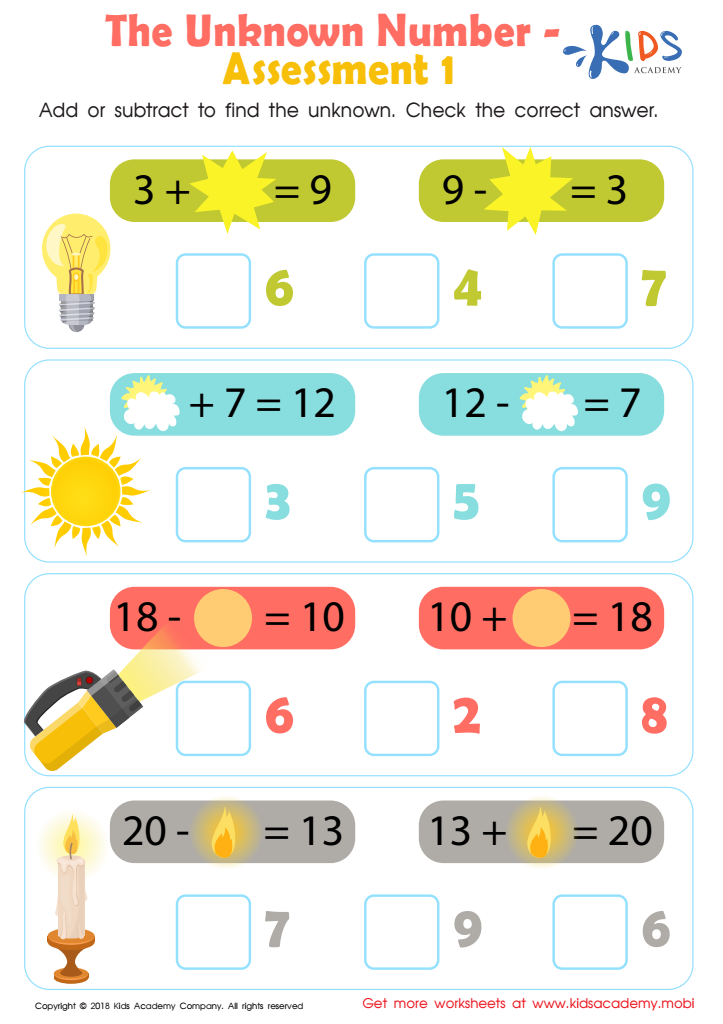
The Unknown Number: Assessment 1 Worksheet
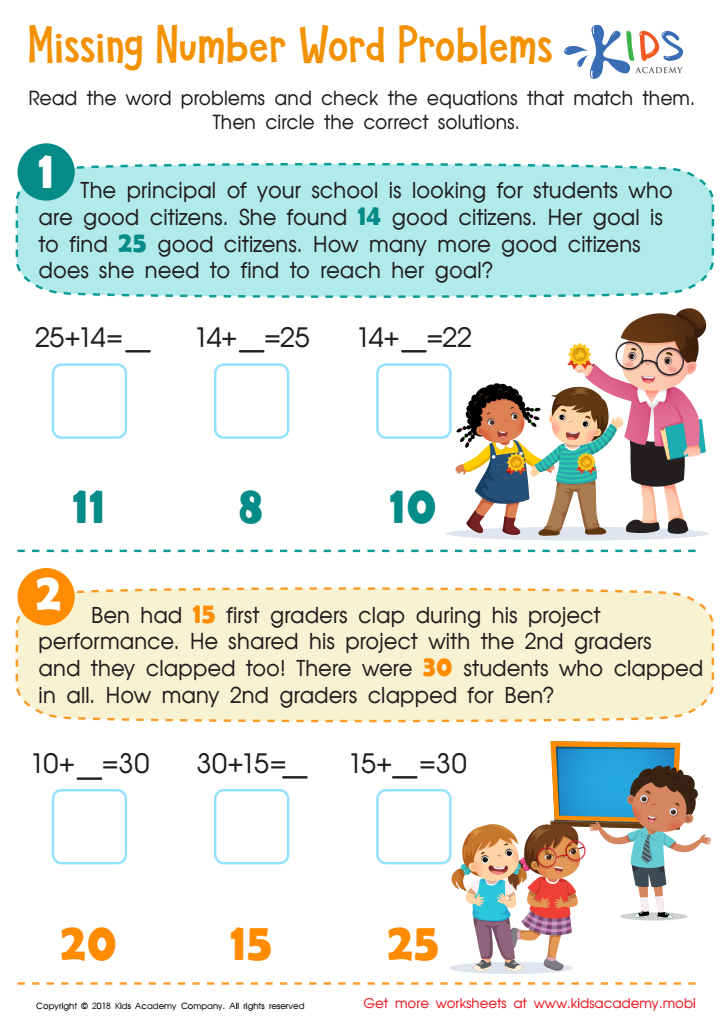
Missing Number Word Problems Worksheet
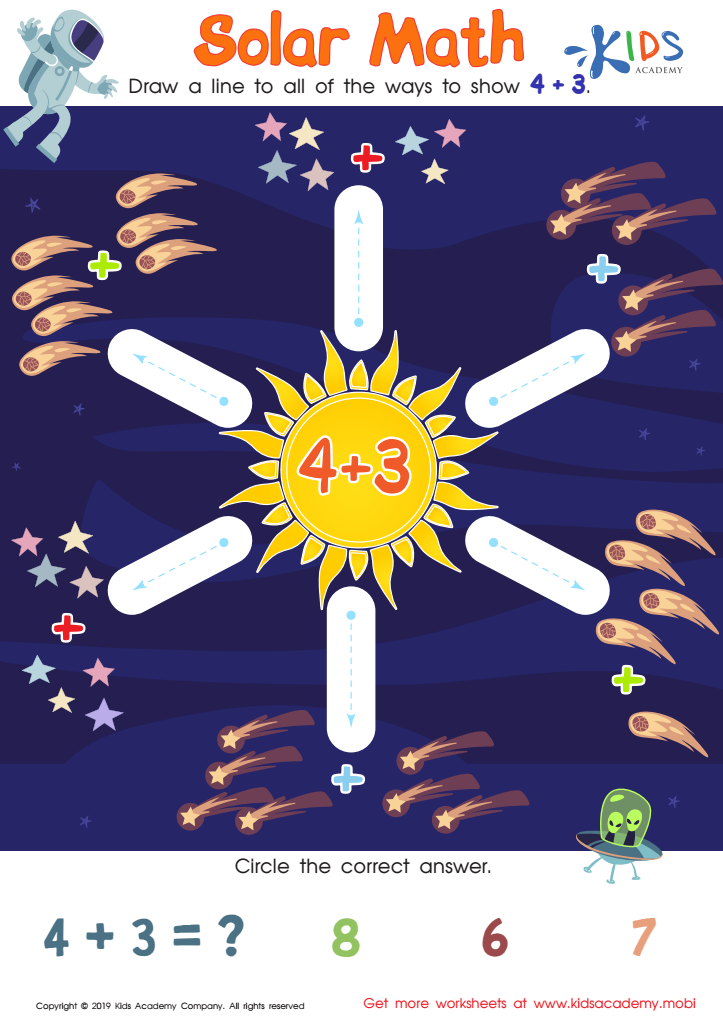
Solar Math Worksheet
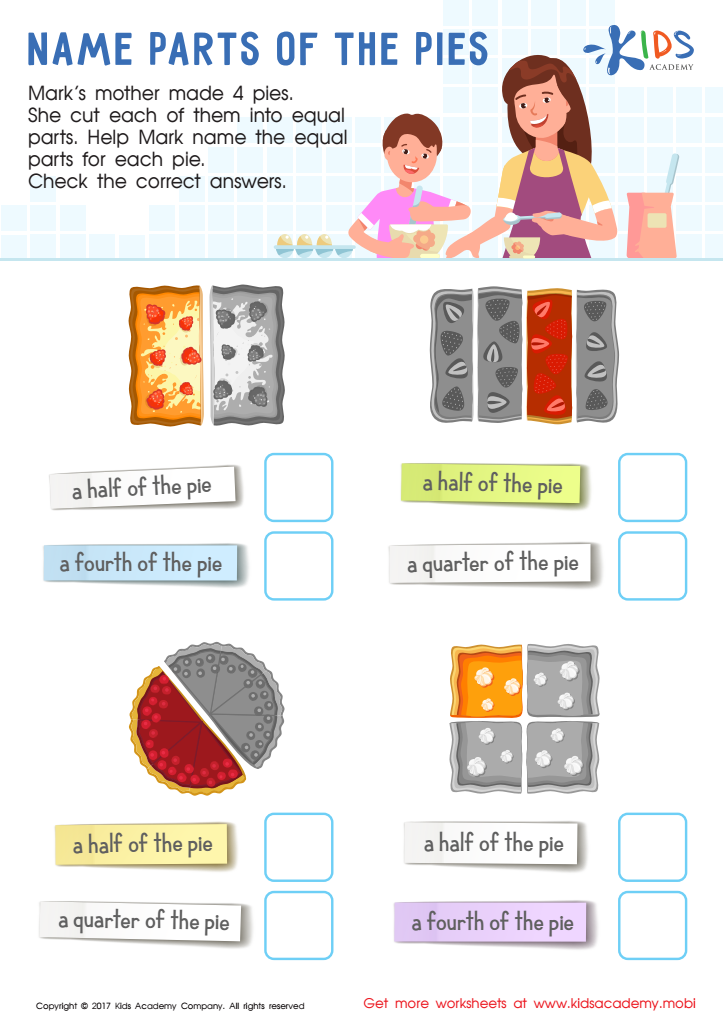
Name Parts of the Pies Worksheet
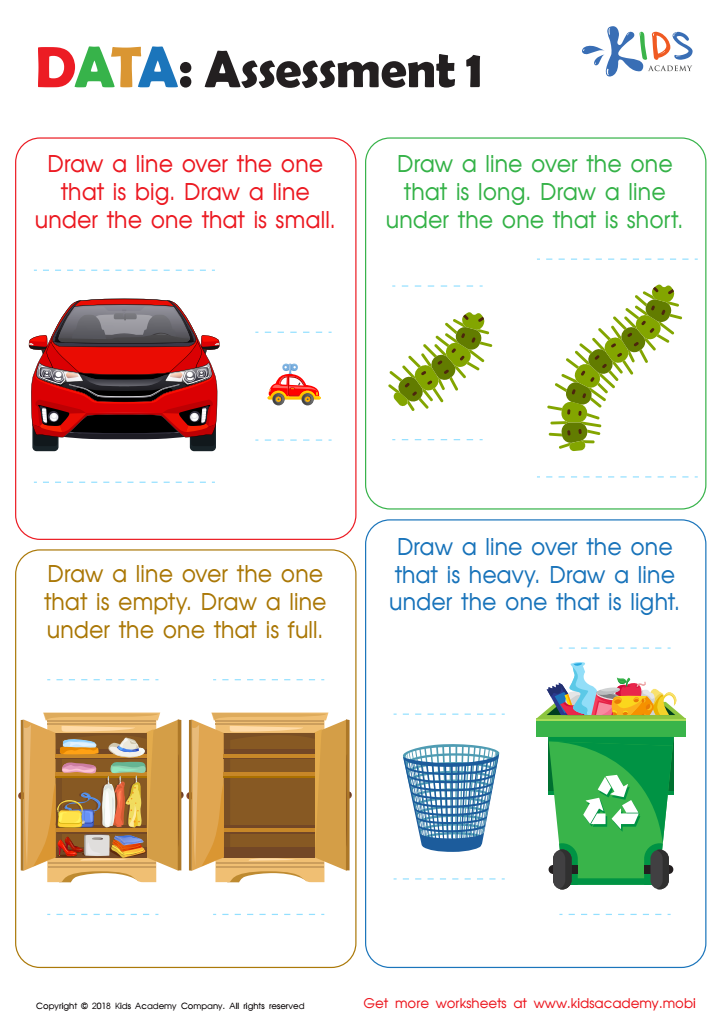
Data: Assessment 1 Worksheet








Mathematical problem-solving is vital for children aged 4-6 as it lays the foundation for critical thinking and cognitive development. During these formative years, children are naturally curious and eager to explore. Engaging them in mathematical problem-solving cultivates essential skills like logical reasoning, pattern recognition, and decision-making. These skills are not only crucial for mathematics but are transferable to various subjects and real-life situations.
Moreover, problem-solving fosters perseverance and resilience in young learners. When children tackle a challenge, they learn to embrace failure as part of the learning process, building confidence and self-esteem. This mindset encourages a positive attitude towards challenges in their future academic journeys.
Parents and teachers play a key role in nurturing a child's mathematical abilities by incorporating fun, hands-on activities and games that promote problem-solving skills. This interactive approach makes learning enjoyable, ensuring that children remain engaged and motivated.
Ultimately, prioritizing mathematical problem-solving at this early stage creates a strong mathematical foundation, preparing children for more advanced concepts later on. It also shapes them into independent thinkers who can approach challenges with creativity and confidence, benefiting them both academically and personally as they grow.








