Number tracing Math Worksheets for Ages 4-6
3 filtered results
-
From - To
Introduce your little ones to the world of numbers with our engaging Number Tracing Math Worksheets for Ages 4-6! These worksheets are designed to enhance early math skills while making learning fun. With delightful illustrations and varied exercises, children will practice writing numbers, improving their pencil grip, and developing their fine motor skills. Tailored for preschool and kindergarten learners, our printable worksheets aim to build a strong foundation in numbers through repetitive tracing activities. Perfect for both at-home practice and classroom settings, our resources ensure a productive and enjoyable learning experience for young mathematicians. Start your child’s journey to number mastery today!
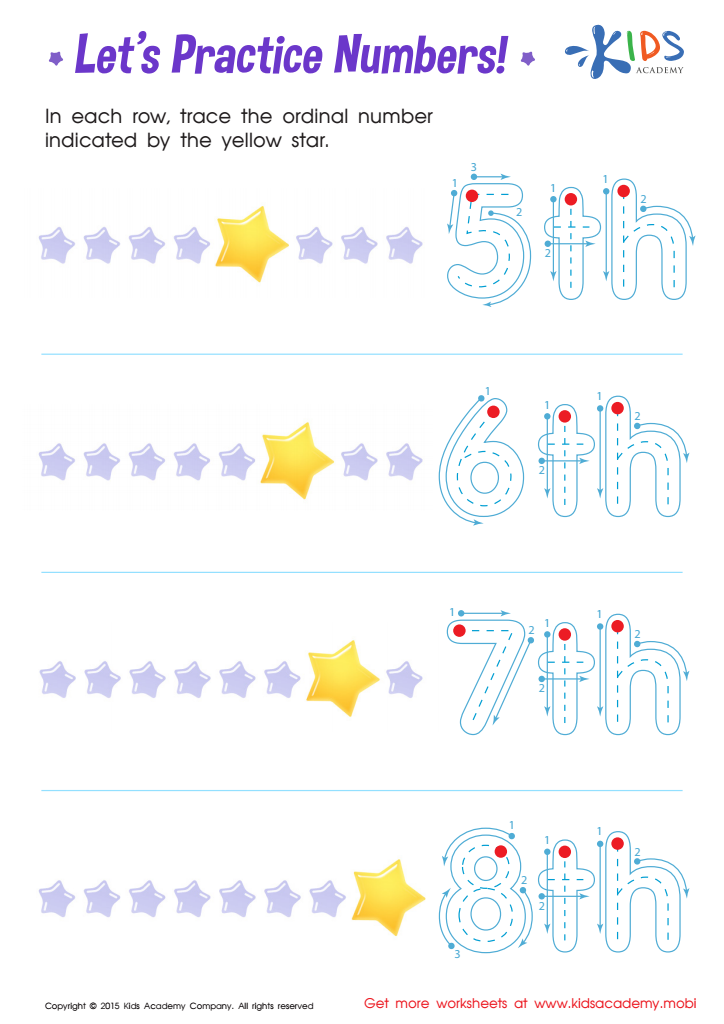
 Assign to My Students
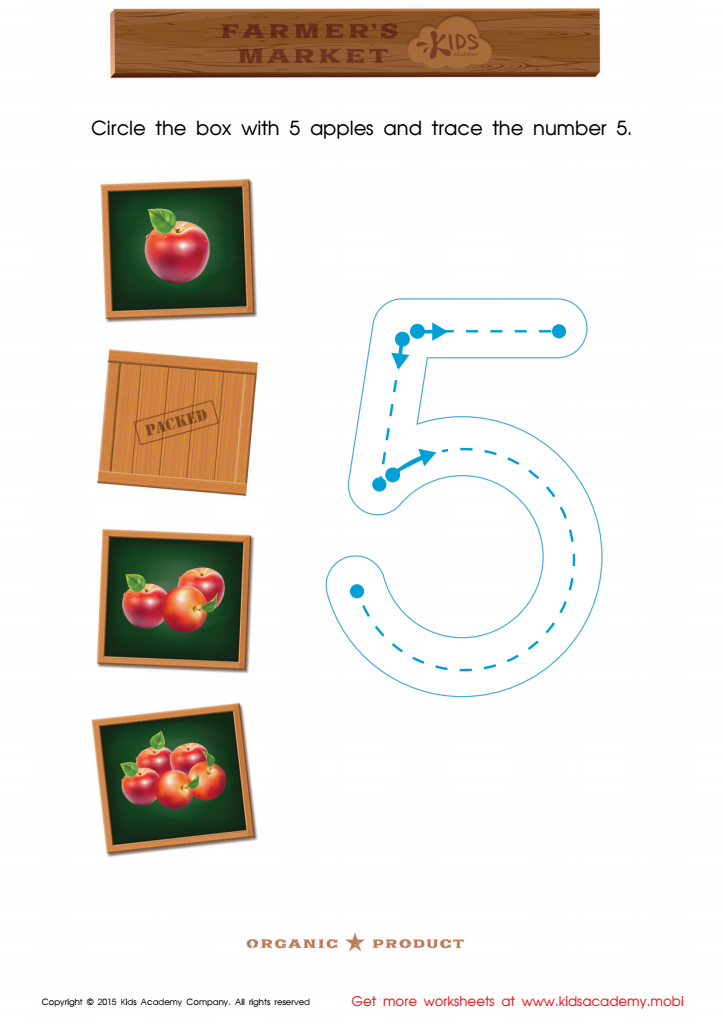
Count the Apples and Trace the Number 5 Printable
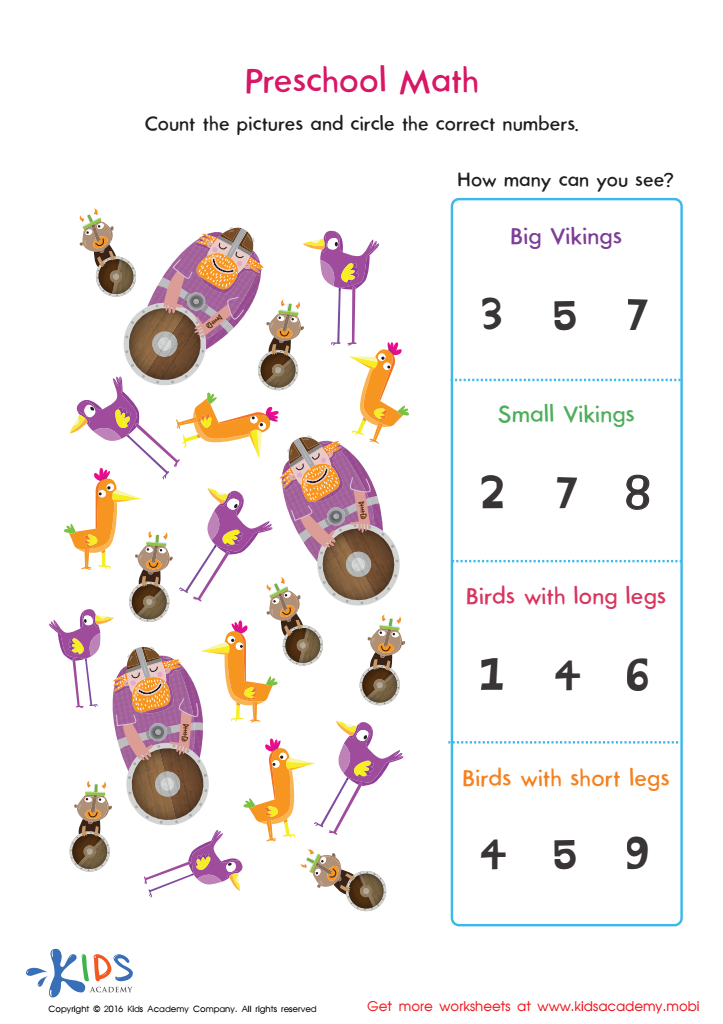








Number tracing for children aged 4-6 is crucial for several reasons. Firstly, it helps develop fine motor skills. As young learners trace numbers, they practice holding writing instruments, guiding their hand movements, and improving hand-eye coordination, which are foundational skills for later writing tasks.
Secondly, number tracing reinforces number recognition and understanding. Engaging with numbers through tracing enables children to visually and physically connect with the shapes and patterns of these figures, aiding in memorization and comprehension. This tactile experience promotes better retention than mere visual learning alone.
Moreover, number tracing introduces basic mathematical concepts. As children begin to recognize numbers, they also start to grasp foundational ideas like counting and ordering, key to developing numeracy skills. Early exposure to these concepts through enjoyable, hands-on activities makes learning math less intimidating and more engaging.
Lastly, involving parents or teachers in this process fosters a supportive learning environment. When adults participate by guiding and encouraging children during tracing activities, it builds confidence, promotes communication about numbers, and establishes positive relationships around learning. Ultimately, number tracing lays the groundwork not just for mathematical understanding, but for a lifelong love of learning.








