
Time recognition Math Worksheets for Ages 4-6
3 filtered results
Difficulty Level
Grade
Age
-
From - To
Subject
Activity
Standards
Introduce your little learners to the exciting world of time with our Time Recognition Math Worksheets designed specifically for ages 4-6! These engaging and interactive worksheets provide children with a fun way to learn how to read clocks, understand time concepts, and develop essential math skills. Featuring vibrant illustrations and age-appropriate activities, our worksheets encourage hands-on practice, helping young learners master both digital and analog time. Perfect for home or school use, these worksheets will ignite curiosity and build confidence in young mathematicians. Begin your child's journey into time-telling today and watch them shine with newfound knowledge!
Favorites
With answer key
Interactive
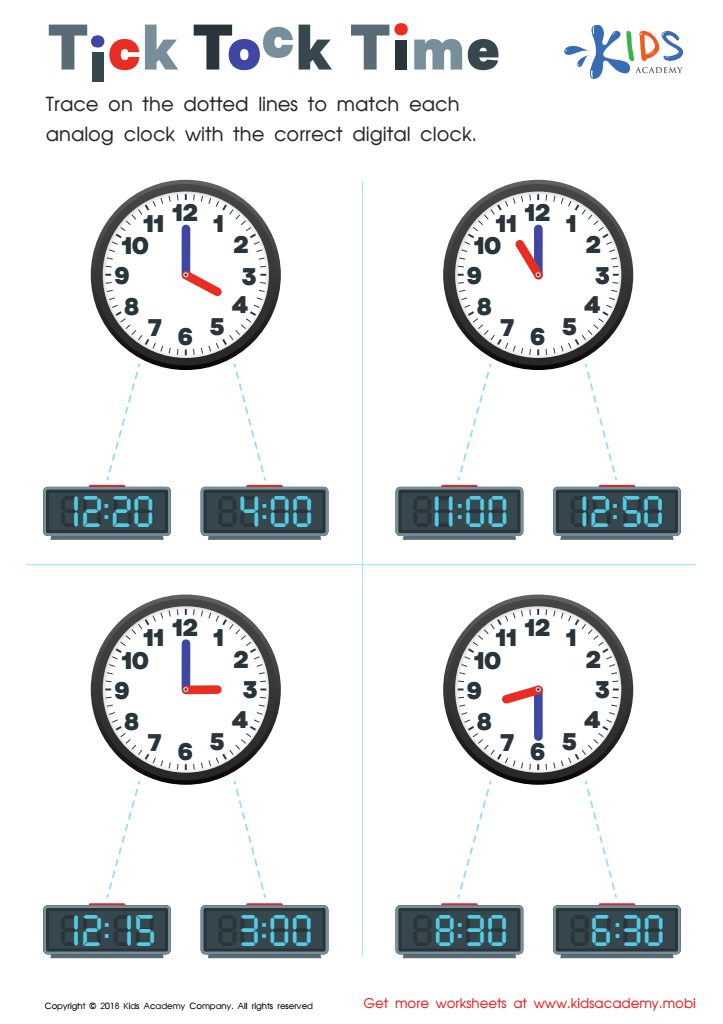
Tick Tock Time Worksheet
Trace the dotted lines on this worksheet to match analog and digital clocks! It's a great way to help your kids learn time-telling. They'll get better at converting analog to digital, and vice versa. Get your children to try it - it's a fun way to practice!
 Assign to My Students
Tick Tock Time Worksheet
Worksheet
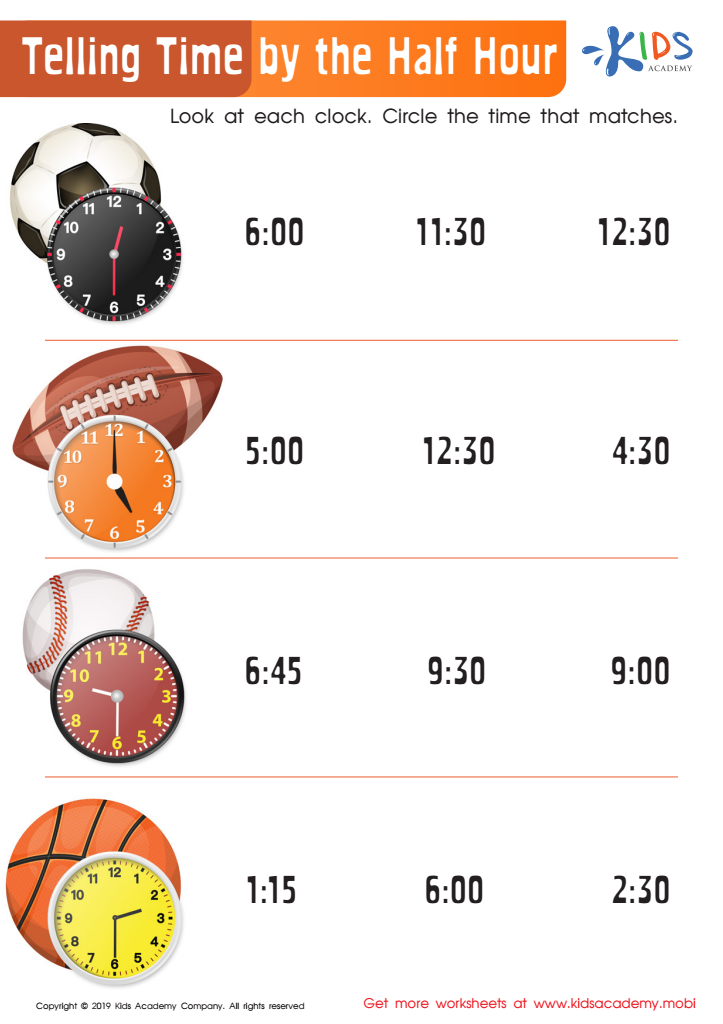
Telling Time by the Half Hour Worksheet
Teach kids to tell time with this worksheet! Four clocks are labeled with different times; help your child circle the right one. It's a great way to teach them to read analog and digital clocks, watches, and written times. Easy and fun learning!
Telling Time by the Half Hour Worksheet
Worksheet
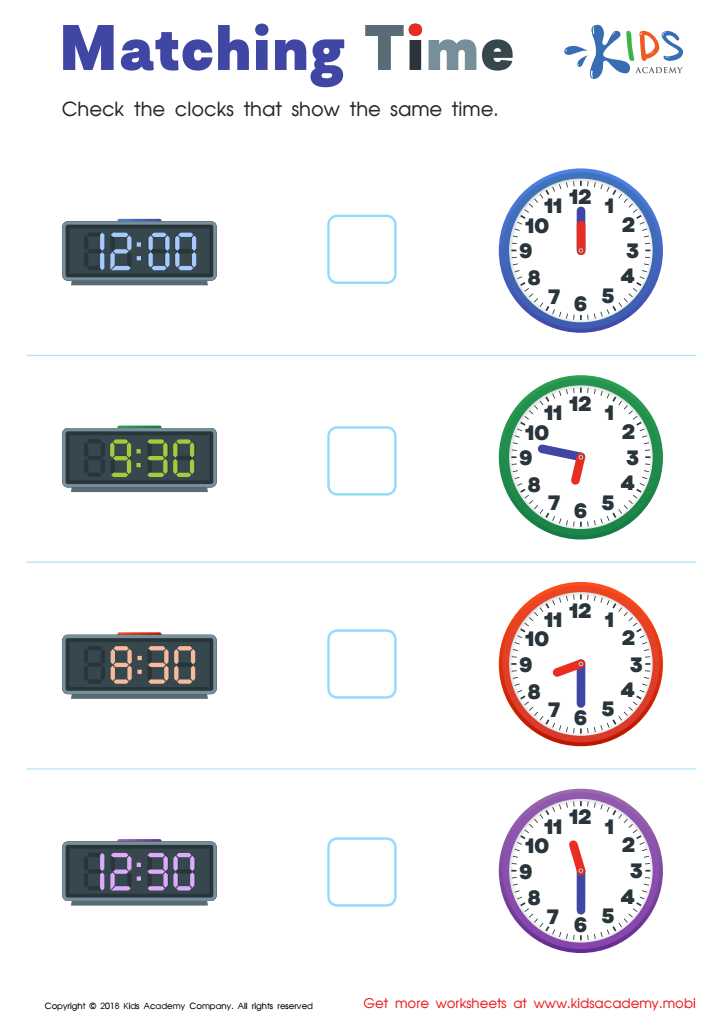
Matching Time Worksheet
Teach your child to read time in both digital and analog formats with this helpful printout. They'll identify clocks that match in both formats and check them off. Colorful and engaging, it's a great way to help your child understand the concept of time-telling.
Matching Time Worksheet
Worksheet
Join Kids Academy for Free
Who is primarily going to use this learning content?








Time recognition is a fundamental skill for children ages 4-6, playing a crucial role in their cognitive and social development. Understanding time helps young learners develop routines, manage transitions, and gain independence—vital skills as they prepare for school and daily life. By recognizing numbers on a clock and grasping the concept of time, children build a foundational understanding of sequencing and order, enhancing their mathematical reasoning.
Moreover, time recognition helps alleviate anxiety around schedules. As children learn to anticipate activities, such as meals, playtime, and bedtime, they cultivate a sense of security and control over their environment. It also fosters language skills, as they begin to articulate and share their understanding of time.
From a practical standpoint, teachers and parents can use everyday opportunities—like reading a book or planning a day—to present time concepts. By incorporating playful activities related to time—like setting timers for chores or using songs about the hours—these caregivers can enrich children’s learning experiences. Engaging children with the concept of time not only aids academic achievement but also enhances their life skills, supporting balanced development and nurturing essential habits for the future. Thus, investing in time recognition is invaluable for holistic early education.








