Understanding equations Math Worksheets for Ages 4-6
4 filtered results
-
From - To
Discover the fun of learning with our "Understanding Equations" math worksheets designed for children aged 4-6! These engaging, age-appropriate resources help young learners develop a foundational understanding of basic equations through colorful illustrations and interactive activities. Kids will explore concepts such as addition and subtraction, building their confidence in math as they solve simple problems. Our worksheets cater to various learning styles, ensuring that every child can grasp the essentials of equations in an enjoyable way. Perfect for homeschooling or enhanced learning in the classroom, these worksheets pave the way for a lifelong love of mathematics. Start your child's math journey today!
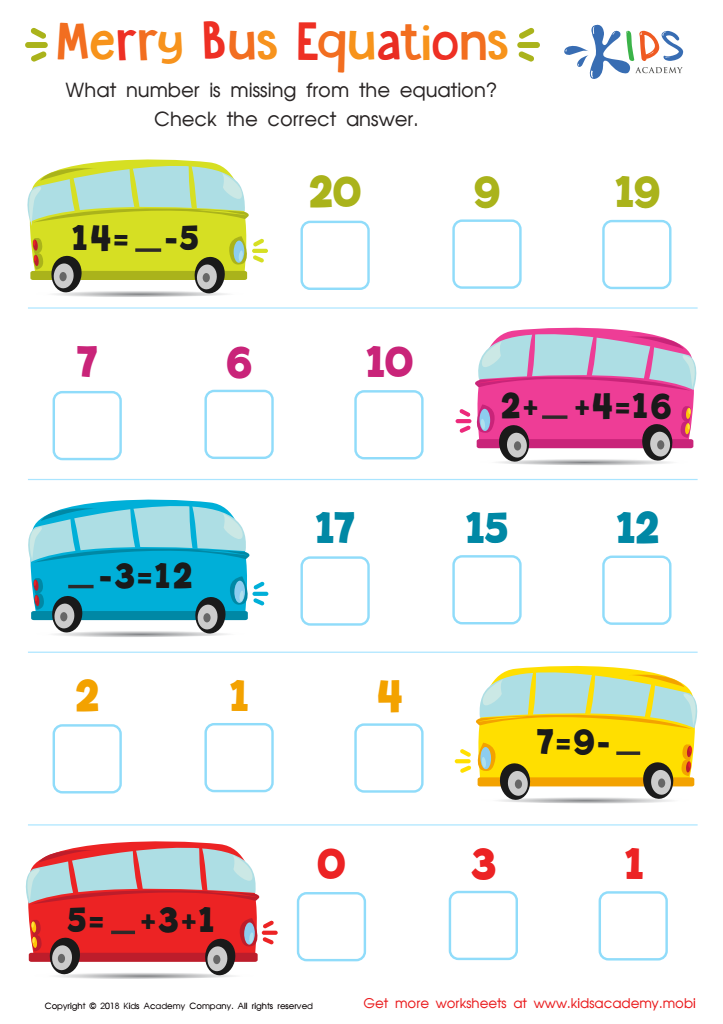
Merry Bus Equations Worksheet
 Assign to My Students
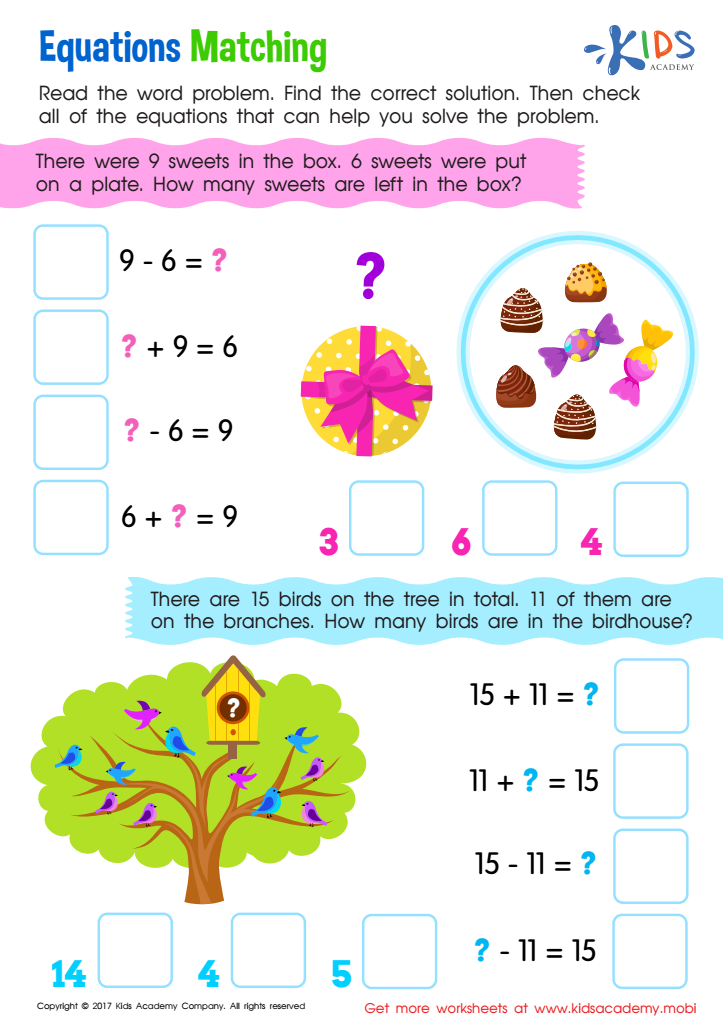
Equations Matching Word Problems Worksheet
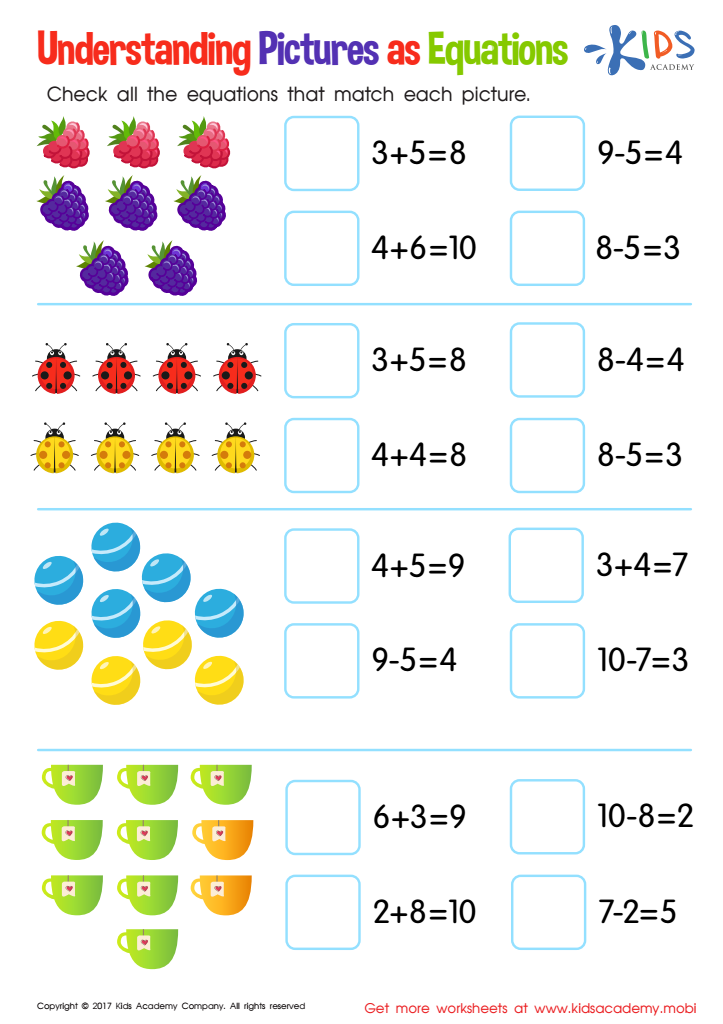
Understanding Pictures as Equations Worksheet
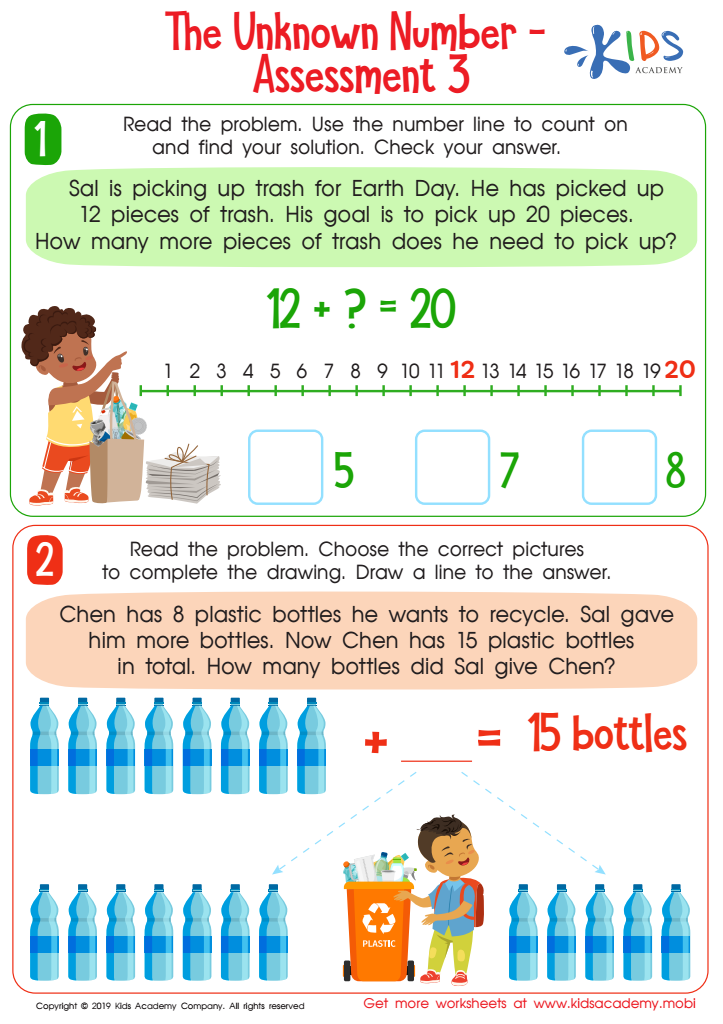
The Unknown Number - Assessment 3 Worksheet






.jpg)
Understanding equations is a foundational skill that sets the stage for future mathematical learning, making it crucial for parents and teachers to prioritize this concept for children aged 4-6. At this early age, children are naturally curious and actively engage with basic math concepts through play and exploration. Introducing them to equations fosters critical thinking and problem-solving skills, encouraging them to see relationships between numbers in a way that’s both fun and meaningful.
Learning about equations helps children understand the concept of equality, which is essential for more complex math operations down the line. It supports their ability to visualize and manipulate numbers, enhancing their overall numeracy skills. When children grasp basic equations, they develop confidence and a positive attitude towards math, which can lead to greater academic success in later grades.
Moreover, engaging with equations encourages language development as children learn to articulate their thought processes. Parents and teachers can use everyday situations—like sharing snacks or counting toys—to teach these concepts in a relatable manner. By fostering an understanding of equations at an early age, adults equip children with the tools they need for lifelong mathematical foundation, paving the way for a variety of future learning opportunities.








