
Visualization skills Math Worksheets for Ages 4-6
4 filtered results
Difficulty Level
Grade
Age
-
From - To
Subject
Activity
Standards
Enhance your child’s learning with our Visualization Skills Math Worksheets, designed specifically for ages 4-6. These engaging worksheets help young learners develop crucial visualization abilities, laying the foundation for future math success. Through fun exercises and interactive activities, children will learn to recognize shapes, patterns, and spatial relationships, enhancing their comprehension and problem-solving skills. Our thoughtfully crafted resources cater to the developmental needs of early learners, making math enjoyable and accessible. Download these printable worksheets today and watch your child cultivate confidence and creativity in their mathematical journey! Ideal for use at home or in the classroom. Start visualizing math fun!
Favorites
With answer key
Interactive
 Assign to My Students
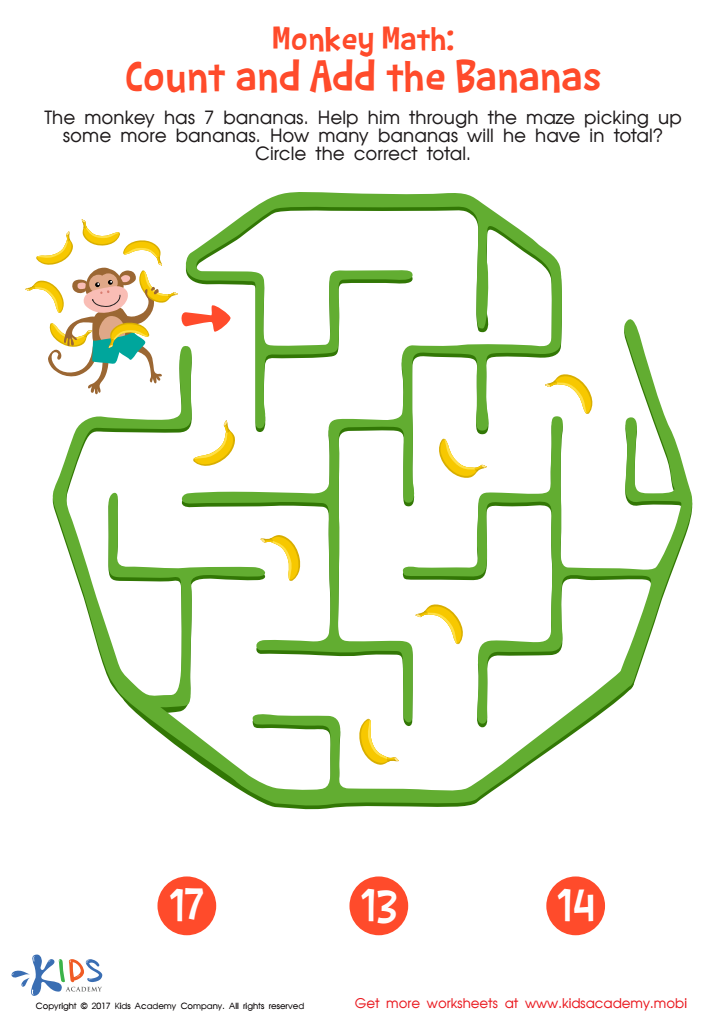
Monkey Math Worksheet
Worksheet
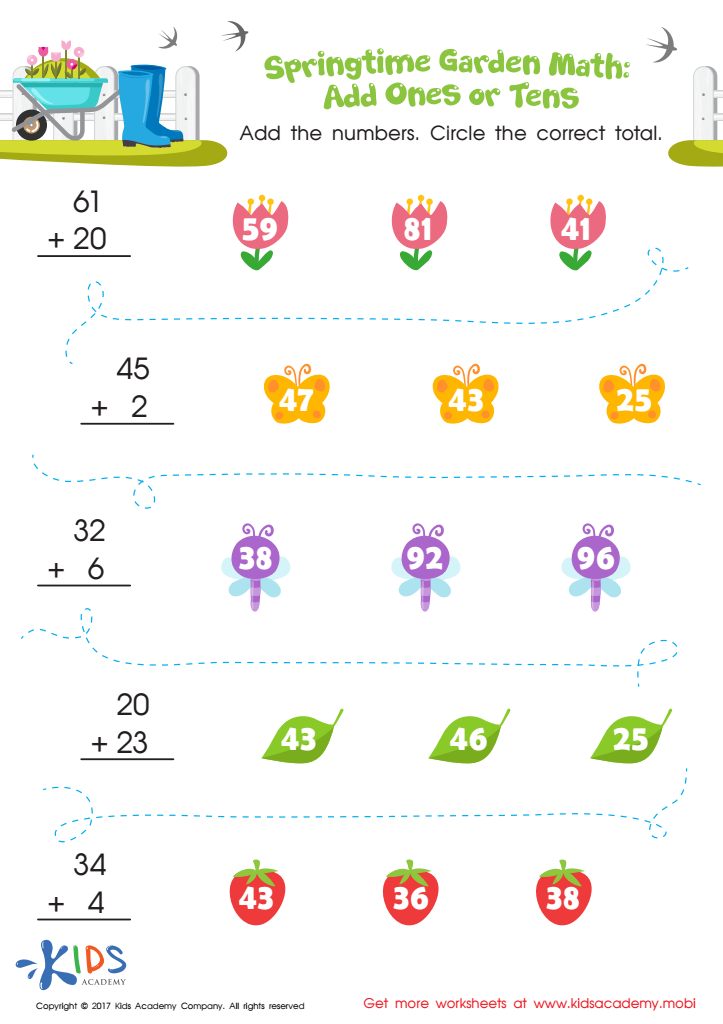
Springtime Garden Math Worksheet
Get your kid ready for math success with this bright garden-themed addition worksheet! They'll practice adding two-digit numbers and check their answers with the choices provided. It's an effective way to help kids build skills, as practice strengthens understanding. Get printing for math mastery!
Springtime Garden Math Worksheet
Worksheet
Join Kids Academy for Free
Who is primarily going to use this learning content?






Visualization skills in math are crucial for children aged 4-6 as they serve as the foundation for more complex mathematical concepts. At this developmental stage, children are naturally curious and ready to explore their environment. Teaching them to visualize math helps them translate abstract concepts into relatable images and ideas, fostering a deeper understanding of numbers and shapes.
Parents and teachers should prioritize visualization skills because they aid in problem-solving and critical thinking. When children can visualize math problems, such as imagining shapes or picturing groupings of objects, they become more capable of manipulating equations and grasping spatial relationships. This mastery enhances their ability to connect different mathematical concepts and solve problems creatively.
Moreover, strong visualization skills contribute to building a positive attitude towards math. When children can see and understand mathematical concepts, they are more likely to enjoy learning, reducing math anxiety down the line. Early sculpting of these skills also primes them for success in future math studies, as confident learners are more likely to engage actively with the subject. Fostering visualization skills in early mathematics creates a solid groundwork for lifelong learning and appreciation of math.








