Comparing objects Measurement Worksheets for Ages 4-6
3 filtered results
-
From - To
Discover our engaging "Comparing Objects Measurement Worksheets" designed for children ages 4-6! These fun, interactive worksheets help young learners develop essential measurement skills by comparing sizes, lengths, weights, and volumes of various objects. Each worksheet encourages hands-on learning, fostering critical thinking and cognitive development. Filled with colorful visuals and age-appropriate challenges, these resources motivate your child to explore and understand measurement concepts in a playful way. Perfect for home or classroom use, our worksheets ensure children grasp foundational math skills while having fun. Begin cultivating a strong understanding of measurements today with our engaging resources!
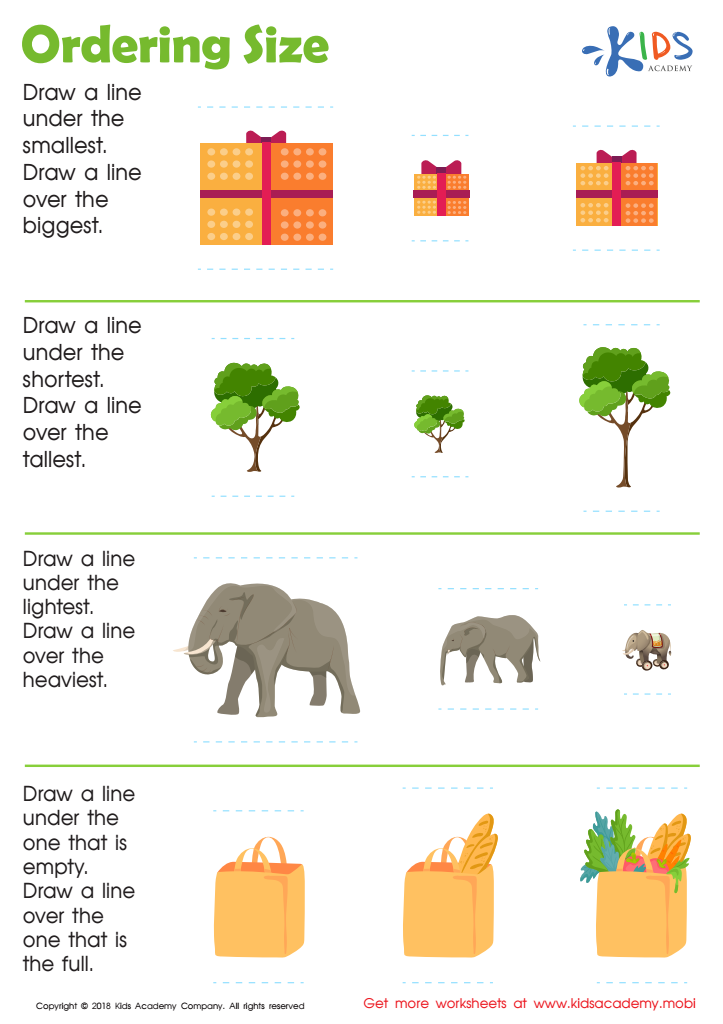
Ordering Size Worksheet
 Assign to My Students
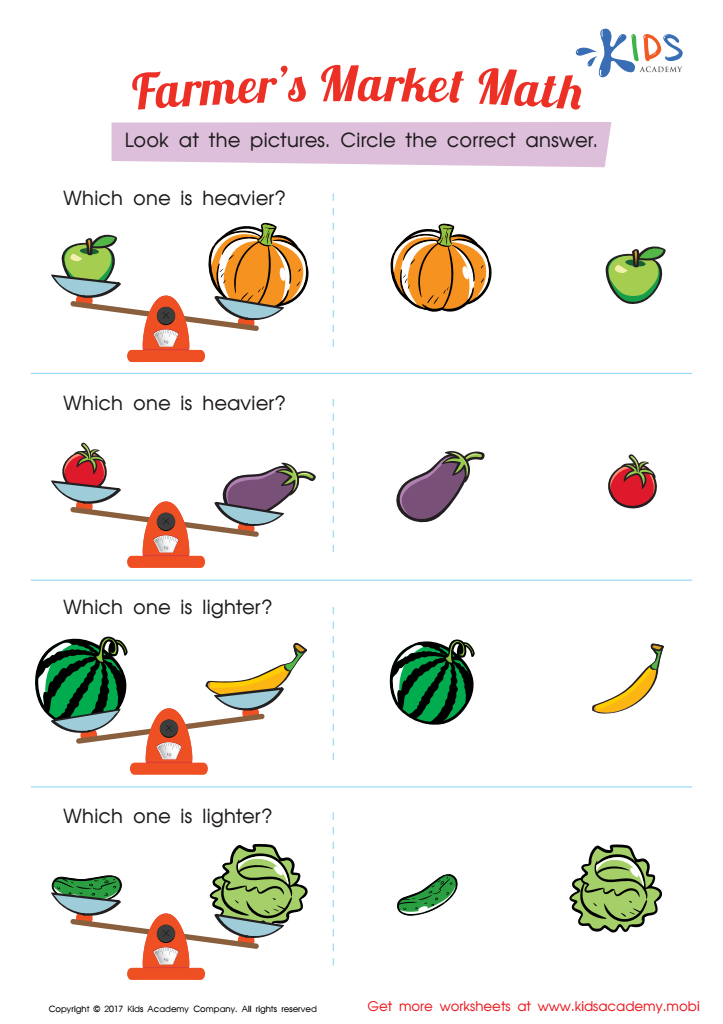
Which One Is Heavier Worksheet
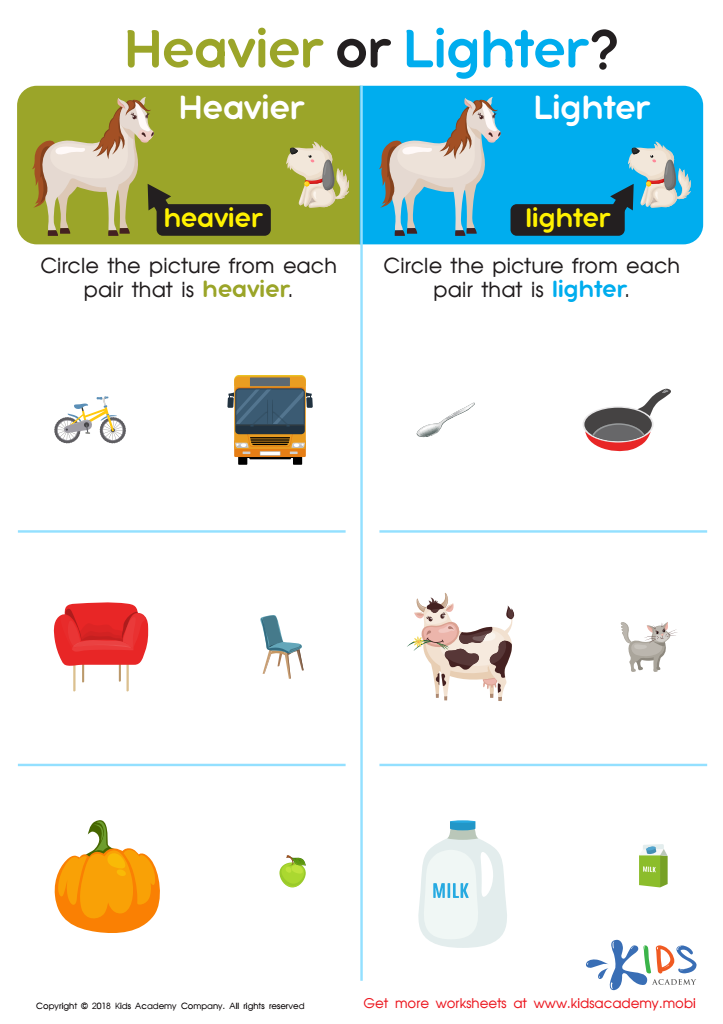
Heavier or Lighter? Worksheet








Teaching young children about comparing objects and measurement is crucial for their cognitive development and foundational math skills. For ages 4-6, this concept introduces them to the world of quantifying and understanding size, weight, and volume, which fosters critical thinking and problem-solving abilities. By comparing objects—such as determining which is longer, heavier, or holds more—children learn to observe and analyze their surroundings, laying the groundwork for higher-level math concepts.
Furthermore, engaging in measurement activities encourages language development as children learn relevant vocabulary like "taller," "heavier," and "longer." Through hands-on experiences, they also develop fine motor skills while manipulating various objects with different attributes.
Parents and teachers should recognize that these early experiences with comparing and measuring promote a sense of curiosity and exploration in children. These activities help in building self-esteem as children find success in their comparisons and measurements. Ultimately, fostering these skills will serve them well as they encounter increasingly complex math concepts in later education. Active involvement from parents and teachers can make learning enjoyable, engaging, and meaningful, ensuring that young learners build a solid foundation in math and critical thinking that will benefit them throughout their academic journey.








