Basic Counting Numbers 0–10 Worksheets for Ages 4-6
3 filtered results
Difficulty Level
Grade
Age
-
From - To
Subject
Activity
Standards
Our "Basic Counting Numbers 0-10 Worksheets" are perfect for young learners ages 4-6. These engaging worksheets help children develop essential math skills by practicing counting and recognizing numbers from 0 to 10. Through fun activities like tracing, matching, and coloring, kids enhance their number sense and eye-hand coordination. Designed to support early childhood education, these printables are ideal for parents, teachers, and homeschooling families. Make learning to count an enjoyable experience for your little ones with our thoughtfully crafted worksheets, ensuring a strong foundation for future math success. Visit our page to download and start learning today!
Favorites
With answer key
Interactive
 Assign to My Students
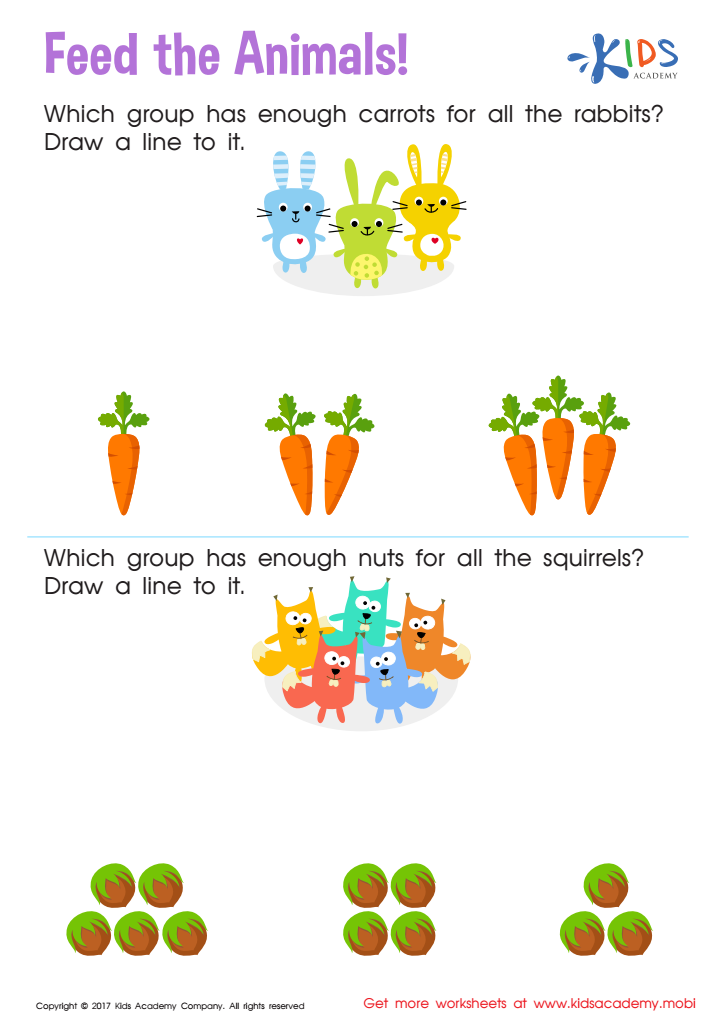
Count and Match: Feed the Animals Worksheet
Learning and growing involves more than just numbers, phonics and comparison. This Feed the Animals worksheet helps kids to exercise their reasoning skills. They must work out how many rabbits and carrots there are, and then repeat the process for the squirrels. This encourages problem solving and counting skills.
Count and Match: Feed the Animals Worksheet
Worksheet
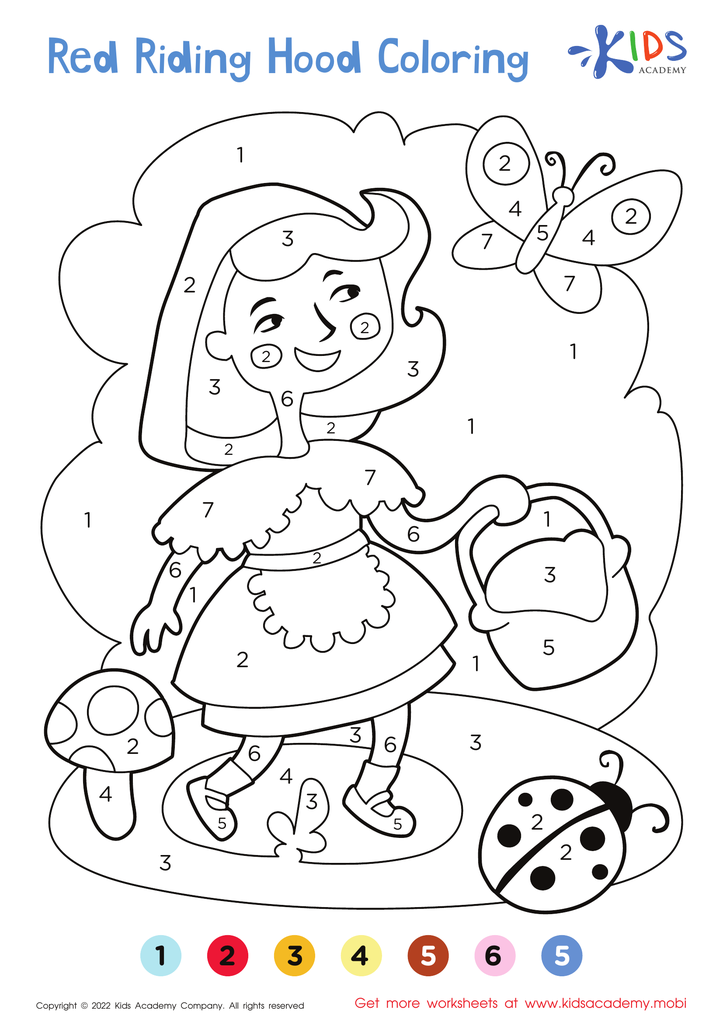
Little Red Riding Hood – Coloring by Numbers
Download this free PDF page and enjoy coloring Little Red Riding Hood. It's an easy and fun activity that everyone can do - just follow the numbers! Get your colored pencils ready and have a blast. 80 words.
Little Red Riding Hood – Coloring by Numbers
Worksheet
Join Kids Academy for Free
Who is primarily going to use this learning content?








Parents and teachers should highly prioritize teaching basic counting numbers 0-10 to children ages 4-6 as these foundational skills are instrumental in their early cognitive and academic development. Counting from 0 to 10 not only introduces children to the concept of quantity, which is fundamental in mathematics, but also serves as a tool to grasp more complex mathematical ideas such as addition, subtraction, and number sequences later on.
This age range is crucial because children's brains are exceptionally receptive to new information, and establishing strong numerical foundations can significantly enhance their problem-solving and analytical abilities. Basic counting skills also play a critical role in everyday tasks and their application, helping children comprehend time, money, and measurement. Understanding numbers early boosts confidence and sets the stage for future academic success, making subsequent learning experiences smoother and more intuitive.
Furthermore, early number skills are linked with overall cognitive development, promoting memory, focus, and fine motor skills through activities such as pencil grips and object manipulation. Teachers and parents must engage in playful, hands-on learning activities to sustain the child’s interest and foster a positive attitude towards numbers, which is crucial for lifelong learning and curiosity.