
Reading analog clocks Time Worksheets for Ages 4-6
3 filtered results
Difficulty Level
Grade
Age
-
From - To
Subject
Activity
Standards
Introduce the joy of reading analog clocks to your young learners with these engaging time worksheets designed for ages 4-6. Our colorful and carefully crafted printables make learning to tell time fun and easy. Each worksheet features vibrant illustrations and simple practice exercises that guide children in identifying hours and minutes. Suitable for preschool and kindergarten students, these resources help build essential math skills and time-telling confidence. By regularly practicing with our worksheets, children will develop a solid understanding of analog clocks, laying a strong foundation for future learning. Start your child's time-telling journey today!
Favorites
With answer key
Interactive
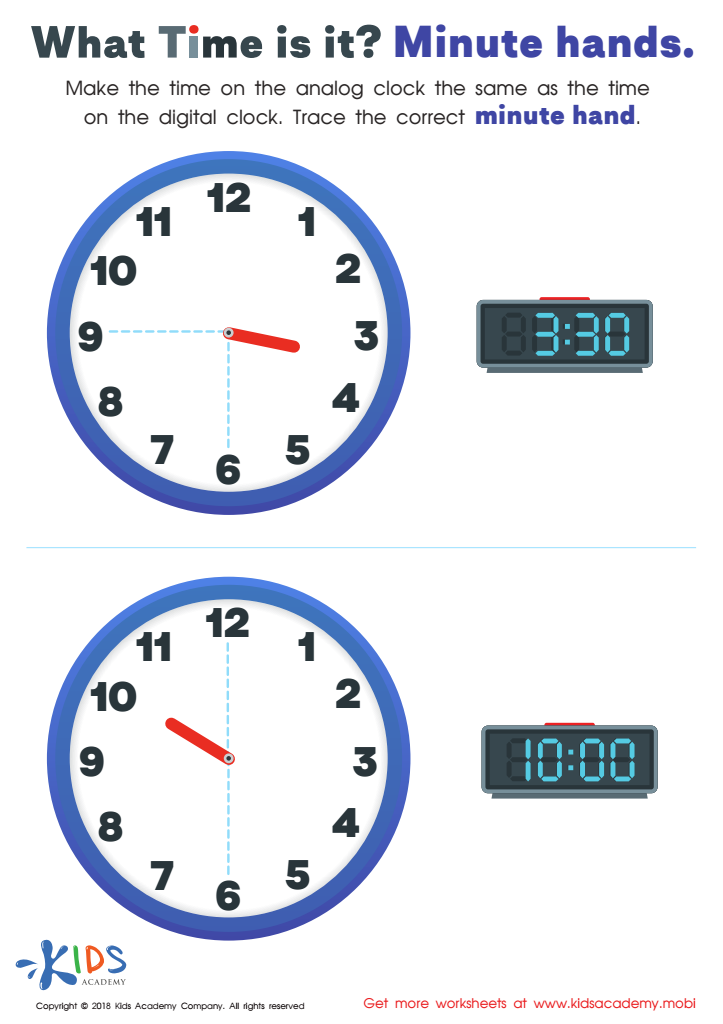
What Time Is it? Minute Hands Worksheet
Help your kids telling time with the minute hand correctly with this tracing sheet. Trace the correct minute hand to make the time on the analog clock the same as the time on the digital clock. Give them a pictured demonstration of how to do it and you'll be all set!
 Assign to My Students
What Time Is it? Minute Hands Worksheet
Worksheet
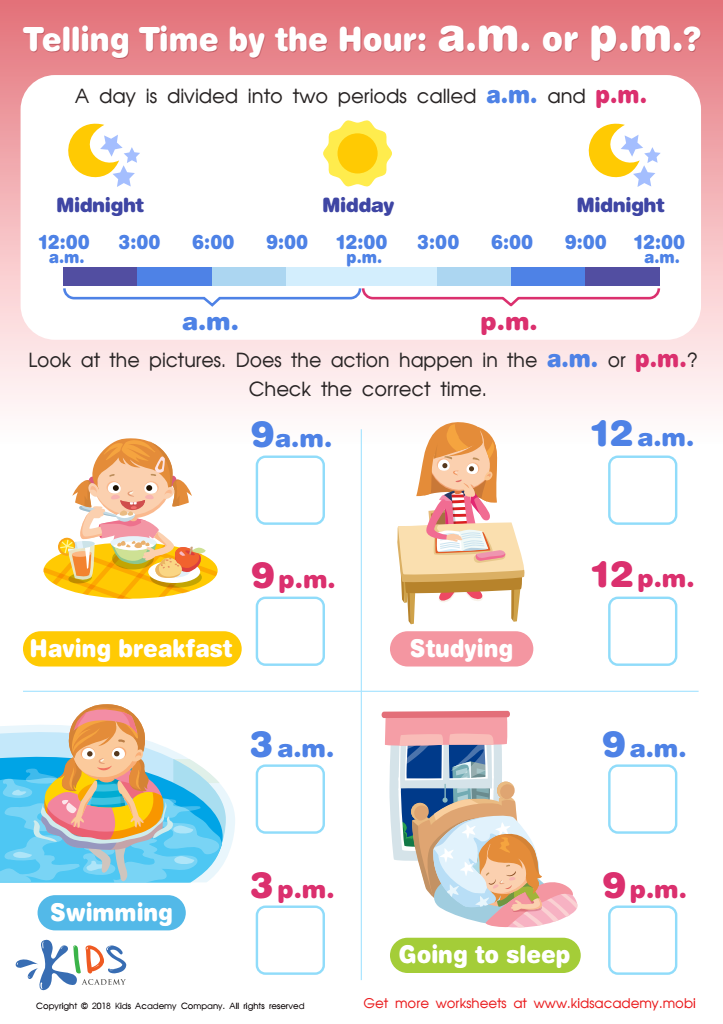
Tilling Time by the Hour: a.m. or p.m.? Worksheet
Can your child tell the time? This worksheet will help them learn. Explain a.m and p.m. and look at the pictures together. Ask your child if the activities happen in the a.m or p.m and help them check the correct time.
Tilling Time by the Hour: a.m. or p.m.? Worksheet
Worksheet
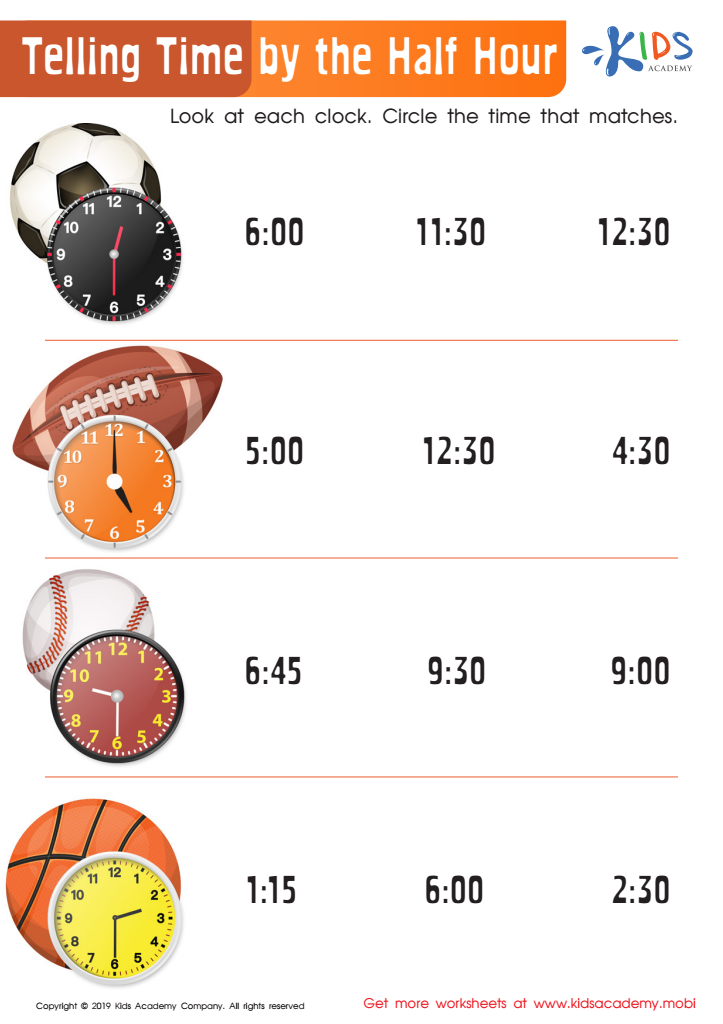
Telling Time by the Half Hour Worksheet
Teach kids to tell time with this worksheet! Four clocks are labeled with different times; help your child circle the right one. It's a great way to teach them to read analog and digital clocks, watches, and written times. Easy and fun learning!
Telling Time by the Half Hour Worksheet
Worksheet
Join Kids Academy for Free
Who is primarily going to use this learning content?







Learning to read analog clocks is a fundamental skill for children aged 4-6, providing them with numerous cognitive and practical benefits. At this developmental stage, children are capable of grasping the basic concepts of time, which lays a foundation for higher learning and daily routine management.
Firstly, reading analog clocks enhances mathematical abilities. As children interpret clock faces, they practice counting by ones, fives, and gradually grasp the concepts of fractions and segments. This hands-on approach to math promotes numerical literacy and analytical thinking from an early age.
Moreover, analog clocks help develop a child's sense of time. Understanding hours, minutes, and the movement of time encourages personal responsibility and time management skills. By associating specific activities with certain times of the day, children learn planning and structure. This routine awareness can also aid in transitions, reducing anxiety about daily changes.
Additionally, reading analog clocks offer educational synergy with other learning methods. Unlike digital clocks that provide time passively, analog clocks demand active engagement and interpretation. This engagement promotes cognitive processing, critical thinking, and visual learning, all crucial for holistic educational development.
In summary, learning to read analog clocks fosters a deep understanding of math, time management, and cognitive skills. Engaging children in this practice endows them with tools essential for academic success and day-to-day life navigation.








