Reading clocks Time Worksheets for Ages 4-6
3 filtered results
-
From - To
Discover our engaging "Reading Clocks Time Worksheets" designed for children aged 4-6! These interactive resources make learning to tell time fun and accessible, promoting essential early math skills. Each worksheet features colorful, age-appropriate illustrations and exercises that help reinforce the concepts of hours, half-hours, and quarter-hours. Kids will enjoy practicing both analog and digital clock reading through a variety of activities, including matching and fill-in-the-blank exercises. Perfect for home or classroom use, these worksheets encourage confidence and competence in understanding time management, paving the way for lifelong learning. Start your child's time-telling journey today!
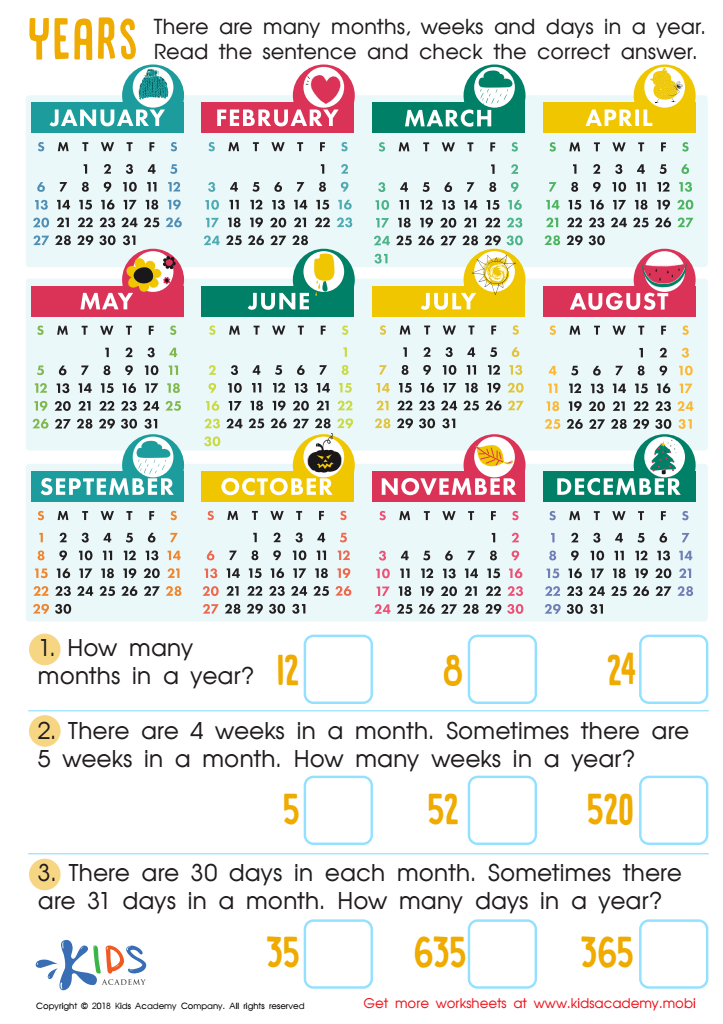
Years Worksheet
 Assign to My Students
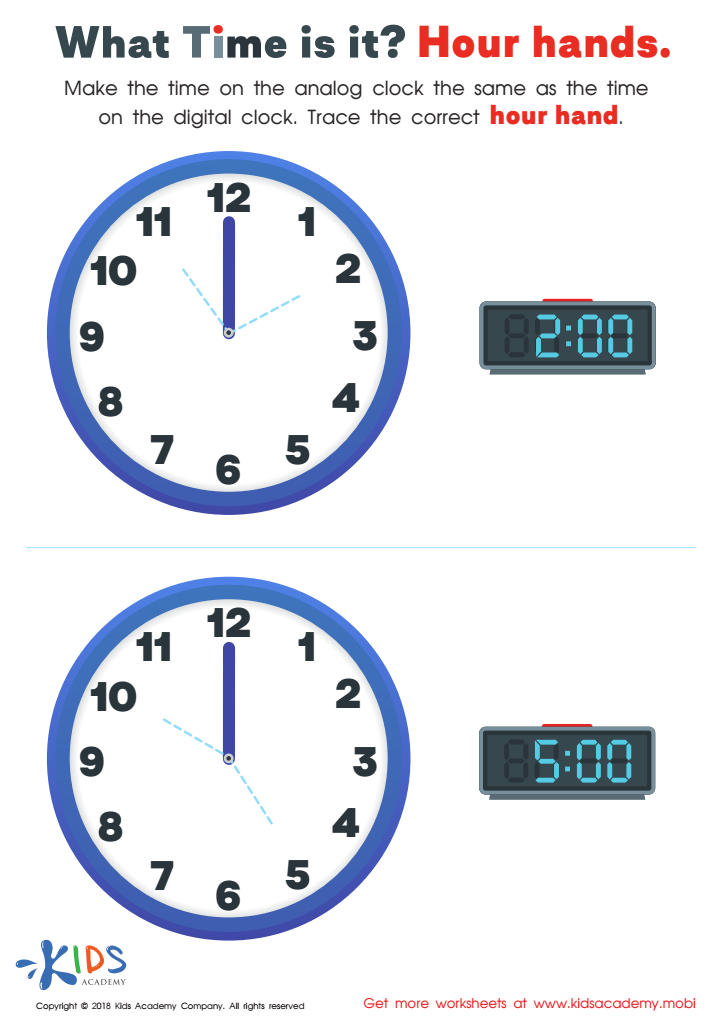
What Time Is it? Hour Hands Worksheet
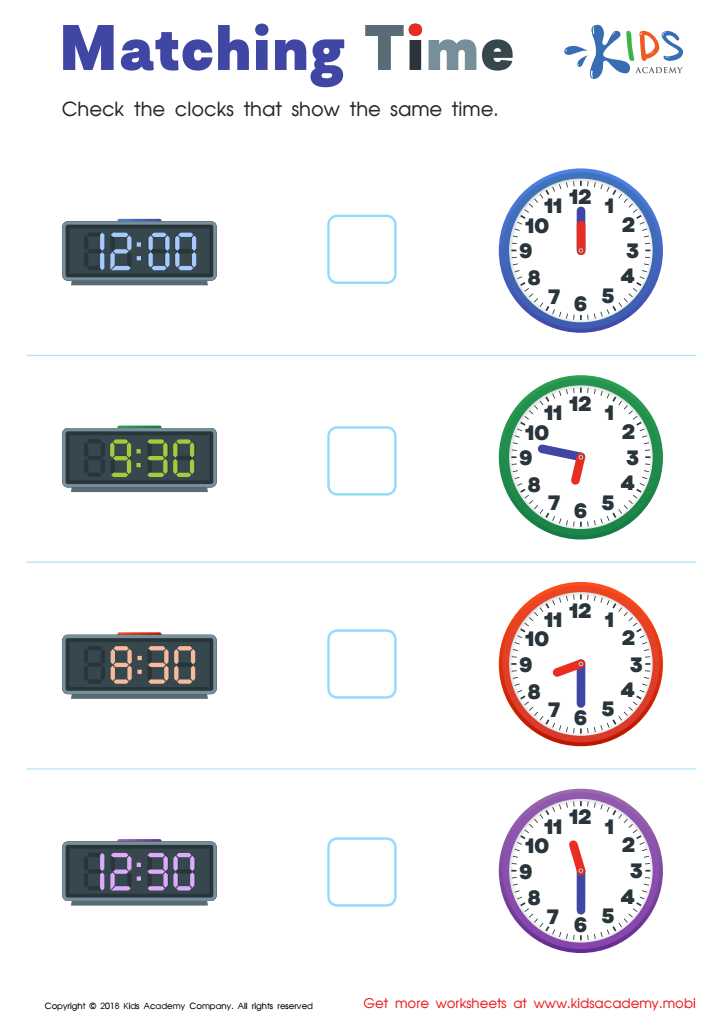
Matching Time Worksheet





Teaching young children to read clocks and understand time is crucial for their development. For ages 4-6, this skill fosters independence and boosts cognitive abilities. As children begin to manage their own schedules, learning to tell time empowers them to transition from one activity to another, fostering a sense of responsibility.
Understanding time also aids in the development of key math skills. It introduces concepts such as division and fractions, as children learn to compute minutes and hours. These foundational skills not only enhance their math comprehension but also prepare them for more complex problem-solving in the future.
Moreover, learning to read a clock cultivates patience and anticipates concepts of planning and time management. As children grasp the structure of routines—from knowing when to wake up to understanding when playtime will end—they become better at self-regulating.
Parents and teachers play a significant role in this learning process. By incorporating fun activities, visuals, and real-life practices, they can blend education with engagement. Investing time in teaching children to read clocks instills not just knowledge but also essential life skills, ultimately preparing them for a more organized and disciplined adulthood.








