Subtraction skills Word Problems Worksheets for Ages 4-6
6 filtered results
-
From - To
Enhance your child's understanding of subtraction with our engaging Word Problems Worksheets designed specifically for ages 4-6. These worksheets provide a fun and interactive way for young learners to practice essential subtraction skills. Through relatable and age-appropriate scenarios, children will solve problems that encourage critical thinking and reinforce their mathematical concepts. Each worksheet is crafted to promote independent learning while fostering a love for math. Ideal for home or classroom use, our subtraction worksheets are perfect for developing problem-solving abilities and building confidence in early learners. Download our resources today and watch subtraction skills come to life!
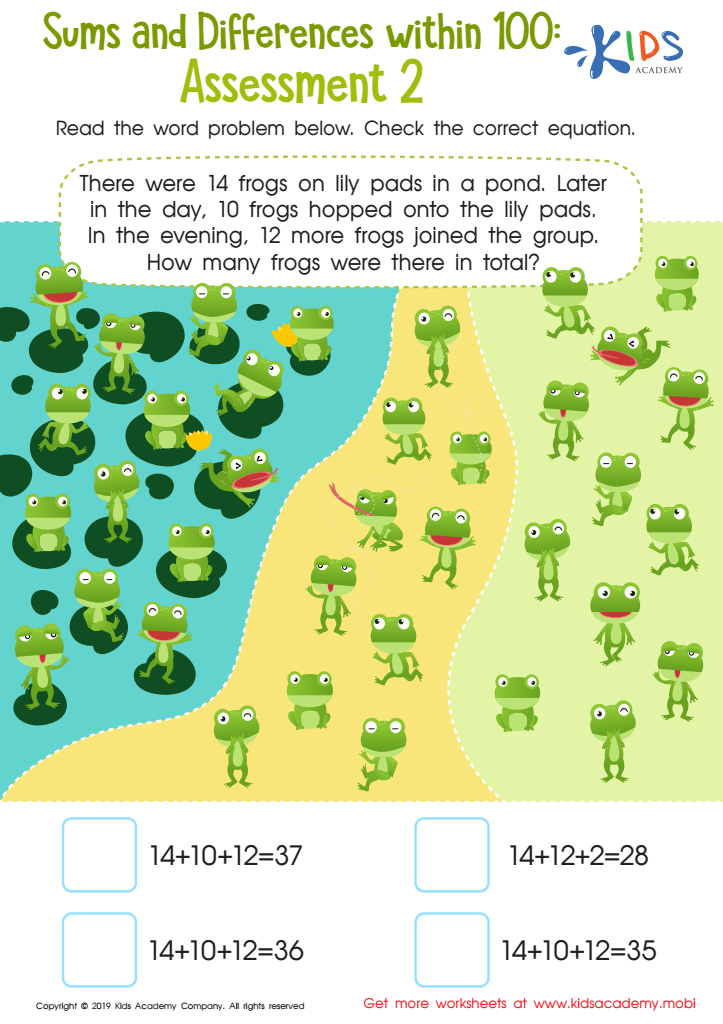
Sums and Differences Within 1 - Assessment 2 Worksheet
 Assign to My Students
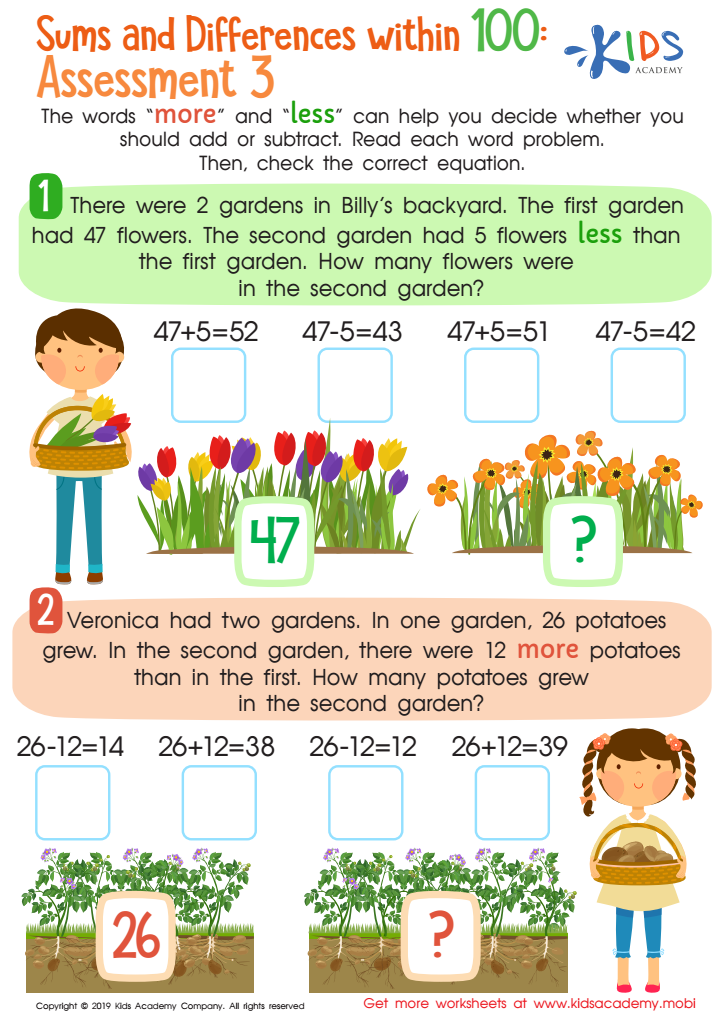
Sums and Differences Within 1 - Assessment 3 Worksheet
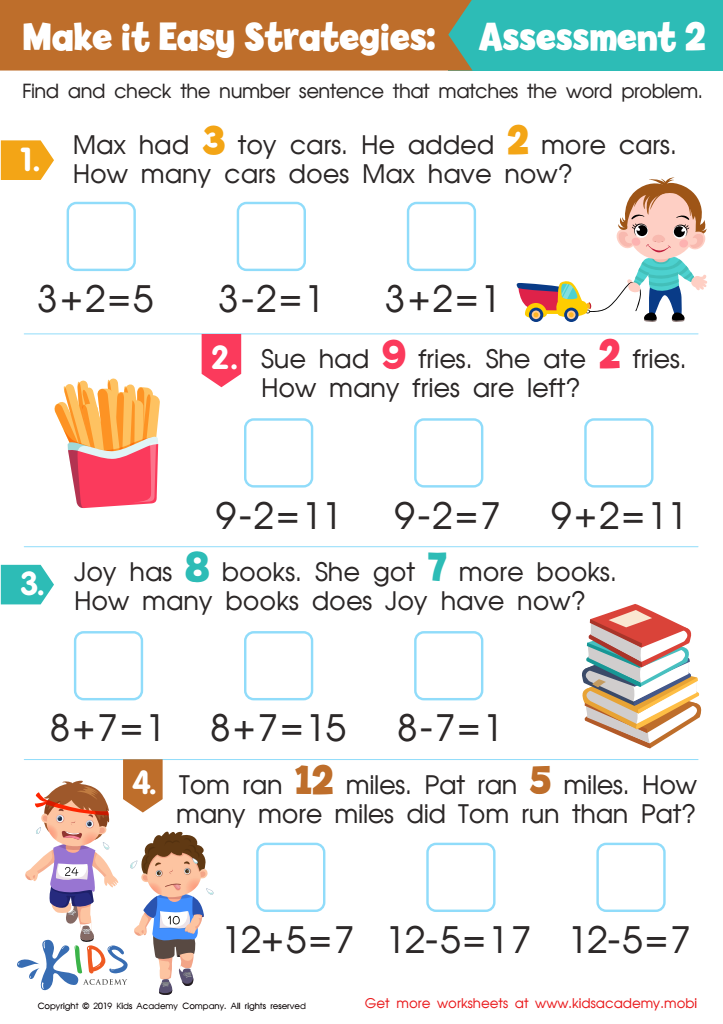
Make it Easy Strategies: Assessment 2 Worksheet
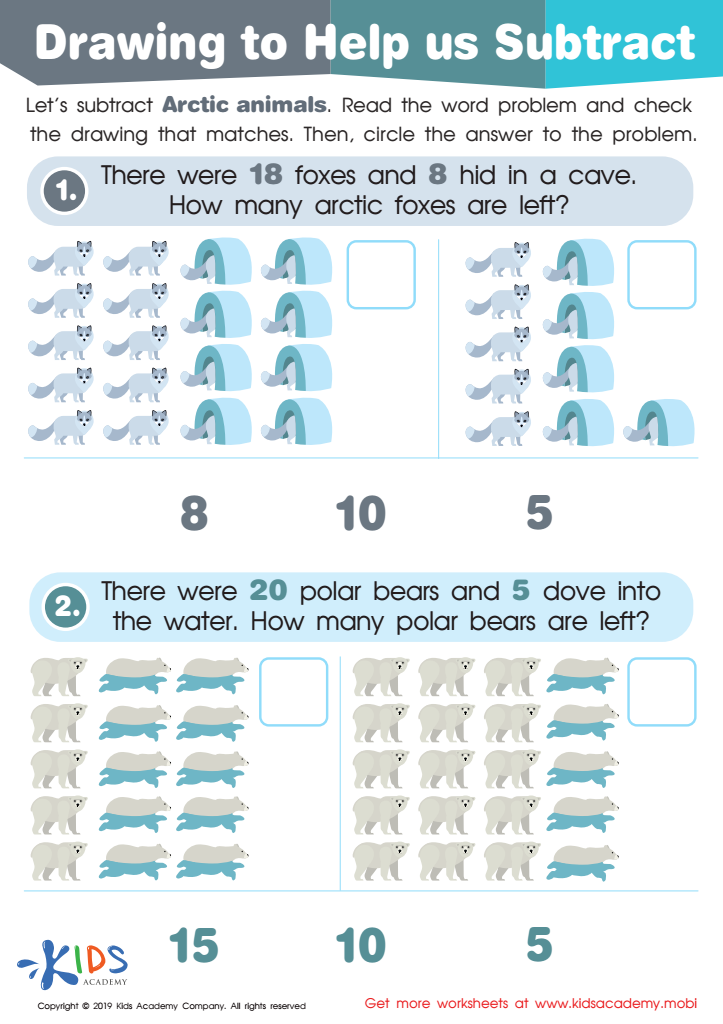
Drawing to Help Us Subtract Worksheet
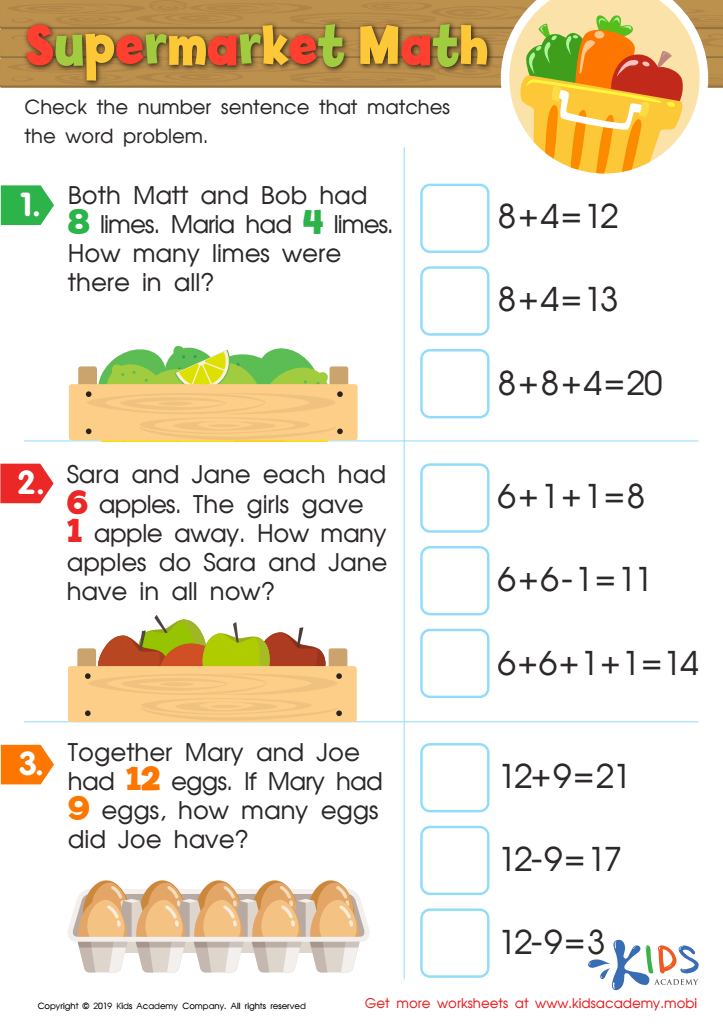
Supermarket Math Worksheet
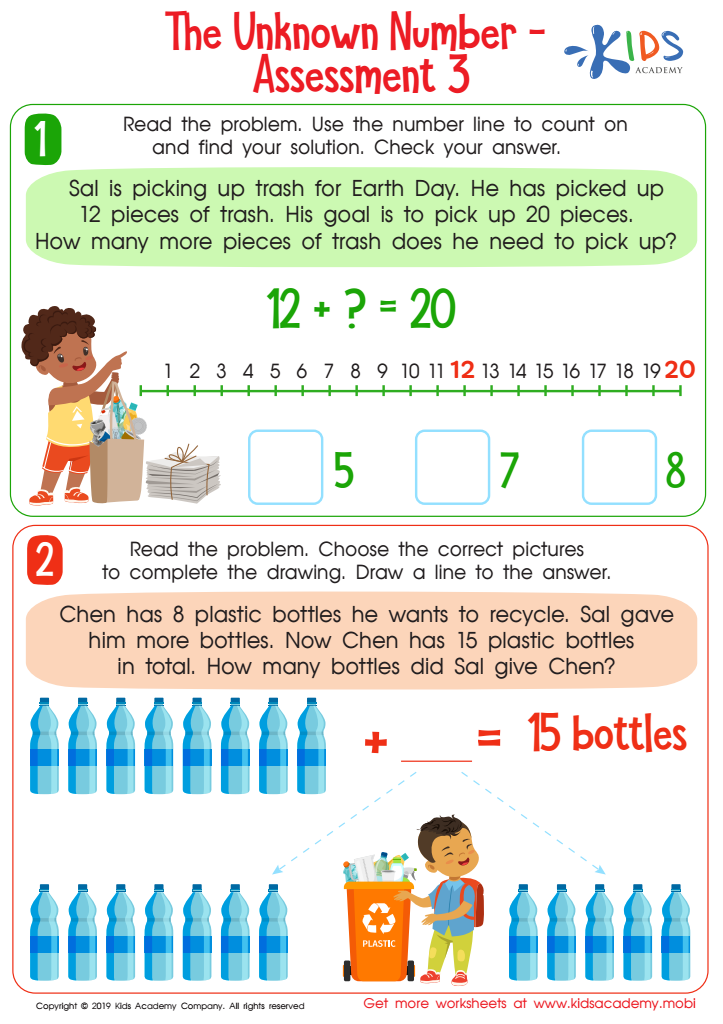
The Unknown Number - Assessment 3 Worksheet







Subtraction skills and word problems are crucial for children aged 4-6 as they lay the foundation for essential mathematical understanding. At this developmental stage, kids are not just learning arithmetic but also problem-solving, critical thinking, and language skills. Engaging with subtraction word problems encourages children to interpret situations, recognize numbers, and understand the concept of “taking away,” essential for grasping basic math.
Moreover, word problems help connect mathematics to real-life scenarios, making learning meaningful and relatable. For example, using playground contexts or toys can not only enhance comprehension but also retain interest. As kids tackle these problems, they learn persistence and develop confidence in their abilities, fostering a positive attitude toward learning.
Teachers and parents play a pivotal role in guiding children through this exploring process. By actively participating in solving word problems, they model reasoning skills, encourage dialogue about strategies, and offer support when challenges arise. As these young learners gain mastery in subtraction word problems, they build a robust numeric foundation, ensuring they are well-prepared for more complex mathematics in the future. Therefore, fostering subtraction skills through engaging problem-solving is a vital part of early education.








