Counting practice Building Vocabulary Worksheets for Ages 4-6
5 filtered results
-
From - To
Enhance your child's learning experience with our engaging Counting Practice Building Vocabulary Worksheets, specially designed for ages 4-6! These worksheets offer a fun and interactive way to develop essential counting skills while expanding vocabulary. Perfect for early learners, each activity encourages critical thinking and problem-solving as children explore numbers and words in exciting contexts. With vibrant illustrations and age-appropriate challenges, young learners will find joy in counting and discovering new words. Foster a love for math and language with these entertaining and educational worksheets that support foundational skills necessary for future success in school. Explore our collection and watch your child thrive!
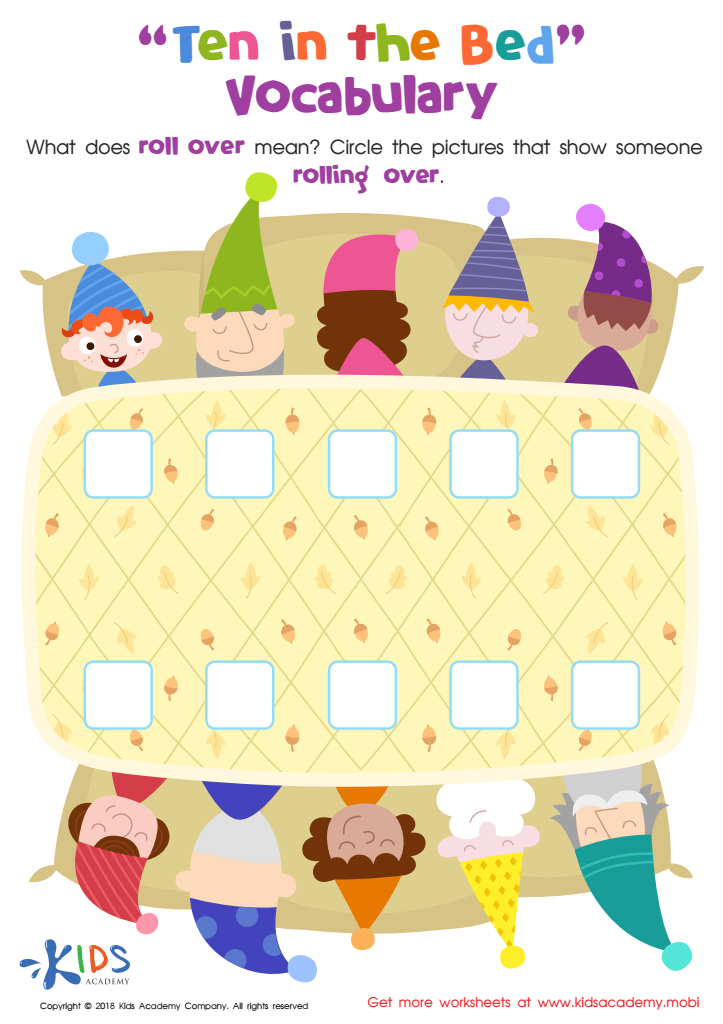
Ten in the Bed: Vocabulary Worksheet
 Assign to My Students











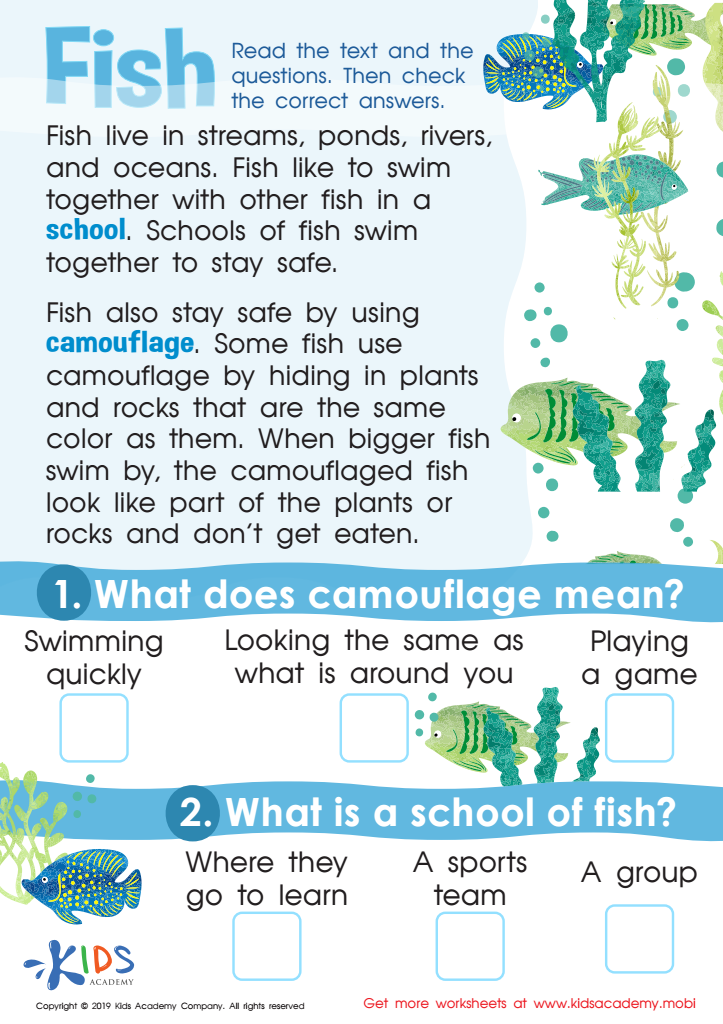
Fish Worksheet
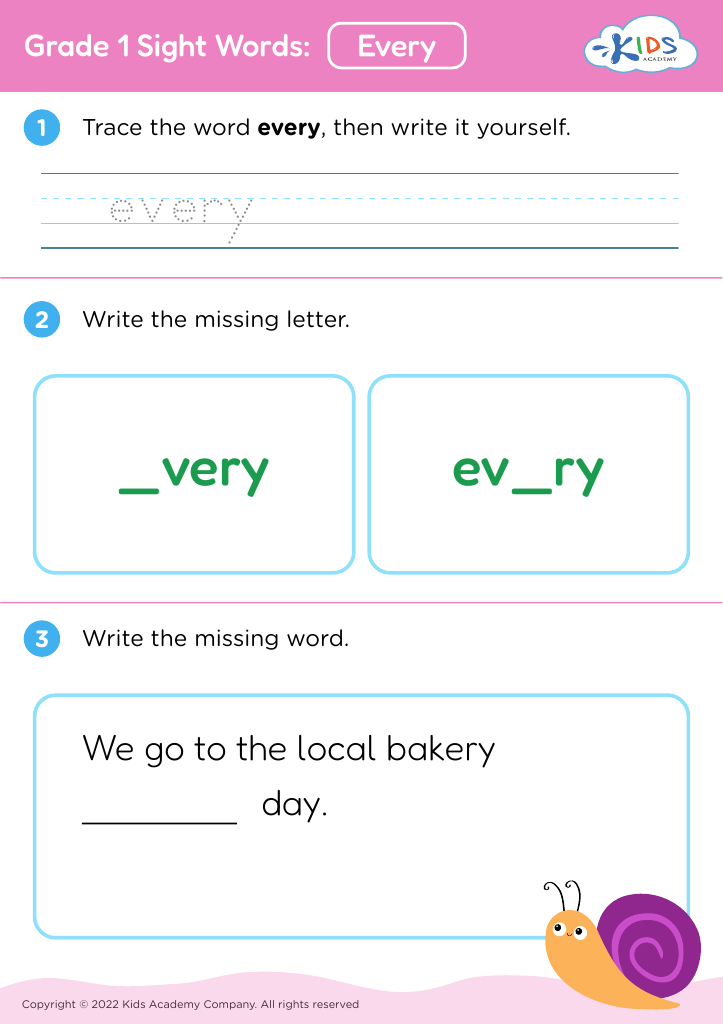
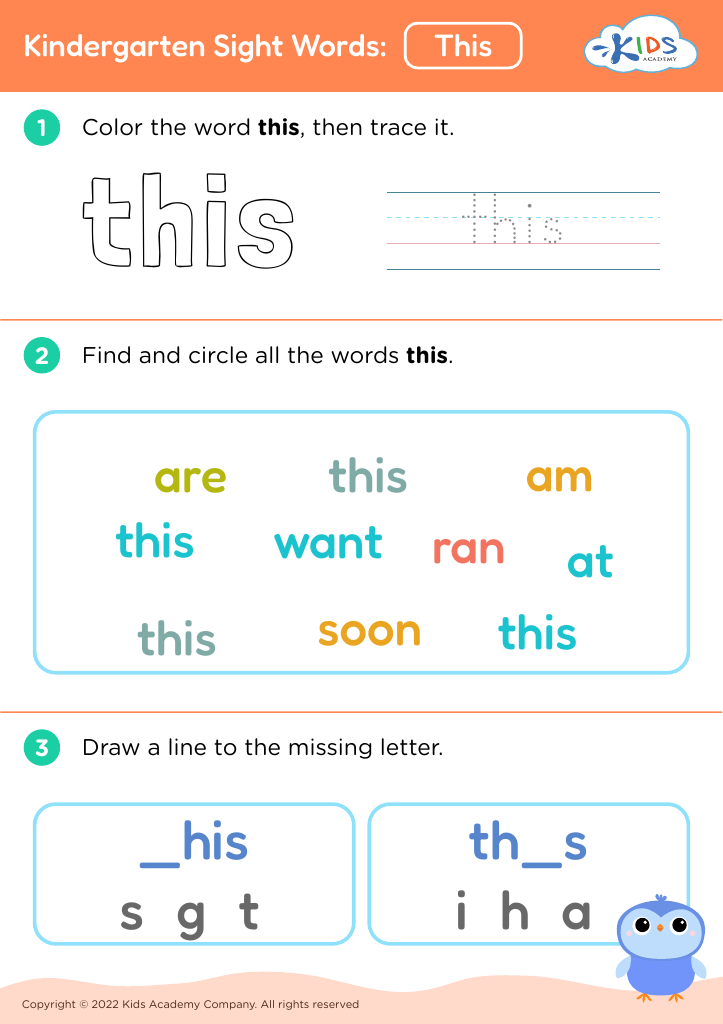
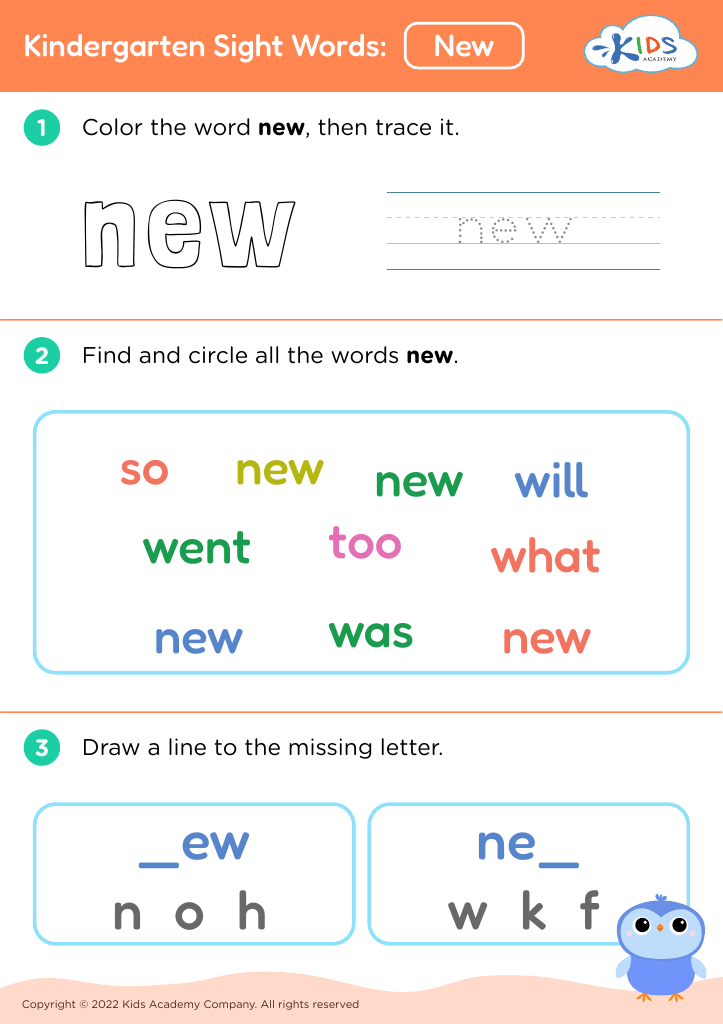







.jpg)
Counting practice and vocabulary building are essential components of early childhood education for children aged 4-6. At this stage, children are like sponges, eager to absorb new concepts and ideas. Engaging in counting activities helps develop their numerical skills, laying the foundation for later mathematical understanding. It enhances their ability to recognize patterns, comprehend quantities, and establish sequencing—a critical skill for problem-solving in academic and real-life scenarios.
Simultaneously, building vocabulary is crucial during these formative years. A robust vocabulary enhances a child’s ability to express themselves, understand instructions, and engage meaningfully with peers and adults. Strong language skills also correlate with better reading and writing capabilities later on.
By focusing on both counting and vocabulary, parents and teachers can create a rich learning environment that promotes cognitive and linguistic development. Games, songs, and interactive activities that incorporate both counting and vocabulary not only make learning enjoyable but also foster creativity and critical thinking skills. The interplay between these two areas supports overall academic success, making it vital for adults to prioritize and nurture these skills during the ages of 4-6. This holistic approach ensures children are well-prepared for future learning challenges.








