
Understanding habitats Building Vocabulary Worksheets for Ages 4-6
3 filtered results
Difficulty Level
Grade
Age
-
From - To
Subject
Activity
Standards
Discover the fascinating world of habitats with our "Understanding Habitats Building Vocabulary Worksheets for Ages 4-6." These engaging resources are designed to enhance your child's vocabulary and understanding of different environments where animals live. Each worksheet features colorful illustrations and fun activities that introduce kids to the unique characteristics of deserts, forests, oceans, and more. Perfect for early learners, these worksheets make vocabulary building exciting and interactive. Help your child explore and expand their language skills while developing a deeper appreciation of the natural world. Cultivate curiosity, learning fun, and foundational science and reading skills today!
Favorites
With answer key
Interactive
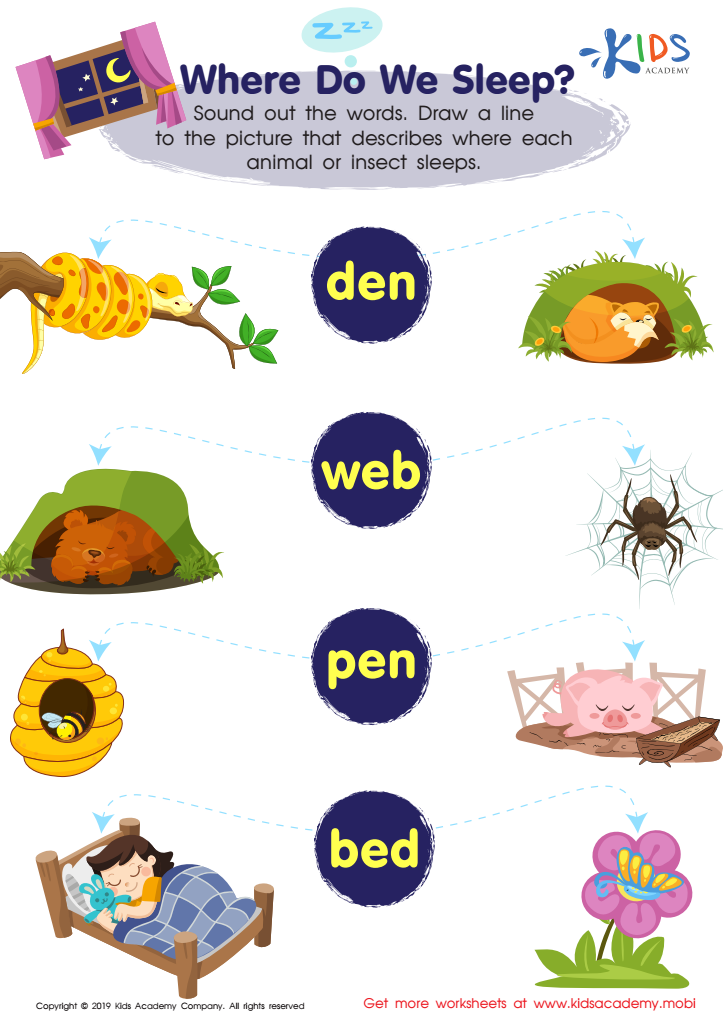
Where Do We Sleep Worksheet
Help your kids understand the importance of a safe space with this activity: Ask them to draw a line connecting the different animals and insects to the words that describe where they sleep. Remind them that everyone needs a sanctuary to rest – like the animals and insects in this printout.
 Assign to My Students
Where Do We Sleep Worksheet
Worksheet











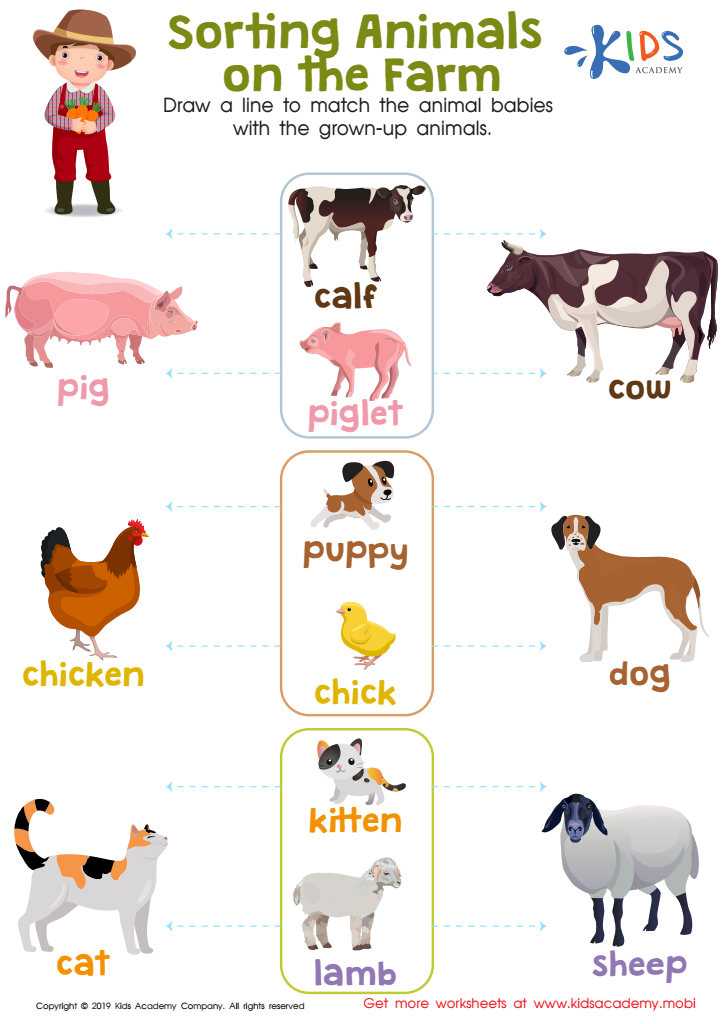
Sorting Animals on the Farm Worksheet
This PDF worksheet engages preschoolers in a fun activity to match Mama farm animals with their babies, strengthening their sorting and patterning skills. They'll learn to recognize rules and relationships, while gaining familiarity with animal-related words.
Sorting Animals on the Farm Worksheet
Worksheet
Join Kids Academy for Free
Who is primarily going to use this learning content?








Understanding habitats and building vocabulary are crucial developmental milestones for children ages 4-6, and parents and teachers play an essential role in fostering these skills.
Exploring various habitats—such as forests, oceans, and deserts—opens up a world of discovery and curiosity for young children. It helps them understand the environment and the diversity of life forms, fostering an appreciation for nature and empathy towards living beings. Knowledge about different habitats also lays the groundwork for more advanced learning in science and geography as they grow older.
Simultaneously, building a rich vocabulary is foundational to children's overall language development and literacy skills. At this formative age, expanding their word bank enables children to describe their thoughts, emotions, and experiences more precisely. Rich vocabulary exposure also enhances their reading and comprehension skills, which are critical for academic success across all subject areas.
Combining these two aspects can create highly engaging and educational experiences. For instance, reading picture books about various habitats introduces new words in context, making learning meaningful and fun. Interactive activities like nature walks, habitat-themed arts and crafts, or simple educational games can spark interest and enhance retention.
By understanding and investing in these areas, parents and teachers equip children with essential tools that fuel their intellectual growth and curiosity, paving the way for lifelong learning and understanding of the world around them.








