Understanding suffixes Building Vocabulary Worksheets for Ages 4-6
3 filtered results
-
From - To
Unlock your child's potential with our "Understanding Suffixes Building Vocabulary Worksheets for Ages 4-6". Designed to enhance reading skills, these engaging worksheets help young learners grasp the concept of suffixes, a key component in expanding vocabulary. With fun activities and colorful illustrations, children will learn how adding different endings can change the meaning of words, fostering both comprehension and vocabulary growth. Ideal for preschool and kindergarten students, our worksheets provide a solid foundation for literacy. Make learning an adventure with Kids Academy’s expertly crafted resources, nurturing a lifelong love for reading and language.
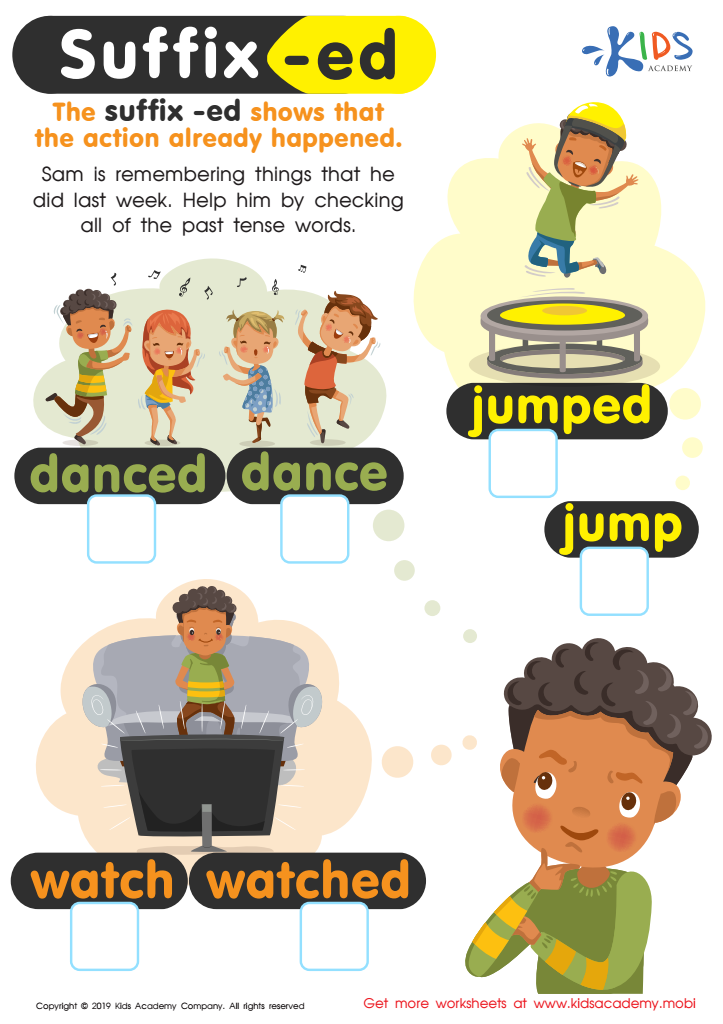
Suffix-ed Worksheet
 Assign to My Students











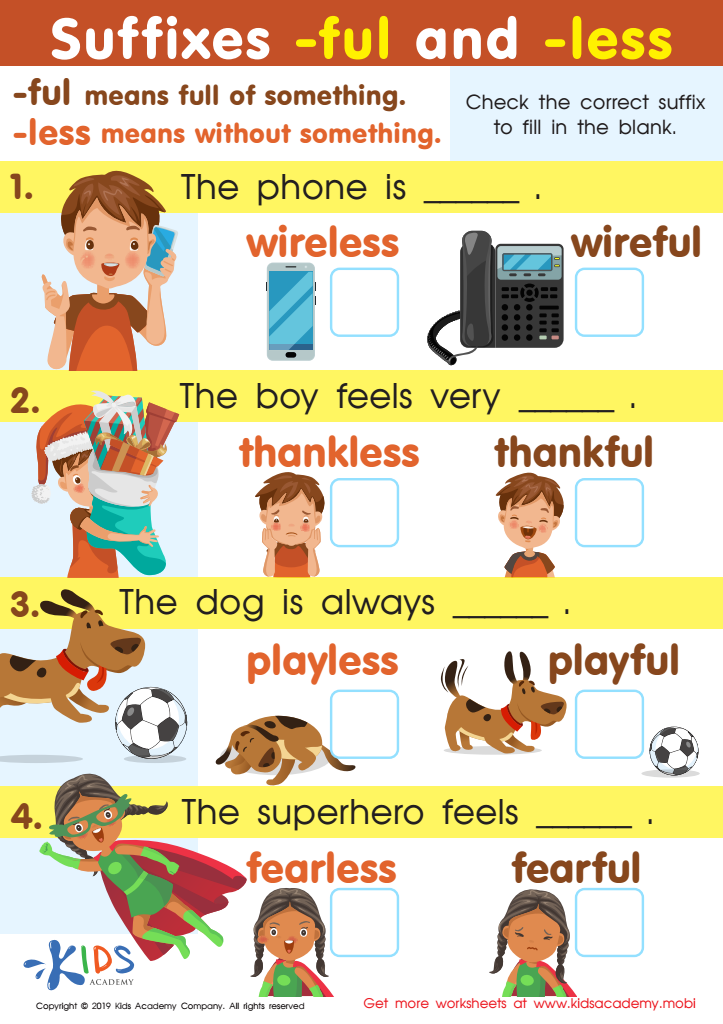
Suffixes –ful and –less Worksheet
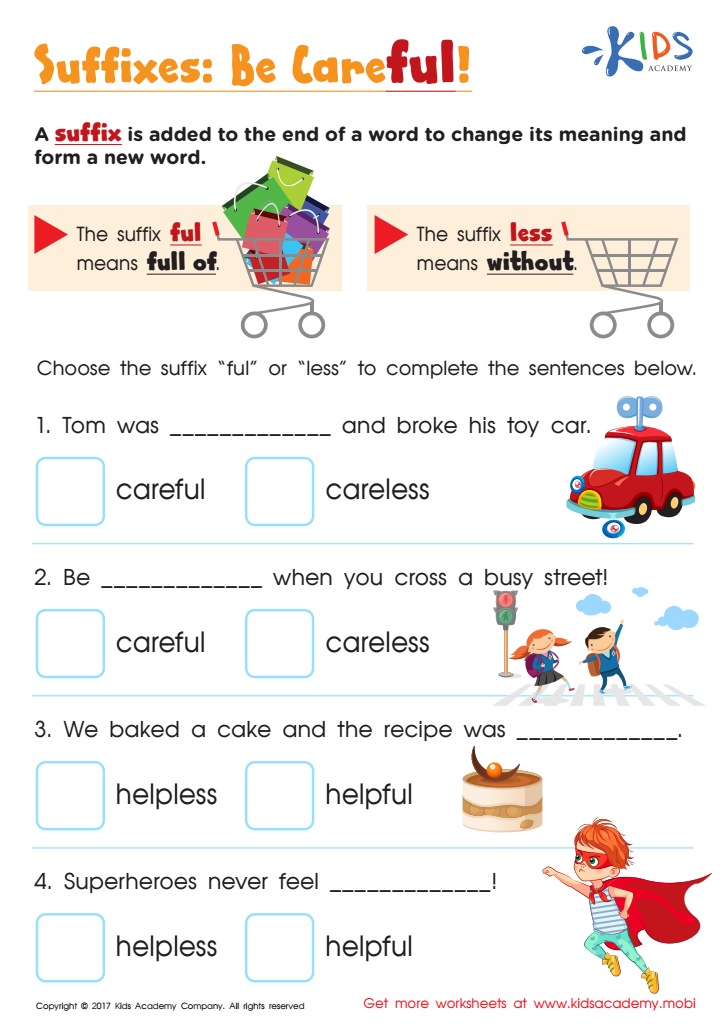
Suffixes Ful and Less Worksheet







.jpg)
Understanding suffixes is crucial for young children, ages 4-6, as it forms a foundational skill for building vocabulary. For parents and teachers, fostering this knowledge opens a path for significant linguistic and cognitive development. Suffixes, the word endings that change the meaning of base words, help children break down and understand new words. For instance, adding '-ed' to 'play' makes 'played,' which changes the tense and therefore the context in which the word is used.
When children grasp how suffixes work, they can decode unfamiliar words more efficiently and comprehend text better. This is especially important as they begin to read more complex sentences and stories, which often contain verbs, comparisons, and plurals formed through suffixes. Enhanced vocabulary empowers children to express themselves more accurately and fosters self-confidence in verbal and written communication.
For educators and parents, carefully integrating suffix lessons into activities and play encourages imaginative learning and retention. For example, using picture books or interactive games where children add suffixes to words themselves can make learning fun and memorable. By prioritizing this fundamental vocabulary skill early on, we help children develop strong reading and comprehension skills, setting a critical foundation for their academic and lifelong communication capabilities.








