Story analysis Reading Comprehension Worksheets for Ages 4-6
5 filtered results
-
From - To
Introduce young learners to the wonderful world of reading with our Story Analysis Reading Comprehension Worksheets, designed specifically for ages 4-6. These fun and engaging worksheets help kids develop essential comprehension skills by exploring characters, settings, and plot. Vibrantly illustrated stories capture their imagination, while interactive questions encourage critical thinking and discussion. Perfect for early readers, our worksheets foster a deeper understanding of stories, building a strong foundation for literacy. Whether used in the classroom or at home, these resources support parents and educators in making reading an enjoyable and valuable experience for young minds.
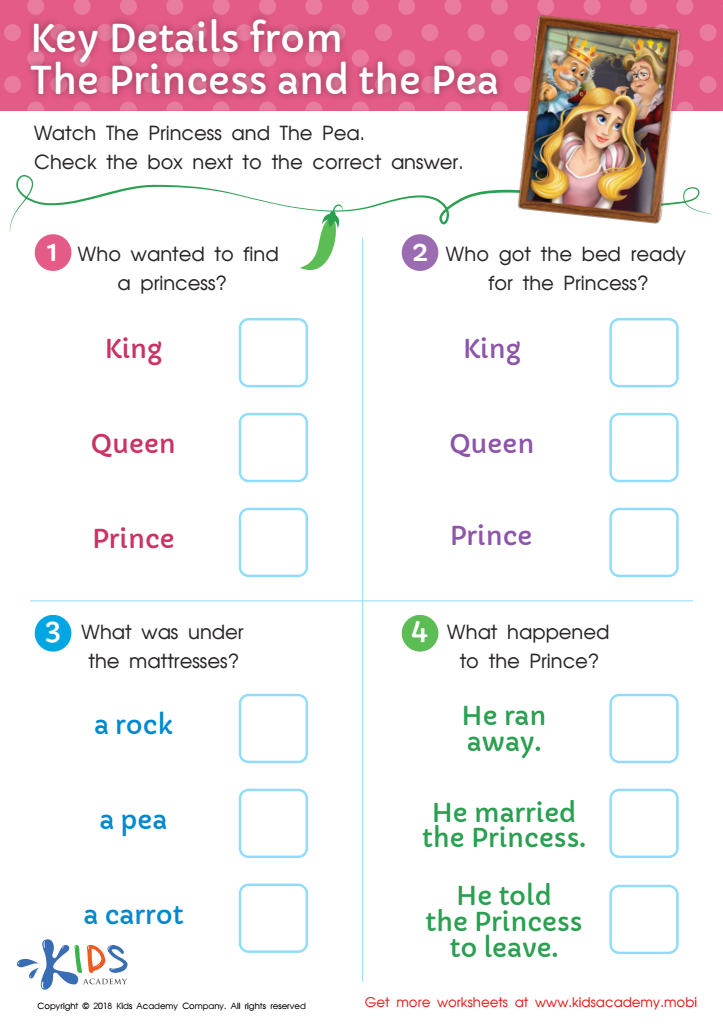
Key Details from the Princess and the Pea Worksheet
 Assign to My Students
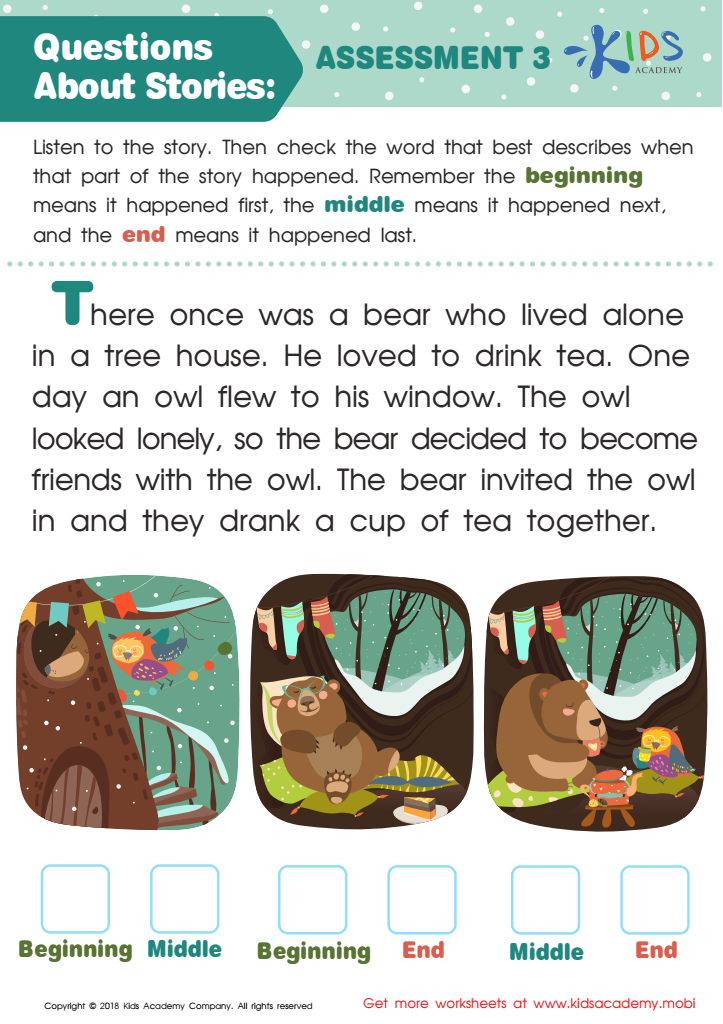
Questions About Stories: Assessment 3 Worksheet
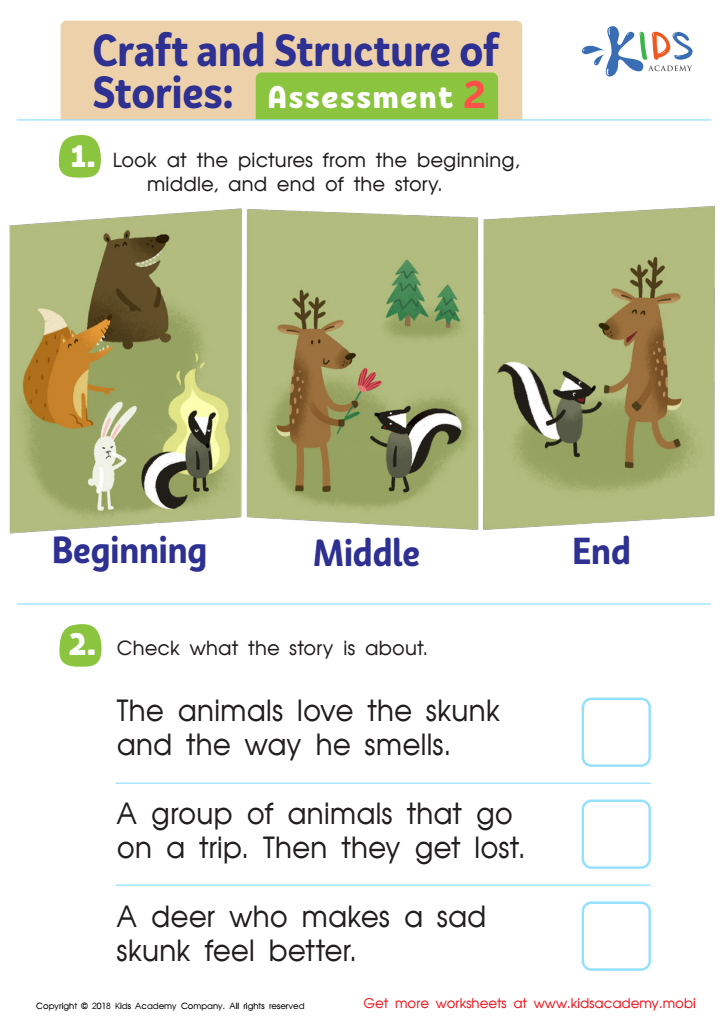
Craft and Structure of Stories: Assessment 2 Worksheet
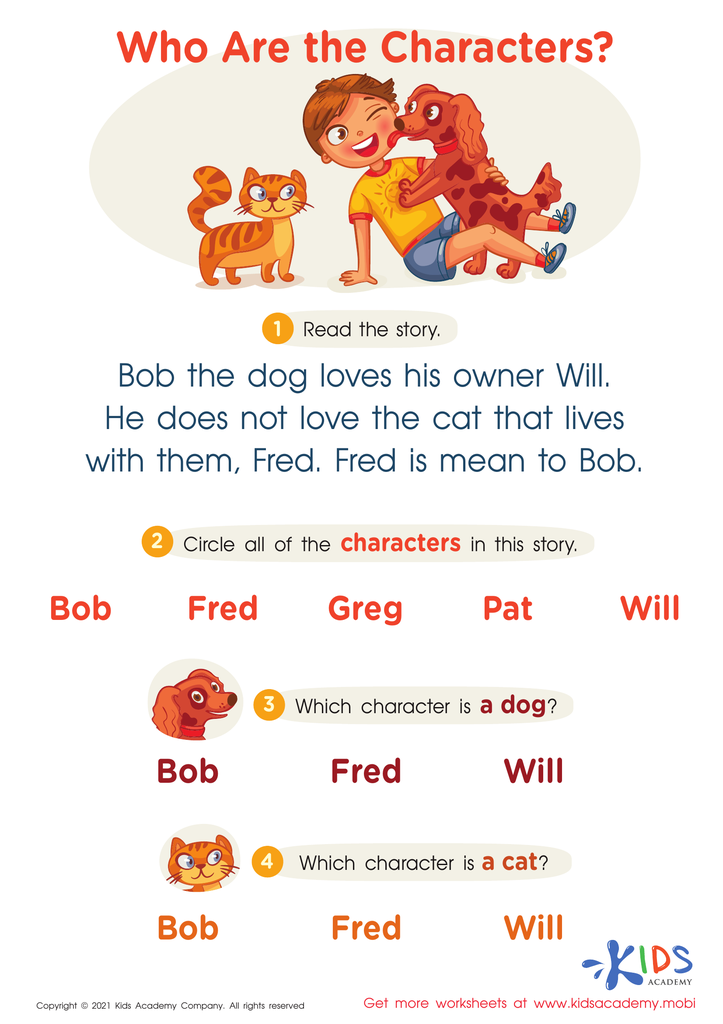
Who Are the Characters? Worksheet
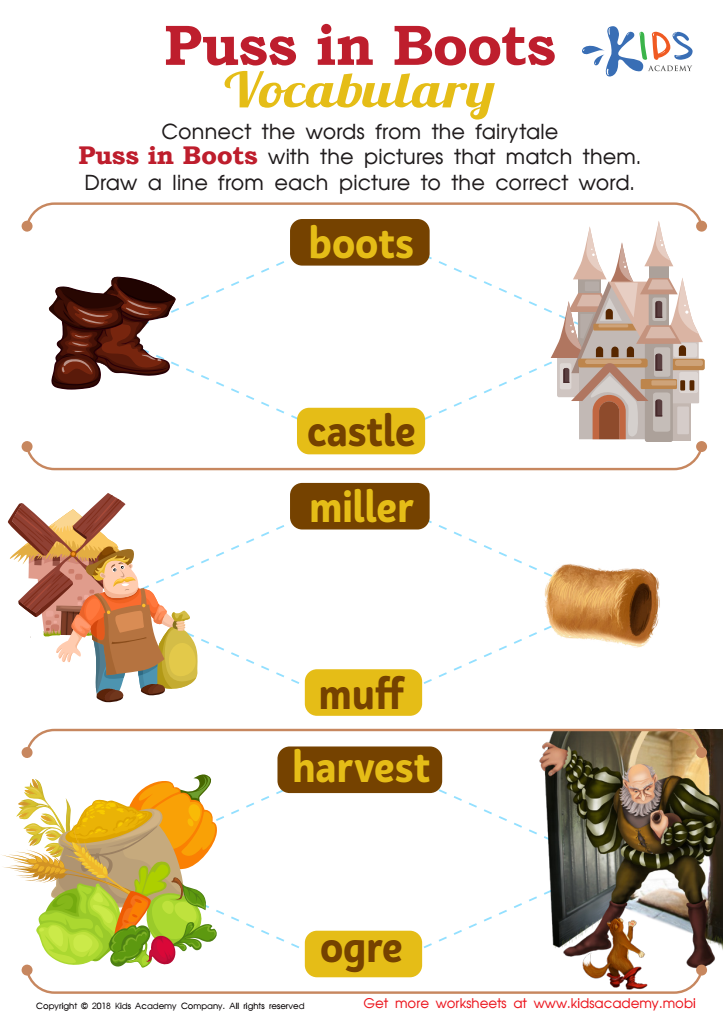
Puss in Boots Vocabulary Worksheet


.jpg)




Story analysis and reading comprehension for young children, particularly those aged 4-6, are foundational skills that extend far beyond simply understanding a narrative. When parents and teachers emphasize these skills, they lay the groundwork for critical thinking, emotional intelligence, and effective communication.
Firstly, story analysis encourages children to think deeper rather than just passively listen. It enables them to identify key elements of a story—like characters, setting, problem, and solution—helping to improve their ability to follow and understand narratives. Engaging with these elements fosters cognitive skills such as sequencing, predicting outcomes, and drawing inferences, which are crucial for problem-solving and logical thinking.
Moreover, reading comprehension nurtures a child’s linguistic abilities. As they encounter new words and phrases through stories, they expand their vocabulary and language proficiency. Discussing stories also enhances their ability to articulate thoughts and opinions, supporting social and communicative development.
On an emotional level, stories often present scenarios that children can relate to, offering them a safe space to explore feelings and empathy. By analyzing character actions and emotions, children can better understand their own feelings and those of others, fostering emotional well-being and social intelligence.
In sum, focusing on story analysis and reading comprehension equips young minds with crucial tools for learning and personal growth, making it imperative for parents and teachers to incorporate these activities into early education.








