Answering questions Reading Fiction Worksheets for Ages 4-6
3 filtered results
-
From - To
Enhance your child's reading comprehension with our "Answering Questions Reading Fiction Worksheets" designed for ages 4-6. These interactive worksheets encourage young readers to engage with stories and develop critical thinking skills. By answering questions about various fictional texts, children will improve their ability to recall details, make connections, and draw conclusions from what they read. Suitable for both classroom and home use, our fun and colorful worksheets make learning enjoyable. Foster a love for reading and help your little ones gain confidence in their abilities with our curated materials, ensuring they are well-prepared for future educational success. Download today!
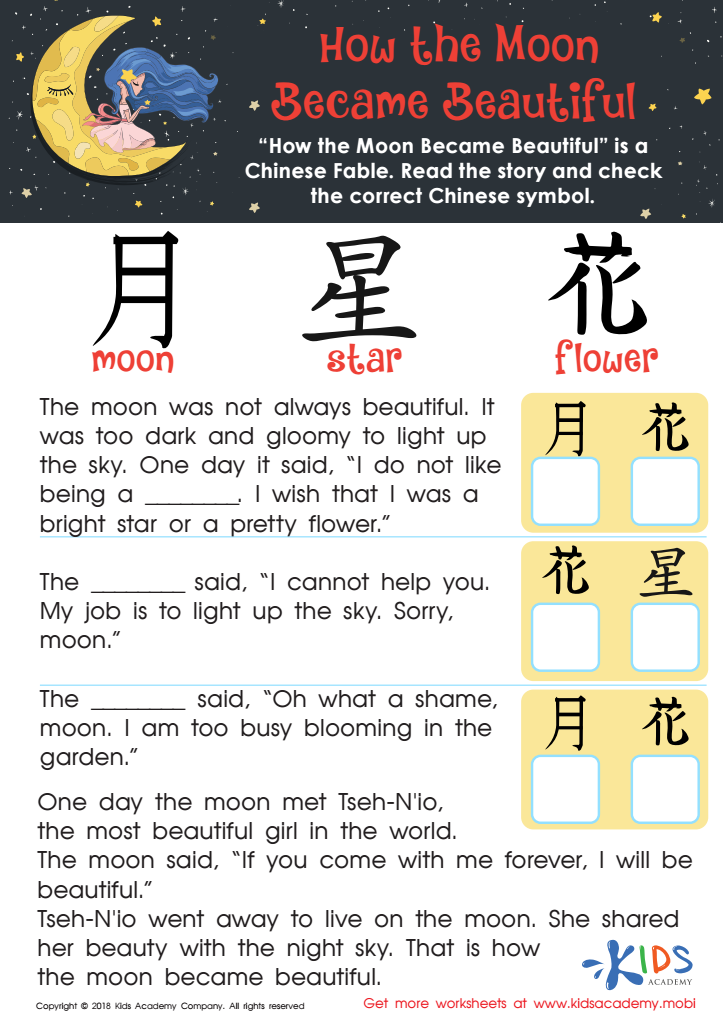
How the Moon Became Beautiful Worksheet
 Assign to My Students
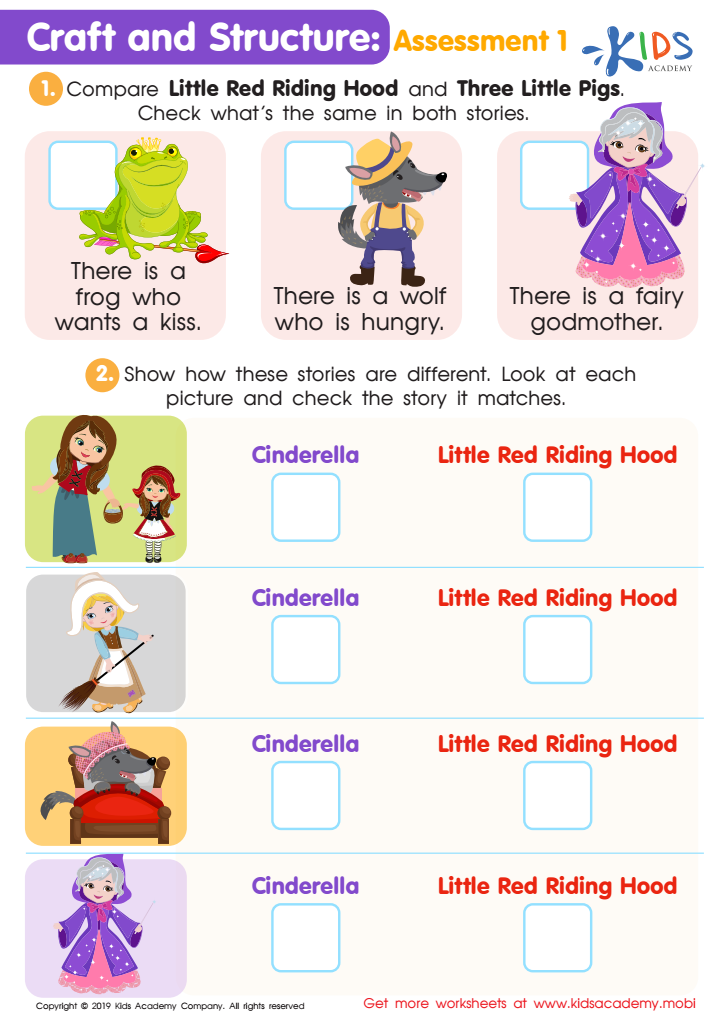
Craft and Structure: Assessment 1 Worksheet
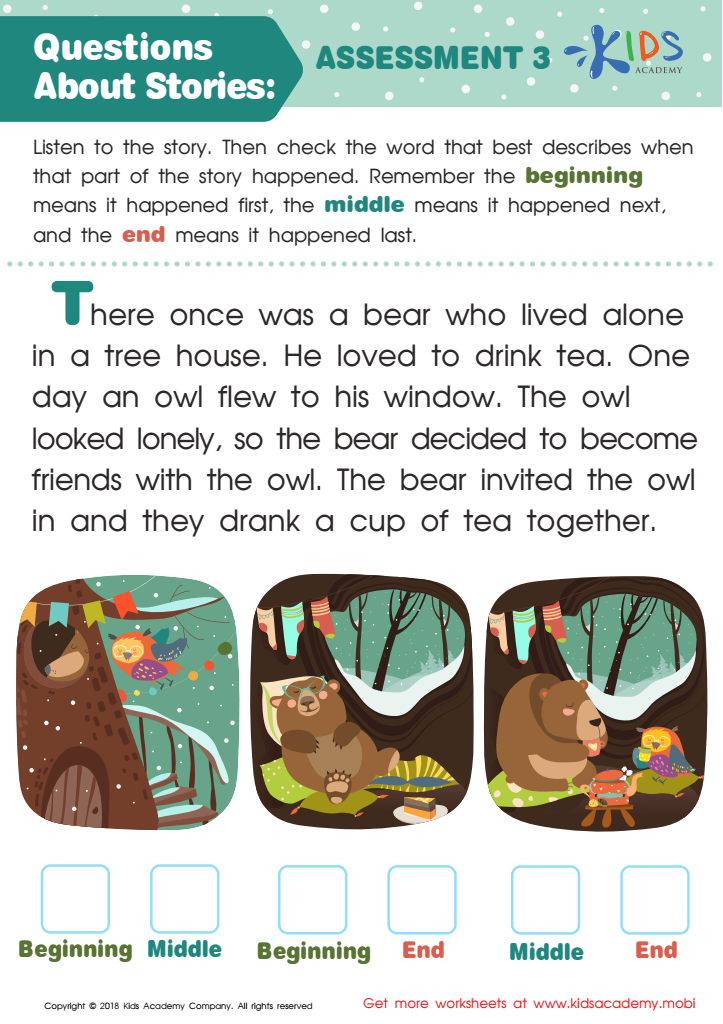
Questions About Stories: Assessment 3 Worksheet







Answering questions during reading sessions is crucial for children aged 4-6, as it significantly enhances their comprehension and critical thinking skills. During this stage of development, children's brains are highly receptive to new information, and engaging them in conversations about stories can deepen their understanding of themes, characters, and plot dynamics.
When teachers or parents prompt young readers with questions about the fiction they encounter, it encourages them to think beyond the text, fostering their ability to make connections and draw inferences. This practice not only builds language skills but also stimulates imagination—essential for cognitive growth. Moreover, children learn to express their thoughts and opinions, which aids in developing communication skills and boosts their confidence.
Additionally, interactive read-aloud sessions where questions are integrated make reading a more enjoyable experience. Such engagement can cultivate a lifelong love for books, as children learn that stories offer more than just entertainment—they can be avenues for exploration and discovery.
Finally, addressing children's questions paves the way for critical discussions around emotions, morals, and real-world contexts that stories often present. This holistic approach not just nurtures literacy but prepares young minds to navigate the complexities of life with empathy and insight.








