Cognitive Development Reading Fiction Worksheets for Ages 4-6
3 filtered results
-
From - To
Unlock your child's cognitive potential with our specially designed Cognitive Development Reading Fiction Worksheets for ages 4-6. These engaging activities blend the joy of storytelling with essential critical thinking skills, enhancing comprehension, vocabulary, and imagination. Each worksheet features captivating stories and interactive exercises that prompt young minds to explore, analyze, and draw connections. Ideal for early readers, our worksheets provide a crucial foundation for cognitive growth, fostering a lifelong love for reading and learning. Visit Kids Academy to empower your child's intellectual adventure with our expertly crafted fiction worksheets.
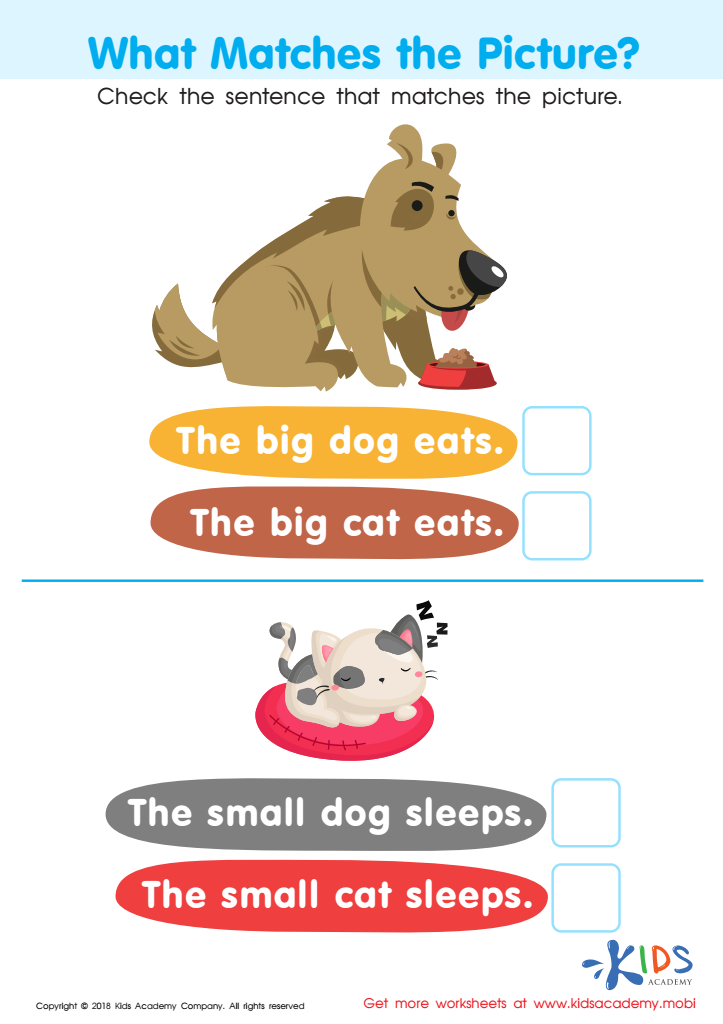
What Matches the Picture? Worksheet
 Assign to My Students
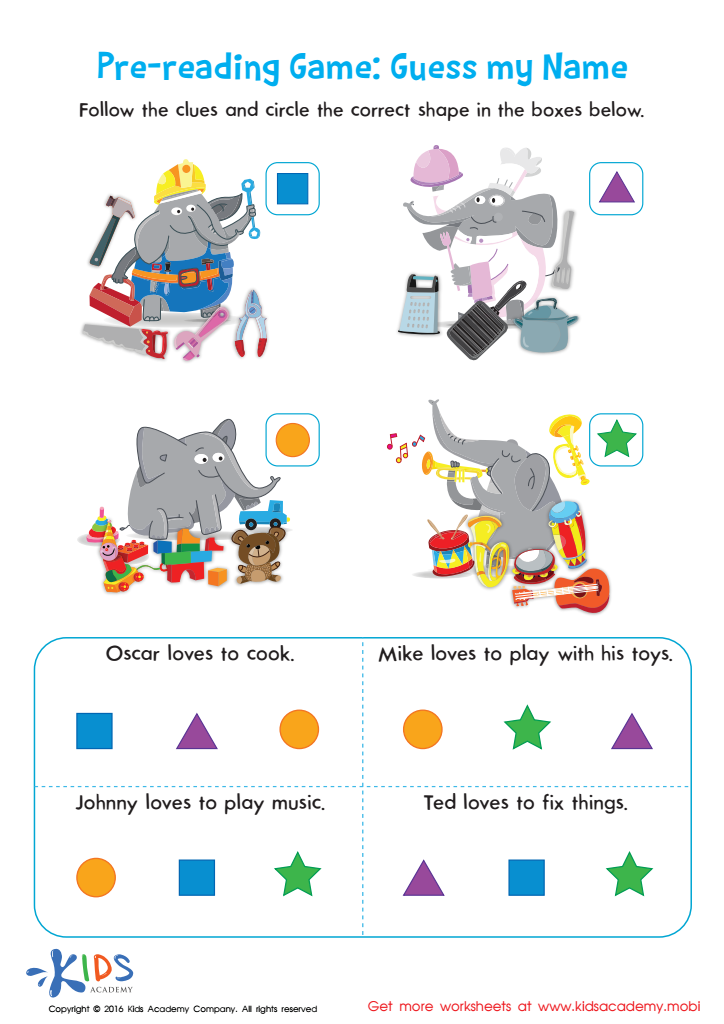
Pre Reading Worksheet Guess My Name
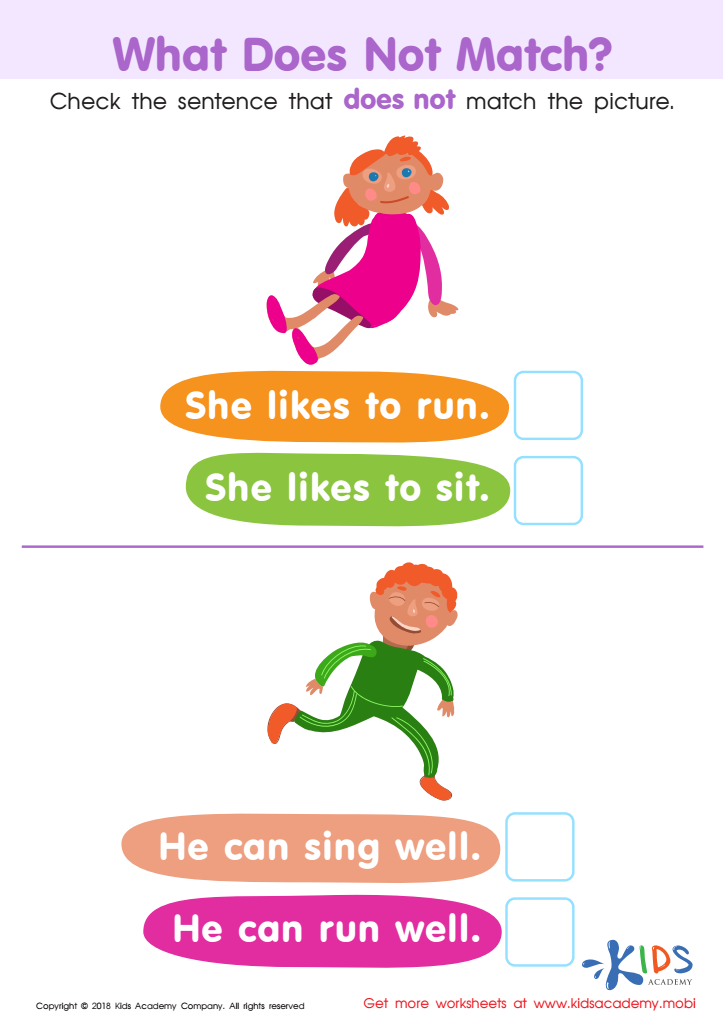
What Does Not Match? Worksheet



.jpg)




Cognitive development during early childhood lays the foundation for lifelong learning and action. Reading fiction to children aged 4-6 plays a pivotal role in this developmental phase for several reasons. First, it stimulates imagination and creativity; young minds are naturally curious, and stories with diverse settings and rich characters encourage kids to envision scenarios beyond their immediate experiences. Second, fiction enhances language skills. Hearing varied vocabulary and sentence structures aids in linguistic development, improving both expressive and receptive language abilities. Third, stories often have underlying morals or themes which help children grasp basic social constructs and emotional understanding. They learn empathy by identifying with characters and understanding different perspectives. Additionally, the structure of stories (beginning, middle, and end) helps in understanding sequences, an essential cognitive skill.
By regularly incorporating fiction into their reading routine, parents and teachers help children build concentration and listening skills as they follow along with the narrative. Moreover, discussing stories fosters critical thinking and comprehension by encouraging kids to ask questions, predict outcomes, and recall details. This shared activity not only bolsters cognitive growth but also strengthens the emotional bond between the child and the adult. In essence, reading fiction is a multi-faceted tool that significantly contributes to a child's cognitive and emotional development.








