Identifying story elements Reading Fiction Worksheets for Ages 4-6
3 filtered results
-
From - To
Discover the joy of reading with our "Identifying Story Elements" Fiction Worksheets, specially designed for ages 4 to 6! Our engaging resources help young learners recognize key components of storytelling, such as characters, settings, and themes. With vibrant illustrations and interactive activities, these worksheets encourage children to analyze stories and boost their comprehension skills. Ideal for both home and classroom use, our worksheets provide a fun way for kids to understand narratives while developing critical thinking. Foster a lifelong love of reading with tools that spark imagination and creativity. Explore our collection today and enrich your child's learning experience!
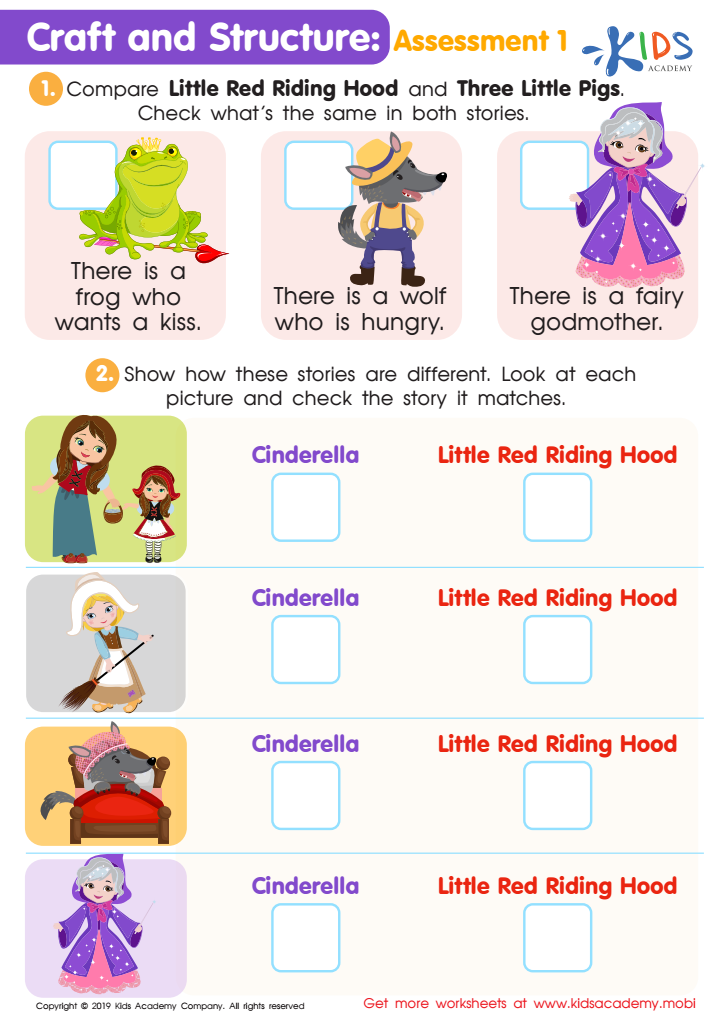
Craft and Structure: Assessment 1 Worksheet
 Assign to My Students
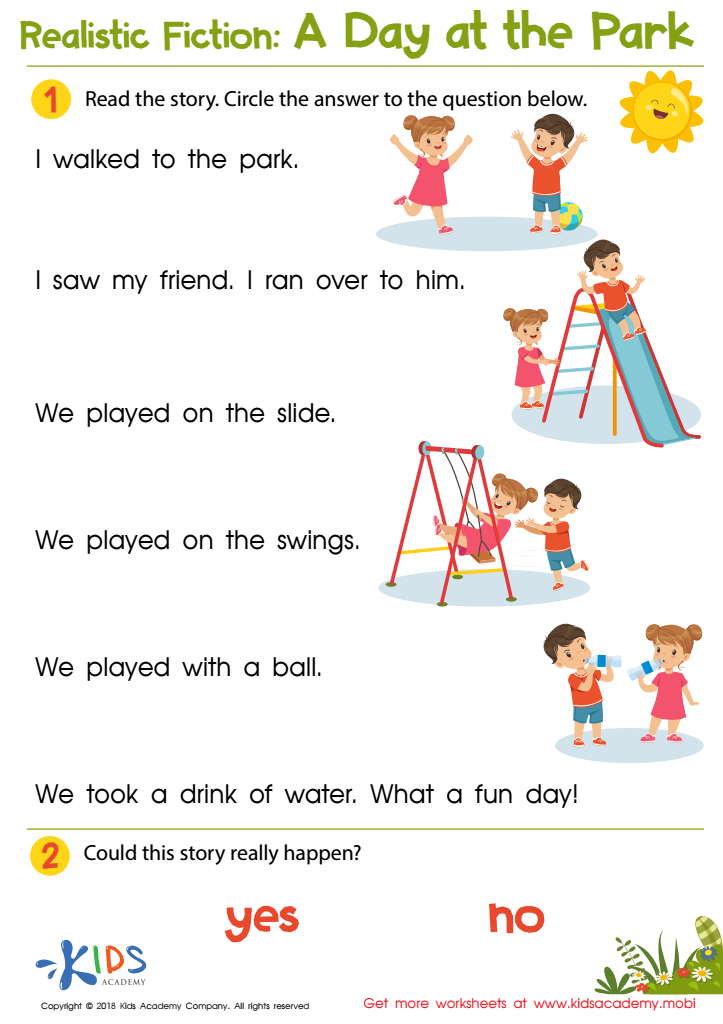
A Day at the Park Worksheet
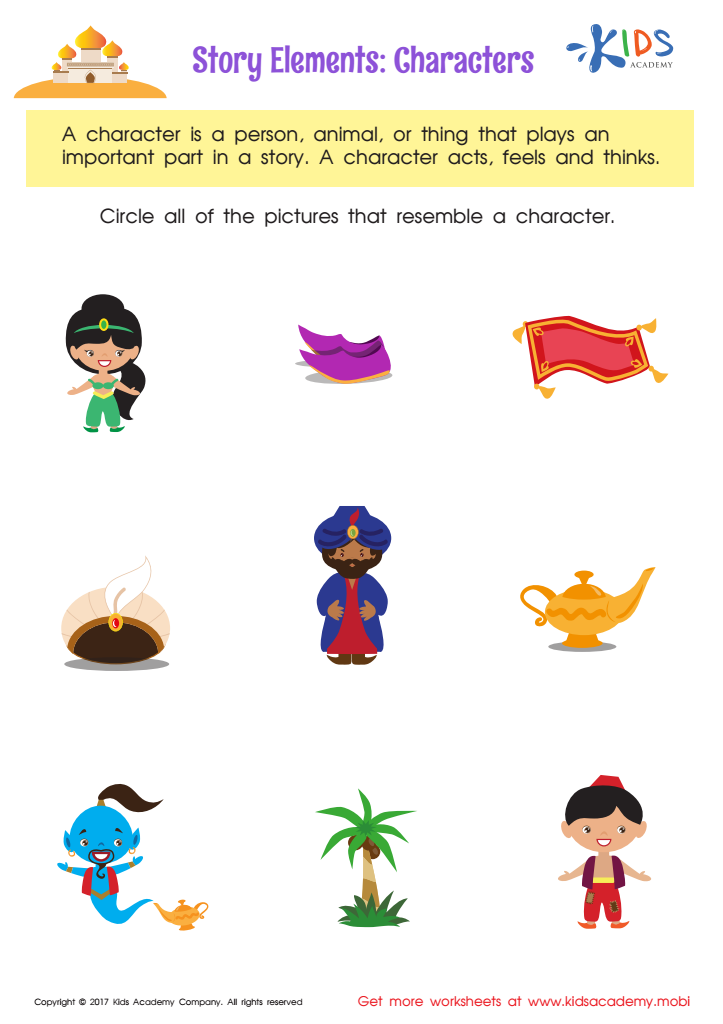
Story Elements Printable








Identifying story elements is crucial in developing literacy skills in young children aged 4-6. Parents and teachers should care about this practice because it lays the foundation for comprehension and analytical thinking. Story elements, such as characters, setting, plot, problems, and resolutions, help children understand the structure of a narrative, enhancing their ability to engage with texts meaningfully.
When children learn to identify these elements, they become active readers rather than passive listeners. They can make predictions about what might happen next, relate the story to their own experiences, and discuss the motives of characters. This not only boosts their reading comprehension but also supports their social-emotional development by allowing them to empathize with different perspectives.
Moreover, discussing story elements fosters critical thinking skills, as children learn to analyze different scenarios and outcomes. By guiding young readers through this process, parents and teachers instill a love for reading and storytelling. Ultimately, recognizing story elements is a vital step in a child’s educational journey, setting them up for future success in language arts and overall academic achievement.








