Vocabulary development Reading Fiction Worksheets for Ages 4-6
4 filtered results
-
From - To
Explore our engaging Vocabulary Development Reading Fiction Worksheets designed specifically for children aged 4 to 6! These worksheets incorporate delightful stories and fun activities aimed at enhancing your child’s language skills. Each activity encourages young learners to identify new words, understand their meanings, and use context clues to expand their vocabulary. Featuring vibrant illustrations and interactive exercises, these worksheets make learning enjoyable and effective. Perfect for at-home practice or classroom use, our resources empower early readers to build confidence in their language abilities. Discover the joy of reading while enriching your child’s vocabulary with our comprehensive worksheets today!
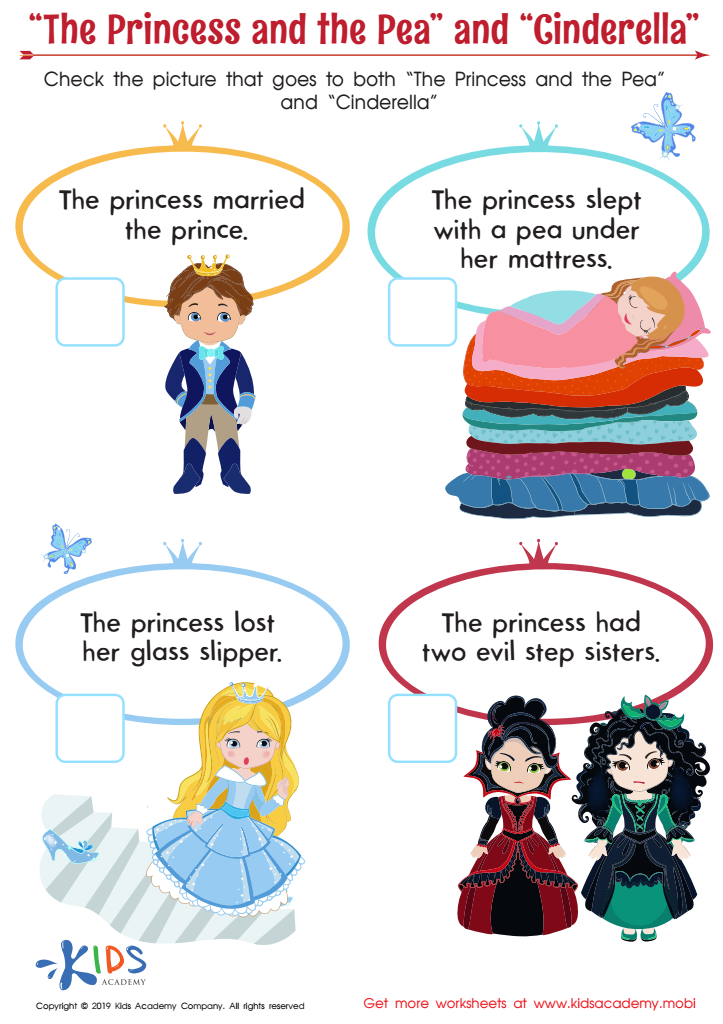
“The Princess and the Pea” and “Cinderella” Worksheet
 Assign to My Students
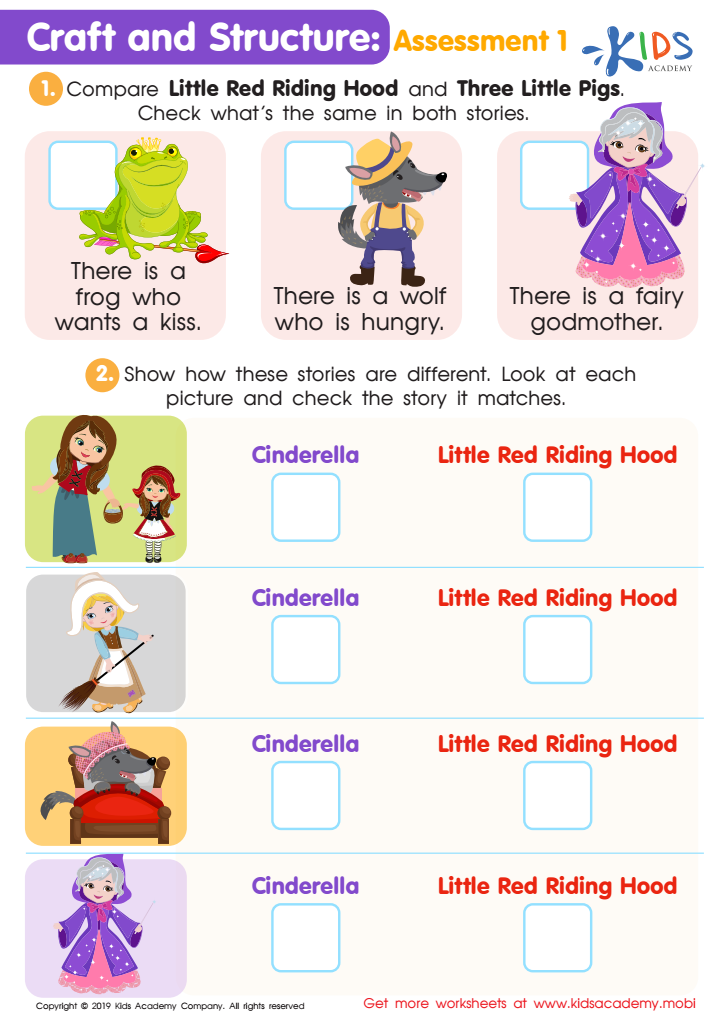
Craft and Structure: Assessment 1 Worksheet
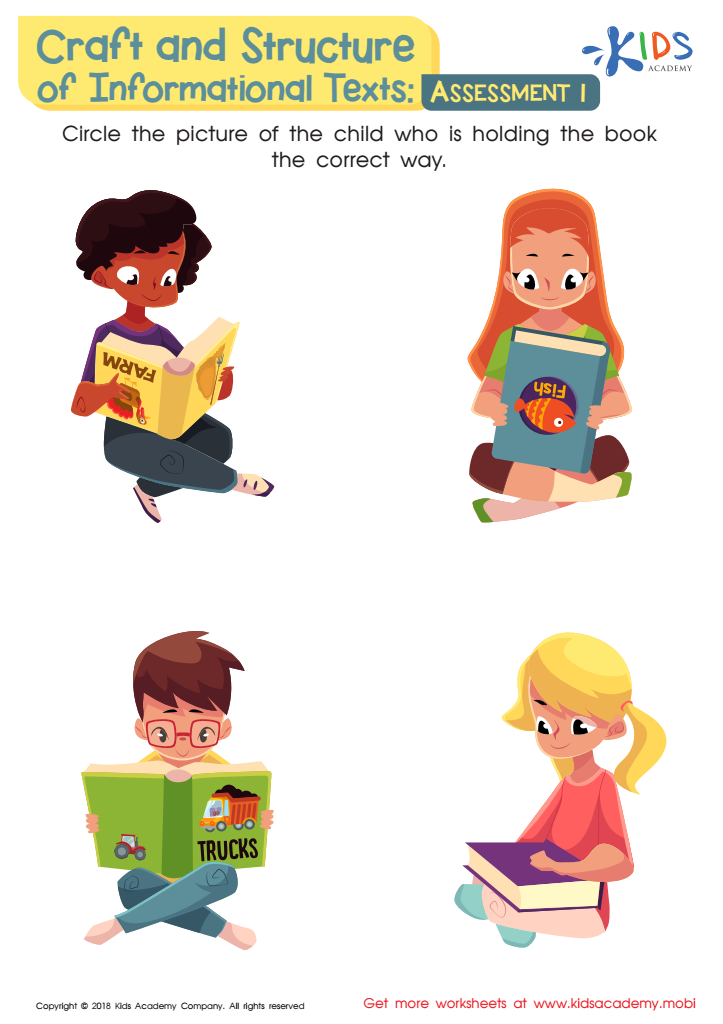
Craft and Structure of Informational Texts: Assessment 1 Worksheet
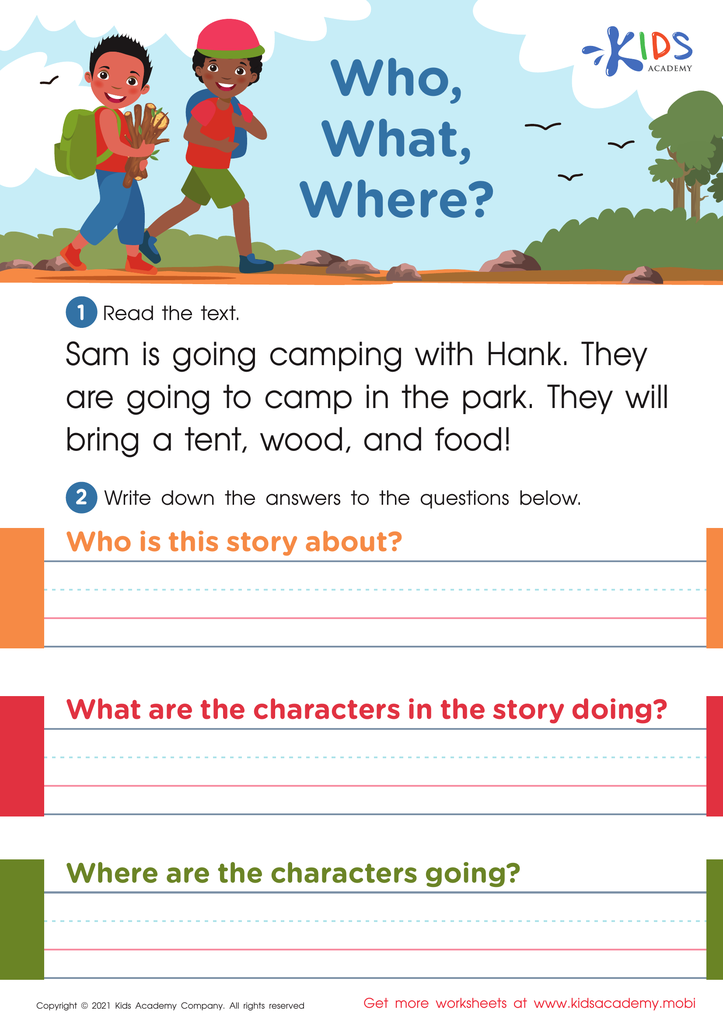
Who, What, Where? Worksheet





.jpg)

.jpg)
Vocabulary development through reading fiction is crucial for children aged 4 to 6, as it lays the foundation for literacy and overall communication skills. During these formative years, young children are exposed to a rich array of words, concepts, and stories that enhance their understanding of language. Fictional narratives introduce them to new vocabulary in context, making it more relatable and memorable. This immersive experience helps young learners grasp meanings, use words appropriately, and express themselves effectively.
Moreover, reading fiction stimulates imagination, creativity, and critical thinking. Engaging stories encourage discussion and questioning, prompting children to think deeply about characters, settings, and plots. This engagement with language not only enriches vocabulary but also fosters comprehension and analytical skills, which are vital for academic success later on.
Parents and teachers play a crucial role in this developmental stage by creating a fun and interactive reading environment. By selecting age-appropriate fiction and discussing narratives, they empower children to expand their vocabulary, enhancing their ability to communicate, comprehend, and navigate the world around them. Investing time in vocabulary-rich reading experiences reaps long-term benefits, paving the way for lifelong learning and well-rounded literacy skills.








