Fine Motor Skills Rhyming Words Worksheets for Ages 4-6
4 filtered results
-
From - To
Enhance your child's fine motor skills while they explore the fun world of rhyming words with our engaging worksheets designed specifically for ages 4-6. Our printable activities combine learning and play, allowing young learners to practice writing and manipulating shapes while discovering the joy of rhymes. Each worksheet incorporates colorful illustrations and interactive tasks that captivate children's attention and promote skill development. By using scissors, crayons, and glue, kids will not only improve their hand-eye coordination and dexterity but also boost their early literacy skills. Unlock your child's potential with our beautifully crafted fine motor skills rhyming words worksheets today!
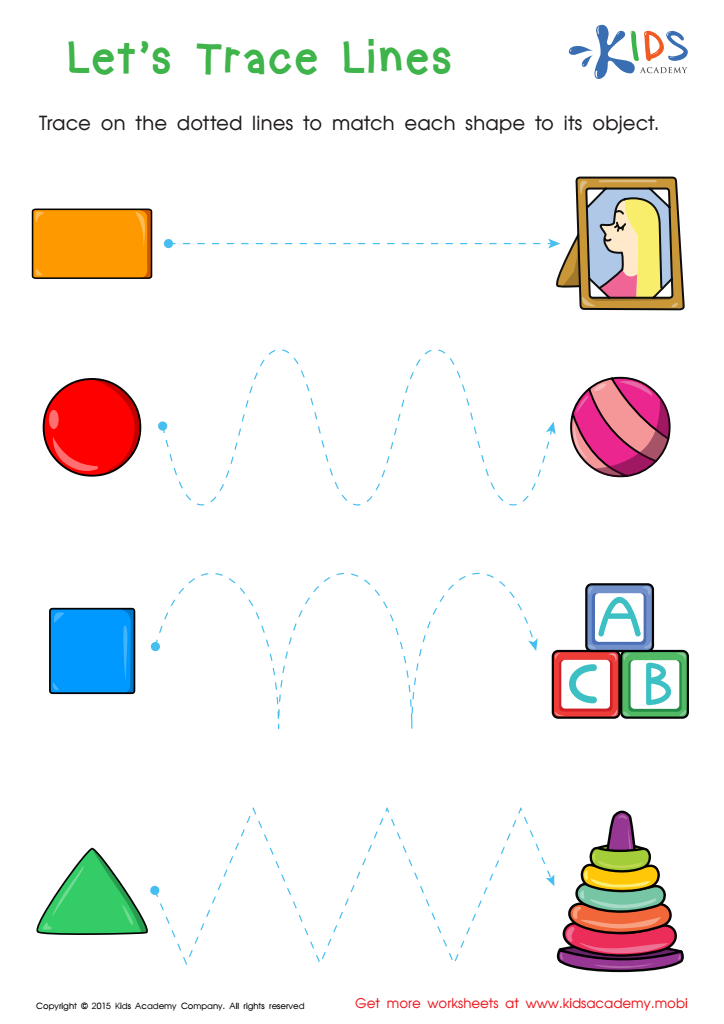
First Words: Let's Trace Lines Worksheet
 Assign to My Students
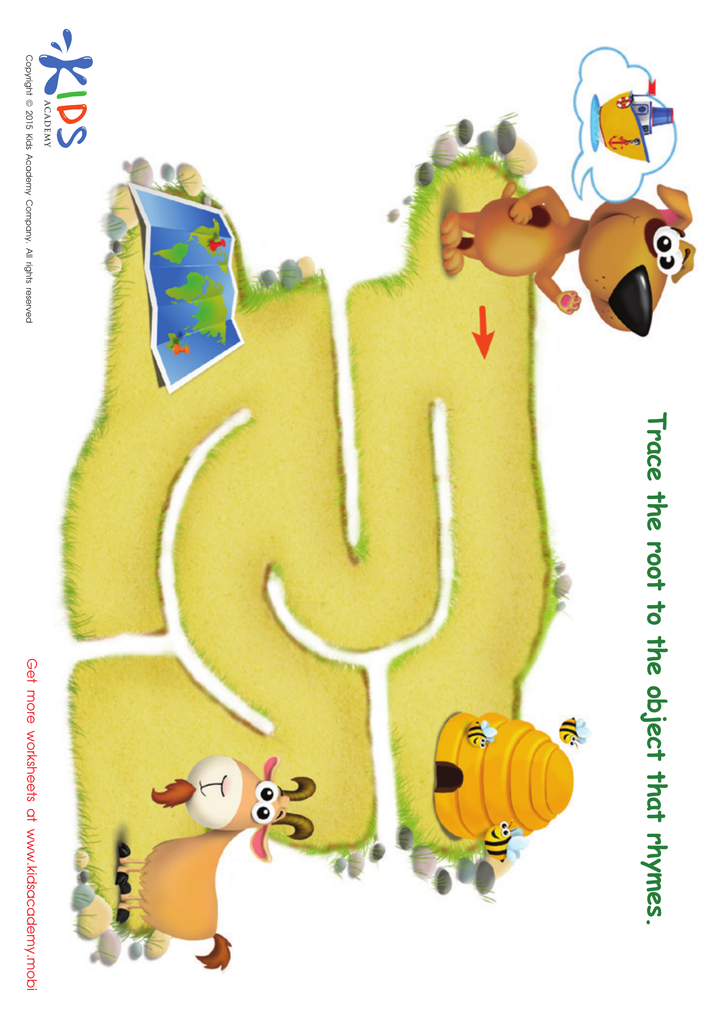
Boat Rhyming Words Worksheet
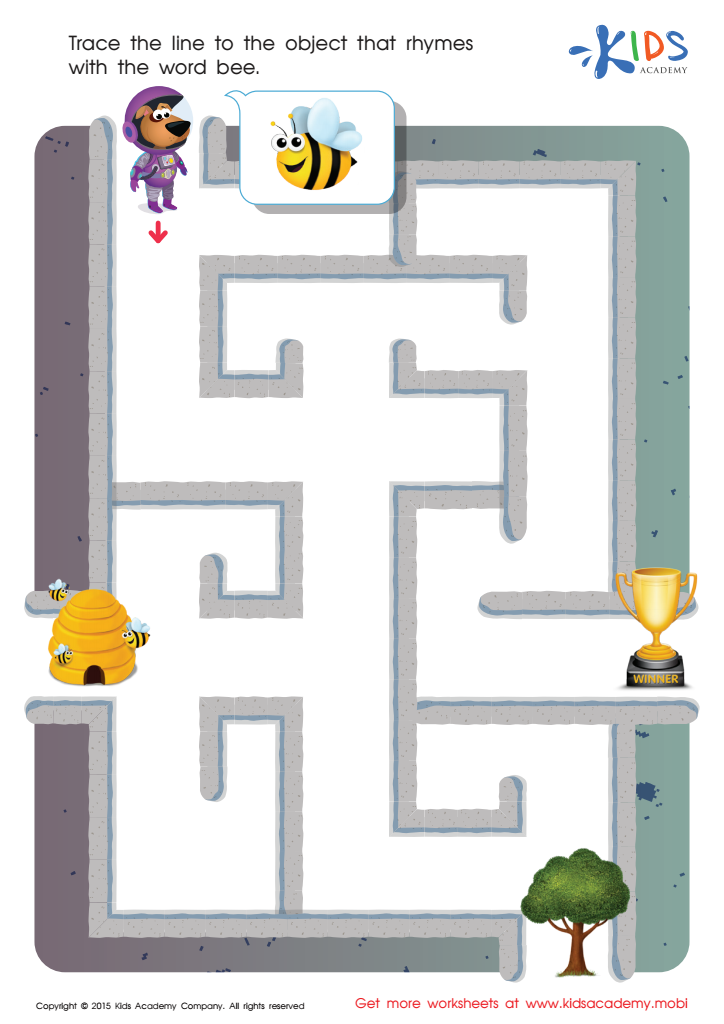
Bee Rhyming Words Worksheet
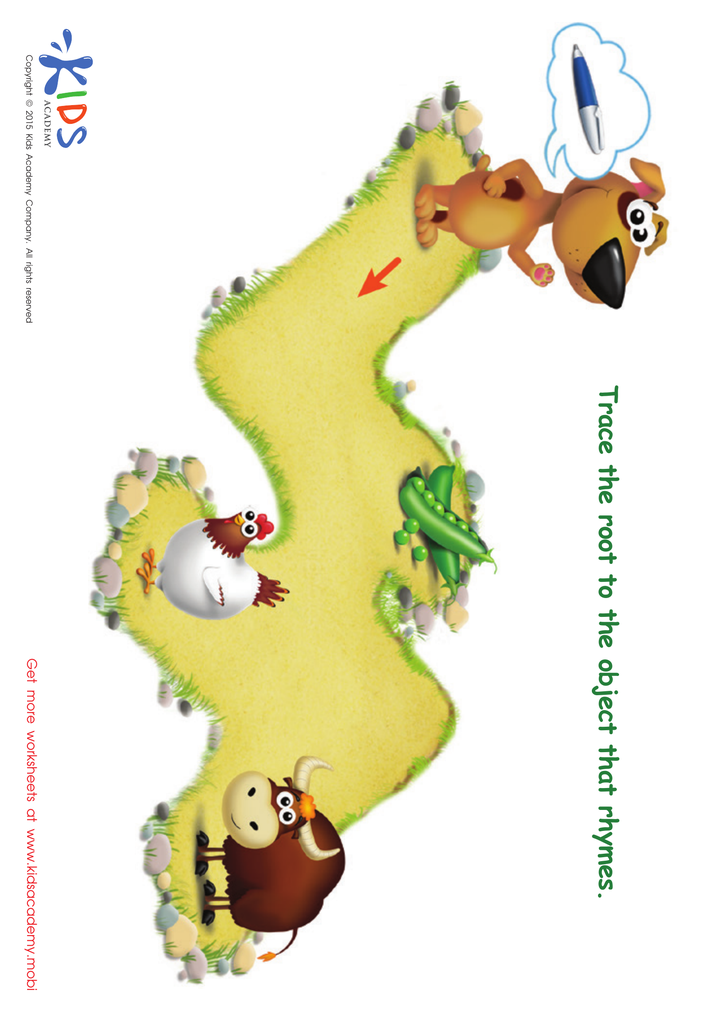
Pen Rhyming Words Worksheet








Fine motor skills and rhyming words are crucial developmental components for children aged 4-6. Fine motor skills involve the ability to perform small, precise movements with hands and fingers, such as grasping, cutting, or threading. These skills are essential for everyday tasks like writing, eating, and dressing, laying a foundation for independence and confidence in young learners.
Rhyming words, on the other hand, play a significant role in language development. They enhance phonemic awareness, which is critical for early literacy. Recognizing and producing rhyming words helps children understand sounds in words, making reading and spelling easier as they progress.
By engaging in activities that incorporate both fine motor skill development and rhyming, parents and teachers can create enriching learning experiences. Activities such as creating rhyming crafts or using manipulatives to form words foster both skills simultaneously. This multifaceted approach not only promotes cognitive and physical abilities but also encourages creativity.
Furthermore, this integration helps build a supportive learning environment where children can explore language and refine their motor skills in playful, engaging ways. Ultimately, focusing on these areas ensures a well-rounded foundation for future academic success and personal growth in young children.








