Rhyming skills development Rhyming Words Worksheets for Ages 4-6
3 filtered results
-
From - To
Boost your child's phonemic awareness with our expertly crafted Rhyming Words Worksheets for ages 4-6. Designed to make learning fun and engaging, these worksheets help young learners develop vital pre-reading skills through entertaining rhyme-based exercises. With vivid illustrations and interactive activities, children will delight in identifying and matching rhyming pairs. Rhyming aids in memory retention, sound pattern recognition, and verbal expression, setting a strong foundation for successful reading. Encourage your child to explore the world of words and sounds with our thoughtfully designed resources that foster both skill development and a love for reading. Make learning a wonderful adventure today!

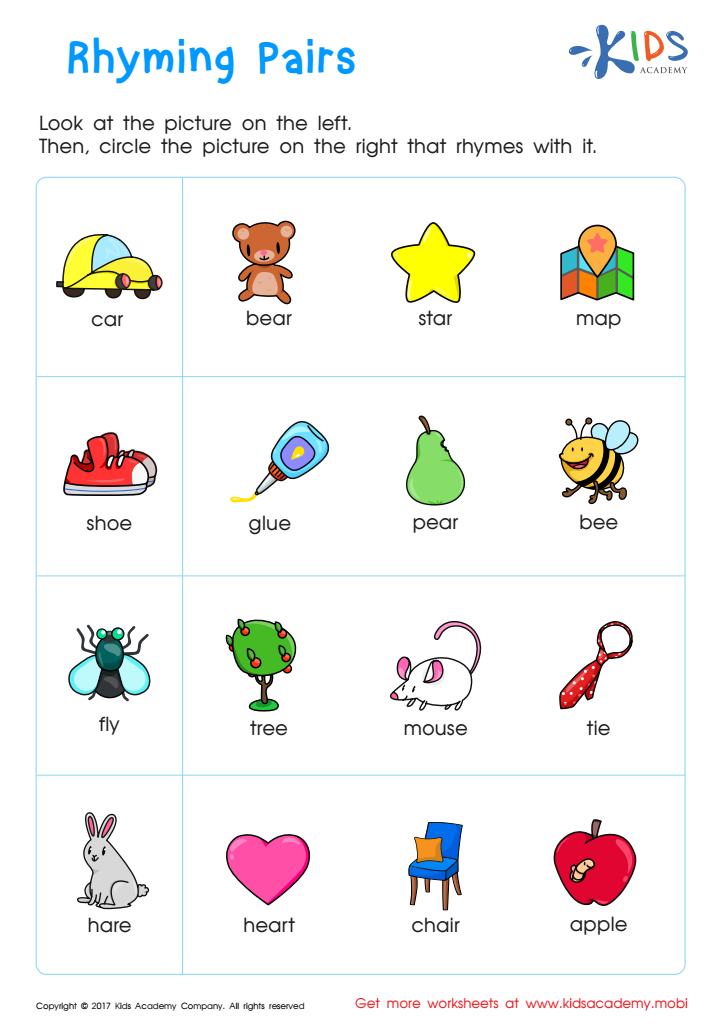
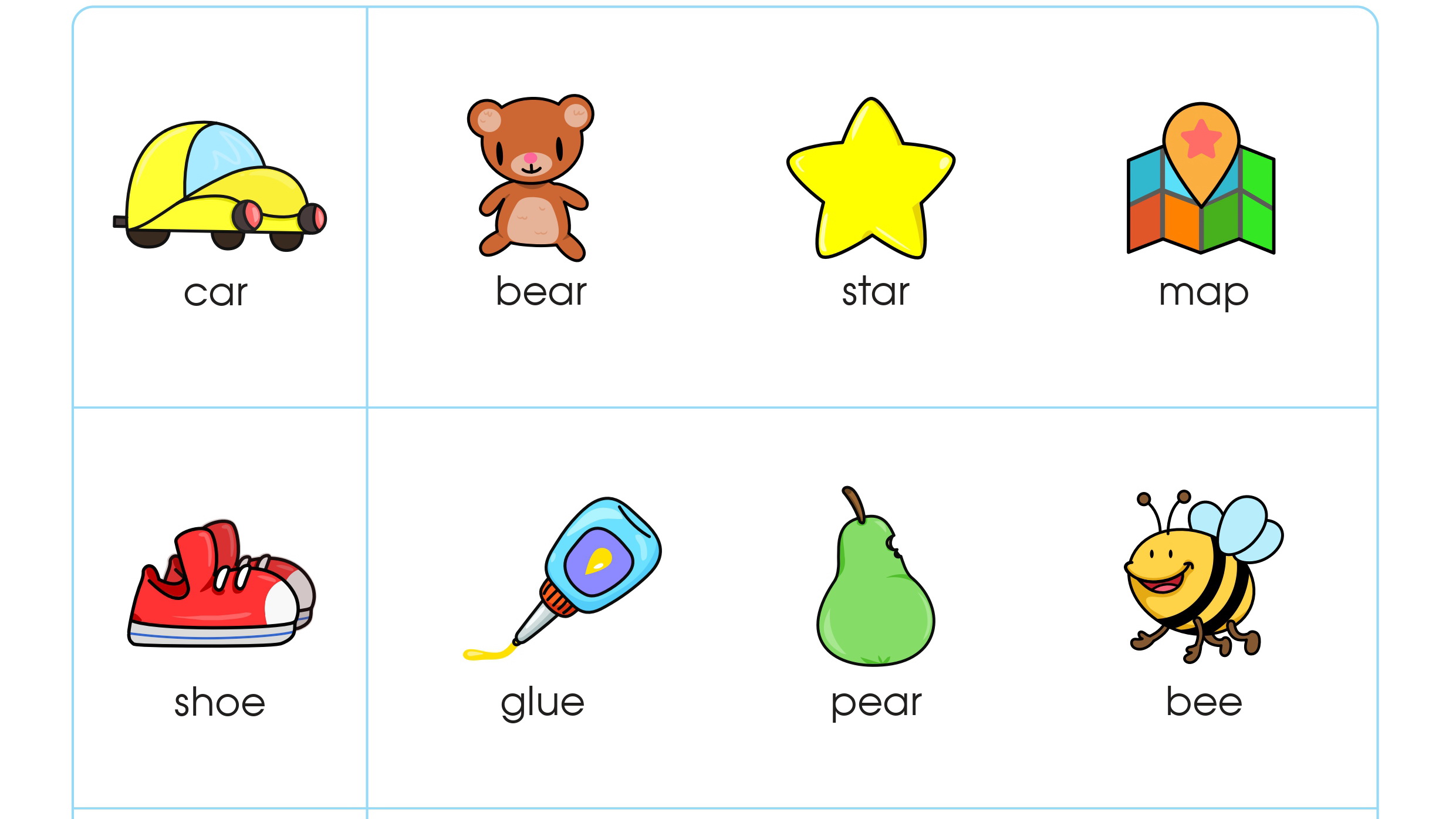
Rhyming Words Rhyming Worksheet
 Assign to My Students
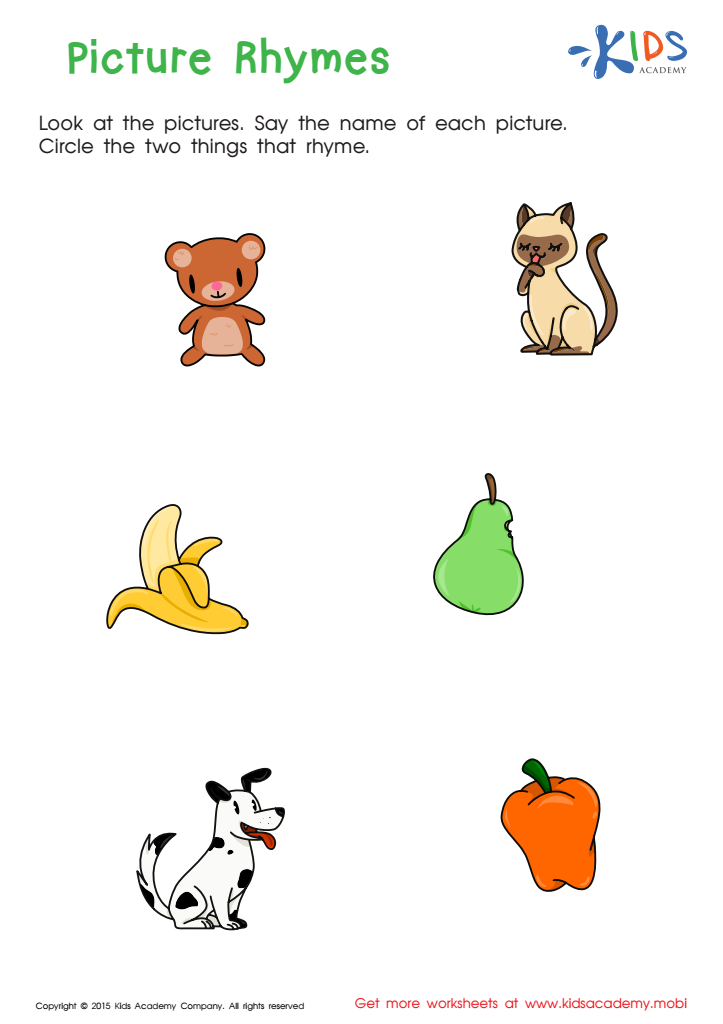
First Words: Picture Rhymes Worksheet







Rhyming skills are a crucial aspect of early literacy development for children aged 4-6, playing a significant role in their overall language acquisition. When parents and teachers foster an interest in rhyming, they help children enhance their phonemic awareness, foundational to learning to read and spell. Rhyming helps kids recognize and work with sounds within words, which is essential for decoding those words when reading.
Engaging in rhyming activities also enhances children’s auditory discrimination, enabling them to distinguish between different sounds and patterns in words. This sensory skill is vital for future vocabulary development and spelling abilities. Moreover, fun and engaging rhyming exercises can make learning enjoyable, boosting children’s enthusiasm for reading and literacy activities.
Additionally, rhyming nurtures creative thinking and linguistic play. As children experiment with creating their own rhymes, they learn to manipulate sounds and explore the rhythm of language. This not only supports cognitive development but also aids in memory retention, aiding them in picking up and remembering new words more efficiently.
In conclusion, focusing on rhyming skills in the early years sets the foundation for reading success. It cultivates essential literacy skills, promotes a love for language, and prepares children for more complex linguistic challenges as they grow. Parents and teachers play an influential role in this foundational stage of learning.








