Counting skills Animals Worksheets for Ages 4-6
3 filtered results
Difficulty Level
Grade
Age
-
From - To
Subject
Activity
Standards
Discover the joy of counting with our engaging Animal Counting Skills Worksheets, perfect for children ages 4-6! Designed to blend fun and learning, these worksheets introduce young learners to basic counting concepts while featuring adorable animals that capture their imagination. Kids will develop essential math skills through interactive activities, such as counting, matching, and number recognition. Each worksheet encourages creativity and critical thinking, ensuring a comprehensive learning experience. Ideal for home or classroom use, our resources help foster a love for math and nature in early learners. Start your child's counting adventure today with our delightful animal-themed worksheets!
Favorites
With answer key
Interactive
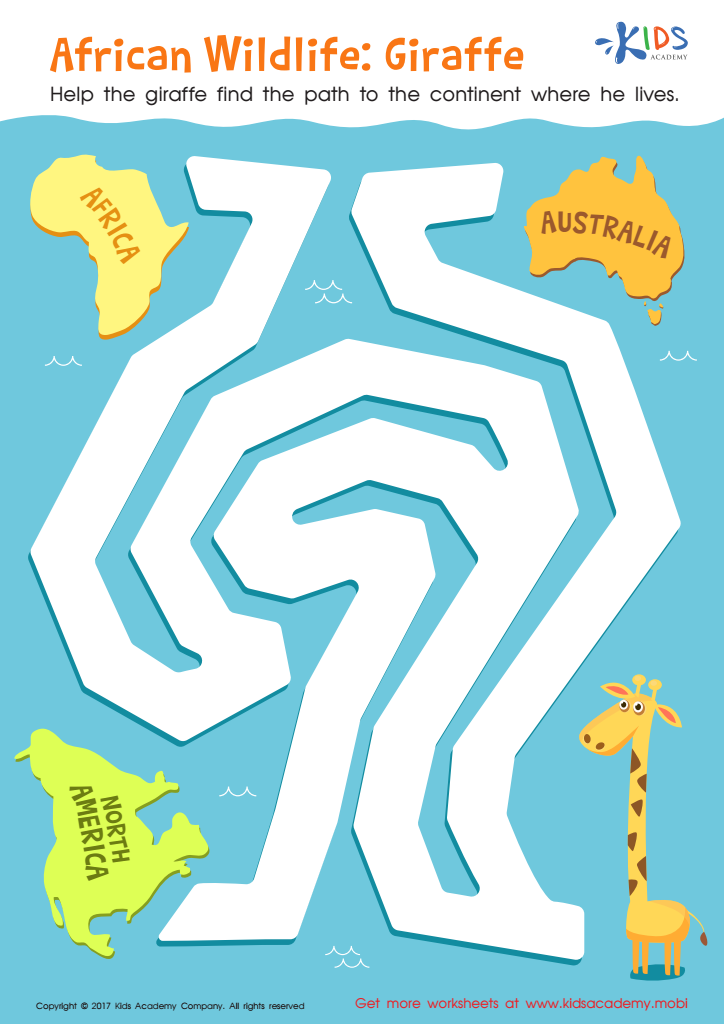
African Wildlife: Giraffe Worksheet
Help the giraffe get home! This African wildlife giraffe worksheet will boost your child's logical reasoning skills while they complete a maze to help the giraffe navigate choppy waters. Learn about different continents and their unique climates, practice problem solving and expand knowledge of the world and its habitats. Perfect for inspiring little learners!
 Assign to My Students
African Wildlife: Giraffe Worksheet
Worksheet
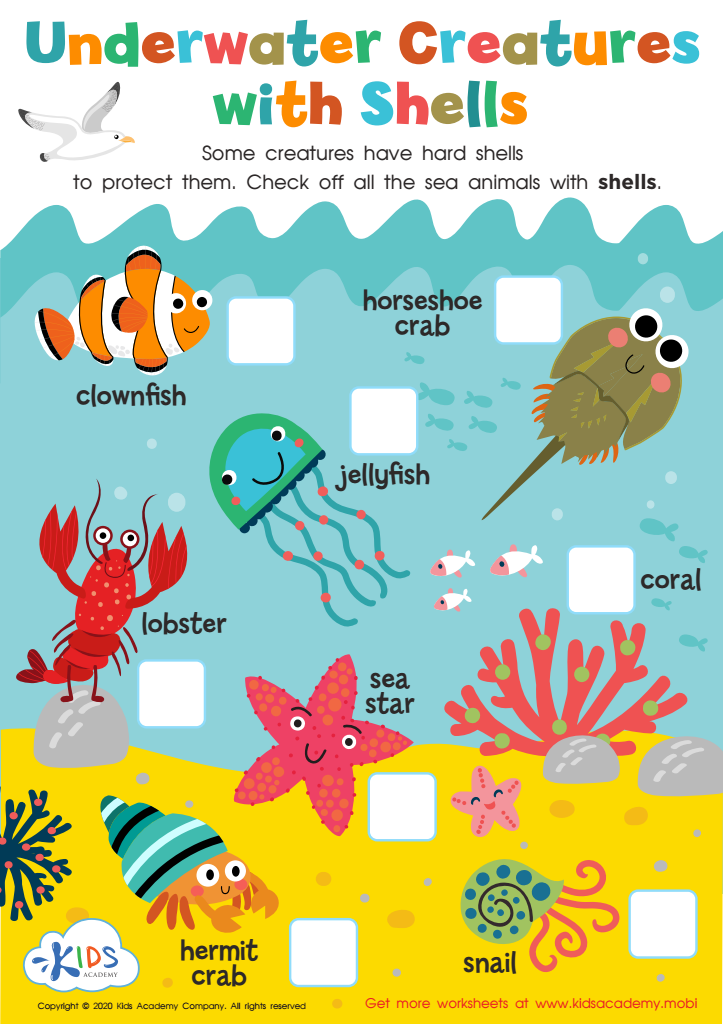
Underwater Creatures with Shells Worksheet
Teach your child about sea creatures with this vibrant PDF science worksheet! Comb through the colorful image to identify animals with shells; compare them to others and check them off. Let them know shells don't just wash up on beach, they serve as protection for sea creatures!
Underwater Creatures with Shells Worksheet
Worksheet
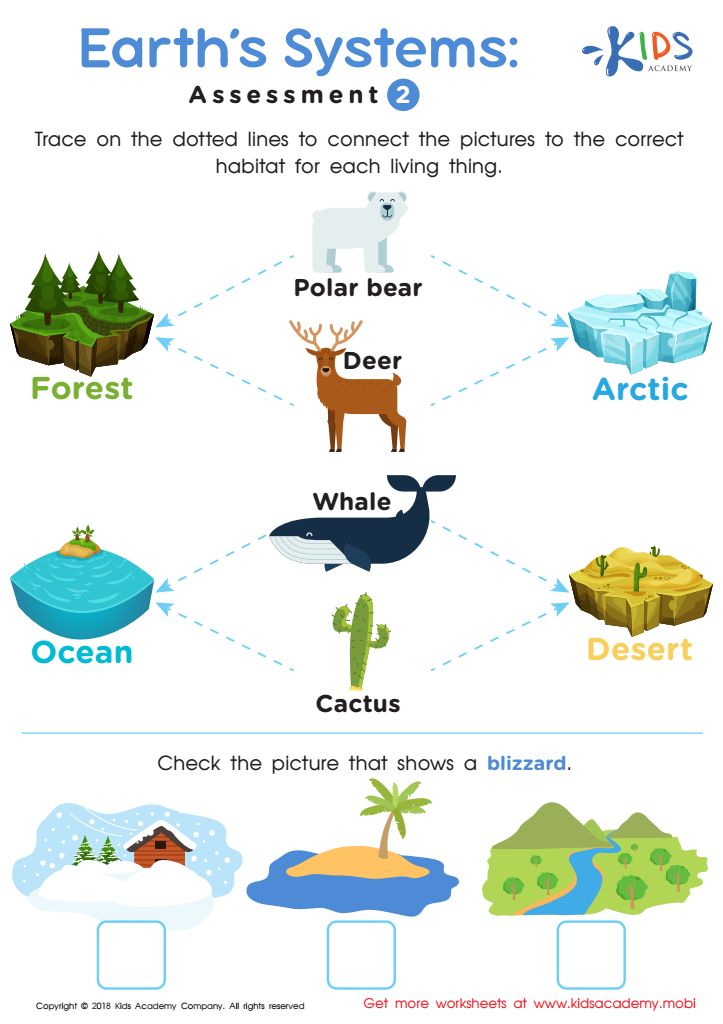
Earth's Systems: Assessment 2
Kids will love this free printable worksheet to assess their knowledge of habitats and the living creatures found in them. They'll trace the dotted lines to connect the pictures of plants and animals to their respective habitat and identify the type of weather depicted. No, polar bears don't live in the ocean, but they do like to swim in icy waters! With this fun activity, your little learner will master earth science basics.
Earth's Systems: Assessment 2
Worksheet
Join Kids Academy for Free
Who is primarily going to use this learning content?




%20(1).jpg)



Counting skills are crucial for young children, particularly those aged 4 to 6, as they lay the foundation for essential mathematical concepts and overall cognitive development. Integrating counting with animals provides a relatable and engaging approach for children. Animals are often a favorite subject among young learners; thereby, incorporating them into counting activities enhances interest and participation.
By focusing on animal counting skills, parents and teachers can make learning fun and interactive. Activities involving animals, such as counting the number of spots on a yellow giraffe or grouping different species, help children visualize quantities and improve their number sense. Moreover, understanding counting through animals can foster skills like sorting, categorizing, and comparing.
These activities also promote language development, as children learn new vocabulary associated with various animals, their habitats, and behaviors. Additionally, learning to count can improve concentration and memory, crucial skills in a child's educational journey. Emphasizing counting skills through animals not only supports academic growth but also encourages a love for nature and wildlife, enriching children's appreciation for the world around them. This holistic approach supports emotional and social development as children engage in discussions and collaborate with peers during these activities.