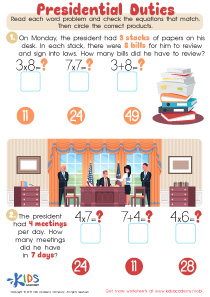
Spatial awareness Community Worksheets for Ages 4-6
4 filtered results
Difficulty Level
Grade
Age
-
From - To
Subject
Activity
Standards
Explore our engaging Spatial Awareness Community Worksheets, designed specifically for children aged 4-6! These worksheets help young learners develop essential spatial skills through fun activities focused on their immediate community. By navigating maps, identifying locations, and understanding directions, children build critical thinking and problem-solving abilities. Each worksheet is crafted to foster creativity and imagination, providing a dynamic way for kids to learn about the world around them. Ideal for in-home learning or classroom settings, our resources promote interactive play while enhancing foundational concepts of space and community awareness. Download our worksheets today to inspire young minds with a love for learning!
Favorites
With answer key
Interactive
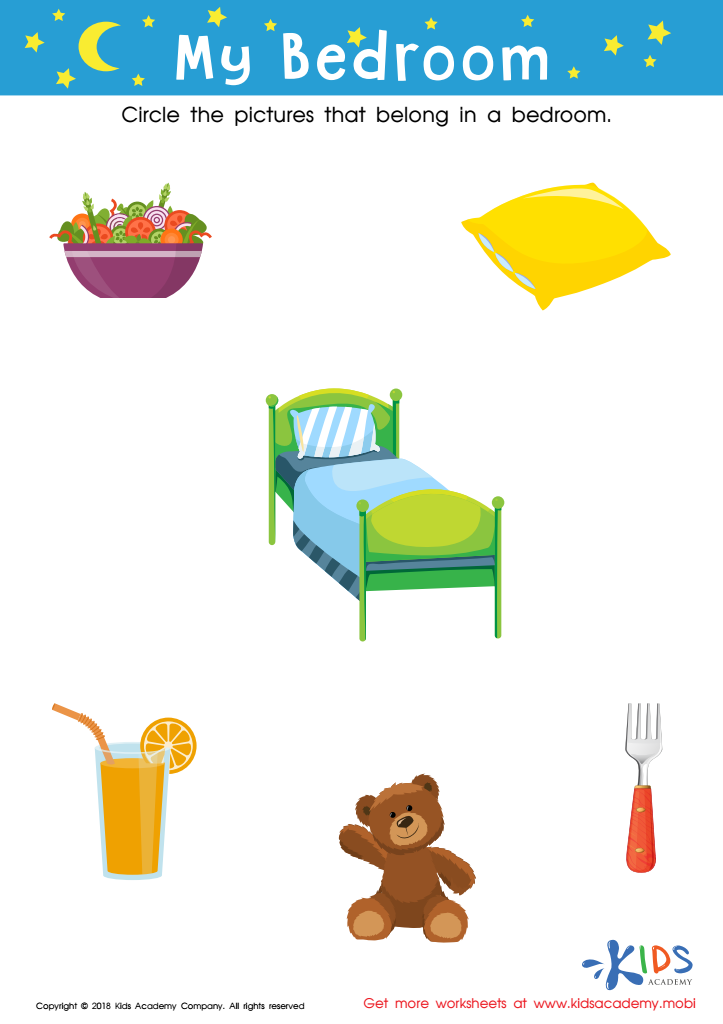
My Bedroom Worksheet
Your child's room is their special space, where only a few are allowed in. You may have let them choose some special decorations, like wall stickers and toys. This exercise will be easy for your child, as they know their bedroom well. Ask them to circle the pictures that belong in a bedroom.
 Assign to My Students
My Bedroom Worksheet
Worksheet
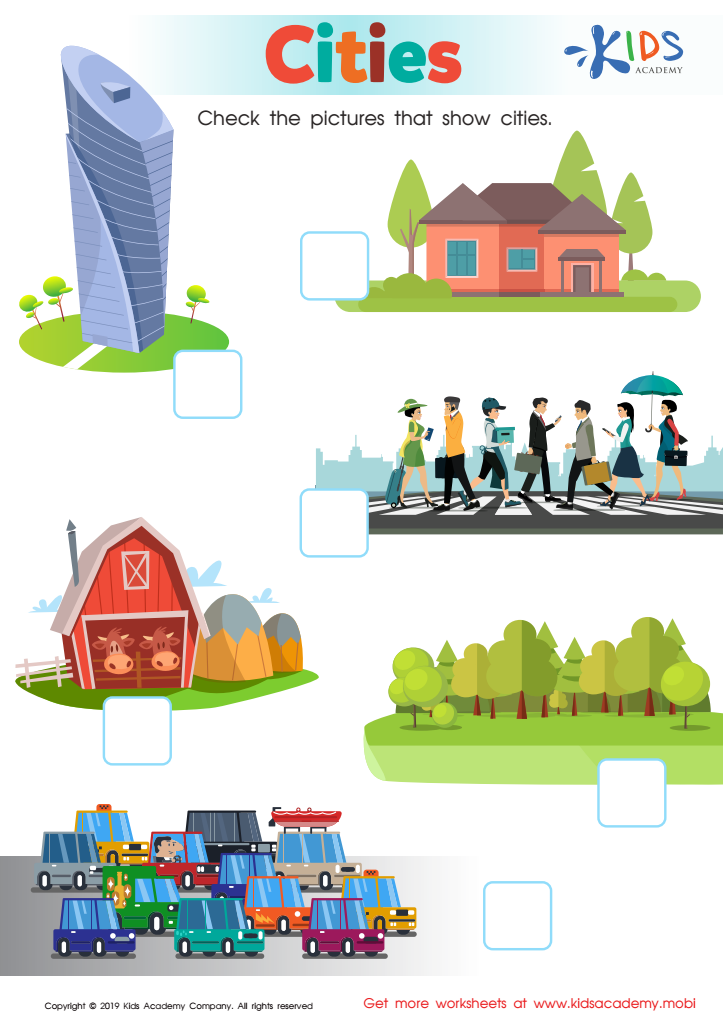
Cities Worksheet
This social studies PDF introduces kids to the differences between cities and towns. Colorful imagery helps them to distinguish between the two; for example, cities have traffic, business people and skyscrapers, while suburbs and rural areas do not. This allows children to have a reference point for what makes cities unique.
Cities Worksheet
Worksheet
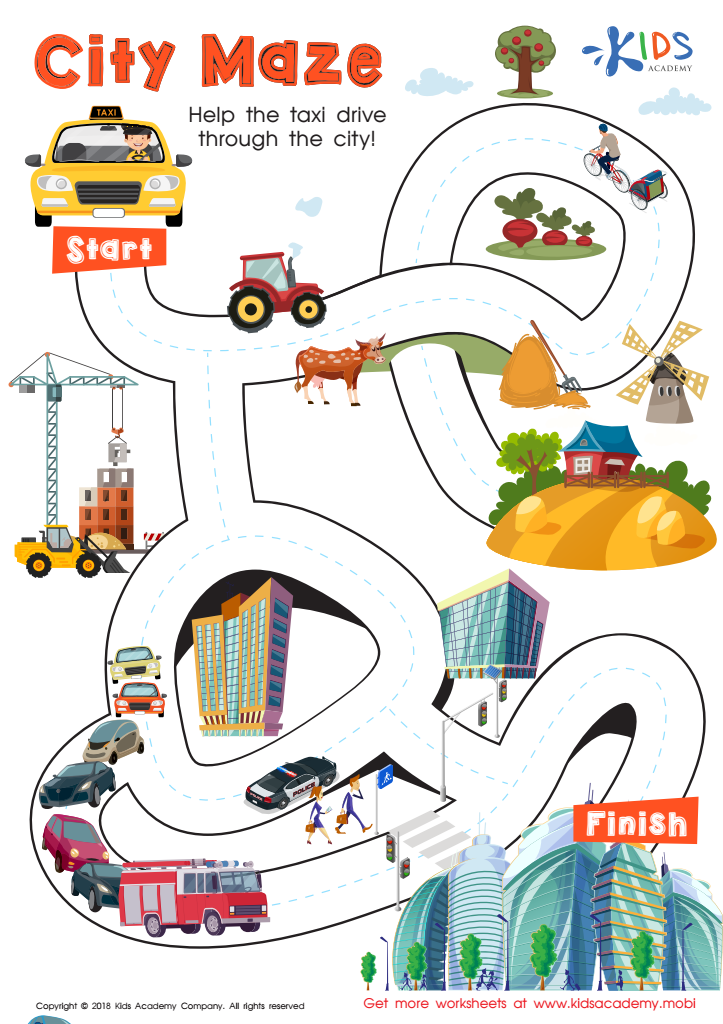
City Maze Worksheet
Kids love mazes! This free PDF city maze worksheet is sure to be a hit. Help your friend the taxi driver get through the maze, following traceable lines through different communities to the big city. It's a fun and challenging way to practice fine motor skills and succeed!
City Maze Worksheet
Worksheet
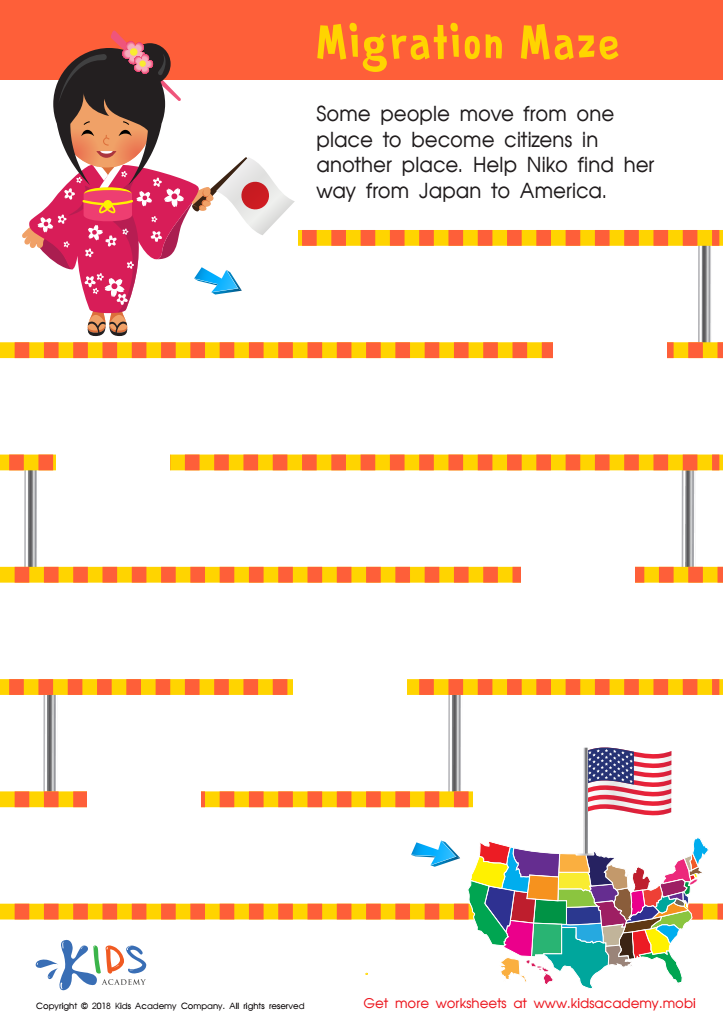
Migration Maze Worksheet
You are a citizen of your school, city and country. Many people migrate to become citizens of another place, like Niko in this worksheet. Ask your students to help her find her way from Japan to America.
Migration Maze Worksheet
Worksheet
Join Kids Academy for Free
Who is primarily going to use this learning content?







Spatial awareness is a crucial skill for children aged 4-6 that impacts various aspects of their development. Parents and teachers should prioritize this aspect of learning because it lays the foundation for essential cognitive abilities, including problem-solving, reasoning, and creativity. As children engage with their environment, they learn to recognize relationships between objects, understand dimensions, and appreciate the layout of space.
Moreover, spatial awareness activities can enhance language development and communication skills, as children learn to describe positions, movements, and distances. This, in turn, aids in their ability to follow directions and collaborate with peers in team-oriented tasks, bolstering social interaction.
Additionally, strong spatial skills are linked to future success in STEM (science, technology, engineering, and mathematics) fields. By nurturing these abilities early on, parents and teachers can help prepare children for academic achievements later in life.
Moreover, building spatial awareness through play and structured activities can make learning enjoyable, fostering a positive attitude towards education. Therefore, by supporting the development of spatial awareness in young children, we invest not only in their current learning but also in their overall growth, ensuring they are well-equipped for future challenges.