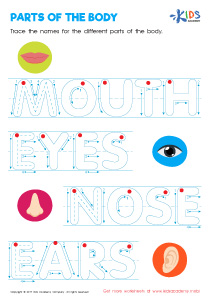
Categorization skills World Around Us Worksheets for Ages 4-6
3 filtered results
-
From - To
Unlock your child's potential with our "Categorization Skills: World Around Us Worksheets" designed for ages 4-6! These engaging and educational exercises help young learners classify and sort everyday objects, fostering critical thinking and cognitive development. Featuring vibrant images and easy-to-follow instructions, these worksheets make learning fun and interactive. Perfect for curious minds, our categorization activities align with early education standards, ensuring your child gains essential skills for future academic success. Ideal for both classroom and home use, inspire a love for learning today with our expertly crafted resources from Kids Academy.
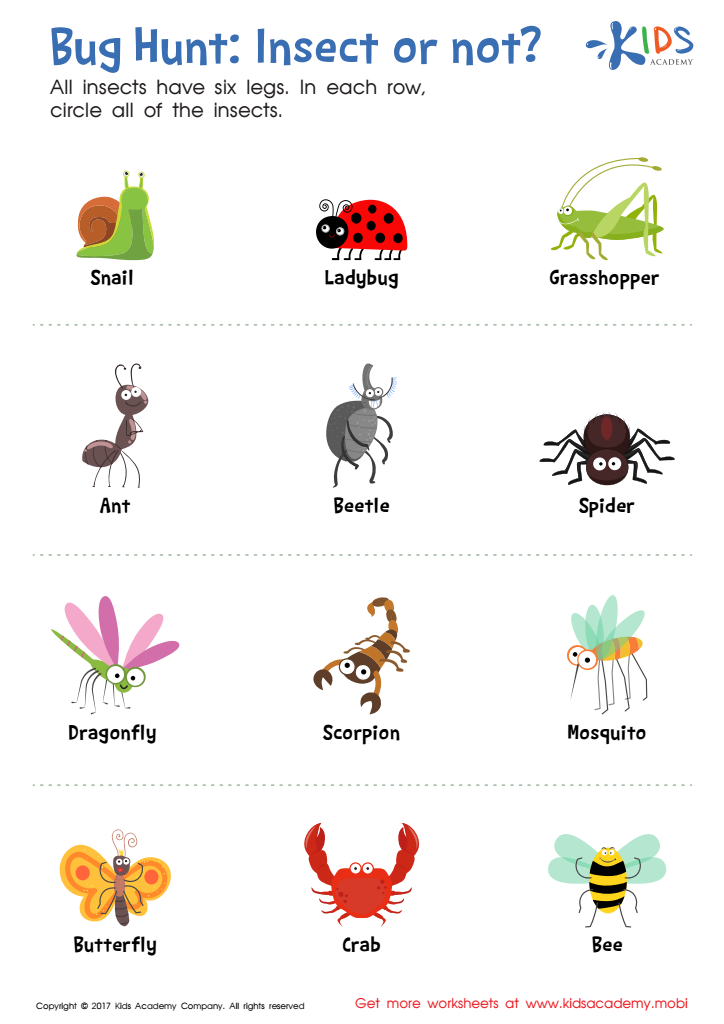
 Assign to My Students
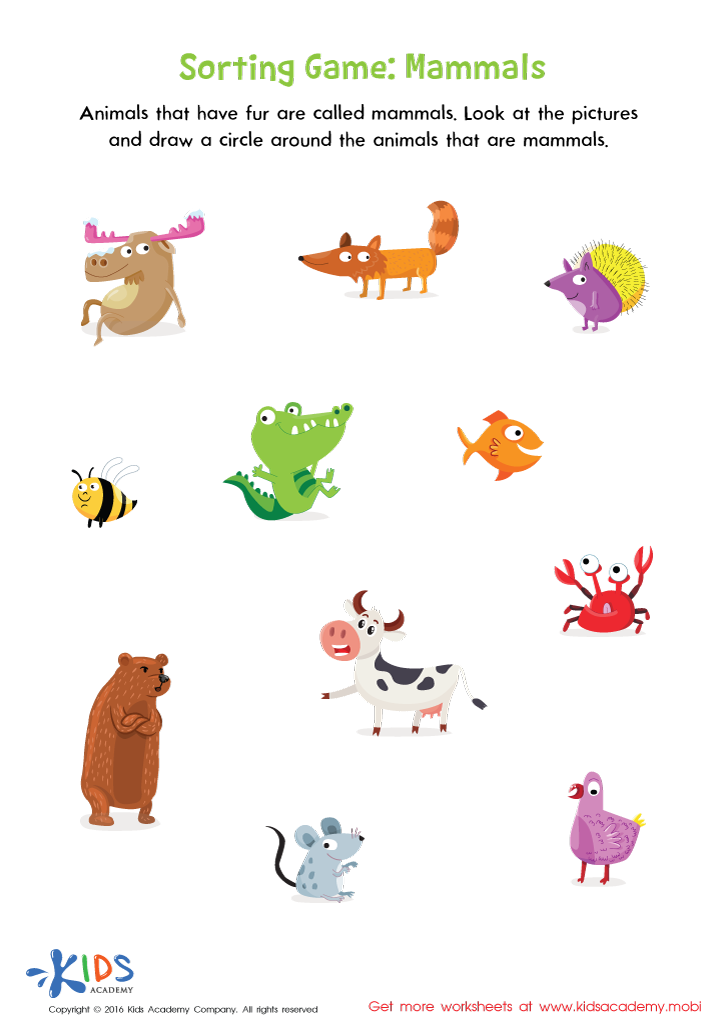
Mammals Sorting Worksheet
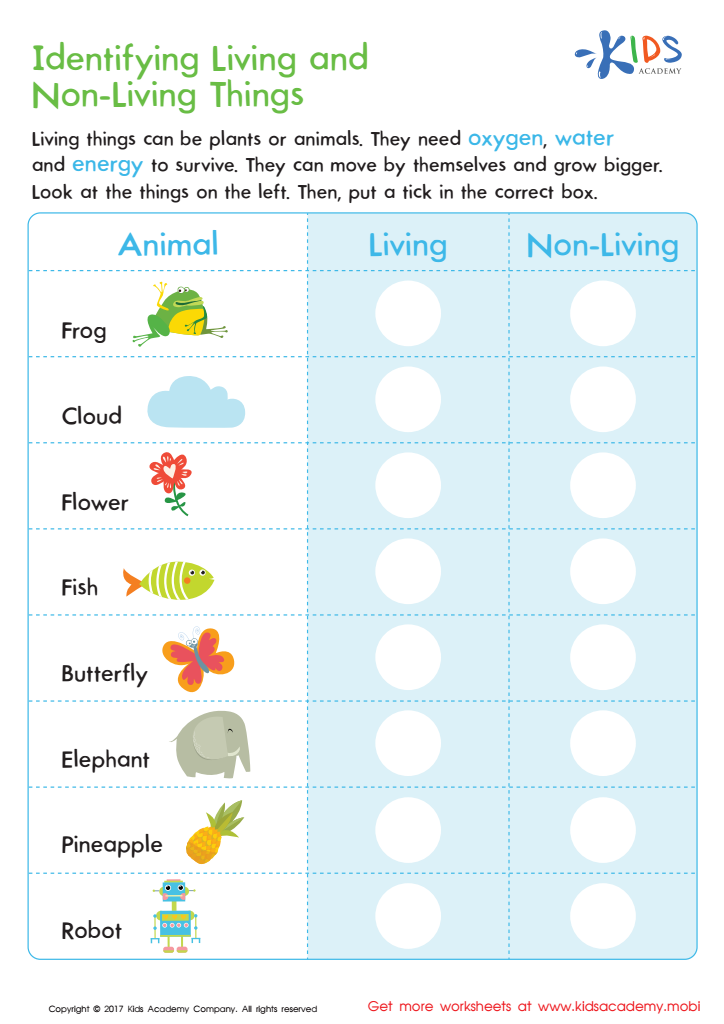
Identifying Living or Non–living Worksheet





Categorization skills are fundamental cognitive abilities that enable children to organize and process information about the world around them. At ages 4-6, children are developing these skills rapidly, and it is crucial for parents and teachers to support this development.
Categorization helps children make sense of their environment by grouping objects, people, and experiences into meaningful categories. This ability not only aids in memory retention and recall, but also enhances problem-solving and decision-making skills. For instance, by categorizing animals by their habitats or foods by their tastes, children learn to draw connections and distinctions, sharpening their analytical thinking.
Moreover, categorization lays the foundation for later academic success. Skills in sorting and organizing are directly related to early math and science concepts. For example, understanding categories is essential for grasping quantities, patterns, and even the basics of arithmetic. In literacy, it aids vocabulary development and comprehension by helping children recognize and group similar words or ideas.
Socially, categorization skills assist children in navigating social situations, differentiating between family members, friends, and strangers, and understanding social norms and roles.
Parents and teachers who prioritize the development of categorization skills help children build a solid cognitive foundation, fostering curiosity and confidence as they explore and learn about the world.