
Cognitive Development Grammar Worksheets for Ages 4-6
5 filtered results
Difficulty Level
Grade
Age
-
From - To
Subject
Activity
Standards
Boost your child’s cognitive development with our engaging Grammar Worksheets tailored for ages 4-6. Designed by expert educators, these worksheets focus on pivotal early learning skills, enhancing grammar understanding while nurturing cognitive abilities. Children will enjoy fun and colorful activities that teach foundational grammar concepts, such as verb usage, proper sentence structure, and noun recognition. By promoting active learning and critical thinking, these worksheets are perfect for preparing your young learners for future academic success. Support your child's language development journey with our expertly-crafted resources, ensuring a solid foundation in both grammar and overall cognitive skills.
Favorites
With answer key
Interactive
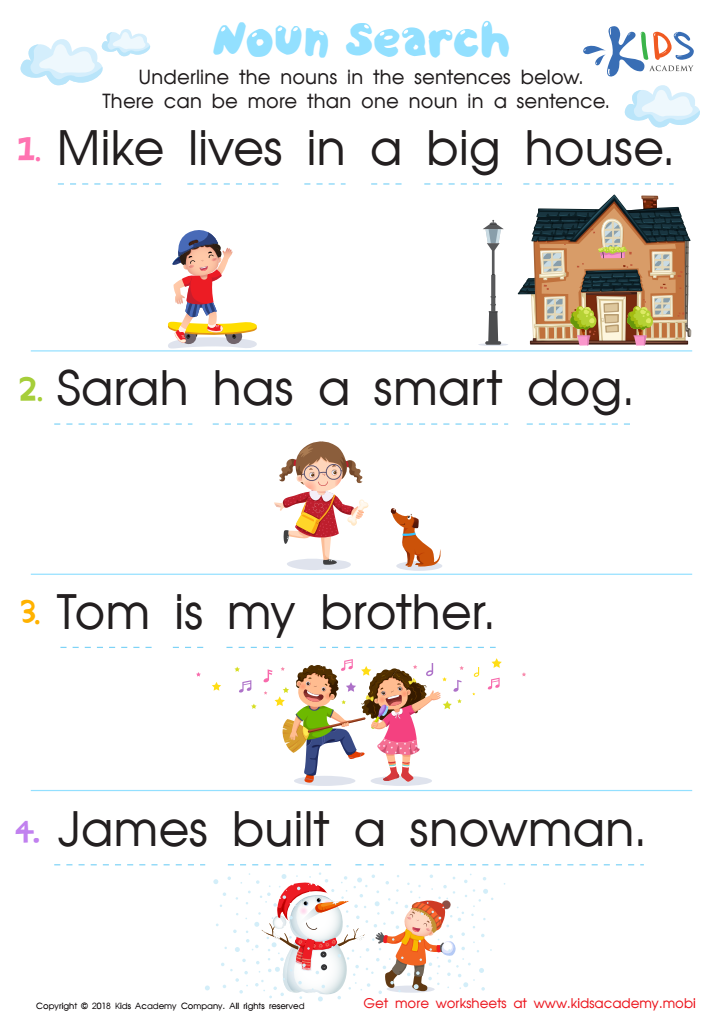
Noun Search Worksheet
To help your children learn the basics of grammar, start with nouns, verbs, adverbs and adjectives. This noun search worksheet will help your child understand the most common part of speech - the noun. Ask them to underline the nouns in each sentence. This is a great way to start learning proper grammar.
 Assign to My Students
Noun Search Worksheet
Worksheet
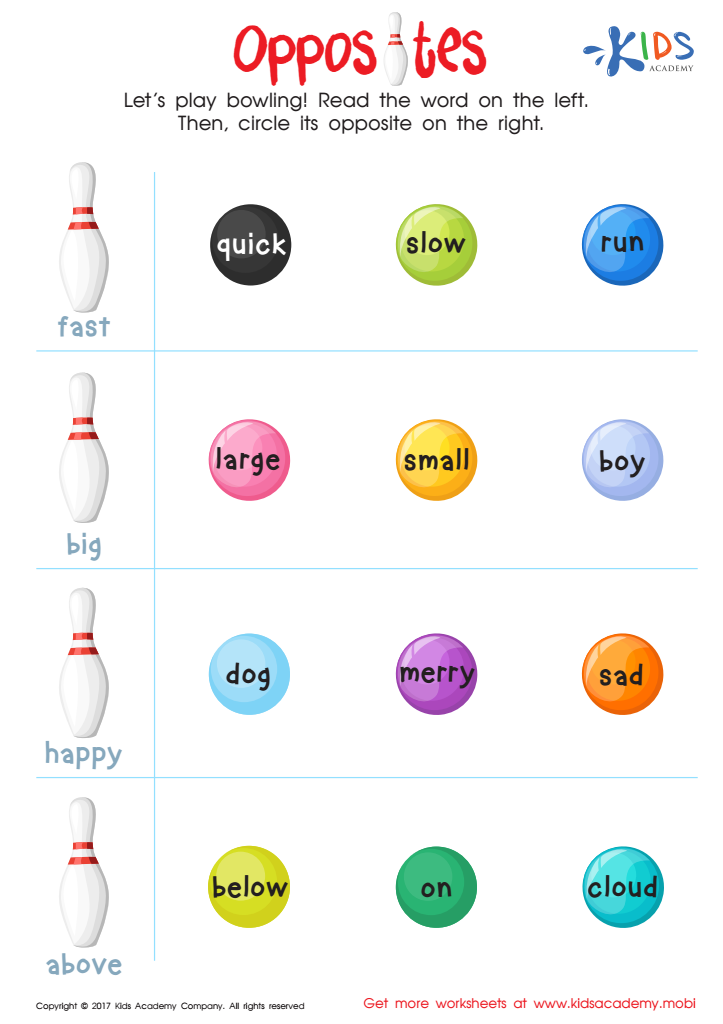
Opposites Worksheet
Have your students identify and circle the opposites of the words on the left. As a fun bowling-themed exercise, read the words and ask your kids if they know the opposites. Look through the options on the right and see if the answer is there; then, circle the correct answers.
Opposites Worksheet
Worksheet
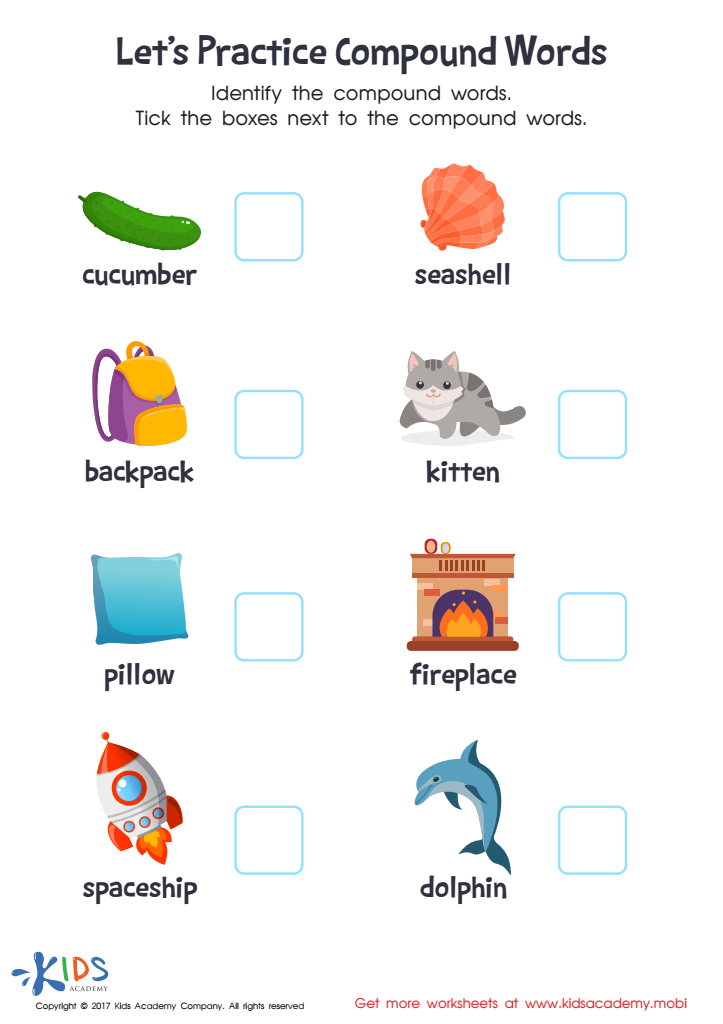
Let's Practice Compound Words Word Structure Worksheet
Test their knowledge of compound words with this fun worksheet and help them build their vocabulary. Have them say the words out loud as they work!
Let's Practice Compound Words Word Structure Worksheet
Worksheet
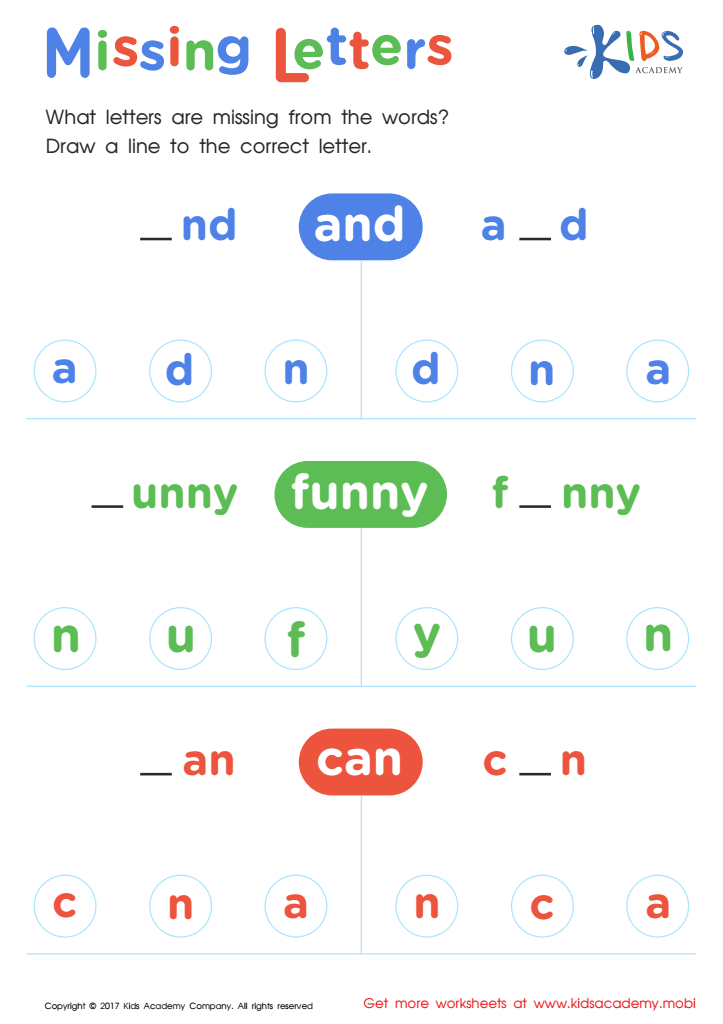
Missing Letters Worksheet
Review sight words with this fun matching worksheet from Kids Academy! Look at the sight words in the middle, read them aloud and find the missing letter on each side for each word. Draw a line to the correct letter to complete the sheet!
Missing Letters Worksheet
Worksheet
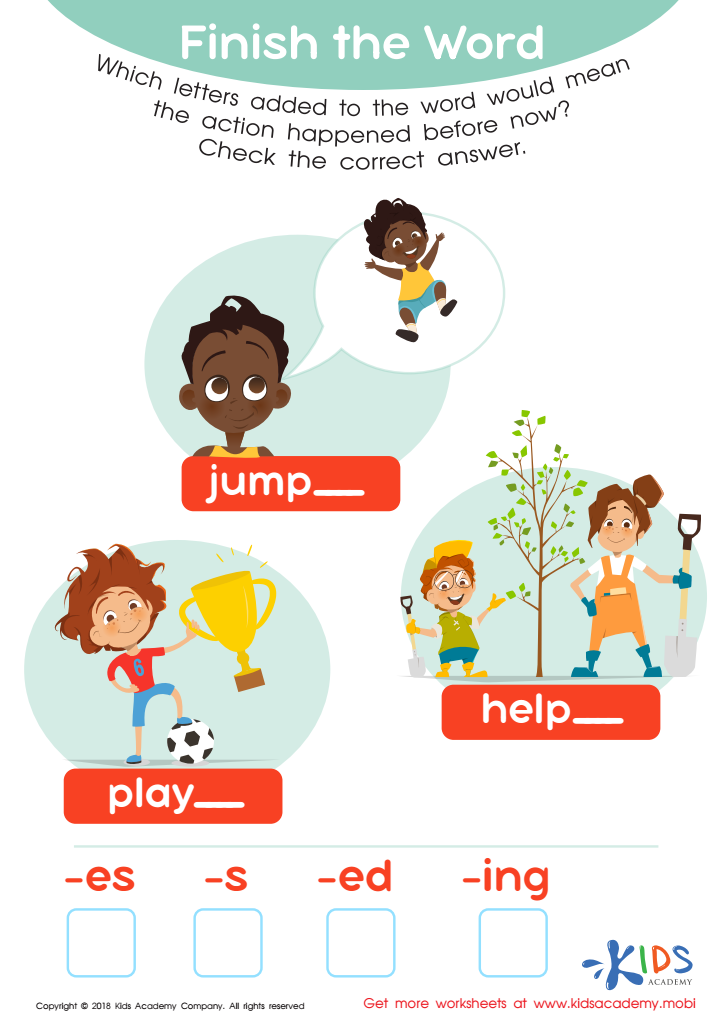
Finish the Word Worksheet
Does your kid know tenses? Listen to see if they are using words correctly. With this worksheet, your kids will learn to use the appropriate past tense forms. Ask them which letters added to words make the action past. Help them check the answers.
Finish the Word Worksheet
Worksheet
Join Kids Academy for Free
Who is primarily going to use this learning content?






Cognitive Development Grammar in children aged 4-6 is incredibly important because this is a critical period for language acquisition and cognitive growth. During these years, children are rapidly developing their abilities to understand and use complex language, which is foundational for all future learning. Mastery of grammar at this stage helps children to express their thoughts clearly, understand instructions, and engage effectively in social interactions. Proper language skills foster better communication, enhancing relationships with peers and adults, and contributing to emotional and social well-being.
Furthermore, cognitive development grammar affects academic readiness. Strong grammar skills prepare children for reading and writing, crucial components of early education. Being able to correctly form sentences aids in comprehension and retention of new information across all subjects, including math and science. This early groundwork in grammar can also strengthen children’s problem-solving and critical-thinking skills by enabling them to categorize and structure information logically.
Teachers and parents play a pivotal role in facilitating this development. Interactive reading, conversations, and structured play can provide rich, contextual grammar learning opportunities. By giving children the right support, we lay the foundation for successful lifelong learning and effective communication skills, essential for their overall cognitive development and future academic success.








