Sentence formation Grammar Worksheets for Ages 4-6
3 filtered results
-
From - To
Enhance your child's writing skills with our engaging Sentence Formation Grammar Worksheets designed specifically for ages 4-6. These playful and interactive resources help young learners grasp the basics of sentence construction through fun activities. Kids will practice identifying subjects and verbs, arranging words correctly, and expanding their sentences, fostering both creativity and grammatical understanding. Our worksheets support early literacy development, making learning enjoyable and effective. Perfect for classroom use or at-home practice, these printables aim to build a strong foundation in writing, encouraging children to express their thoughts clearly and confidently. Start your child’s journey to becoming a proficient writer today!
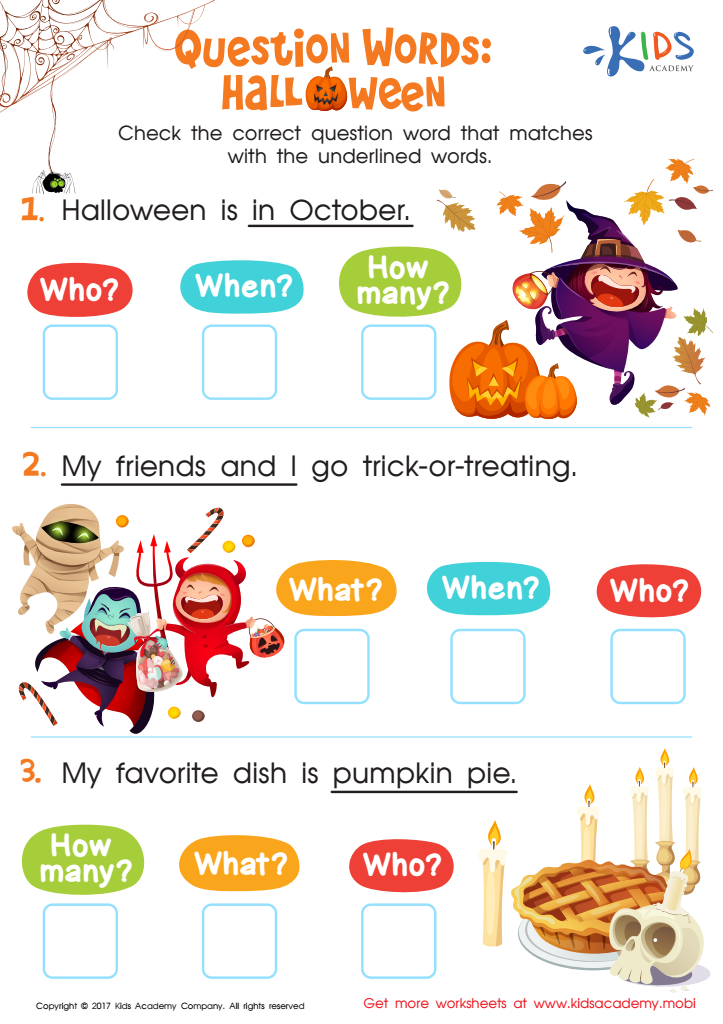
Question Words: Halloween Worksheet
 Assign to My Students
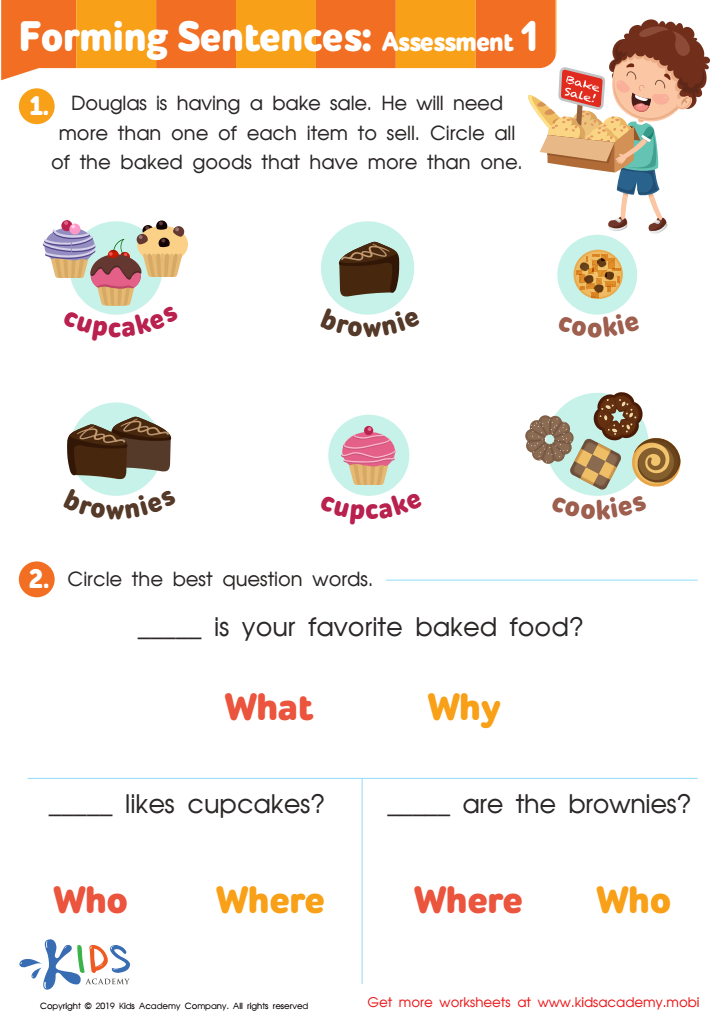
Forming Sentences: Assessment 1 Worksheet
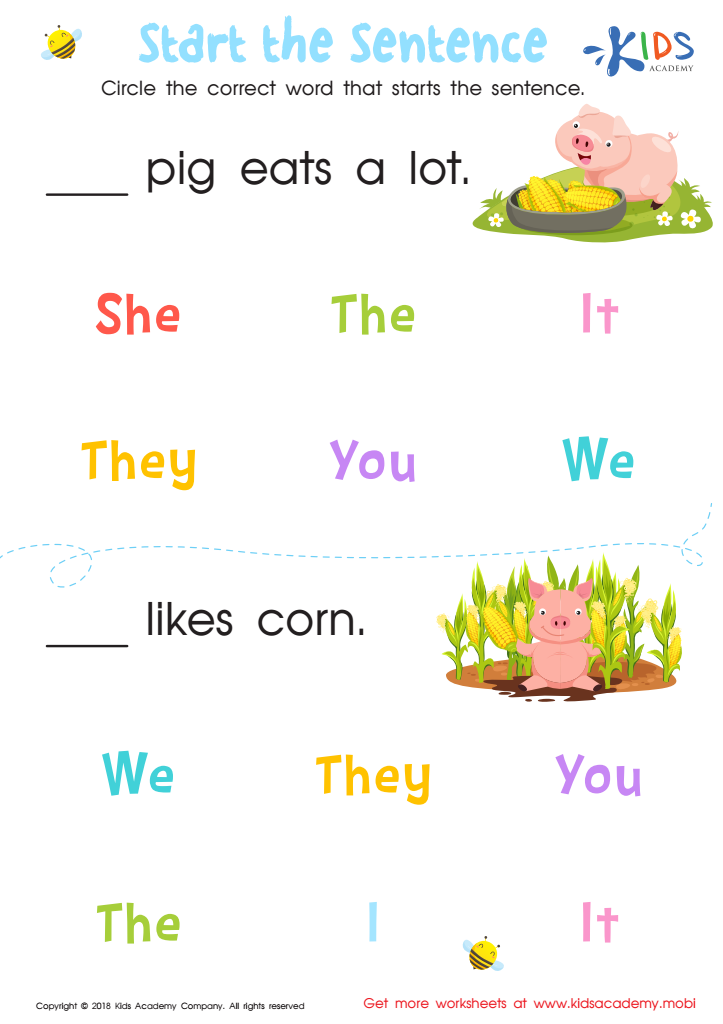
Start the Sentence Worksheet








Sentence formation is crucial for early language development in children aged 4-6, and parents and teachers play a pivotal role in fostering this skill. During these formative years, children are like sponges, absorbing language from their environment. Understanding and using proper sentence structure helps them communicate effectively, share ideas, and express their emotions.
Caring about sentence formation grammar encourages children's cognitive development, enhancing their understanding of how language works. It aids literacy skills, as a strong grasp of sentence structure lays the foundation for reading and writing. Children who master sentence formation can create more complex thoughts, ultimately boosting their self-confidence in communicating with peers and adults.
Furthermore, promoting good grammar habits early on fosters critical thinking. Children learn to organize their thoughts logically and articulate them clearly. This skill is not only valuable academically but also socially, as it enhances their ability to make friends and engage in conversations effectively.
Overall, investing time in teaching sentence formation grammar within this age group boosts children's linguistic abilities, setting them up for success in their academic journey and beyond. By prioritizing this aspect of language development, parents and teachers nurture well-rounded, confident communicators.








