Vocabulary expansion Grammar Worksheets for Ages 4-6 - Page 2
27 filtered results
-
From - To
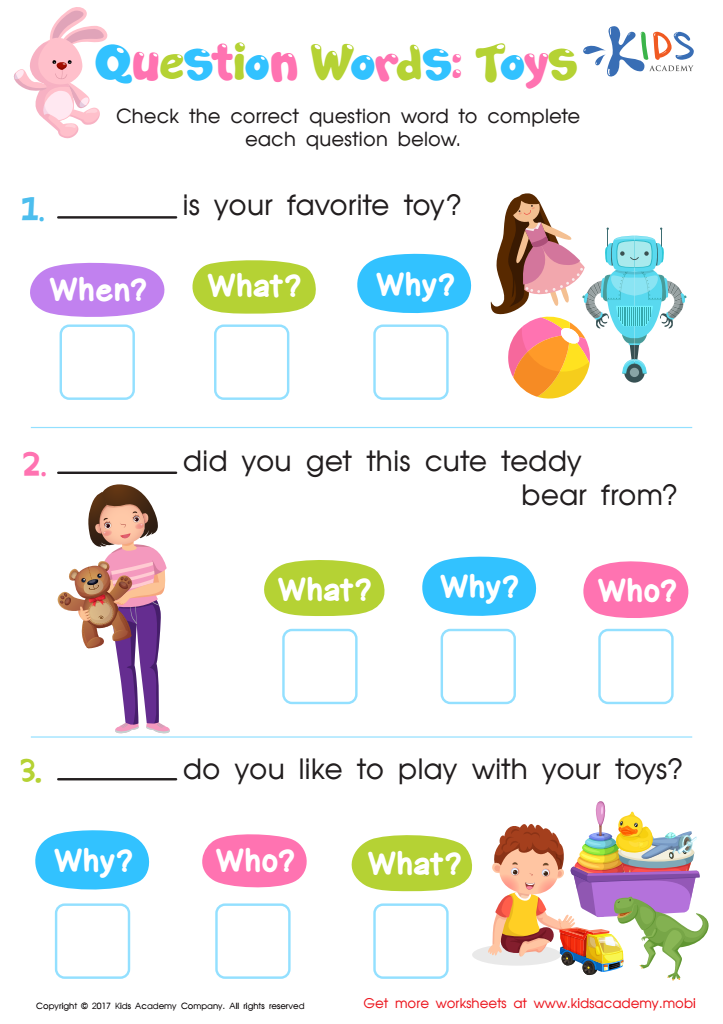
Question Words: Toys Worksheet
 Assign to My Students
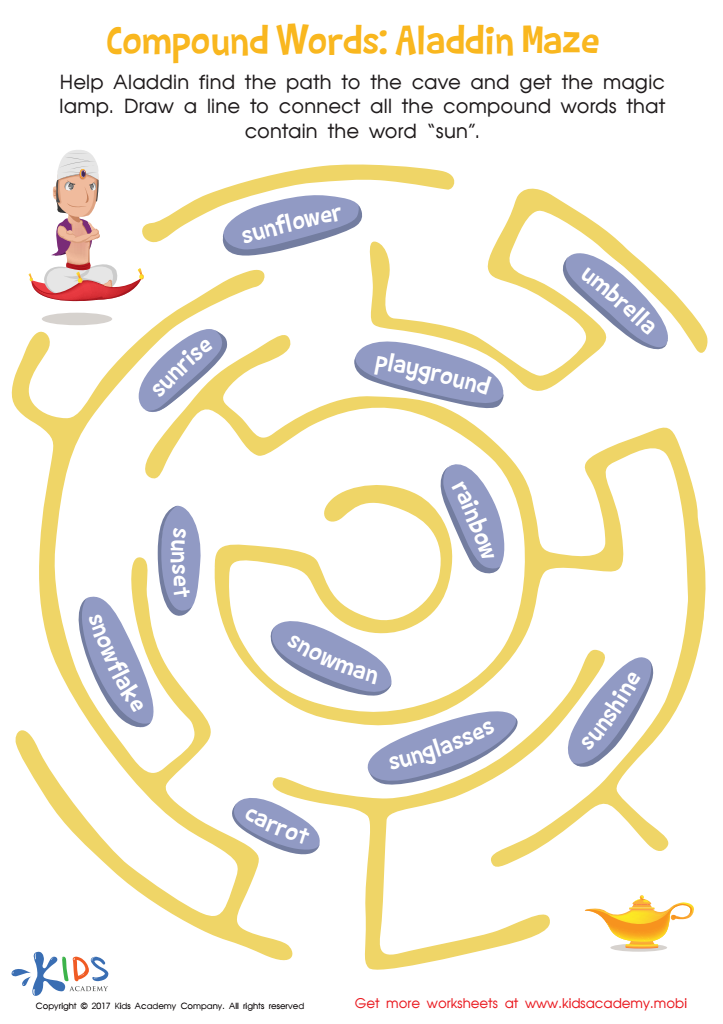
Compound Aladdin Maze Word Structure Worksheet
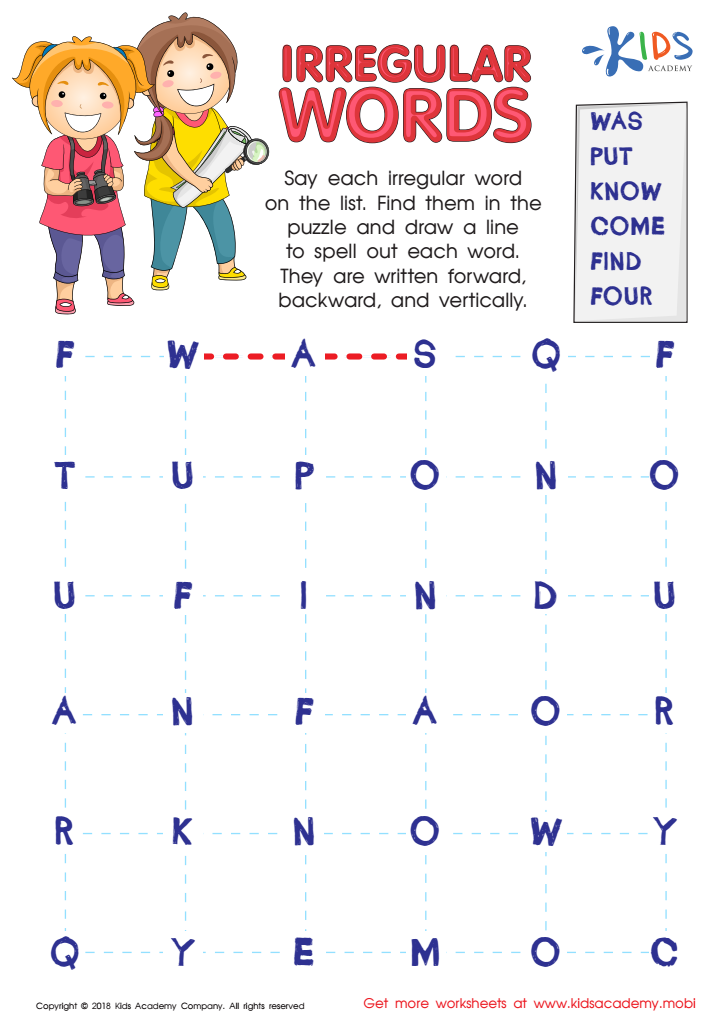
Irregular Words Worksheet


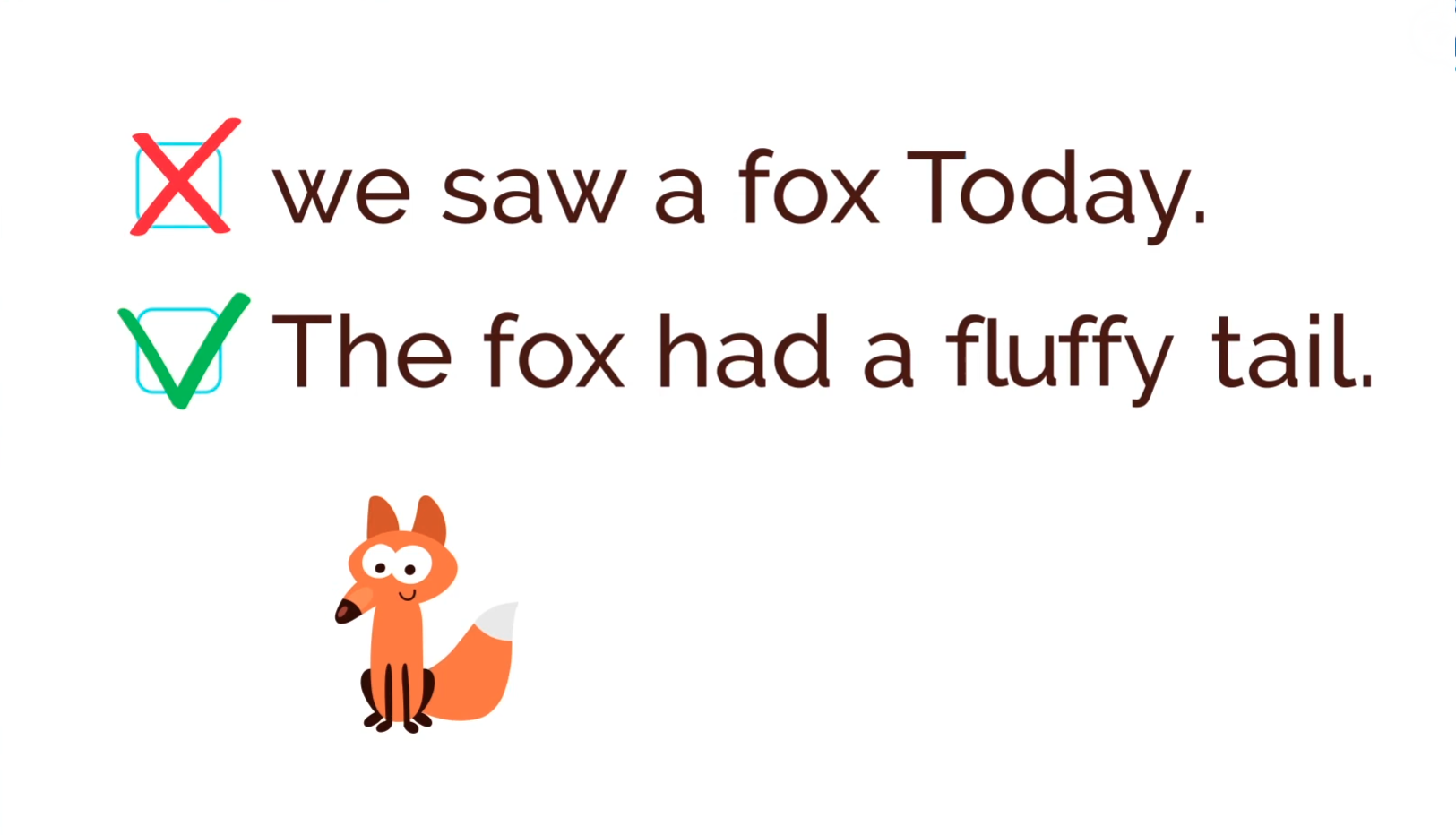

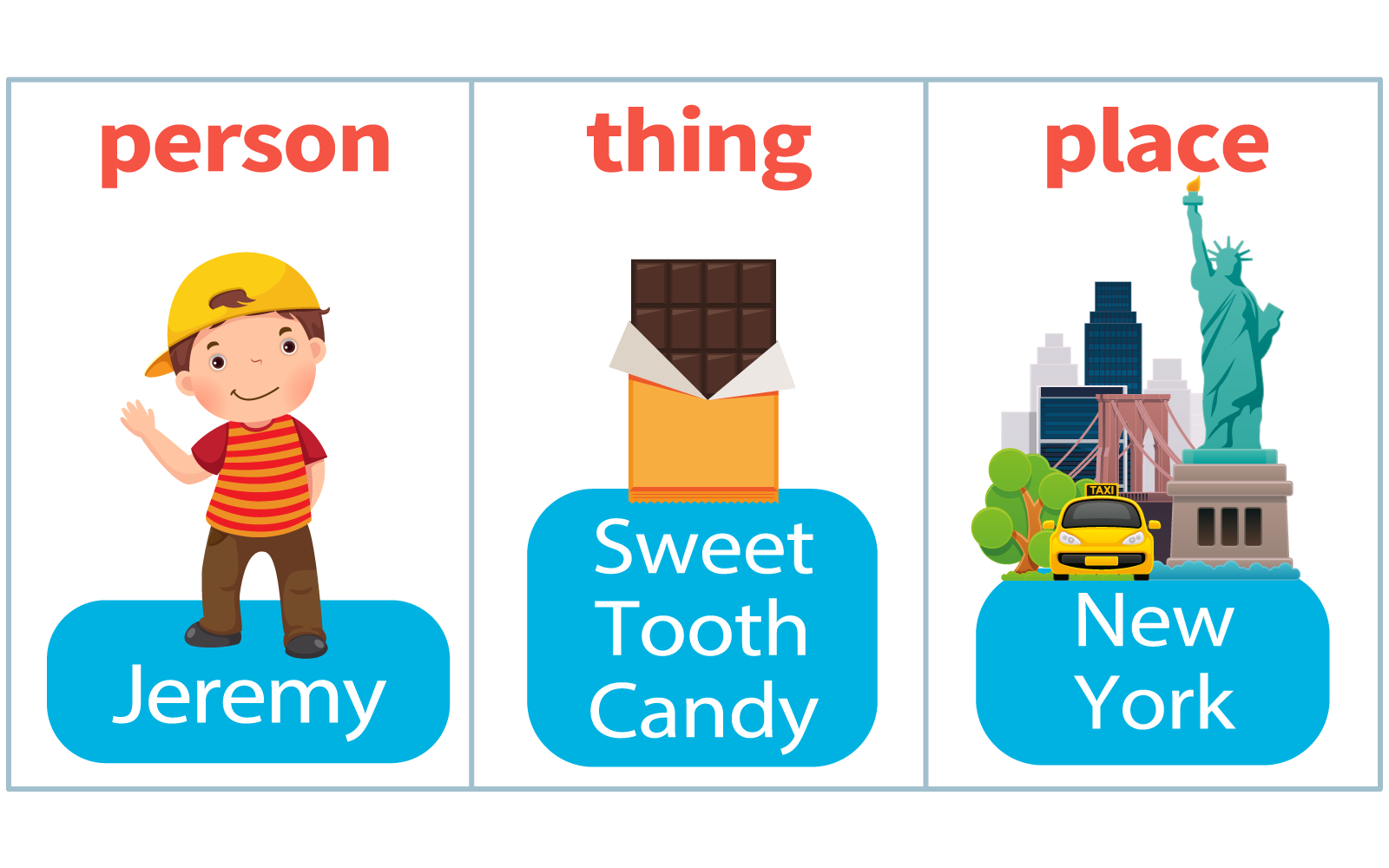


Vocabulary expansion and understanding grammar are fundamental aspects of early childhood education that provide a critical foundation for lifelong learning. Between the ages of 4 and 6, children are in a peak period of language acquisition, where their cognitive ability to absorb new words and grammatical structures is at its height. Vocabulary expansion at this stage enriches children's ability to express themselves clearly and accurately, facilitating better communication with peers and adults.
Moreover, a rich vocabulary contributes significantly to reading comprehension and overall academic success. Children who possess a wide range of words can more easily grasp new concepts, follow instructions, and engage with complex ideas, thus fostering a love for learning that extends beyond language arts to all subjects.
Grammar skills, on the other hand, are equally crucial as they help children understand the rules and structure of language. Knowledge of proper grammar enables children to form coherent sentences, which is essential not only for effective communication but also for developing their writing skills.
By prioritizing vocabulary expansion and grammatical understanding, parents and teachers equip children with the essential tools that boost self-esteem, foster independence, and enhance social interactions. Investing in these language skills early on paves the way for academic achievement and encourages a lifelong curiosity and enthusiasm for learning.








